#9 Post of 2014 – Why Did God Create Adam and Eve if He Knew They Would Sin?

Post Author: Bill Pratt 

Some people wonder why God created human beings if he knew we would reject him and bring sin into the world.

The answer seems to be that God desired to have a relationship with creatures that would freely love him.  Only creatures with a moral conscience and an ability to freely make moral choices could have authentic relationships with God.  Rocks can’t love God, and neither can squirrels.

Unfortunately, it may be actually impossible for God to create free creatures like ourselves and not have some of them choose to reject Him.  Even though God knew that some people would freely reject him, He felt it was the worth the cost to give others the chance to freely love him.  This world is better than a world full of inanimate objects or robots who can’t freely choose.

#10 Post of 2014 – Is Christian Salvation Unjust or Unfair?

Post Author: Bill Pratt 

Many non-Christians have accused the Christian God of being unjust or unfair because he asks that they recognize their sinfulness before the Creator-God, recognize their need for forgiveness, and then place their trust in Jesus Christ and his atoning death. They argue that this is just too narrow, too exclusive. God, the argument goes, is simply unjust and unfair.

But if we look at the biblical data, we see that regardless of how exactly God determines who will spend eternity with him, his selection is eminently just and fair.

First, we know God is loving and merciful. See this blog post on God’s love in the Old Testament and this post on God’s mercy in the Old Testament. There are several more passages that can be highlighted:

“The Lord is gracious and compassionate, slow to anger and rich in love. The Lord is good to all; he has compassion on all he has made” (Ps. 145:8-9).

“But I tell you, love your enemies and pray for those who persecute you, that you may be children of your Father in heaven. He causes his sun to rise on the evil and the good, and sends rain on the righteous and the unrighteous. If you love those who love you, what reward will you get? Are not even the tax collectors doing that? And if you greet only your own people, what are you doing more than others? Do not even pagans do that? Be perfect, therefore, as your heavenly Father is perfect” (Matt 5:44-48).

“But when the kindness and love of God our Savior appeared, he saved us, not because of righteous things we had done, but because of his mercy” (Titus 3:4).

“This is love: not that we loved God, but that he loved us and sent his Son as an atoning sacrifice for our sins” (1 John 4:10).

Second, we know that God is just and morally perfect. See this post on God’s moral perfection in the Old Testament. But also consider these passages:

“Shall not the God of all the earth do right?” (Gen 18:25)

“He will judge the world in righteousness and the peoples with equity” (Ps 98:9).

“The Lord within her is righteous; he does no wrong. Morning by morning he dispenses his justice, and every new day he does not fail” (Zeph. 3:5).

 “For he has set a day when he will judge the world with justice by the man he has appointed” (Acts 17:31).

“God will give to each person according to what he has done” (Rom. 2:6).

Time and again the Bible reassures us that God will deal lovingly, mercifully, and justly with all of humanity. As Glenn Miller notes in his excellent article, “Notice, that there will be NO excuse of ‘not fair’ with God’s judgment…no one will argue that their situation is Unfair!” When we all stand before God, not one of us will dare to accuse God of unfairness or injustice.

What Is Evil?

We know that evil cannot exist without good. We know that evil is not the opposite of good, like yin and yang. But what exactly is evil?

Philosopher David Oderberg answers this question in an article entitled “The Metaphysics of Privation.” Oderberg first explains that evil is the absence of good.

But what is good? Oderberg writes that good is “a kind of fulfillment, the completion of some tendency of a thing.” If good is the fulfillment of a thing, then evil is the lack, or privation, of that fulfillment. Oderberg expands on the meaning of privation:

It is the absence of something on which some aspect of the world has what we might call a prior claim or title but where the claim or title need not be construed evaluatively. So, for example, if you have cooked me dinner, and I ask for a third helping of ice cream but you cannot give me any because you’ve run out, then in the technical sense of privation used here, my inability to have more ice cream is a privation, not a mere absence, because I had a prior desire for it.

The privation becomes an evaluative matter when we ask, say, whether I really need a third helping; since I don’t, I haven’t been deprived of it, in the evaluative sense, though I am still subject technically to a privation as opposed to a mere absence. The latter would be the case if you served me cheese for dessert and, without even a thought on either of our parts about ice cream, in fact I did not eat ice cream but cheese.

So your inability to have more ice cream when you want more ice cream is a privation, but it is not necessarily evil. What makes a privation evil?

[W]ithin privations there are those that are essentially evaluative and those that are not. Deafness and disease are privations we correctly regard as bad or evil. The essentially evaluative privations are, precisely, the evils. What they have in common is that they are all privations of good. Since – I am assuming – good is a kind of fulfillment evil is the privation of a kind of fulfillment. The relevant kind of fulfillment belongs to the nature of a thing – how it is supposed to function given the kind of thing it is.

Given that evil is privation of the good, Oderberg, after further analysis, concludes with three propositions about evil (actually there are five, but space does not permit me to deal with the last two).

1. Evil is real. By real, Oderberg is denying that evil is illusory or unreal, a position pantheists take.

2. Evil is a privation. As we discussed above, evil is a lack of good.

3. Privations are not real. What Oderberg means by this proposition is that evil is not a real thing like the computer I am typing on is a real thing, or the cup of tea I am sipping is a real thing. But privations are real in the sense that they have cognitive being. They really exist in the minds of intellectual beings. Privations are beings of reason.

Does This New Argument for Scientism Work?

It’s been a while since we’ve beat up scientism on the blog, so I figured we were due again. It’s an “ism” that just keeps rearing its head over and over and thus needs to be slapped around over and over. Philosopher Edward Feser, in one of his blog posts, reviews yet  another version of the argument for scientism that he then critiques. Here is the argument:

  1. The predictive power and technological applications of science are unparalleled by those of any other purported source of knowledge.
  2. So science is a reliable source of knowledge.
  3. Science has undermined beliefs derived from other purported sources of knowledge, such as common sense.
  4. So science has shown that these other purported sources of knowledge are unreliable.
  5. The range of subjects science investigates is vast.
  6. So the number of purported sources of knowledge that science has shown to be unreliable is vast.
  7. So what science reveals to us is probably all that is real.

Feser grants premise 1 and 2, but thinks that premise 3 is not sustainable (in the post he explains why). However, in order to move the critique along, he grants, for the sake of argument, premise 3, and then proceeds to look at premises 4-7.

[P]remise (3) simply doesn’t give us good reason to believe step (4).  To see why not, suppose we replace “science” with “visual experience” in these two steps of the argument.  Visual experience has of course very often undermined beliefs derived from other sources of knowledge.  For example, it often tells us that the person we thought we heard come in the room was really someone else, or that when we thought we were feeling a pillow next to us it was really a cat.

Does that mean that visual experience has shown that auditory experience and tactile experience are unreliable sources of knowledge?  Of course not.  To do that, it would have to have shown that auditory experience and tactical experience are not just often wrong but wrong on a massive scale and with respect to a very wide variety of subjects.  And it has done no such thing.  But neither has science shown any such thing with respect to common sense.  Hence (3) is not a good reason to conclude to (4).

But do premises 4 and 5 support premise 6? Not really.

(4) and (5) also don’t give us good reason to believe (6).  Suppose we label the range of subjects science covers with letters, from A, B, C, D, and so on all the way to Z.  Even if science really did show that other purported sources of knowledge were unreliable with respect to domains A and B (say), it obviously wouldn’t follow that there were no reliable sources of knowledge other than science with respect to domains C through Z.

Feser, referring to his book Scholastic Metaphysics: A Contemporary Introduction (Editiones Scholasticae), summarizes the case against scientism:

In any event, a theme that is developed at length throughout my book is that there are absolute limits in principle to the range of beliefs that science could undermine, and these are precisely the sorts of beliefs with which metaphysics is concerned.  The book aims in part to set out (some of) the notions that any possible empirical science must presuppose, and thus cannot coherently call into question.

Or put another way, science is built on a foundation of mathematics, logic, reliability of the senses, truth-telling, language, uniformity of nature, and so on. Without that foundation, science crumbles to the ground in a heap of debris.

Will We Have Free Will in Heaven?

We’re told in Scripture that in Heaven there will be no sin and no evil of any kind. This leads to the question of human free will, because Adam and Eve were free to choose between good and evil, and as humans alive on earth now, we also have the ability to choose between good and evil. So, it seems that if we have no ability to choose evil in Heaven, then we will have an inferior freedom to what we have now. Is that the case?

Only if you can argue that a freedom to do evil is ultimately superior to a freedom to only do good. Adam and Eve were given the ability to choose evil as a test. The testing continues today, as each human being is allowed to choose good and evil every day of their lives. Why does God test us? Because giving mankind the ability to choose evil is the greatest way to teach us how awful sin really is. The testing grows us. Consider what James says in his letter to the church:

Consider it pure joy, my brothers, whenever you face trials of many kinds, because you know that the testing of your faith develops perseverance. Perseverance must finish its work so that you may be mature and complete, not lacking anything.… Blessed is the man who perseveres under trial, because when he has stood the test, he will receive the crown of life that God has promised to those who love him. (James 1:2–4, 12)

Eventually, though, the testing must end. In Heaven the results of our earthly testing will be confirmed. Those who chose God will be given the ability to only choose good, which is a far superior form of freedom then the ability to choose good or evil. Theologian Norm Geisler, in his Systematic Theology, Vol. 3: Sin/Salvation, explains the difference between these two kinds of freedom:

It is important to note that heaven is not the destruction of true freedom but the fulfillment of it. On earth, we choose whether we want to do God’s will or our own; once the choice is made, our destiny is sealed at death (Heb. 9:27). Then, if we have chosen God’s will instead of our own, the freedom to do evil vanishes and we are free to do only the good. Since the freedom to do evil is also the freedom to destroy oneself, it is not perfect (complete) freedom.

The essence of true freedom is self-determination; true freedom is the kind that God has (and, in eternity, believers will have), namely, the self-determined ability to choose only the good. Likewise, in hell, evil persons no longer under the influence of God’s grace will be solidified in their will to do evil.

Heaven, then, is the completion of our freedom, not a negation of it. All true believers yearn to have the Lord’s Prayer fulfilled: “Your will be done, [O God,] on earth as it is in heaven” and “lead us not into temptation” (see Matt. 6; Luke 11). Therefore, when God brings us to heaven, where this will be true, He will not have eliminated our freedom but instead fulfilled it. In summary, the loss of the ability to do evil is not an evil of any kind; it is, rather, a profound good.

God has perfect freedom, and God is not able to choose evil. When we are in Heaven, we will finally have this same kind of freedom. The ability to choose evil, then, is a lesser form of freedom that will be discarded once we’ve joined God for eternity.

In Heaven, Will We Be Aware of Bad Things on Earth?

How can we enjoy Heaven if we are aware of all the evil that persists on earth? This is a good question, and Randy Alcorn, in his book Heaven, offers a biblical answer. Alcorn believes that believers who are in Heaven right now are aware of what’s going on down here on earth. He reasons that

God knows exactly what’s happening on Earth, yet it doesn’t diminish Heaven for him. Likewise, it’s Heaven for the angels, even though they also know what’s happening on Earth. In fact, angels in Heaven see the torment of Hell, but it doesn’t negate their joy in God’s presence (Revelation 14: 10).

Abraham and Lazarus saw the rich man’s agonies in Hell, but it didn’t cause Paradise to cease to be Paradise (Luke 16: 23-26). Surely then, nothing they could see on Earth could ruin Heaven for them. (Again, the parable does not suggest that people in Heaven normally gaze into Hell.) It’s also possible that even though joy would predominate in the present Heaven, there could be periodic sadness because there’s still so much evil and pain on Earth.

What can we learn from passages about Jesus in Heaven?

Christ grieved for people when he was on Earth (Matthew 23: 37-39; John 11: 33-36). Does he no longer grieve just because he’s in Heaven? Or does he still hurt for his people when they suffer? Acts 9: 4-5 gives a clear answer. Jesus said, “Saul, Saul, why do you persecute me?” When Saul asked who he was, he replied, “I am Jesus, whom you are persecuting.”

Doesn’t Christ’s identification with those being persecuted on Earth suggest he’s currently hurting for his people, even as he’s in Heaven? If Jesus, who is in Heaven, feels sorrow for his followers, might not others in Heaven grieve as well?

An objection that might be raised at this point is Rev 21:4, which says, ““He will wipe every tear from their eyes. There will be no more death or mourning or crying or pain, for the old order of things has passed away.” How do we deal with this verse?

Alcorn reminds us that there are two Heavens described in Scripture, the present Heaven where all who have departed reside right now, and the eternal Heaven, or the New Heaven and New Earth, which will not arrive until after Christ’s second coming. Rev 21:4 is clearly referring to the eternal Heaven, or the New Heaven and New Earth.

It’s one thing to no longer cry because there’s nothing left to cry about, which will be true on the New Earth. But it’s something else to no longer cry when there’s still suffering on Earth. Going into the presence of Christ surely does not make us less compassionate. . . .

Christ’s promise of no more tears or pain comes after the end of the old Earth, after the Great White Throne Judgment, after “the old order of things has passed away” and there’s no more suffering on Earth. The present Heaven and the eternal Heaven are not the same. We can be assured there will be no sorrow on the New Earth, our eternal home . But though the present Heaven is a far happier place than Earth under the Curse, Scripture doesn’t state there can be no sorrow there.

So how is it that those in the present Heaven can bear the burden of witnessing all of the evil and suffering still taking place on earth?

[P]eople in Heaven are not frail beings whose joy can only be preserved by shielding them from what’s really going on in the universe. Happiness in Heaven is not based on ignorance but on perspective . Those who live in the presence of Christ find great joy in worshiping God and living as righteous beings in rich fellowship in a sinless environment. And because God is continuously at work on Earth , the saints watching from Heaven have a great deal to praise him for, including God’s drawing people on Earth to himself (Luke 15: 7, 10).

But those in the present Heaven are also looking forward to Christ’s return, their bodily resurrection, the final judgment, and the fashioning of the New Earth from the ruins of the old. Only then and there, in our eternal home, will all evil and suffering and sorrow be washed away by the hand of God. Only then and there will we experience the fullness of joy intended by God and purchased for us by Christ at an unfathomable cost.

Will We Remember Our Earthly Lives When We’re in Heaven?

According to author Randy Alcorn, in his book Heavenwe surely will. Alcorn starts building his case from the contents of Rev 6.

As we’ve seen, the martyrs depicted in Revelation 6 clearly remember at least some of what happened on Earth, including that they underwent great suffering. If they remember their martyrdom, there’s no reason to assume they would forget other aspects of their earthly lives. In fact, we’ll all likely remember much more in Heaven than we do on Earth, and we will probably be able to see how God and angels intervened on our behalf when we didn’t realize it.

Alcorn points out the fact that we are promised, in Luke 16:25, to be comforted in Heaven about the bad things that happened to us on earth. That comfort implies that we will remember what it is we are being being comforted for.

Additionally, there is the fact that we will give an account of our earthly lives after we die (see 2 Corinthians 5:10; Matthew 12:36). Alcorn argues that

[g]iven our improved minds and clear thinking, our memory should be more— not less—acute concerning our life on Earth . Certainly, we must remember the things we’ll give an account for. Because we’ll be held accountable for more than we presently remember, presumably our memory will be far better.

But perhaps his strongest argument for memory of our earthly lives is the doctrine of eternal rewards. Alcorn explains:

The doctrine of eternal rewards hinges on specific acts of faithfulness done on Earth that survive the believer’s judgment and are brought into Heaven with us (1 Corinthians 3:14). In Heaven, the Bride’s wedding dress stands for “the righteous acts of the saints” done on Earth (Revelation 19:7-8). Our righteous deeds on Earth will not be forgotten but “will follow” us to Heaven (Revelation 14:13).

The positions of authority and the treasures we’re granted in Heaven will perpetually remind us of our life on Earth, because what we do on Earth will earn us those rewards (Matthew 6: 19-21; 19:21; Luke 12: 33; 19: 17, 19; 1 Timothy 6:19; Revelation 2:26-28). God keeps a record in Heaven of what people do on Earth, both unbelievers and believers. We know that record will outlast our life on Earth— for believers, at least until the judgment seat of Christ (2 Corinthians 5: 10); for unbelievers, right up until the Great White Throne Judgment (Revelation 20:11-13), just preceding the coming of the new heavens and New Earth. For those now in Heaven, these records of life on Earth still exist.

Alcorn concludes by reminding us of the importance of our memories to our personalities:

Memory is a basic element of personality. If we are truly ourselves in Heaven, there must be continuity of memory from Earth to Heaven . We will not be different people, but the same people marvelously relocated and transformed. Heaven cleanses us but does not revise or extinguish our origins or history. Undoubtedly we will remember God’s works of grace in our lives that comforted, assured, sustained, and empowered us to live for him.

Did God Promise to Commit Genocide?

In Exodus 23:23, God says, “My angel will go ahead of you and bring you into the land of the Amorites, Hittites, Perizzites, Canaanites, Hivites and Jebusites, and I will wipe them out.” It seems from this verse that God is going to kill all of these people only because of their nationality. Is that what’s going on?

There are two things that we need to pay attention to. First, these people groups, commonly referred to by the largest of the groups, the Canaanites, have been warned by God to repent of their wickedness. The wickedness of Canaanite society was anticipated in Gen 15:16.

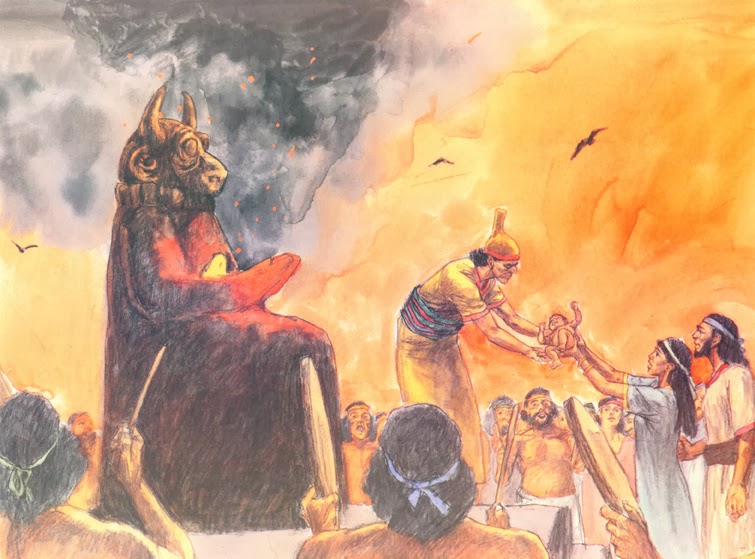
Their sins are described in Leviticus and Deuteronomy (see Lev 18 and 20; Deut 9 and 12), and include rampant incest, bestiality, and child sacrifice, just to name a few. Theirs is a desperately wicked culture that God had promised to destroy. God had been extremely patient with them, waiting for hundreds of years for them to repent, but they did not.

Second, the reader needs to continue on to verse 27-30 where God clarifies exactly what he means in verse 23. God’s plan is to drive them out of the land, little by little, year after year. This is what He means by the phrase “wipe them out.” Rather than killing the Canaanites, God’s primary plan is to push them out of the land so that they will not corrupt the people of Israel. Only the Canaanites foolish enough to stay behind will be attacked by the Israelite army.

Commentary on Exodus 23 (Promises and Warnings)


Chapters 20-23 of Exodus record all of the covenant laws that God has thus far given to Moses. The Ten Commandments are the most important of these laws, but the subsequent texts build on the foundation of the Ten Commandments, providing more detail. At the end of these laws, we come to Exodus 23:20-33.

In this section of Exodus 23, God repeats (from Gen 15) and expands on his promises to the Israelites regarding their entrance into Canaan, the Promised Land. This section also concludes the Covenant Code that God has shared with the Israelites over the previous chapters.

In verse 20, God introduces an angel that will guide them to the land and also protect them along the way. As we read along further, we learn that this angel is actually God himself.

In verses 21-23, God reminds the people of Israel to pay attention to what the angel (God) commands. If they listen and obey, God will “wipe out” the Canaanites, but if they disobey, God will not forgive their rebellion. The success of the Israelites in the Promised Land is dependent on their obedience to God. The other implication of these verses is that the Israelites have no hope of conquering the land without God’s direct and mighty intervention. They are too small of a nation to accomplish this task on their own.

In verse 24, we see God repeating and emphasizing the importance of the First and Second Commandments. The Israelites will be tempted to worship the gods of Canaan, to adopt their religious practices, so God is warning them again not to do this. In fact, in the next two verses, God promises to bless the people of Israel with food, rain, fertility, and long life, if they will only worship Him.

Why would Israel be tempted to worship the Canaanite deities? Douglas Stuart explains in Exodus: An Exegetical and Theological Exposition of Holy Scripture (New American Commentary):

The answer is that once settled in Canaan, they would surely desire agricultural success, which in the ancient world was generally attributed to proper involvement of the deities in the agricultural process through worship. In general, ancient peoples believed that the gods could do anything but feed themselves. Humans therefore had the job of raising food for the gods, which was then ‘sent’ to them through the offerings humans gave in the presence of the gods’ idols.

What part did the gods have in this process? They caused the crops to grow and the flocks and herds to multiply. The ancient farmer thought that the gods were absolutely essential to the agricultural process and that the way to involve the goodwill of the gods on behalf of one’s farming was to worship them. The essence of worship was providing food for them in the form of sacrifices. When Israel would arrive in the promised land, the temptation to plant as the Canaanites planted, to cultivate as they cultivated, to harvest as they harvested, and to worship as they worshiped would be almost irresistible since all these were thought to go together as part and parcel of farming in any given locality.

Verses 27-30 expand on God’s promise to “wipe out” the Canaanites. Here we learn what God means by this promise. God’s intention is to drive the inhabitants out of the land, little by little, over a period of years. The Israelites will be conducting a mere mop-up operation, because God will be doing the heavy lifting during the conquest.

Verses 29-30 explain that God must drive the people out slowly because the Israelites are not numerous enough to inhabit the land. The land will become desolate and overrun with wild animals if the Canaanites are driven out too rapidly.

Verse 31 reminds the reader again of the borders of the Promised Land, The Red Sea (northern tip of the Gulf of Aqaba) on the east, the Mediterranean Sea on the west, the Negev desert to the south, and the Euphrates River to the north.

Finally, in verses 32-33, God again warns the Israelites not to worship the gods of Canaan. If they allow the Canaanites to live among them in great numbers, they are sure to adopt the worship practices of the Canaanites.

Douglas Stuart summarizes the meaning of these verses: “Without Yahweh, they were nothing, could do nothing, and would end up as nothing. With him leading and them following obediently, however, all would fall properly into place, and their purpose as a people would come to fulfillment.”

Why Should We Focus on Heaven?

Perhaps you’ve heard the saying, “Christians are so heavenly minded they’re no earthly good.” The idea behind this statement is supposed to be that Christians are content to leave the world the way it is because we are simply biding our time here so that we can get to our final destination, Heaven. It’s only those people who don’t believe in Heaven that will do the hard work to improve the Earth, because Earth is all there is.

While this is a catchy cliché, it misses an important point. Christians do try to make the Earth a better place, every single day, and they do it because Heaven represents what Earth is supposed to be like. Heaven, the Christian’s final destination, is a perfected and transformed Earth. Heaven is what Earth was supposed to be before sin entered the world and corrupted it.

It is only by focusing on what is supposed to be, that we will change what is. C. S. Lewis says this eloquently in Mere Christianity:

If you read history, you will find that the Christians who did most for the present world were just those who thought most of the next. The Apostles themselves, who set on foot the conversion of the Roman Empire, the great men who built up the Middle Ages, the English Evangelicals who abolished the Slave Trade, all left their mark on Earth, precisely because their minds were occupied with Heaven. It is since Christians have largely ceased to think of the other world that they have become so ineffective in this. Aim at Heaven and you will get earth ‘thrown in’: aim at earth and you will get neither.

Randy Alcorn summarizes the point: “We need a generation of heavenly minded people who see human beings and the earth itself not simply as they are, but as God intends them to be.” So, rather than chide Christians for focusing on Heaven too much, the non-Christian should hope that Christians do just the opposite!

The Christian vision of Heaven is what drives us to improve the Earth we currently call “home.”

A Christian Apologetics Blog