How Should We Enjoy God? Part 1

The standard answer to this question, from many Christians, is that we enjoy God through prayer, worship, and Bible study. And, those things are definitely important ways to enjoy God. But there is more.

God has given mankind numerous gifts, through his creation (the physical universe and everything in it), that we are meant to enjoy. When we enjoy the gifts God has given us, when we remember that they are his gifts, and when we thank him for those gifts, we are surely enjoying God in a way that pleases him.

Having said that, we all know that there are millions of people who enjoy God’s gifts, but who fail to acknowledge that they are gifts at all. They are like a child who receives a new toy at Christmas, and then plays with the toy for months and never once thinks about who gave it to her.

So what is the proper way to think about enjoying God through his gifts? How do we keep the focus on the giver without taking Him for granted? Randy Alcorn offers some helpful insights in his book Heaven

Suppose you’re sick. Your friend brings a meal. What meets your needs— the meal or the friend? Both. Of course, without your friend, there would be no meal; but even without a meal, you would still treasure your friendship. Hence, your friend is both your higher pleasure and the source of your secondary pleasure (the meal). Likewise, God is the source of all lesser goods, so that when they satisfy us, it’s God himself who satisfies us. (In fact, it’s God who satisfies you by giving you the friend who gives you the meal.)

Some Christians frown upon the pleasures of the physical world, but Alcorn argues this is unbiblical.

Scripture says we are to put our hope not in material things but “in God, who richly provides us with everything for our enjoyment” (1 Timothy 6:17). If he provides everything for our enjoyment, we shouldn’t feel guilty for enjoying it, should we?

Paul says it is demons and liars who portray the physical realm as unspiritual, forbid people from the joys of marriage, including sex, and “order them to abstain from certain foods, which God created to be received with thanksgiving by those who believe and who know the truth. For everything God created is good, and nothing is to be rejected if it is received with thanksgiving, because it is consecrated by the word of God and prayer” (1 Timothy 4:3-5).

Alcorn continues:

God isn’t displeased when we enjoy a good meal, marital sex, a football game, a cozy fire, or a good book. He’s not up in Heaven frowning at us and saying , “Stop it— you should only find joy in me.” This would be as foreign to God’s nature as our heavenly Father as it would be to mine as an earthly father if I gave my daughters a Christmas gift and started pouting because they enjoyed it too much. No, I gave the gift to bring joy to them and to me— if they didn’t take pleasure in it, I’d be disappointed. Their pleasure in my gift to them draws them closer to me. I am delighted that they enjoy the gift.

Alcorn warns us:

Because of the current darkness of our hearts, we must be careful not to make idols out of God’s provisions. . . . Of course, if children become so preoccupied with the gift that they walk away from their father and ignore him, that’s different. Though preoccupation with a God-given gift can turn into idolatry, enjoying that same gift with a grateful heart can draw us closer to God.

In part 2, we’ll continue to look at the proper ways to enjoy God through his creation.
What Will It Mean for the Curse to Be Lifted?

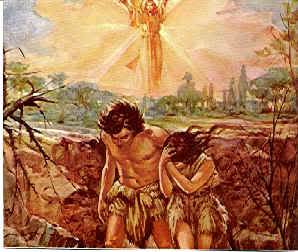
In the Book of Genesis we read that after Adam and Eve sinned against God, God pronounced a curse on them and all creation. “Cursed is the ground [earth] because of you” (Genesis 3: 17). Mankind would be subject to “painful toil” among “thorns and thistles.” After a difficult life, men and women would die, returning to the ground from which they were made.

Randy Alcorn, in his book Heaven, looks at the plan God set in motion to redeem his creation from the curse brought on by human sin. Regarding the connection between human sins and the earth, Alcorn writes,

Our welfare is inseparable from Earth’s welfare. Our destiny is inseparable from Earth’s destiny. That’s why the curse on mankind required that the earth be cursed and why the earth will also be resurrected when we are resurrected. The Curse will be reversed.

How did God deal with the curse? Through Christ.

As a result of the Curse, the first Adam could no longer eat from the tree of life, which presumably would have made him live forever in his sinful state (Genesis 3:22). Death, though a curse in itself, was also the only way out from under the Curse— and that only because God had come up with a way to defeat death and restore mankind’s relationship with him.

Christ came to remove the curse of sin and death (Romans 8:2). He is the second Adam, who will undo the damage wrought by the first Adam (1 Corinthians 15: 22, 45; Romans 5:15-19). In the Cross and the Resurrection, God made a way not only to restore his original design for mankind but also to expand it.

What will the New Earth, with the curse removed, look like?

In our resurrection bodies, we will again dwell on Earth— a New Earth— completely free of the Curse. Unencumbered by sin, human activity will lead naturally to a prosperous and magnificent culture. Under the Curse, human culture has not been eliminated, but it has been severely hampered by sin, death, and decay.

Before the Fall, food was readily available with minimal labor. Time was available to pursue thoughtful aesthetic ideas, to work for the sheer pleasure of it, to please and glorify God by developing skills and abilities.

But since the Fall, it’s been a sad tale for mankind.

[G]enerations have lived and died after spending most of their productive years eking out an existence in the pursuit of food, shelter, and protection against theft and war. Mankind has been distracted and debilitated by sickness and sin. Our cultural development has likewise been stunted and twisted, and sometimes misdirected— though not always.

Is everything that mankind has accomplished since the Fall sinful and evil? Has the Curse wiped out 100% of the goodness God introduced into his original creation?

Even though our depravity means we have no virtue that makes us worthy of our standing before God, we are nevertheless “made in God’s likeness” (James 3:9). Consequently, some things we do, even in our fallenness, such as painting, building, performing beautiful music, finding cures for diseases, and other cultural, scientific , commercial, and aesthetic pursuits, are good. The removal of the Curse means that people, culture, the earth, and the universe will again be as God intended.

Alcorn reminds us of the terrible price that Christ paid for removing the curse:

“Christ redeemed us from the curse of the law by becoming a curse for us” (Galatians 3: 13, ESV). God’s law shows us how far short we fall. But Jesus took on himself the curse of sin, satisfying God’s wrath. By taking the Curse upon himself and defeating it through his resurrection, Jesus guaranteed the lifting of the Curse from mankind and from the earth.

The removal of the Curse will be as thorough and sweeping as the redemptive work of Christ. In bringing us salvation, Christ has already undone some of the damage in our hearts, but in the end he will finally and completely restore his entire creation to what God originally intended (Romans 8:19-21). Christ will turn back the Curse and restore to humanity all that we lost in Eden, and he will give us much more besides.

#1 Post of 2014 – What Role Does Polygamy Play in Islam? Part 2

William Tucker, in his book Marriage and Civilization: How Monogamy Made Us Human, traces the links between Islam, polygamy, and violence. In part 2, we look at how polygamy coupled with Islam has continued to breed violence up to this very day.

Tucker describes the Islamic Turks:

Like Mohammed , the invading Turks, who founded the Ottoman Empire in the thirteenth century, ignored the Koranic limitation of four wives and collected palaces full of concubines. Indeed, the emblem of Ottoman rule for the European imagination was always the sultan and his harem. In order to avoid dynastic wars among the numerous potential heirs, the Sultan chose a successor, then locked all the others in a special prison on the fifth floor of the Topkapi Palace where, when the heir reached maturity, they were all strangled.

Tucker moves from the Turks to the Wahhabi Movement.

The Ottomans, of course, were not the only Islamic power practicing and promoting polygamy and its attendant customs. The Wahhabi Movement, born at the time of George Washington, rallied Sunni tribesmen of the Arabian desert to the banner that, once again, the Islam being practiced in Mecca was not the “true Islam.”

They crashed into the Holy City, smashing works of art, and destroying some of Islam’s most sacred shrines, including Mohammed’s tomb. Then they established the version of Islam that still dominates life in Saudi Arabia. The Saudis have spent millions of their oil wealth in spreading Wahhabism throughout the Muslim world via madrasas— schools that teach young boys the version of Islam that we see in al Qaeda, the Muslim Brotherhood, and the Taliban.

While the Wahhabis are strict Islamists, they are, like so many Muslims before them, liberals when it comes to the number of wives a Muslim man may take. Mohammed bin Laden, one of Arabia’s most successful businessmen and father of Osama, had fifty-four children by twenty-two wives.

So what is it like in modern-day polygamous, Islamic countries?

In such societies, the frustrations of lower-caste Arab-Muslim men fester. Since conquest is no longer really an option, only martyrdom remains. If they cannot practice polygamy in this life, they trust that they will enjoy the fruits of the afterlife with seventy-two virgins.

“But,” it is often objected, “many Islamist terrorists we’ve read about were already married and even had children. What could be motivating them?” This is to judge Muslim men by Western standards. In monogamous, Western society, marriage for a man means settling down, supporting a wife and children, and taking part in family life. But in polygamous societies wives are a sign of wealth. Having only one wife can be a sign of inferiority. There is no Nash Equilibrium in Islamic or any other polygamous society. The demand for women always exceeds the supply and no one ever has enough. For men of modest means, women can seem almost unattainable.

Tucker reports several recent stories out of the Islamic world:

In a 2004 New York Times Magazine article, a graduate student in his twenties described what it was like growing up in Saudi Arabia. He said that he had never been alone in the company of a young woman. He and his friends refer to women as “BMOs— black moving objects,” gliding past in full burkas. Brideprices are steep and men cannot think of getting married until they are well established in a profession. All marriages are arranged and it is not uncommon for the bride and groom to meet at their wedding. Those without money are out of luck.

During the last few years of the Hosni Mubarak administration, the Egyptian government became so worried about couples having to put off marriage that it began subsidizing bride-wealth payments and sponsored mass marriages. In reporting on the early days of the Arab Spring, the New York Times found “the long wait for marriage” to be the second most pressing grievance in Egyptian society, behind only general poverty.

So what happens because of this shortage of women?

Yet because of the shortage of women, young girls have value and families refuse to lower the price of their assets. For this reason, an enormous number of marriages are contracted between cousins so that wealth is kept in the family. The only other avenue, of course, is bringing younger and younger women into the marriage pool.

Muslim countries are the world champions of child marriage. In Yemen, 52 percent of girls are married before age eighteen and 14 percent before age fifteen. Some are betrothed as young as eight. In 2008, a ten-year-old Yemenite girl named Nujood Ali made headlines when she threw herself upon the mercy of a court, asking to be released from a three-month-old marriage to her thirty-two-year-old cousin who had repeatedly beaten her since their wedding.

Obviously there are more and more Muslims living in western countries where polygamy is illegal. We can only pray that monogamy takes hold in this, the second largest religion in the world.

#2 Post of 2014 – What Is a Step by Step Argument Showing that Christianity is True?

Post Author: Bill Pratt


Anyone who has read my blog for the last several years knows that I am a big fan of the book I Don’t Have Enough Faith to Be an Atheist by Norman Geisler and Frank Turek. I have quoted from the book many times and pointed my readers to it again and again.

One thing that I haven’t done, though, is given an outline of what the book is actually trying to accomplish. What Geisler and Turek attempt to do in the book is lay out a methodical, step by step process for arguing that Christianity is true. Here is the 12-step argument:

  1. Truth about reality is knowable.
  2. The opposite of true is false.
  3. It is true that the theistic God exists.
    1. Beginning of the Universe (cosmological argument)
    2. Design of the universe (teleological argument/anthropic principle)
    3. Design of life (teleological argument)
    4. Moral law (moral argument)
  4. If God exists, then miracles are possible.
  5. Miracles can be used to confirm a message from God.
  6. The New Testament is historically reliable.
    1. Early testimony
    2. Eyewitness testimony
    3. Uninvented testimony
    4. Eyewitnesses who were not deceived
  7. The New Testament says Jesus claimed to be God.
  8. Jesus’ claim to be God was miraculously confirmed by:
    1. His fulfillment of many prophecies about Himself
    2. His sinless and miraculous life
    3. His prediction and accomplishment of His resurrection
  9. Therefore, Jesus is God.
  10. Whatever Jesus (who is God) teaches is true.
  11. Jesus taught that the Bible is the Word of God.
  12. Therefore, it is true that the Bible is the Word of God (and anything opposed to it is false).

Notice that these 12 steps marshal evidence from philosophy, science, and history, and they all work together to build a logical argument which leads to the conclusion that the Bible is the Word of God. I am always bewildered when skeptics claim that Christian beliefs are based on nothing but wish fulfillment when books like this fill Christian bookshelves.

I have used this basic 12-point framework for many years and it has served me well. Most everything you learn about apologetics fits into this 12-point argument. In fact, at Southern Evangelical Seminary, where I received my Master’s degree, you had to take a class on these 12 points and your final exam was to write down the 12 points and briefly defend and explain each point.

If you have never purchased and read this book, do it today. You won’t be sorry.

#3 Post of 2014 – Why Don’t Christians Stone People to Death?

If you are a Christian, how many times have you heard a skeptic say, “If you believe that the Bible is really the Word of God, then why don’t you [fill in the blank with a divine command from Leviticus]?”

Since the first five books of the Bible (aka the Pentateuch, Torah, or Law) contain hundreds of commands that deal with all aspects of human life, there is plenty of material for the skeptic to choose from. The purpose of this “gotcha” tactic is to take a verse from the Law that offends 21st century ears and challenge the Christian’s lack of consistency.

After all, skeptics think, if Christians truly believed that the entire Bible was the Word of God, then we  would follow every command given in the Bible, right? Isn’t that just obvious? Since Christians don’t obey every command, then they are inconsistent and must not really believe that the Bible is the Word of God.

The skeptic argues that we actually get our moral values from the surrounding culture, just like everyone else. But if we get our moral values from the surrounding culture, then why don’t we jettison the Bible altogether? We obviously don’t need it.

What is wrong with this approach by the skeptics? The skeptic who quotes from the Law and asks Christians why we are not following the commands found in the Law has failed to read and/or understand the New Testament. How do I know that?

The NT clearly states in several places that the Law was fulfilled by Jesus and no longer applies to Christians. Here are a few passages proving the point:

“By calling this covenant ‘new,’ he has made the first one [the Law] obsolete; and what is obsolete and outdated will soon disappear.” (Heb 8:13)

“We who are Jews by birth and not sinful Gentiles know that a person is not justified by the works of the law, but by faith in Jesus Christ. So we, too, have put our faith in Christ Jesus that we may be justified by faith in Christ and not by the works of the law, because by the works of the law no one will be justified.” (Gal 2:15-16)

“Before the coming of this faith, we were held in custody under the law, locked up until the faith that was to come would be revealed.  So the law was our guardian until Christ came that we might be justified by faith.  Now that this faith has come, we are no longer under a guardian [the Law].” (Gal 3:23-25)

“But now, by dying to what once bound us, we have been released from the law so that we serve in the new way of the Spirit, and not in the old way of the written code [the Law].” (Rom 7:6)

These verses and others clearly state that Christians are not under any obligation to follow the divine commands given to the Israelites as they left Egyptian slavery and journeyed toward the Promised Land. As my seminary professor used to tell us, the Old Testament was written for us, but not to us. It was written to ancient Israel.

Now, does this mean that Christians should completely ignore the divine commands given to the Israelites? No, it doesn’t. But the question as to how we should apply God’s words to the Israelites to our lives today is an altogether different subject.

The bottom line for this blog post is that every time a skeptic throws a command from the Law at me and accuses me of being inconsistent, of not obeying one of God’s commands, I know that he hasn’t read the New Testament and understood one of its major themes – Christians are not under the Law!

#4 Post of 2014 – Commentary on Exodus 7-11 (The 10 Plagues)

Post Author: Bill Pratt

In chapters 7-12, the power of God would be demonstrated to Pharaoh and all the people of Egypt. Recall that Pharaoh told Moses and Aaron that he did not know their God, and God promised that he soon would. Ten plagues would be visited upon the Egyptians, with each successive plague bringing yet more devastation on top of the previous.
The ten plagues may have occurred over a period of about nine months, with the first beginning in the months of July or August, when the Nile typically floods. The first plague is described in verses 14-25 of chapter 7. These are the words Moses is to speak to Pharaoh: “With the staff that is in my hand I will strike the water of the Nile, and it will be changed into blood. The fish in the Nile will die, and the river will stink; the Egyptians will not be able to drink its water.”

In verses 19-21, Aaron held out his staff over the waters of the Nile and the waters did become blood (or red like blood, as it could be translated). As a result, “The fish in the Nile died, and the river smelled so bad that the Egyptians could not drink its water. Blood was everywhere in Egypt.”

Pharaoh’s magicians were able to use trickery to partially duplicate this first plague, and so Pharaoh pays no mind and leaves Moses and Aaron to return to his palace.

Why make the waters of the Nile turn into blood, or into blood-colored water? The Egyptians worshiped many different gods that were associated with natural objects. The Nile River, in particular, was associated with at least 3 major gods and goddesses (Hapi, Isis, and Khnum). Therefore, when the God of Israel turned the water into blood, rendering the water undrinkable, it was a clear demonstration of God’s superiority over the Egyptian gods and goddesses. Each of the subsequent plagues would also “defeat” other Egyptian gods.

It is also worth noting the reactions of both Pharaoh and his magicians. The magicians clearly believed that through their own trickery they could duplicate, at least partially, this sign from God. They see no reason to believe that the God of Israel is anything special at this point.

Pharaoh, likewise, does not seem to be overly impressed, given that his own magicians can duplicate the sign. As the plagues progress, it is interesting to see the attitudes of Pharaoh and his magicians transform from smug contempt for Moses and his alleged God, to fear and open acknowledgment of his power.

If we skip ahead to the time period just before the seventh plague, the hailstorm, God reminds us in clear language what his purposes are in bringing the devastation of the plagues on the people of Egypt. In chapter 9, verses 13-16, we read the following:

Then the LORD said to Moses, “Get up early in the morning, confront Pharaoh and say to him, ‘This is what the LORD, the God of the Hebrews, says: Let my people go, so that they may worship me, or this time I will send the full force of my plagues against you and against your officials and your people, so you may know that there is no one like me in all the earth. For by now I could have stretched out my hand and struck you and your people with a plague that would have wiped you off the earth. But I have raised you up for this very purpose, that I might show you my power and that my name might be proclaimed in all the earth.”

God’s purposes are the following: 1) to force Pharaoh to release the Israelites from captivity so that they may worship him, 2) to teach Pharaoh that there is no one like God, 3) to demonstrate his power so that his name would be proclaimed over the earth.

After nine plagues have taken place, over a period of nine or ten months, Pharaoh is still not willing to let the Israelites go. Up to this point Pharaoh’s responses to each plague have been the following: 1) Nile turned to blood – ignored the request of Moses; 2) Frogs – agreed to let Israelites leave for worship, then reneged; 3) Gnats – ignored his magicians’ suggestion that the Hebrew God’s power was real; 4) Flies – suggested the Israelites worship in Egypt instead of leaving; 5) Death of livestock – refused Moses’ request; 6) Boils – refused Moses’ request; 7) Hail – agreed to let Israelites leave for worship, then reneged; 8) Locusts – offered to let only the men go; 9) Darkness – agreed that people could go, but not their animals.

So finally, in chapter 11, verses 1-10, God tells Moses that only one more plague will be brought on Pharaoh and Egypt. This plague will be so awful that Pharaoh will drive them completely out of the land. Recall that Moses has been asking for three days of worship, but God is saying that Pharaoh will go beyond that request and ask them to leave forever.

What is the tenth plague? God, through Moses, explains what will happen:

About midnight I will go throughout Egypt. Every firstborn son in Egypt will die, from the firstborn son of Pharaoh, who sits on the throne, to the firstborn son of the slave girl, who is at her hand mill, and all the firstborn of the cattle as well. There will be loud wailing throughout Egypt—worse than there has ever been or ever will be again. But among the Israelites not a dog will bark at any man or animal.’ Then you will know that the LORD makes a distinction between Egypt and Israel.

This final plague, the death of the firstborn, would strike the Egyptians harder than all the others. In particular, the firstborn of Pharaoh was considered to be a god, and for him to be killed would be a clear divine demonstration of superiority by the God of Israel. And, so that there would be no doubt about God’s desire to have Pharaoh release the Hebrew slaves, God assures Pharaoh that no Israelites will be harmed. Death will pass over them.

#5 Post of 2014 – How Were People Who Lived Before Jesus Saved?

Post Author: Bill Pratt 

We know that today the contents of the gospel involve the deity, death, and resurrection of Jesus Christ. But what about people who lived before him?

Theologian Norm Geisler explains:

It seems that there are at least four sine qua non explicit soteriological beliefs (or “elements of saving faith”) for all times:

(1) God exists.
(2) We cannot save ourselves from our sinfulness.
(3) God’s grace is necessary for our salvation.
(4) We must believe in God and in His grace to receive salvation.

All of these are found in one crucial text: “Without faith it is impossible to please God, because anyone who comes to him must believe that he exists and that he rewards those who earnestly seek him” (Heb. 11:6).

The first, third, and fourth qualifiers are stated—(1) God exists, and (3) He graciously rescues those who (4) seek Him by faith—and the second is implied, i.e., (2) we sense the need to come to Him in faith and ask for His help, recognizing that we cannot overcome sin on our own. Without these aspects of faith (belief), it seems impossible for anyone, at any time, to be saved. This is the “universal plan of salvation.”

So what is this universal plan of salvation? How is it that Old Testament and New Testament believers both believed the same gospel?

While God’s stated content of salvation differed for Abraham and Paul, the same basic message was preached to both. Paul says there is only one gospel (Gal. 1:8), but he quickly clarifies that Abraham believed this one gospel (Gal. 3:8). The content as revealed to Abraham was,

[God] took him outside and said, “Look up at the heavens and count the stars—if indeed you can count them.” Then he said to him, “So shall your offspring be.” Abram believed the LORD, and he credited it to him as righteousness. (Gen. 15:5–6)

Geisler continues:

This act of faith is used in the New Testament as an example of how we receive justification before God (cf. Rom. 4:3). When Paul spelled out the contents of this same gospel (cf. Gal. 1:8), he included far more revelation; namely, explicit belief in the death and resurrection of the Lord Jesus Christ for our sins (cf. 1 Cor. 15:1–6).

The gospel itself did not change; however, required salvific belief regarding the content of that gospel did change. Even if it could be argued from certain verses (e.g., John 8:56; Gal. 3:16) that Abraham somehow foresaw the Messiah someday coming as his Seed, it would still not be demonstrated that all believers in the Old Testament era had to know and believe the gospel as later (more fully) revealed in order to be saved. There is no evidence that every saved person from that time comprehended and embraced this, nor did any of them know that Jesus of Nazareth was the foretold Promised One.

In summary, every person who has ever been reconciled to God has believed that God exists, has recognized that her sins have separated her from God, that only God can save her, and thrown herself on the grace of God to be saved.

#6 Post of 2014 – Are Believers Judged After They Die?

Many Christians believe the answer to this question is “no.” Of course, they would be wrong. The New Testament clearly claims that all people, believers and unbelievers, are judged for their works after they die. Randy Alcorn, in his book Heaven, lays out the biblical evidence for this view. Alcorn describes the first judgment, after we die, as the judgment of faith:

When we die, we face judgment, what is called the judgment of faith. The outcome of this judgment determines whether we go to the present Heaven or the present Hell. This initial judgment depends not on our works but on our faith. It is not about what we’ve done during our lives but about what Christ has done for us. If we have accepted Christ’s atoning death for us, then when God judges us after we die, he sees his Son’s sacrifice for us, not our sin. Salvation is a free gift, to which we can contribute absolutely nothing (Ephesians 2:8-9; Titus 3:5).

Most Christians are aware of this first judgment, but forget about the second, or final, judgment.

This first judgment is not to be confused with the final judgment, or what is called the judgment of works . Both believers and unbelievers face a final judgment. The Bible indicates that all believers will stand before the judgment seat of Christ to give an account of their lives (Romans 14:10-12; 2 Corinthians 5:10). It’s critical to understand that this judgment is a judgment of works, not of faith (1 Corinthians 3:13-14).

Alarm bells are going off in many Christian heads at this point. How can he say that Christians are judged for their works? After all, our faith in Christ is all that counts, not our works. Are we under the Law again? Why did Jesus die if our works matter? Read on….

Our works do not affect our salvation, but they do affect our reward. Rewards are about our work for God, empowered by his Spirit. Rewards are conditional, dependent on our faithfulness (2 Timothy 2:12; Revelation 2: 26-28; 3:21). Unbelievers face a final judgment of works as well. The Bible tells us it will come at the great white throne, at the end of the old Earth and just before the beginning of the New Earth (Revelation 20:11-13).

Believers, then, are judged on the works they performed for God after becoming believers. The greater the faithfulness, the greater the rewards in Heaven. The Bible doesn’t offer easy-believism, the idea that you trust Jesus one day, and then continue living as you did before. That concept is totally and completely contrary to everything the Bible teaches.

#7 Post of 2014 – Did Christians Steal from Egyptian Mythology?

Post Author: Bill Pratt

Generally I don’t post videos as I’m more of a fan of the written word, but sometimes I run across something that is just too good to not post. Check out this video from Lutheran Satire that does an accurate and funny debunking of the folks out there who claim that Christianity was just copied from older Egyptian myths.

httpv://youtu.be/s0-EgjUhRqA

#8 Post of 2014 – What Does “Inherit the Kingdom” Mean in 1 Cor 6:9-10?

Post Author: Bill Pratt

Duck Dynasty patriarch Phil Robertson recently cited 1 Cor 6:9-10 when asked about sin in a GQ article. Here is the passage:

Do you not know that the wicked will not inherit the kingdom of God? Do not be deceived: Neither the sexually immoral nor idolaters nor adulterers nor male prostitutes nor homosexual offenders nor thieves nor the greedy nor drunkards nor slanderers nor swindlers will inherit the kingdom of God. (NIV)

What everyone has been focused on is the fact that “homosexual offenders” is included in this passage. The apostle Paul is clearly giving a list of vices that should be avoided, with homosexual behavior included in the list.

But what hasn’t been discussed, at least not that I’ve seen, is what “inherit the kingdom of God” means. This phrase appears twice in these two verses, and clearly Paul is claiming that not inheriting the kingdom of God is a bad thing.

Some Christians will argue that this phrase refers to entrance into heaven, and that it is targeted at non-Christians who are not saved, but I think this is wrong. We know that a thief did go to heaven – the thief on the cross. In addition, common sense tells us that many people who have truly professed faith in Christ have subsequently been drunk, or slandered, or stolen. Right? So it follows that true Christians have also committed the rest of the sins in Paul’s list.

If “inherit the kingdom” doesn’t mean enter into heaven, then what does it mean? Theologian Joseph Dillow provides the answer in his book The Reign of the Servant Kings. Listen to what he says.

[Paul] is not warning non-Christians that they will not inherit the kingdom; he is warning Christians, those who do wrong and do it to their brothers. It is pointless to argue that true Christians could never be characterized by the things in this list when Paul connects the true Christians of v. 8 with the individuals in v. 9.

It is even more futile to argue this way when the entire context of 1 Corinthians describes activities of true Christians which parallel nearly every item in vv. 9-10. They were involved in sexual immorality (6:15); covetousness (probable motive in lawsuits, 6:1); drunkenness (1 Cor. 11:21); dishonoring the Lord’s table (1 Cor. 11:30–for this reason some of them experienced the sin unto death); adultery (5:1); and they were arrogant (4:18; 5:6).

Yet this group of people that acts unrighteously, . . . and that is guilty of all these things has been washed, sanctified, and justified in the name of the Lord Jesus Christ (1 Cor. 6:11)! They were washed and saved from all those things, and yet they are still doing them. That is the terrible inconsistency which grieves the apostle through all sixteen chapters of this book.

His burden in 6:9-10 is not to call into question their salvation (he specifically says they are saved in v. 11) but to warn them that, if they do not change their behavior, they will, like Esau, forfeit their inheritance. As Kendall put it, “It was not salvation, then, but their inheritance in the kingdom of God these Christians were in danger of forfeiting.”

This, of course, does not mean that a person who commits one of these sins will not enter heaven. It does mean that, if he commits such a sin and persists in it without confessing and receiving cleansing (1 Jn. 1:9), he will lose his right to rule with Christ. Those walking in such a state, without their sin confessed, face eternal consequences if their Lord should suddenly appear and find them unprepared. They will truly be ashamed “before Him at His coming” (1 Jn. 2:28).

According to Dillow, then, “inherit the kingdom” in the context of 1 Cor 6 is referring to rewards in heaven, not entrance into heaven. The Christian who persists in committing the sins enumerated by Paul will lose her rewards in heaven.

This is no small threat. Christians face losing a seat at the wedding feast, forfeiting their reign with Christ, and not hearing “Well done, good and faithful servant” at the judgment seat. I don’t know about you, but I don’t want to give up any of those things.

A Christian Apologetics Blog