In chapter 5 of Deuteronomy, Moses reviewed again with Israel the Ten Commandments. After this review, chapter 6 begins with Moses reminding the Israelites why they must follow the Law given to them by God, through Moses. It is “so that you, your children and their children after them may fear the LORD your God as long as you live by keeping all his decrees and commands that I give you, and so that you may enjoy long life.” In addition, it is “so that it may go well with you and that you may increase greatly in a land flowing with milk and honey, just as the LORD, the God of your fathers, promised you.”
It is impossible for the Israelites to enjoy long life and to prosper in the Promised Land if they do not follow the commands of God. There is no successful way forward for this new nation without loving obedience to their God.
Verses 4-9 are known to Jews as the Shema. These verses contain the fundamental truth of Jewish religion and the fundamental duties based on that truth. Observant Jews still recite these verses at least twice a day.
The fundamental truth is found in verse 4: “Hear, O Israel: The LORD our God, the LORD is one.” Peter C. Craigie, in The Book of Deuteronomy (New International Commentary on the Old Testament), explains the implications of this important verse:
The Israelites had already discovered the practical implications when they celebrated the Exodus in song: ‘Who is like you, O Lord, among the gods?’ (Exod. 15:11), a rhetorical question inviting a negative response—there were no gods like the Lord! In the Exodus, the Israelites had discovered the uniqueness of their God and that the Egyptian ‘gods’ could do nothing to stop the Lord’s people leaving Egypt. It was because they had experienced the living presence of their God in history that the Israelites could call the Lord our God. Thus the oneness and reality of the Lord were practical knowledge to the people.
But there were also theological implications and the context of this verse indicates its source as a direct revelation from God (v. 1). The word expresses not only the uniqueness but also the unity of God. As one God (or the ‘Unique’), when he spoke there was no other to contradict; when he promised, there was no other to revoke that promise; when he warned, there was no other to provide refuge from that warning. He was not merely first among the gods, as Baal in the Canaanite pantheon, Amon-Re in Egypt, or Marduk in Babylon; he was the one and only God and as such he was omnipotent. It was this all-powerful Unique God who imposed on Israel the charge to love him, thereby revealing another aspect of his character.
In verse 5 we find the fundamental duty of every Jew and Christian: “Love the LORD your God with all your heart and with all your soul and with all your strength.” In essence, this verse instructs us to love God with all of our being, with every part of us. Jesus referred to this verse as the greatest command.
Verses 6-9 command the Israelites to keep the Law on their mind at all times and to teach their children everything in the Law. Even though verse 8 was meant figuratively, some Jews, up to present day, have taken these verses literally and have actually tied small boxes containing Bible verses around their foreheads and forearms during particular religious holidays.
Verses 10-12 remind the children of Israel that all of the good things they will receive in the Promised Land will be given to them by God, not earned by Israel. The houses, cities, wells, and vineyards – everything – that they will take from the Canaanites, will be because of God’s promises to their forefathers. An interesting implication of these verses is that the Israelites, for the most part, are not to destroy the property of the Canaanites, but only drive the people out of the land.
In verses 13-19, God again reminds the Israelites that they are to only worship Him alone. If they do worship other gods, His anger “will burn against [them], and he will destroy [them] from the face of the land.” They are not to test the Lord, which means they are not to doubt His promises to them. If they keep His commands, their enemies will be driven away and they will inherit the land they were promised.
If an Israelite father is ever asked by his child why Israel must keep the commandments of God, he is to answer:
We were slaves of Pharaoh in Egypt, but the LORD brought us out of Egypt with a mighty hand. Before our eyes the LORD sent miraculous signs and wonders—great and terrible—upon Egypt and Pharaoh and his whole household. But he brought us out from there to bring us in and give us the land that he promised on oath to our forefathers. The LORD commanded us to obey all these decrees and to fear the LORD our God, so that we might always prosper and be kept alive, as is the case today. And if we are careful to obey all this law before the LORD our God, as he has commanded us, that will be our righteousness.
In summary, God saved Israel from slavery, delivered them to a new land, and provided them instructions (the Law) on to maintain a proper relationship with Him. As long as their relationship with God was first priority, they would prosper.
 Proponents of the various versions of the Documentary Hypothesis believe there must be 4 or more authors of the Pentateuch for several reasons, but the three most common are:
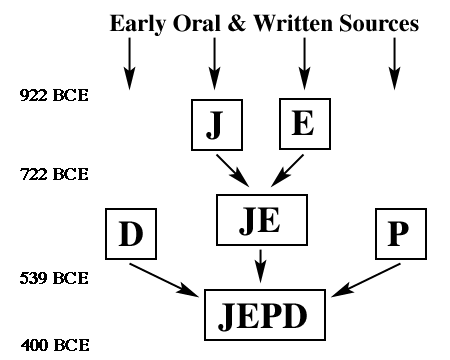 While Jews and Christians have traditionally believed that Moses was the primary author of the Pentateuch, some biblical scholars today reject that belief. Instead, these scholars believe that the Pentateuch was written over several centuries by several different authors and not finally compiled into its final form until just a few hundred years before Jesus was born.
 In chapters 7-12, the power of God would be demonstrated to Pharaoh and all the people of Egypt. Recall that Pharaoh told Moses and Aaron that he did not know their God, and God promised that he soon would. Ten plagues would be visited upon the Egyptians, with each successive plague bringing yet more devastation on top of the previous.
 At the beginning of chapter 19, the Israelites have finally reached the base of Mount Sinai, on the third day of the third month after the Exodus from Egypt (48 days). The people of Israel would reside at Mount Sinai for a full year – the rest of the Book of Exodus, all of the Book of Leviticus, and the first ten chapters of the Book of Numbers all take place here.
 , notes that this covenant “represents the separation of his chosen people from the general world population, or, stated in terms of the overall biblical plan of redemption, the beginning of the outworking of his intention to bring close to himself a people that will join him for all eternity as adopted members of his family.”
 Following the crossing of the Red Sea, the Israelites continued to travel south in the desert of the Arabian peninsula. As they moved further away from Egypt, they simultaneously moved further away from civilization. They became more and more hungry because there were few plants and animals for them to eat. This is the situation when Exodus 16 picks up.
 We’re all familiar with the verses in 1 Cor 1:10-12:
 suggest another possibility.
 In chapters 12 and 13, the Israelites escaped from Egypt due to the mighty hand of God, and have traveled some distance to the southeast, but not out of Egyptian territory. Chapter 14 begins the account of one of the most famous miracles performed by God for the Israelites, the parting of the Red (or Reed) Sea.
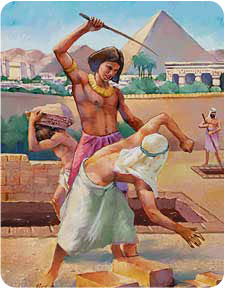 After successfully convincing their fellow Israelites that the God of their ancestors had sent them, Moses and Aaron boldly approach Pharaoh and request that he let them go to the desert to worship. Pharaoh’s response frames the events that will take place in chapters 7 through 12 of Exodus.