Category Archives: Bible Interpretation

Why Did Israel Still Want a King after Samuel’s Warning?

In 1 Samuel 8, the prophet Samuel warns the elders of Israel that they will be miserable under the rule of a human king who is like the kings of “all the other nations.” Instead of listening to Samuel, they demand a king anyway. Why would they do this when Samuel, a man they trusted and a man who spoke to God, educated them about the facts of life under a monarchy?

My seminary professor used to tell me that you can lead a horse to water, but you can’t make him drink. Facts alone often do not change a person’s choices or behavior. Dale Ralph Davis, in 1 Samuel: Looking on the Heart (Focus on the Bible Commentaries), puts it this way:

Israel’s muleheadedness should instruct us. It teaches us, for example, that knowledge or information or truth does not in itself change or empower. (Our society has not learned this. Watch television news clips that discuss some contemporary social or moral problem. Interviewers ask an expert what needs to be done. Usually the answer is that we must get or use funds to educate people about the harmful effects of the current villain. It is the education fallacy, and the fallacy assumes that if people only know that something will destroy them they will leave it alone. It never reckons with intrinsic stupidity.) Education may clarify; it cannot transform.

Human persons are composed of intellect, emotions, and will. You have to win over all three to get a person to change his behavior.  I can tell you what the consequences of committing a certain sin are, and I can have all my facts documented, but if you are emotionally bought into that sin, and if you desire that sin with all your heart, then my facts will simply bounce off you.

Davis concludes,

Israel then hears God’s wisdom but does not submit to it; God gives her instruction but she is not teachable. Which should lead God’s current people to cry out for a soft heart, for a teachable spirit, for preservation from the arrogance of our own stupidity. ‘The way of a fool is right in his own eyes, but a wise man listens to advice’ (Prov. 12:15, RSV).

Commentary on 1 Samuel 7-8 (Israel Asks for a King)

First and 2 Samuel were originally a single work that was separated into two books centuries after composition. These books continue the historical narrative where Judges and Ruth end. Since the books of 1 and 2 Samuel cover a period in Israel’s history of about 150 years (1120 to 970 BC), it seems that several sources were used to put together the books in their final form. Scholars aren’t sure when 1 and 2 Samuel were finally composed, but a date between 800 and 700 BC seems likely.

The events in 1 and 2 Samuel center around three main figures—Samuel, Saul, and David. First Samuel opens with the narrative of Samuel’s birth, an event which occurred about 1120 BC, and 2 Samuel concludes with David on his deathbed, which is dated at 971 BC.

Robert Bergen writes in the Apologetics Study Bible,

The books of Samuel are especially valuable for Christians because they lay the foundation for the all-important doctrine of the Messiah, the ultimate descendant of David who would sit on an everlasting throne ruling over God’s people and bring deliverance and justice. The promises God made to David in 2 Samuel 7 created hopes and expectations that the NT writers understood to have been fulfilled by Jesus.

The book of 1 Samuel starts with the birth of Samuel, the greatest judge and prophet since Moses and Joshua lived. During the first six chapters of the book, while Samuel is growing up, Israel suffers defeat at the hands of the Philistines, and even loses the Ark of the Covenant to them.

God punishes the Philistines by bringing plagues against them until they finally return the ark to the Israelites 7 months later. The Israelites keep the ark at a place called Kiriath Jearim, a settlement 10 miles northwest of Jerusalem, since the place the ark had been kept during previous centuries, Shiloh, had been destroyed by the Philistines. The ark would reside there for 20 years before Samuel’s public ministry would begin in chapter 7, verse 2.

In verses 2-6, we learn that after 20 years of mourning and repentance (roughly 1084 BC), the Israelites have reached a point where they are truly seeking God. We can only surmise that those 20 years of “repentance” were not genuine in the eyes of God. The Israelites were likely calling out to God for rescue from the Philistines, while at the same time still worshiping the false gods of Canaan.

But, after 20 years, Samuel senses that Israel is ready to sincerely turn back to God and he instructs them to stop worshiping the gods of Canaan and only worship the one true God. They agree to do so, and to memorialize this new commitment to God, Samuel calls for an assembly at a place called Mizpah. At Mizpah Israel gathers to admit their sin before God and ask for his forgiveness. Samuel also becomes the official leader of Israel at this time.

In verses 7-11, the Philistines decide to attack the Israelites during their assembly at Mizpah. The people of Israel ask Samuel to cry out to God for protection, and God answers his prayers with loud thunderclaps which frighten the Philistines and cause them to turn around and flee. Israel chases after the Philistines and wins a significant military victory.

Samuel commemorates their victory with a stone monument, and the Philistines do not attack Israel again during the rule of Samuel (approximately 30 years).

Chapter 8 resumes the narrative some 30 years later when Samuel has become an old man. Samuel has appointed his two sons to be judges, but they are both corrupt and not servants of God, like their father. The leaders of Israel come to Samuel and demand that he appoint a king “such as all the other nations have.”

Samuel, knowing this request from the elders of Israel is misguided, prays to God about it. God reveals to Samuel that Israel is rejecting God’s leadership over them, not Samuel’s. Nevertheless, he commands Samuel to accede to their demand for a king, but he wants Samuel to first warn them what will happen when their new king takes charge.

In verses 10-18, Samuel describes to Israel exactly how a monarchy will work. The king will take the people’s sons to build up his military, he will take their daughters to serve him and the officials in his government, he will take their choicest land, their servants, and their livestock to give to his officials, and he will demand a tithe of 10% from everyone to build his treasury. They will effectively become slaves to the king.

After hearing Samuel’s warning, the leaders of Israel respond, “We want a king over us. Then we will be like all the other nations, with a king to lead us and to go out before us and fight our battles.”

God grants their wish and promises them a human king. How sad for Israel. It is God who promised throughout the Torah (Pentateuch) to fight their battles for them, to drive out the Canaanites, to defeat their enemies. And that is exactly what God did for Israel when the people were worshiping and obeying Him. Recall the victories under Moses and Joshua. Recall the defeat of the Philistines under Samuel. In every battle, God was leading the army of Israel to victory, not a human king.

The fundamental problem with Israel is that they want to be “like all the other nations” instead of the holy nation that God had called them to be.

Was it wrong for Israel to ever ask for a king? No, because Deuteronomy 17 makes provision for a human king to rule over Israel. But, Deuteronomy 17 also commands Israel to only accept a king who God chooses. This king will be different from the kings of all the other nations, as he will be completely dedicated to serving God. He will not multiply his wealth, he will not multiply his wives, he will not build a bloated military, and he will study God’s word every day of his life. But Israel did not care about finding a king who loved God. They wanted to rush the process and find someone ahead of God’s timing.

Israel will have to suffer through a king not of God’s choosing to get to a king of God’s choosing. This king of God’s choosing would then become the ancestor of the King of kings, Jesus Christ Himself. Jesus will embody all the attributes that a king should have, ruling with perfect justice and mercy. All believers await the day when his reign begins!

Commentary on the Book of Ruth

The Book of Ruth is placed right after Judges in the Christian Old Testament, as part of the Historical Books section. As with most other books in the OT, the author is not known for sure, although Jewish and Christian tradition point to the prophet Samuel. If it was Samuel, it would have been written before the year 1000 BC, which is about the latest date for Samuel’s death.

The main purpose of the Book of Ruth is to communicate the ancestry of King David, the greatest king of Israel, who would rule from 1010 to 970 BC. The events in Ruth likely take place around 1100 BC, or toward the end of the rule of the judges. The period of the judges would end when Saul was anointed as the first king of Israel in 1050 BC.

The story of Ruth is also a sharp contrast to the depressing history of the period of the judges. In contrast to the Canaanized judges (e.g., Gideon, Jephthah, and Samson), the characters in Ruth are, for the most part, faithful to God, kind in their dealings with each other, and otherwise exemplary individuals.

The story of Ruth is meant to tell the story of the bloodline of King David, the greatest king Israel would ever have. Ruth is David’s great-grandmother, but the writer of the Book of Ruth wants to chronicle how exactly it came to be that the great grandmother of David could be a foreign woman from Moab.

The story begins in chapter 1 with a husband, wife, and two sons leaving Bethlehem, a small town in the territory of Judah, to go to Moab, a neighboring nation that had been unfriendly to Israel in the past (recall that King Balak from the Book of Numbers was from Moab). The reason given is that there was a famine in Bethlehem.

Why was there a famine? Remember that the books of Leviticus (26:18-20) and Deuteronomy (28:23-24) both recorded God’s commitment to cursing Israel with famine if they chased after foreign gods, and we know from the Book of Judges that they certainly did.

The two sons married Moabite wives, but after 10 years, the father, Elimelech, and the two sons, Mahlon and Kilion, had died. Naomi, the widow of Elimelech, decided to travel back to Bethlehem because she heard that God had brought an end to the famine.

Naomi tells her two daughters-in-law that they should abandon her and go back to their Moabite families so that they could remarry. In the ancient world, an unmarried woman was in a very precarious position, as she had to rely on her relatives to support her. Naomi knew that the girls would be better off going back to their own families and finding new husbands than coming with her to Bethlehem in a foreign land where remarriage was unlikely.

One of the daughters-in-law, however, refuses to abandon Naomi, and pledges not only to accompany her, but to adopt Naomi’s people as her own, and Naomi’s God as her own. Her name is Ruth.

In chapter 2, after Naomi and Ruth have returned to Bethlehem, they are faced with the difficulty of getting food for themselves. Ruth volunteers to go to a local farmer’s field and gather the leftover grain from the harvesting that was going on at the time. Daniel Block, in Judges, Ruth: An Exegetical and Theological Exposition of Holy Scripture (The New American Commentary), explains:

The Mosaic law displayed particular compassion for the alien, the orphan, and the widow by prescribing that harvesters deliberately leave the grain in the corners of their fields for these economically vulnerable classes and not go back to gather (liqqēṭ) ears of grain they might have dropped (Lev 19:9, 10; 23:22; Deut 24:19). As a Moabite and a widow Ruth qualified to glean on two counts. But for these same two reasons she could not count on the goodwill of the locals, hence her concern to glean behind someone who would look upon her with favor.

Ruth happens to choose the fields of a man named Boaz, a relative of Naomi’s former husband Elimelech. Boaz arrives to find Ruth working hard in his fields to pick up the scraps of grain left over by his harvesters. After finding out that Ruth has forsaken her own people and country to help her poor widowed mother-in-law, he rewards Ruth’s efforts by 1) telling her to continue working in his fields, 2) promising her safety, 3) offering her water whenever she needs it, 4) feeding her a meal of bread, wine vinegar, and roasted grain, 5) and instructing his workers to leave behind extra grain for Ruth to gather.

Ruth returns home that evening with a large amount of grain and explains to Naomi Boaz’s generosity. Naomi thanks God for Boaz and tells Ruth to continue going to Boaz’s fields until the grain harvest is over. A young, widowed woman like Ruth would be in great danger from being raped, and so not only was Ruth able to gather plenty of food at Boaz’s fields, she would not have to worry about her safety.

In chapter 3, Naomi instructs Ruth to seek the hand of Boaz in marriage. Her reasoning is that Boaz is a close relative of her late husband, and that he is therefore obligated to buy the property that Elimelech and his sons left behind, but also obligated to marry the widow of Elimelech’s son, Mahlon, so that she can bear children which will grow up to claim that property.

Land was passed on from father to son, and since Naomi’s sons were dead, there was nobody to whom Elimelech’s land could pass. Naomi herself was too old to conceive any more children, but her daughter-in-law, Ruth, was young and able to conceive and bear children. If Ruth had children, those children would grow up and inherit the land owned by their grandfather. Otherwise, Elimelech’s descendants would lose the land forever.

Ruth was to go to a public threshing floor where Boaz would be working, and wait for him to go to sleep. The threshing floor was being used by Boaz to thresh and winnow the grain he had harvested. John Reed, in The Bible Knowledge Commentary, provides the setting:

The people of Bethlehem took turns using the threshing floor. The floor was a flat hard area on a slightly raised platform or hill. In threshing, the grain was beaten out from the stalks with flails (cf. 2:17) or was trodden over by oxen. Then in winnowing the grain was thrown in the air and the wind carried the chaff away. The grain was then removed from the threshing floor and placed in heaps to be sold or stored in granaries.

Threshing and winnowing were a time of great festivity and rejoicing. Naomi knew that Boaz was threshing his grain on the day that she had chosen for her plan. She also knew that Boaz would be sleeping near his grain that night, to protect it.

When Boaz went to sleep, Ruth was to lay down at his feet, uncover his feet, and wait. This was a customary way for a woman to signal that she was asking a man for marriage.

When Boaz awakes, he is stunned to find Ruth asking him for marriage. He is surprised because he is much older than her, and she chose him over other younger men. We can assume that Ruth was a very attractive young lady!

There is, however, a catch. Boaz tells Ruth that there is a closer relative than he who must be given the first chance to buy Elimelech’s land and marry Ruth. If this other man decides not to take the opportunity, Boaz will.

In chapter 4, Boaz gathers the elders of the town and offers the closer relative the land and Ruth in marriage. The man declines and lets Boaz buy the land and take Ruth as his wife instead. Why might the other man have declined? The text doesn’t tell us explicitly, but it seems that he is without sons and he is afraid that if he has children with Ruth, then his lands will pass to her sons in the names of Elimelech, Mahlon, and Kilion.

At the end of chapter 4, we learn that Ruth and Boaz do have a son named Obed. Obed becomes the father of Jesse, and Jesse becomes the father of David, the greatest king of Israel.

God’s hand can be seen throughout this narrative. First, God causes the famine which drove Elimelech and his family to Moab. Second, the clear implication is that God was at work when Ruth “happened” to end up in the fields of Boaz. Of all the fields she could have chosen, it was clearly providential that she chose Boaz’s fields.

Third, Block points out that Naomi’s plan for Ruth to petition Boaz for marriage was fraught with danger:

Ruth’s preparations and the choice of location for the encounter suggest the actions of a prostitute. Under normal circumstances, if a self-respecting and morally noble man like Boaz, sleeping at the threshing floor, should wake up in the middle of the night and discover a woman beside him, he would surely have shooed her off, protesting that he had nothing to do with women like her. But if Ruth’s actions are questionable ethically, her demand that Boaz marry her are highly irregular from the perspective of custom: a foreigner propositioning an Israelite; a woman propositioning a man; a young person propositioning an older person; a destitute field worker propositioning the landowner. But instead of taking offense at Ruth’s forwardness, Boaz blesses her, praises her for her ḥesed, calls her ‘my daughter,’ reassures her by telling her not to fear, promises to do whatever she asks, and pronounces her a noble woman (ʾēšet ḥayil). This extraordinary reaction is best attributed to the hand of God controlling his heart and his tongue when he awakes.

Fourth, God ensures that it is Boaz who marries Ruth, not the other relative. Fifth, and finally, God sees to it that Ruth bears a child, Obed, who will be the grandfather of King David. Why does David matter so much? Because God promised to bring the Messiah through David’s descendants. Reed writes,

“Jesus Christ’s lineage, through Mary, is traced to David (Matt. 1:1–16; cf. Rom. 1:3; 2 Tim. 2:8; Rev. 22:16). Christ is therefore called “the Son of David” (Matt. 15:22; 20:30–31; 21:9, 15; 22:42). Christ will someday return to earth and will sit on the throne of David as the millennial King (2 Sam. 7:12–16; Rev. 20:4–6).”

God fulfills his promises of a Messiah and a future redeemer of mankind, Jesus Christ, through the faithful actions of Ruth and Boaz, two godly people who lived 1000 years before He was born.

Why Did God Bless Samson When He Acted So Badly?

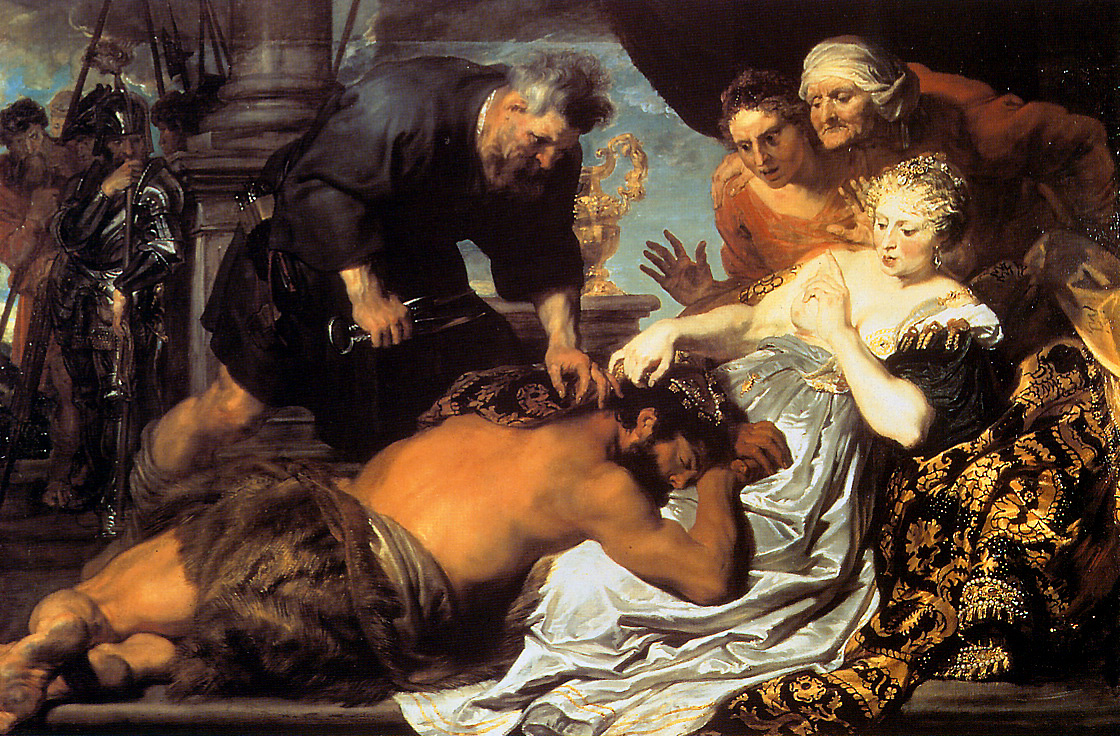
We learn from Judges 13-16 that Samson is anything but a godly man. He lies, he has illicit sexual relations with multiple women, he kills indiscriminately at times, and he is impulsive and self-centered. How could this man be blessed by God with supernatural physical strength when he acted so badly? Was God rewarding Samson’s bad behavior?

The answer to this question is that nobody deserves God’s blessings as we are all sinners. Maybe we don’t sin as badly as Samson, but we still sin. God bestows His blessings because of His grace, which means God gives us good things that we do not deserve.

God’s purpose in blessing Samson was to raise up a leader of Israel who would drive the Philistines out of the land that Israel was given by God, to complete the settlement of the Promised Land that had begun centuries earlier. The Philistines had been allowed to subjugate the Israelites for 40 years because of Israel’s worship of Canaanite gods, and God was ready to extend grace to Israel.

Samson was the man God chose to get this done. Throughout the Bible, God chooses deeply flawed human beings to accomplish His work. All of Israel’s prophets, judges and kings failed to live perfect, godly lives. Israel had to wait until the birth of Jesus Christ to finally see what a perfect follower of God would look like, a man in whom no sin could be found.

Commentary on Judges 13-16 (Samson)

Toward the end of the period of the judges lived one of the most famous judges, Samson.  He lived from approximately 1089 BC to 1049 BC. The story of Samson begins in chapter 13, which is where we pick up the narrative.

In verse 1, we learn that God is once again punishing Israel by allowing them to be ruled over by the Philistines. Who were the Philistines? According to F. Duane Lindsey in The Bible Knowledge Commentary, the

Philistines arrived in large numbers during the invasion of the Sea Peoples about 1200 B.C. They organized a pentapolis or confederation of five cities—Gaza, Ashkelon, and Ashdod on the strategic coastal highway, and Gath and Ekron on the edge of the Shephelah or Judean foothills (cf. Josh. 13:3). When the Philistine aggression moved eastward into the land of Benjamin and Judah, the Israelites accepted that domination without resistance (cf. 14:4; 15:11) till the time of Samuel (cf. 1 Sam. 7:10–14).

For what evil was Israel being punished? Serving the false gods of the Canaanites instead of serving the one true God who brought them out of Egypt and into the Promised Land.

After 40 years under Philistine rule, God is going to bring a deliverer forth to begin to rescue his people from the Philistines. The angel of the Lord appears to a Danite woman who is barren and tells her that she will conceive and birth a child who will be dedicated to God for his entire life. The boy would be a Nazirite (see Numbers 6:1-21), which meant that he was never to cut his hair, he was to abstain from drinking any alcohol, and he was never to have contact with a corpse.

Notice that verse 5 says that he will only begin to deliver Israel from the Philistines, a modest pronouncement. The final defeat of the Philistines would be left to Samuel (1 Sam. 7:10–14) and David (2 Sam. 5:17–25). Immediately we are suspicious that this particular judge will not live up to the potential he has.

One would expect that a man dedicated to God before his birth, a man who was a divinely appointed deliverer of Israel, would lead an exemplary and godly life. Instead, we will see that Samson is a deeply flawed man who personifies all that is wrong with Israel.

In chapters 14-15, the writer records several incidents from Samson’s life. We learn that God gives Samson supernatural physical strength at particular times. Due to this God-given strength, Samson personally kills hundreds of Philistines and becomes a “leader” of Israel. What is interesting is that Samson never leads others into battle or appears to administer the affairs of Israel in any official way. He simply keeps the Philistines at bay because they are scared of him as an individual. Daniel Block, in Judges, Ruth: An Exegetical and Theological Exposition of Holy Scripture (The New American Commentary), summarizes Samson’s life:

No other deliverer in the Book of Judges matches his potential. Called prenatally by Yahweh, stirred as a youth by the Spirit of Yahweh, empowered with extraordinary gifts by Yahweh, and granted exceptional opportunities for heroism by Yahweh, the narrator devotes more attention to Samson than to any other deliverer. Despite all these advantages and this special attention, Samson accomplishes less on behalf of his people than any of his predecessors. . . . Though Samson is impressive as an individual, he turns out to be anything but a military hero. He never leads Israel out in battle; he never engages the Philistines in martial combat; he never experiences a military victory. All his accomplishments are personal; all his victories, private.

As we begin chapter 16, we learn that Samson forms a relationship with a Philistine woman named Delilah. The rulers of the Philistines bribe Delilah to discover Samson’s source of physical strength. Three times Delilah begs to know Samson’s secret, and three times he lies to her.

Finally, the fourth time she asks, Samson reveals that he has been dedicated to God since birth, and this is symbolized by the fact that his hair has never been cut. If his hair is cut, his physical strength will be like that of any other man.

Samson falls asleep and Delilah cuts his hair. The Philistine rulers overpower him and carry him off as a prisoner. His eyes are gouged out and he is kept as a slave doing hard labor.

In verses 23-31, Samson is brought before a large number of Philistine leaders at a temple to entertain them. In his last act, he asks God for physical strength one more time so that he can knock down two columns that support the temple roof, thus killing all of the people on the roof of the temple. What a sad end to a life with so much potential.

What are we to make of Samson’s story? Daniel Block invites us to compare Samson to the nation of Israel:

Samson is a Wunderkind, miraculously born by the will of God. Samson is called to a high life of separation and devotion to Yahweh. Samson has a rash, opportunistic, and immature personality. Samson is inexorably drawn to foreign women, like Israel was drawn to foreign gods (both ‘play the harlot’). Samson experiences the bondage and oppression of the enemy. Samson cries out to Yahweh from his oppression. Samson is blinded (cf. 1 Sam 3:1–3). Samson is abandoned by Yahweh and does not know it.

Samson, as the “greatest” deliverer of Israel during the time of the judges, is a great disappointment. Contrast him to the greatest deliverer of Israel and all mankind, Jesus Christ. Jesus was a Wunderkind born by the will of God who fulfilled all of his potential. He perfectly obeyed God the Father in everything and defeated man’s greatest enemies, sin and death.

Don’t Judges 1:8 and 1:21 Contradict Each Other?

Judges 1:8 says, “The men of Judah attacked Jerusalem also and took it. They put the city to the sword and set it on fire.” The surface implication is that the city of Jerusalem was completely destroyed and everyone inside of it killed.

Just a few verses later, Judges 1:21 says, “The Benjamites, however, failed to dislodge the Jebusites, who were living in Jerusalem; to this day the Jebusites live there with the Benjamites.” This verse clearly states that the Jebusites, the inhabitants of Jerusalem, were not removed and still live there! How can both of these verses be true?

Daniel Block, in Judges, Ruth: An Exegetical and Theological Exposition of Holy Scripture (The New American Commentary) offers one explanation:

The most likely explanation recognizes that Jerusalem was a border city, located on the boundary between Judah and Benjamin. The city that was burned in v. 8 probably identifies the Jebusite fortress on the southern hill of the city, between the Kidron and Hinnom Valleys, and which David eventually captured and made his capital. Accordingly, the unsuccessful Benjamite effort in v. 21 must have been directed against the citadel farther north. The fact that David had to reconquer Jerusalem suggests the Judahite hold on the city was weak and short-lived. It seems that shortly after they had sacked it the Jebusites moved in from the north and took control, which they then held for several centuries.

Block’s explanation assumes that Jerusalem actually consisted of at least two separate citadels. But if there really was only one citadel named Jerusalem at that time, then how would we explain the apparent difficulty?

Paul Copan and Matt Flannagan argue in their book Did God Really Command Genocide?: Coming to Terms with the Justice of God that we have to be careful when interpreting phrases like “put the city to the sword.” This phrase may have been hyperbolic in its original context. In other words, the author and the original readers would have understood that the entire city was not destroyed and that all the people inside were not literally killed. Instead there was a military victory that left at least some of the city intact and some of the residents alive.
We use hyperbolic language all the time today. Think about sports. Sports fans frequently say things like, “My team destroyed yours” or “We annihilated them last night.” Are we really talking about destruction and annihilation? No, obviously not. We simply mean that one team defeated the other. We use the exact same kinds of phrases when we talk about military battles.

Other hyperbolic phrases found in the Old Testament are “utterly destroy,” “put to the edge of the sword,” “leave alive nothing that breathes,” “leaving no survivors,” and “man and woman, young and old.” These kinds of phrases were commonly used among the people living at this time in history. Many times in the historical books of the Bible we see reports of “complete annihilation” of a city or group of people, only to see this same city or people group alive and well later on, often in the same book (compare Joshua 10:39 to 11:31 and Joshua 11:21 to 15:13-14).

So, a second plausible explanation for the seeming contradiction of verses 8 and 21 is that verse 8 should be understood hyperbolically. Whether you are convinced by this explanation or by Daniel Block’s explanation, there is not actually a contradiction.

Commentary on Judges 1-2 (Disobedience and Defeat)

The Book of Judges continues the historical narrative where Joshua ended. The author of Judges is unknown, although Jewish tradition ascribes authorship to the prophet Samuel. Samuel may have written portions of the book, but there were likely later editors that compiled it into its final form. Scholars date the final composition of Judges from some time between 700 and 1000 BC.

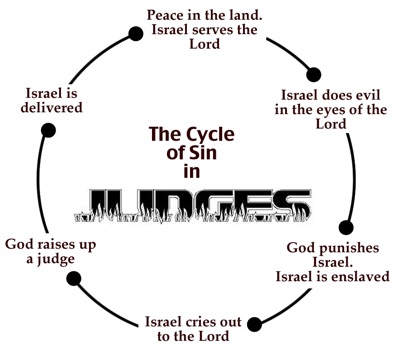
Judges describes the period between the initial conquests of Canaan (around 1400 BC) to the time of the first king of Israel, Saul (around 1050 BC). Thus the entire span of the book is about 350 years. During this time period, Israel consists of 12 separate tribes, all of whom experience cycles of 1) sinning against God, 2) being oppressed by various Canaanite groups, and 3) then being rescued by judges. The book mentions 12 judges, but there were likely many more.

The judges were men and women, usually military leaders, whom God used to rescue the different tribes in Israel from their Canaanite oppressors. Why is it that the Israelites were not taking all the Promised Land as they had been commanded? Why is it they were losing military battles against their enemies? Sin. The theme of the Book of Judges is the “Canaanization of Israel.” Instead of obeying God, the Israelites adopted the practices of the very people who God sent them to drive out of the land.

As we begin looking at chapter 1 in Judges, it is helpful to understand the historical context that Israel is within. The Chronological Study Bible: New King James Version summarizes the situation:

Having established at least a foothold in the land of Canaan, Israel now organized itself into a loose confederation of independent tribes. The link connecting these clans was their God. The tribes celebrated common religious festivals at the shrine where the ark of the covenant was kept. The shrine was movable, but it was most often located at Gilgal and Shiloh. The tribal confederation had military purposes as well. When an outside people invaded, the clans were to join in a holy war. Some leader would take the initiative and summon the tribes to battle. These leaders, for the most part, we call the judges. The judges led makeshift armies, but they did not have to face the forces of the major empires. Through most of the period of the judges, Egypt and the countries of Mesopotamia were weak and preoccupied with internal problems. The wars of the Book of Judges are waged against unconquered Canaanites and such small neighboring nations as Edom, Midian, and Ammon.

Verses 1-10 in chapter 1 of Judges describes the first actions of Israel after Joshua’s death. God commands the tribe of Judah to set out from Gilgal (Israel’s home base at this time) and take the land promised to them (see this map to remember where Judah was given land).

The tribe of Simeon would go along with Judah since Simeon’s allotted land was inside of Judah’s. The actual men, Judah and Simeon, had been full brothers, both having Leah as their mother and Jacob as their father.

Verses 4-10 describe successful military campaigns against Canaanites and Perizzites living in Bezek, against the city of Jerusalem, and against the “Canaanites living in the hill country, the Negev and the western foothills.” They also successfully conquered the city of Hebron.

In verses 17-21, we learn that the Judahites continued to attack additional cities: Zephath, Gaza, Ashkelon, and Ekron. In verse 19, however, we start to see the first signs of failure. The writer records that Judah was unable to drive “the people from the plains, because they had iron chariots.” We also see that the “Benjamites, however, failed to dislodge the Jebusites, who were living in Jerusalem; to this day the Jebusites live there with the Benjamites.”

Verses 27-36 report even more disturbing news. The other tribes had utterly failed to drive out the Canaanites living in their allotted territories. What was going on? Didn’t God promise to give the Israelites the Promised Land? Wasn’t He going ahead of them to win their military victories for them? How is it that most of the tribes of Israel were not, in fact, driving out the Canaanites? Chapter 2 gives us the answer.

In verses 1-3, the angel of the Lord (possibly God Himself) accuses the Israelites of disobedience. They had made covenants with the Canaanites and had adopted their religious, cultural, and ethical practices. Thus God would “not drive them out before you; they will be thorns in your sides and their gods will be a snare to you.”

Verses 6-23 now give the more detailed account of exactly what went wrong after Joshua died. Things started out well during the lifetimes of the elders who witnessed the miracles of the conquest under Joshua. After that generation died off, the next generation, who had not witnessed the miraculous events of the conquest, began to worship the gods of the Canaanites.

Recall that the worship of the Canaanite deities went hand in hand with all of the other immoral practices of the Canaanites: incest, bestiality, child sacrifice, etc. The Israelites were turning their backs on God and becoming “Canaanized.” God tells them that they will be trapped, ensnared by the false gods of Canaan. Daniel Block, in Judges, Ruth: An Exegetical and Theological Exposition of Holy Scripture (The New American Commentary) writes,

When the Israelites observed the prosperity of the Canaanites, the latter’s’ gods seemed to offer so much: fertility, prosperity, security. But Yahweh hereby turns their twisted theological thinking against them. Rather than finding new freedom in the religious structures of the Canaanites, the Israelites would be caught in the trap of their gods, like a fly in a spider’s web.

God was angry over their sin and handed them over to their enemies. In fact, God was actively enabling their enemies to defeat them every time they went out to battle! This is exactly what God promised He would do if Israel disobeyed.

From time to time, the people of Israel would remember God, cry out in distress, and beg Him for help against their enemies. During these periods, verses 16-19 explain that God would raise up a judge. The judge was a military leader who would rescue the Israelites from their oppressors. But as soon as the judge died, the people would revert back to worshiping the gods of Canaan. The rest of the Book of Judges records the actions of several judges that ruled over the various tribes of Israel for next few centuries.

Daniel Block concludes:

By way of reflection, from this text the reader has learned the Israelite [Yahwist] definition of apostasy. Apostasy means abandoning Yahweh in favor of other gods; it means claiming to be the people of Yahweh while acting as if one belongs to Baal. This perfidy is expressed in transgressing Yahweh’s covenant, not walking in his way, not listening to his voice, not heeding his commandments, especially his call for exclusive allegiance. Unlike the gods of the surrounding nations, Yahweh would tolerate no rivals. There is no room in Yahwistic faith for accommodation to pagan notions or customs. At the same time the reader is reminded of the patience and grace of Yahweh.

The cycle of disobedience, repentance, forgiveness, and deliverance would repeat over and over again. In fact, the tribes of Israel during this time are representative of humanity. We constantly disobey, repent, gain forgiveness and deliverance from our sins, and then disobey again. The only person who ever broke this cycle is Jesus Christ. He is the first and only human to never disobey God the Father. His sinless life broke the endless cycle recorded in the Book of Judges.

Commentary on Joshua 21-24 (Joshua’s Farewell)

In chapters 7-12 in the book of Joshua, the Israelites, led by Joshua, conquer the cities of 31 kings (see the list in chapter 12). God, as promised, drove the Canaanites out ahead of the Israelites, and the Canaanites who stayed behind to defy Israel were easily defeated by Israel’s armies.

Once these 31 kings were defeated, God reminds Joshua that much land is still to be taken, but that it is time to allocate all of the land to the 12 tribes of Israel. Some of the land that will be allocated is already in the hands of Israel, but some of the land still needs to be cleared of Canaanites. Take a look at this map to see how the land was allocated to the 12 tribes in chapters 13-21.

After all the land has been assigned, we arrive at, arguably, the climax of the Book of Joshua. In chapter 21, verses 43-45, we read:

So the LORD gave Israel all the land he had sworn to give their forefathers, and they took possession of it and settled there. The LORD gave them rest on every side, just as he had sworn to their forefathers. Not one of their enemies withstood them; the LORD handed all their enemies over to them. Not one of all the LORD’s good promises to the house of Israel failed; every one was fulfilled.

Verse 43 summarizes chapters 13-21, verse 44 summarizes the victories of chapters 1-12, and verse 25 summarizes the entire book of Joshua. Even though there was more land to be taken, Israel now had a firm foothold in the Promised Land. All of the promises God made to Abraham, Isaac, and Jacob had been fulfilled. The tiny nation of Israel was able to take possession of land occupied by nations far greater and far stronger than they. This would have been completely and utterly impossible without God doing the work!

We now pick up the narrative in chapter 23. Joshua, who is 110 years old, senses that he is close to death and makes preparation for his departure. He first summons the leaders of Israel and reminds them of everything God has done for them over the previous 30 years in verses 1-5. In addition, he reassures them that the land they have been allotted, but not yet possessed, will be given over to them by God, as He promised.

In verses 6-16, Joshua warns Israel to carefully follow the Law of Moses and not associate with the nations of people still living among them. Remember that the primary reason that Israel is dispossessing the Canaanite nations is that their cultures and religious systems are extremely depraved. They are characterized by incest, bestiality, child sacrifice, and ritualized prostitution, among other things. If Israel assimilates with these people, then they too will start to commit the same awful sins and they will “perish from this good land.”

How will they perish from the land? God Himself will punish them. “If you violate the covenant of the LORD your God, which he commanded you, and go and serve other gods and bow down to them, the LORD’s anger will burn against you, and you will quickly perish from the good land he has given you.”

Israel is not exempt from God’s justice. He has punished the Canaanites for their sin, and He will do exactly the same to Israel.

In chapter 24, Joshua again summons all of Israel to hear his final words to them. Joshua rehearses the entire redemptive history of Israel, starting with Abraham’s calling and continuing all the way up to the current day, where they have seen for themselves the fulfilment of God’s promises to them.

Having seen all that God has done for them, what should the people do? “Fear the Lord and serve Him with all faithfulness.” Joshua commands Israel to choose between the gods of Egypt, the gods of Canaan, or Yahweh. For Joshua, the choice is simple: “But as for me and my household, we will serve the LORD.”

The people of Israel respond to Joshua that they, too, will serve the LORD. Joshua doubts their allegiance to the LORD and reminds them again that God will destroy them if they turn to the gods of the Canaanites, but the people respond twice that “We will serve the Lord our God and obey him.” Joshua then renews the covenant between God and Israel at Shechem, setting up a large stone as a witness to the covenant. The stone would remind the people of the promises they made to God.

Chapter 24 closes with the deaths of Joshua and Eleazar. After 30 years of leading Israel, Joshua was buried in his allotted land. The author notes that “Israel served the LORD throughout the lifetime of Joshua and of the elders who outlived him and who had experienced everything the LORD had done for Israel.”

Why Does God’s Character Matter When It Comes to Interpreting Difficult Passages?

A couple of years ago I wrote a series of blog posts on why the God of the Old Testament is worthy of worship. We looked at His mercy, His love, and His truthfulness, along with several other attributes. At the time, I had several commenters tell me that considering all the attributes of God is of no help when interpreting difficult passages in the Bible. We should take those difficult passages as isolated texts.

This has always seemed flatly wrong to me. Every time we listen to a person speak, we are interpreting what they say based on what we know about that person. If a friend of mine has been caught lying several times, and he makes an excuse for why he has to cancel a night out with me, I’m going to guess that he’s lying again and that his excuse is fabricated.

A friend of mine who has always been truthful with me will get the benefit of the doubt when he cancels a night out. I will assume he is telling the truth.

It is standard procedure for lawyers and prosecutors to bring forth evidence in a trial about various witnesses’ character so that the jury can decide whether to believe the witnesses or not.

So when someone says that we can’t take into account God’s character when we interpret difficult Bible passages, I immediately know they are applying a double standard. They are refusing to hear the evidence of God’s good character.

If we take the conquest of Canaan as an example, a person who is considering God’s character would not immediately jump to the conclusion that God is capriciously trying to wipe out a particular ethnic group (committing genocide) just because of where they live. Since we know that God is loving, just, and merciful, we would search the Scriptures to find out exactly what’s going on.

We would discover that God had waited hundreds of years before judging the people of Canaan, thus exhibiting His mercy. We would learn that He was first, and foremost, driving them out of the land, as opposed to killing them. We would learn that God’s justice demands that He punish a people who routinely have sex with animals, commit incest, and sacrifice their children to pagan gods by burning them. We would see that God held the people of Israel to the exact same standards which He applied to the Canaanites. We would learn that God welcomed anyone in Canaan who renounced their detestable sinful lifestyle and turned toward Him, thus demonstrating His love for all mankind.

The bottom line is this: it is completely illegitimate to read any difficult passage in the Bible and draw conclusions about what God is affirming or commanding, without first considering what the Bible overwhelmingly teaches about God’s moral qualities. To do so is to apply a standard to God that is utterly foreign to the standard we apply to anyone else whose words we are trying to understand.

Commentary on Joshua 3-6 (The Fall of Jericho)

In chapter 3, the Israelites are finally ready to enter the Promised Land, but to get there, they have to cross a river, the Jordan River. Given that there were tens of thousands of Israelites, young and old, along with all of their supplies, how would they do this? The Jordan River was not a small stream that could easily be crossed. Dale Ralph Davis, in Joshua: No Falling Words (Focus on the Bible), describes the scene:

The actual Jordan Valley between the Sea of Galilee and the Dead Sea varies in breadth from 3 to 14 miles. Within this valley is the river’s floodplain, which is 200 yards to 1 mile wide. The floodplain was packed with tangled bush and jungle growth. . . . Then there was the river channel itself, which—if similar to nineteenth-century (AD) conditions—was from 90 to 100 feet broad, with a depth of 3 feet at some fords to as much as 10 to 12 feet. The current was strong because of the drop in elevation (a drop of 40 feet per mile near the Sea of Galilee and an average of 9 feet per mile overall). This means that the river Israel faced that springtime was no placid stream but a raging torrent, probably a mile wide and covering a mass of tangled brush and jungle growth.

Only a miracle from God will get the nation into Canaan. God’s instructions to Joshua are simple. Tell the people to prepare themselves. Send the Levite priests out first, carrying the Ark of the Covenant. The people are to stay back 1000 yards and watch the miracle. When the priests, carrying the ark, step foot in the water, the water will stop flowing. The people will cross the river on dry ground while the priests stand in the middle of the river with the ark.

And this is exactly what occurred. See verses 15-17 below:

Now the Jordan is at flood stage all during harvest. Yet as soon as the priests who carried the ark reached the Jordan and their feet touched the water’s edge, the water from upstream stopped flowing. It piled up in a heap a great distance away, at a town called Adam in the vicinity of Zarethan, while the water flowing down to the Sea of the Arabah (the Salt Sea) was completely cut off. So the people crossed over opposite Jericho. The priests who carried the ark of the covenant of the LORD stood firm on dry ground in the middle of the Jordan, while all Israel passed by until the whole nation had completed the crossing on dry ground.

Now that the Israelites have crossed the Jordan, they must conquer the city of Jericho, and this is where the story picks up in chapter 6. How would Israel defeat a heavily fortified city with thick outer walls? God would provide a way. Here are his instructions to Joshua in verses 3-5:

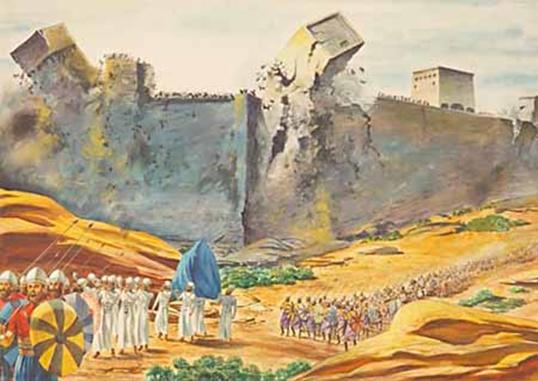
March around the city once with all the armed men. Do this for six days. Have seven priests carry trumpets of rams’ horns in front of the ark. On the seventh day, march around the city seven times, with the priests blowing the trumpets. When you hear them sound a long blast on the trumpets, have all the people give a loud shout; then the wall of the city will collapse and the people will go up, every man straight in.

Notice that the ark would lead the way around the city. The ark represented God’s presence among the people, so the clear message to Israel, and to us, is that God gets the glory! He enabled Israel to enter the city. Joshua and his army could have never conquered Jericho on their own.

Verses 8-20 describe, in detail, the Israelites following Joshua’s orders exactly as commanded. Once the city walls fell, Joshua gave further instructions. They were to destroy all of the people and livestock within the city, and they were to remove any valuable items, objects made of gold, silver, bronze, or iron, and place them into the treasury of the Lord. The people were not to take any valuables for themselves. God warns them that if they take any valuables for themselves, they will be destroyed just as the people of Jericho.

Everything in the city was to be dedicated to God. Dedication, in the context of the conquest of the Promised Land, means either total destruction or donation to the treasury of God. The people of Israel were not to benefit from the destruction of Jericho, for they were serving as God’s instrument of justice.

Before we finish chapter 6, let’s review why God is giving Canaan to Israel. Is it because they are deserving of the land? Because they are a righteous people who are morally superior to all other nations of the world? No. Deuteronomy 9:1-6 gives the rationale for God driving out the Canaanites and giving the land to Israel: the sinfulness and wickedness of the Canaanites (their sins are catalogued in Leviticus 18:1-20:27). God was judging the Canaanites with Israel. That is why every bit of Canaanite culture needed to be destroyed.

The only people in Jericho who believed in God, who trusted Him for their salvation, were Rahab and her family. They were rescued by the two spies and taken to safety outside the camp of Israel. Joshua then cursed the city and anyone who would try to rebuild it.

Finally, we see that “the LORD was with Joshua, and his fame spread throughout the land.” Thus the conquest of the Promised Land had begun.