Why Ought I Act Morally? Part 2

Post Author: Bill Pratt

In the previous post, I explained atheist Dan Barker’s argument in a debate he had with Christian Matt Slick.  If you don’t remember what I said, please go back and quickly remind yourself, as this post won’t make sense otherwise.  Below I pick up where I left off.

What I don’t understand is how Barker jumped from telling us that morality consists of natural inclinations produced by a blind, purposeless, process of evolution (that is solely interested in how we reproduce) to a moral duty of doing less harm.  Barker has committed the classic faux pas of moving from an is to an ought.  He tells us what morality is – a natural inclination toward behaviors that promote human survival – and from there tells us that we ought to do whatever causes less harm.  But where does this duty come from?

If I am a person who is naturally inclined to lie about what atheists say in debates, why should I attempt to fight this inclination?  After all, maybe evolution needs some liars in the gene pool.  I am just playing my role in the survival of the species.  If Barker were to say to me, “Lying about what atheists say causes harm, so you shouldn’t do it,” I would say, “What duty do I have to follow Barker’s personal opinion about morality?”  What authority does he have to legislate my behavior?  If he answers that he is summarizing what Nature already is telling me, then I would want to know what duty I have to follow the commands of a mindless, purposeless, blind process?

Please notice that I have not even questioned Barker’s maxim of do less harm.  I am just assuming for this argument that he has correctly summarized our natural inclinations.  His maxim actually represents a utilitarian calculus which presents several major problems that philosophers have called attention to, but his idea of doing less harm can’t even get off the ground until he has provided a rational reason to accept it.  Many atheists seem to completely miss this point.  Atheists are able to rattle off dozens of moral theories which claim to summarize our natural moral inclinations.  But the question is why should anyone follow their theories?  What rational reason is there to let their moral theories dictate moral commands to anyone?

Dan Barker is a self-appointed ambassador for the periodic chart of elements (Nature).  The elements have spoken and Dan is translating for us.  But it’s even more bizarre than that.  Not only do non-intelligent and non-personal atoms have no authority to legislate, but they legislate contradictory things.  After all, the same Nature that produced Mother Theresa produced Hitler.  They both followed their natural inclinations, so how can I ever say which one was right and which was wrong?  Nature may need both of them for the species to survive so that it would actually be immoral to stop Hitler from doing what he was naturally inclined to do.

Barker’s world ultimately has no legitimate source for moral authority.  He could never tell us who is giving moral commands that has the legitimate authority to do so.  Based on his moral philosophy, I do not know why I should rationally be moral.

Why Ought I Act Morally? Part 1

Post Author: Bill Pratt

This week I’ve been listening to a debate between Matt Slick (Christian) and Dan Barker (atheist) on whether humans can be good without God.  Barker’s argument during the debate struck me as illogical, and here’s why.

Barker explained that moral values are merely natural inclinations that are built into human beings due to the long process of evolution.  These inclinations vary from person to person across a statistical distribution.  Some people feel a strong inclination to help the poor and some don’t.  Some people are strongly opposed to rape and some are not.

For every natural, moral inclination there is a statistical bell curve across humanity.  Evolution has bequeathed moral inclinations to humans, but to varying degrees.  At one point, Barker even said that it may be evolutionarily necessary for this bell curve to exist.  To give an example, it may be that if everyone was strongly opposed to murdering the innocent, this may not best advance the survival of the human race.  We can’t have everyone acting like Mother Theresa or else our species might die out.  The converse is also true: a world full of Hitler’s would also kill off the human race.

I agree with Barker that some people have stronger moral inclinations than others and that some of this variation may be genetic.  What I don’t understand is the next move he made in the debate.

He then offered his definition of behaving morally: do less harm.  For Barker, this phrase neatly encapsulates the diverse natural instincts that evolution has given us.  In essence, Barker is saying, “Nature has caused us to have these inclinations and if I had to come up with a phrase to describe what these inclinations are telling us to do, it is ‘do less harm.'”  Barker is acting as Nature’s ambassador and explaining to us in a command what she actually wants from us.  From then on, Barker repeatedly stated that humans ought to do less harm, with the situation determining how that plays out.

In the next post, I will explain why Dan Barker’s approach does not work.  See you then.

Can the Mind Be Explained by Physics?

Post Author: Bill Pratt

Some naturalists are betting on it, because ultimately physical laws, in their worldview, have to explain everything.  For the naturalist, there is nothing but physical reality which is governed by physical laws.  That being the case, everything, including the human mind, must be reduced to the purely physical and mechanistic.

Philosophers have pointed out serious problems with this attempt to reduce the mind to physics.  In a fascinating discussion of the origins of modern science, philosopher Richard Swinburne explains that mental states have been purposefully excluded by scientists because mental states were not seen as anything that science could measure or investigate.  Here is Swinburne:

Thermodynamics was conceived with the laws of temperature exchange; and temperature was supposed to be a property inherent in an object.  The felt hotness of a hot body is indeed qualitatively distinct from particle velocities and collisions.  The reduction was achieved by distinguishing between the underlying cause of the hotness (the motion of the molecules) and the sensations which the motion of molecules cause in observers. . . .  But this reduction has been achieved at the price of separating off the [sensation] from its causes, and only explaining the latter.  All reduction from one science to another dealing with apparently very disparate properties has been achieved by this device of denying that the apparent properties (i.e., the ‘secondary qualities’ of colour, heat, sound, taste, etc.) with which one science dealt belonged to the physical world at all.  It siphoned them off to the world of the mental.

But then, when you come to face the problem of the sensations themselves, you cannot do this.  If you are to explain the sensations themselves, you cannot distinguish between them and their underlying causes and only explain the latter.  In fact the enormous success of science in producing an integrated physico-chemistry has been achieved at the expense of separating off from the physical world colours, smells, and tastes, and regarding them as purely private sensory phenomena.  The very success of science in achieving its vast integrations in physics and chemistry is the very thing which has made apparently impossible any final success in integrating the world of mind into the world of physics.

Swinburne’s point is profound.  Modern science was never meant to deal with the mind and its mental states.  Not only that, but its very avoidance of explaining the mind is what has made it so successful.  Naturalists who demand that science explain the mind are asking it to do the impossible.  Maybe the mind is not reducible to physical laws.  Maybe it’s just the opposite – physical laws are ultimately reducible to The Mind.

Why Should I Care What Your Kids Are Watching?

Post Author: Bill Pratt

The conventional wisdom these days is that what you do in your home is your business.  If you have children, and you let them watch inappropriate TV shows or movies, then who am I to judge?  After all, what you allow your kids to consume doesn’t affect me.  Sometimes you’ll hear people say, “If you don’t like that movie or TV show, then don’t watch it.  Change the channel.”  You have your life and I have mine.

In the real world, however, everything you do in your home, and especially everything you let your kids do in your home, does affect me and my family.  None of us lives on an island by ourselves.  We are all interacting with other individuals in our community every day.  The media that your kids consume influence how they think, talk, and otherwise behave.

Since my kids go to school with your kids, then how your kids behave is going to directly impact my kids every day of the school week.  When your kids speak on the phone to my kids, they are influencing them.  When your kids play with my kids on sports teams, they are influencing them.

All of us impact the people with whom we interact.  C. S. Lewis uses the metaphor of ships in a fleet.  As the ships sail in a tight formation toward their destination, it is imperative that each ship be in proper working order.  If one ship is damaged and loses its steering mechanism, then it can accidentally run into other ships, causing them damage, and negatively affecting the entire fleet.

In the same way, each person is a ship in the fleet of our community.  As we damage ourselves, we will end up damaging others around us.  Living in a community gives me a reason to care about what your kids are watching.  Ethicist Francis Beckwith elaborates on this point:

These [inappropriate TV] programs convey messages and create a moral climate that will affect others, especially children, in a way that is adverse to the public good. Hence, what troubles [concerned] citizens is that you and your children will not change the channel. Furthermore, it concerns these people that there is probably somewhere in America an unsupervised ten-year-old who is, on a consistent basis, watching late night HBO or listening to radio shock-jock Howard Stern. Most of these people fear that their ten-year-olds, who are not watching or listening to such programs, may have to interact socially with the unsupervised ten-year-old. Others, who may not have young children, are concerned for the declining moral health of their communities, which is sometimes manifested in an increasing level of rudeness, disrespect, incivility, crime, or verbal and physical violence.

Let me be the first to say that our household is not perfect; there is much we could do to improve our media consumption.  My point is not to cast my family as completely innocent victims.  My point is to make a case for why we should be concerned about how people in our community are raising their children.  I am trying to raise awareness of the concept of the public good.  We are all sailing in a fleet together.

If you aren’t concerned about the media’s effect on your children, then think about my children and change the channel.

Do the Creeds Matter? Part 2

Post Author:  Darrell

In my last post, I conducted a poll as to whether or not the Nicene Creed is relevant and authoritative in Christianity today.  Thus far, the results are as follows:  48% believe it to be both relevant and authoritative, 21% believe it to be relevant, but not authoritative, and a relatively small number (17%) believe it to be completely irrelevant.  Given the tone of my post, you will find it no surprise that I fall in line with the majority opinion, holding the Nicene Creed to be both relevant and authoritative.

Those who oppose the idea of the creeds being relevant and authoritative often appeal to the doctrine of sola scriptura, i.e., the doctrine that scripture alone is authoritative.  The general claim is that the Bible is the only authoritative source on Christian doctrine and life, and, as a result, the creeds can’t possibly carry any authority.  This position grew out of the classic and radical reformers reaction to papal abuses, and quite honestly, I can understand the sentiment behind it.

However, those who hold this position often fail to realize that while our beliefs may be rooted in scripture, it is often not scripture itself that is believed.  Instead, our beliefs are based upon our interpretation of scripture.  For example, while the Bible says that God is one, it does not tell us exactly how God is one. Nevertheless, most conservative Christians assert that God is one in nature, essence, and being.  These words and this belief are not explicitly taught in the Bible.  Instead, they are inferred based upon what the Bible does say and are thus, an interpretation of the biblical teachings relative to the nature of God.

Personally, I believe this is exactly what the creeds are: correct interpretations of scripture contained in short statements of faith.  However, I believe that their connection to Apostolic Tradition and the culmination of Church history have demonstrated them to be authoritative.  Most of the creeds were hard won, coming at the expense of much blood, sweat, and tears.  In large part, they have served as a source of unity for Christians, placing fences that help to delineate orthodoxy from heresy and heterodoxy.  The Nicene Creed came out of a long, hard fought battle with the Arian Heresy (Mormonism’s ancient cousin) and answered the question of how God is one once and for all.

Admittedly, the belief that the creeds are authoritative is a position of faith.  Epistemological certainty is impossible in an area such as this.  However, it is a position of faith that is supported by good reason, logic, and evidence.  In addition, those who believe they can’t be authoritative because “scripture alone is authoritative” hold their position to their own peril.  For, if the creeds can’t be authoritatively correct because they aren’t scripture, how do you know your interpretation is correct and authoritative, and by what authority do you judge differing positions to be wrong?  After all, your interpretation isn’t scripture.

Have a blessed day!

Darrell

Are There Things that Really Bother You about Christianity? – #1 Post of 2010

Post Author: Bill Pratt

Does it bother you that the Bible is composed of 66 different books instead of one single tome?

What about the fact that there were errors made in copying some of the Bible manuscripts over the last few thousand years?

Does it cause you to doubt Christianity because there are some difficult passages in the Bible?

Do you wish Jesus didn’t say some of the harsh things he said?

Do you find it strange that the biblical authors come from vastly different backgrounds (e.g., shepherds, kings, fishermen)?  Or that they composed poetry, historical narrative, allegory, and apocalyptic letters instead of a theological/moral textbook with each point being carefully outlined (e.g., “see section 11.3.4.7 for why murder is wrong”).

Does it irritate you that Jesus only ministered for a few years and covered a limited range of topics?

Are you worried about the way the canon of Scripture developed over time in the church instead of God sending Scripture to earth in a black obelisk, like  in the movie 2001: A Space Odyssey?

Do you wish Jesus and the apostles had addressed more social ills than they did?

Listen carefully: If these kinds of things really eat at you, you have either rejected Christianity or you have erected barriers around your faith so that you can shut off your brain and not think any more.

You see, what you fail to realize is that God has chosen to use flawed and fallible human beings in the framework of human history to accomplish his purposes.  We are included in his plans and he allows us to be important actors in the drama he has written, but there is a catch with this approach: Christianity turns out to be messier than some of us would like.

Jesus is both divine and human; the Bible is both divine and human.  Both of these are tenets of Christianity, so why do so many of us want to drop the human part of the Bible and the human part of Jesus?

Jesus, as the God-man, was sinless during his life in earth, but that doesn’t mean he was some kind of emotionless Spock with no feelings and no passion.  The Bible, because it is divinely inspired, is inerrant in what it teaches, but that doesn’t mean that God had to compose the Bible as a dry textbook that dropped from the sky one day, avoiding all human interference.

Learn to appreciate the fact that God has included humanity in his plans.  The sooner you do, the better you’ll understand Christianity.

Top Ten Myths about Homosexuality – #2 Post of 2010

Post Author: Bill Pratt

I have written previously on why the state should not endorse gay marriage. I received numerous comments on that post and if you bother to read through all of them, you will find that they quickly move toward the question of whether the gay lifestyle is good for those in it and whether those in it should be raising children.

As a continuation of that discussion, I want to point my readers to a pamphlet written by the Family Research Council called “The Top Ten Myths About Homosexuality.” The pamphlet is well written and seems to be well researched, with copious citations of scientific papers.

Below are the ten myths which are expanded upon in the article.

Myth No. 1: People are born gay.

Fact: The research does not show that anyone is “born gay,” and suggests instead that homosexuality results from a complex mix of developmental factors.

Myth No. 2: Sexual orientation can never change.

Fact: Thousands of men and women have testified to experiencing a change in their sexual orientation from homosexual to heterosexual. Research confirms that such change does occur—sometimes spontaneously, and sometimes as a result of therapeutic interventions.

Myth No. 3: Efforts to change someone’s sexual orientation from homosexual to heterosexual are harmful and unethical.

Fact: There is no scientific evidence that change efforts create greater harm than the homosexual lifestyle itself. The real ethical violation is when clients are denied the opportunity to set their own goals for therapy.

Myth No. 4: Ten percent of the population is gay.

Fact: Less than three percent of American adults identify themselves as homosexual or bisexual.

Myth No. 5: Homosexuals do not experience a higher level of psychological disorders than heterosexuals.

Fact: Homosexuals experience considerably higher levels of mental illness and substance abuse than heterosexuals. A detailed review of the research has shown that “no other group of comparable size in society experiences such intense and widespread pathology.”

Myth No. 6: Homosexual conduct is not harmful to one’s physical health.

Fact: Both because of high-risk behavior patterns, such as sexual promiscuity, and because of the harm to the body from specific sexual acts, homosexuals are at greater risk than heterosexuals for sexually transmitted diseases and other forms of illness and injury.

Myth No. 7: Children raised by homosexuals are no different from children raised by heterosexuals, nor do they suffer harm.

Fact: An overwhelming body of social science research shows that children do best when raised by their own biological mother and father who are committed to one another in a lifelong marriage. Research specifically on children of homosexuals has major methodological problems, but does show specific differences.

Myth No. 8: Homosexuals are no more likely to molest children than heterosexuals.

Fact: Sexual abuse of boys by adult men is many times more common than consensual sex between adult men, and most of those engaging in such molestation identify themselves as homosexual or bisexual.

Myth No. 9: Homosexuals are seriously disadvantaged by discrimination.

Fact: Research shows that homosexuals actually have significantly higher levels of educational attainment than the general public, while the findings on homosexual incomes are, at worst, mixed.

Myth No. 10: Homosexual relationships are just the same as heterosexual ones, except for the gender of the partners.

Fact: Homosexuals are less likely to enter into a committed relationship, less likely to be sexually faithful to a partner, even if they have one, and are less likely to remain committed for a lifetime, than are heterosexuals. They also experience higher rates of domestic violence than heterosexual married couples.

I ask you to go read the entire article to get the details behind these claims; they are backed up by research citations. The bottom line is this: science shows that the gay lifestyle is generally destructive of those in it and we should not, as a society, be promoting it.

Does this mean that every gay person experiences the problems cited in the research? Obviously not. We’re dealing with statistics and probabilities, so there are absolutely gay people who are exceptions to the research findings. However, the gay marriage movement is asking for a state endorsement of their lifestyle, and the only way we can approach this issue is to look statistically at those who practice the lifestyle.


Can God Be in the Presence of Sin? – #3 Post of 2010

Post Author: Bill Pratt

The Bible clearly teaches that God is morally perfect and holy, that he hates sin.  Habakkuk 1:13 says that God is too pure to look on evil.  Christians often say that God cannot allow any sin in his presence.

But, this is not the whole story.  There are also several instances in the Bible where Satan and other demons are said to be in God’s presence (e.g., Job 1:6; 2 Chron. 18:18-21; Rev. 12:10).  In addition, the prophet Isaiah, himself a sinful man, was in the presence of God, as recorded  in Isaiah 6.

We also know that God is omnipresent, which means he is present everywhere.  “‘Am I only a God nearby,’ declares the Lord, ‘and not a God far away?  Can anyone hide in secret places so that I cannot see him?’ declares the Lord.  ‘Do not I fill heaven and earth?’ declares the Lord” (Jer. 23:23-24).  If he is present everywhere then he cannot but be in the presence of sinful creatures.

So what are we to make of all this?  I think the simple answer is that Habakkuk 1:13 is a commentary on God’s moral perfection and holiness.  It is not meant to be a statement about proximity.  In fact, the full rendering is, “Your eyes are too pure to look on evil.”  But we know God does not literally have eyes!  God is spirit (John 4:24) and does not have a physical presence.

The Bible teaches that God is opposed to sin and evil, that he is holy and righteous.  We know that eventually he will quarantine evil from good when he creates the New Heaven and Earth (Rev. 21).  At that time, God will physically separate those who love him from those who don’t.  Those who love him will no longer be in the presence of sin from that point forward.

Until then, God tolerates the presence of sin in order to accomplish his purposes with mankind.  Thank goodness, because if God truly could not be in the presence of sin, none of us would be here!

Did Ancient Non-Christians Write about Jesus? Part 1 – #4 Post of 2010

Post Author: Bill Pratt

Recently I was in a discussion with a skeptic of Christianity, a man who had been Roman Catholic for 55 years, and then decided that he couldn’t believe Christianity any longer.  During our conversation, he asked what historical evidence I could provide that Christianity was true, so I immediately went into the material in the New Testament.  After listening to me for a few minutes, he told me that all of that material was mythical and legendary, and he wanted to know if I had anything outside of the New Testament.

Now, this is like saying, “Aside from your multiple eyewitnesses, do you have any good evidence?”  But nonetheless, I started to provide non-Christian sources that mention Jesus, only to be stopped cold.  He claimed that there was no extra-biblical, non-Christian evidence of Jesus’ existence in the first two centuries, and that he, in fact, doubted that Jesus ever existed.

I’ve spoken to many skeptics over the years and I have heard a few of them take this position, but it is rare.  From what I know, there are virtually no reputable historians who deny the existence of Jesus.  According to historian Edwin Yamauchi, the idea that Jesus never existed is indeed extreme.  “From time to time some people have tried to deny the existence of Jesus, but this is really a lost cause.  There is overwhelming evidence that Jesus did exist.”  But rather than just make that assertion, what is some of that evidence?

During my conversation, I mentioned the Jewish historian Josephus as one important example of non-Christian evidence, but my skeptical friend confidently told me that Josephus never mentioned Jesus.  Let’s take a look.

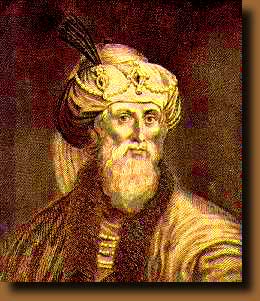
Josephus was a very important Jewish historian, born in A.D. 37, who wrote most of his four works toward the end of the first century.  Yamauchi explains, “His most ambitious work was called The Antiquities, which was a history of the Jewish people from creation until his time.  He completed it in about A.D. 93.”   Josephus writes about James, the brother of Jesus, and Jesus himself in The Antiquities.

In the first mention, Josephus recounts how a high priest, Ananias, takes advantage of the death of the Roman governor, Festus (also mentioned in the New Testament), to have James, the brother of Jesus killed.  With the previous governor dead, and the new one not yet arrived, Ananias could take the law into his own hands.

Festus was now dead, and Albinus was but upon the road; so he assembled the Sanhedrin of judges, and brought before them a man whose name was James, the brother of Jesus, who was called Christ, and some others; and when he had formed an accusation against them as breakers of the law, he delivered them to be stoned.

Here we have Josephus mentioning Jesus, James, and Festus, all New Testament characters.  We also have corroboration that some people were referring to Jesus as the Christ, which means Messiah, in the first century.  Yamauchi claims that no scholar “has successfully disputed this passage.”  Bottom line: my skeptical friend was mistaken.

There is more from Josephus, plus other ancient sources, and we’ll continue to deal with them in subsequent posts.  Make sure you come back!


Who Wrote the Gospel of Matthew? – #5 Post of 2010

Post Author: Bill Pratt

Although the author did not record his name within the text itself (a common practice in the ancient world), the first book found in the New Testament (NT) has historically been attributed to the writing of Matthew, a tax collector and one of the twelve disciples of Jesus.  Although some NT scholars doubt the authorship of Matthew, there are good reasons to believe that he was, indeed, the author of the first gospel.

There are at least two lines of evidence that can be rallied to the defense of Matthew: (1) the superscription of the ancient manuscripts and (2) the patristic witness.

A superscription is text added to an ancient manuscript by a scribe for purposes of identification; it acts as a title.  According to NT scholar D. Edmond Hiebert, the first gospel’s “identifying superscription, ‘The Gospel According to Matthew,’ is the oldest known witness concerning its authorship.”   Scholars believe the superscription was added as early as A.D. 125 and the “superscription is found on all known manuscripts of this gospel.”   This fact is a powerful testimony to the uniformity of evidence with regard to the authorship of Matthew.

The second line of evidence is the patristic witness.  The early church fathers were unanimous in crediting the gospel to Matthew.  Hiebert claims, “The earliest is the testimony of Papias, bishop of Hierapolis, dating to the first half of the second century.”

Following Papias is Irenaeus “who wrote his famous Against Heresies around A.D. 185.”

The next church father to attribute authorship to Matthew is Origen, who wrote in the early third century.  He is quoted by Eusebius, who wrote in the early fourth century.

Finally, Eusebius himself, in the early fourth century, documents that Matthew wrote the first gospel.

There is an unbroken witness to Matthew as the author of the first gospel going back to at least the middle of the second century, and there is no contradictory witness found in any of the church fathers.

Due to the fragmentary nature of documentary evidence in the ancient world, our ability to trace back authorship to within 100 years of the original writing of the first Gospel is exceptional.  Surely this presents a persuasive case for Matthean authorship.

A Christian Apologetics Blog