All posts by Bill Pratt

If Jesus Is God, Why Did He Get Tired?

Post Author: Bill Pratt

If Jesus is God, and God is uncaused, immaterial, omniscient, omnipotent, and eternal (and lots of other things), then don’t we have a problem with Jesus being a real man who lived in 1st century Palestine?  After all, Jesus grew tired, but God doesn’t get tired; Jesus sometimes didn’t know things, but God knows everything; Jesus died, but God can’t die; Jesus has a human body, but God doesn’t have a body.  I think you get the point.  How does the Christian church deal with this problem?

Well, before we get to the Christian church, one approach that has been taken by some religious groups over the last two millennia is just to give up on the idea that Jesus is God.  If he is less than God, then all these questions go away.  Mormons and Jehovah’s Witnesses are two groups that took this approach, but they are just the latest in a long line.  The problem with this approach is that it contradicts the Bible’s clear teaching that Jesus is God (see the series of posts on how we know Jesus is God).  So this approach fails to take seriously the biblical data.

The approach that the Christian church has taken is to accept the fact that the Bible teaches that Jesus is both God and man.  In the early church, there was a couple centuries of debate about how this works, until the Council of Chalcedon came together in AD 451 to settle the issue.  Here is the creed that resulted from the Council:

We, then, following the holy Fathers, all with one consent, teach men to confess one and the same Son, our Lord Jesus Christ, the same perfect in Godhead and also perfect in manhood; truly God and truly man, of a rational soul and body; consubstantial with the Father according to the Godhead, and consubstantial with us according to the Manhood; in all things like unto us, without sin; begotten before all ages of the Father according to the Godhead, and in these latter days, for us and for our salvation, born of the Virgin Mary, the Mother of God, according to the Manhood; one and the same Christ, Son, Lord, Only-begotten, to be acknowledged in two natures, unconfusedly, unchangeably, indivisibly, inseparably; the distinction of natures being by no means taken away by the union, but rather the property of each nature being preserved, and concurring in one Person and one Subsistence, not parted or divided into two persons, but one and the same Son, and only begotten, God the Word, the Lord Jesus Christ, as the prophets from the beginning have declared concerning him, and the Lord Jesus Christ himself has taught us, and the Creed of the holy Fathers has handed down to us.

What does all that mean?  It means, among other things, that Jesus is one person composed of two natures: human and divine.  The creed repeats the words Godhead and Manhood several times to hammer the point home.  So, whenever we ask any question about Jesus, we have to specify whether we are asking about his divine nature or his human nature.  In his divine nature, he is omniscient, eternal, and uncaused.  In his human nature, he was tired, he needed food, he didn’t know everything, and he even died.  Two natures, two sets of questions about Jesus.

The church never went so far as to try and explain how exactly Jesus’ two natures interacted; they set boundaries around what was acceptable, based on Scripture, and captured it in the above creed.  Many theologians have attempted to go further with this doctrine and explain in more detail how this is possible, but these details, to my knowledge, have never been formally adopted into creeds of the church.
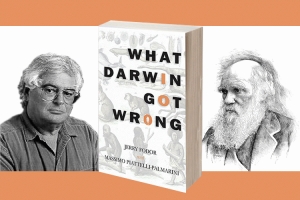
Two Atheist Academics Take On Darwinism

Post Author: Bill Pratt

If I could count how many times I’ve been told that only ignorant, fundamentalist Christians doubt the truth of Darwinian evolution, I would be a rich man!  Alas, the worst nightmare of Darwin defenders occurs when non-Christians, and non-theists at that, write books criticizing Darwin’s ideas.

In their new book, What Darwin Got Wrong, Jerry Fodor and Massimo Piattelli-Palmarini do exactly that.  I have often told people that my doubts about Darwin have little to do with my religious beliefs, but from what I know of science.  Here are two atheists that likewise find the science to be lacking.

Salon.com interviewed Fodor recently and asked several provocative questions.  In one exchange, they ask Fodor about the standard evolutionary story about giraffes evolving long necks because they needed to adapt to food high up in trees.  Here is Fodor’s response:

The inference runs that there’s this creature that has a long neck, so this creature was selected for having a long neck. That inference is clearly invalid. A creature that has a long neck may have that neck because a different trait was selected, and the long neck came along with it.

And in a sense, there are no such things as traits. The environment selects creatures. Animals can have long necks and toenails, but if you try to break such creatures apart into traits and you say, OK, “What selected this trait?” and, “What selected that trait?” you’ve made a mistake right from the beginning. The disintegration of the organism into traits is itself a spurious undertaking. Biologists have said for a long time that organisms aren’t like Swiss apples, you can’t tap them on a table and have them fall apart into distinct wedges. Selection is operating on whole organisms.

In another exchange the interviewer asks what the implications are for Darwinism being wrong.  Fodor answers:

If this is true, then we need to rethink the implications of Darwinism. Maybe the right question to ask is not what environmental variables are doing selection, but what kinds of complexes are they selecting on. One sees, even without God, how this Darwinian story could turn out to be radically wrong. You could see a massive failure of the evolutionary project, because wrong assumptions were made.

Again, these guys aren’t fundamentalist creationists, but they recognize that the Darwinian story of the origin of species just does not work.  There are far too many holes in it.  Make sure you read the entire interview with Fodor.  It’s well worth it.

Are Christians Arrogant for Believing They Are Right?

Post Author: Bill Pratt

One of the most common accusations hurled at Christians is arrogance.  If Christians believe that only they are right about who God is, that is arrogant.

Usually, but not always, I hear this accusation from atheists.  They say something like, “If you think that the Christian God is the only true God, then you are excluding the rest of world who believe in other gods.  You are also excluding those who don’t believe in any god.  That betrays an incredible arrogance and narrow-mindedness.”

Typically these kinds of statements put Christians on the defensive and a few of us, unfortunately, will even claim that all religious concepts of God are basically the same so as not to seem narrow-minded.  After all, who wants to be seen as arrogant?

But there’s a problem with this accusation, especially for atheists.  Most religion surveys indicate that there are about 2 billion Christians in the world, which is about 1/3 of the world’s population.  That means that about 4 billion people don’t believe in the Christian God, or 66% of the world.

If we look at the number of atheists, those who deny that any kind of god exists, it’s probably around 150 million people, or 2.5% of the world population (see this link for data).  Even if we double that number, we get 300 million people.  That means that approximately 5.7 billion people are wrong about the existence of god, or 95% of all the people living in the world.

Now who is calling who arrogant?  If anybody is exclusive, if anybody is narrow-minded, it is atheists far more so than Christians.  As an atheist, you have to believe that 95% of all people alive are wrong about the existence of a higher power, a god or gods.  In fact, if numbers are how we determine arrogance, Christians are the least arrogant of any religious group because they have the most adherents!

Do I really believe atheists are arrogant for saying that no gods exist, a belief that contradicts 95% of the rest of the world?  No, of course not.  Truth claims are narrow, by definition, because they rule out falsehoods.  Numbers don’t determine truth, and it’s certainly possible that atheists are right, despite their relatively small numbers.  But that means that the accusation that Christians are arrogant also needs to be put to rest.  The atheist claiming that Christians are arrogant is sawing off the limb he is sitting on.

Let’s drop these silly accusations of arrogance and get back to reasonable and rational discussions about the existence or non-existence of God.  Can I get an atheist “Amen?”

Is Man’s Nature Fixed? Part 2

Post Author: Bill Pratt

Constrained or Unconstrained Vision?  Which is it?

In my view, the more biblically sound vision must be the constrained – for one simple reason: original sin.

The Bible teaches that every human being is born with a sinful nature, that we are not born with a clean moral slate, as the unconstrained vision claims.  The first human, Adam, sinned, and his sin has passed down to all of us.  “Just as sin entered the world through one man, and death through sin, and in this way death came to all men, because all sinned” (Rom 5:12).

King David lamented, “Surely I was sinful at birth, sinful from the time my mother conceived me” (Ps. 51:5).

The apostle Paul ended any debate about the sinful nature of man when he said, “There is no one righteous, not even one” (Rom. 3:10) and “there is no one who does good, not even one” (3:12).

Even after a person receives Christ, they will still struggle with sin until they die.  It is only after death, when a person is glorified (their salvation is completed and they are free from the desire to sin), that the unconstrained vision holds.  The unconstrained vision, then, can only be actualized in heaven, the place where man finally acts only for the good.

While we live on this earth, Christians recognize the sin that penetrates every man’s heart, and we are thus deeply skeptical of the intellectual and moral potential of human beings.  The ability of fallen human beings to reason their way to moral solutions for all mankind is impossible, under the Christian view.

Even though Christians recognize that man’s nature is sinful, we still fight for the good, to the best of our abilities.  We are still commanded to make this world the best it can be.  There is no sense of giving up, but there is a sense of realism, that man-made political solutions will never deliver the utopia that the unconstrained vision sees as a real possibility.

Is Man’s Nature Fixed? Part 1

Post Author: Bill Pratt


Recently I read an incredibly thought-provoking book written by Thomas Sowell, called A Conflict of Visions: Ideological Origins of Political Struggles.  In this book, Sowell traces out two conflicting visions of the nature of man, the constrained  and the unconstrained.  Sowell argues that these two visions have been at odds for centuries and the conflict between them lies at the root of most of our political, moral, judicial, and economic ideological battles.

The constrained vision sees human nature as fixed.  Man is egocentric and morally limited.  In addition, his intelligence and ability to reason are also limited by his nature.  Those with the constrained vision do not so much seek explanations for why most men are self-interested and morally fragile, but they seek explanations for why the rare man seems to act unselfishly.

The constrained vision accepts man for who he is and seeks to build incentives to channel man’s imperfect nature in positive directions.  These incentives rely heavily on traditions and family, with government playing a limited role.  Placing power in the hands of the intellectual and moral elite is a great mistake, under the constrained view, as human nature inevitably leads to corruption when power is concentrated.

The unconstrained vision sees human nature as pliable and perfectible.  Man can overcome his egocentricity through intellect and reason.  This view is optimistic that man is ever rising higher and higher in his capacity to act morally, in the best interests of all mankind.  Those who hold the unconstrained vision are perplexed as to why so much of humankind is egocentric and morally corrupt.  They conclude that societal institutions are to blame because man’s nature cannot be to blame – it is corrupted by outside forces.

The unconstrained vision rejects the current state of man as a self-interested and intellectually stunted creature.  It seeks to lift human morality and intellect by asking the best and the brightest to devise and implement solutions to our shortcomings.  We are well served by giving power and influence to those few who have advanced intellectually and morally further than the rest of us, the true exemplars and visionaries.  It is only they who can lead the way.  Finally, human reason trumps tradition, which should be discarded when it no longer serves any obvious purpose.

Sowell argues that those people with the constrained vision tend to line up on the same side of most political, judicial, economic, and moral issues (e.g., size of government, judicial activism, capitalism, gay marriage).  Likewise for those with the unconstrained vision.

How do you see human nature?  Do you find yourself leaning more toward the constrained or unconstrained vision?  Make your choice in the poll below, and as always, please leave comments about your choice, if you care to.

In a couple days, I will weigh in with my viewpoint and explain why I think one of these visions is more biblical than the other.

A Valentine's Day Post

Post Author: Jennifer Pratt

On Valentine’s Day, it seems fitting for me (Jennifer) to write about how to have a secure and successful marriage.  Billy and I have been married for 15 years (we have been a couple for almost 20 years).  I can honestly say that each year gets better!  When I think back to our first few years of marriage, I cringe.   We had no idea how to make a marriage work.

Recently, I read a book entitled The Marriage Code by Bill and Pam Farrel.  Reading this book helped me to understand why we struggled during our first few years of marriage.  First and foremost, the book states that the best way to have a healthy and vibrant marriage is to have a growing, intimate relationship with Jesus Christ.  Fifteen years ago, Billy and I did not have an intimate, growing relationship with Jesus Christ.  We were Christians but we were more concerned with pleasing ourselves than with a growing relationship with Jesus.  To put it mildly, we were both very selfish.

Mistake #2 in our relationship was the notion that saying “I do” was enough to make our marriage successful.  As The Marriage Code puts it, “You have to know the access code that keeps the heart-to-heart connection to your spouse alive and well.  Knowing your mate’s code–the core needs he or she longs to have met–will give you ready access into the other’s heart.”  The problem was that Billy and I were so selfish (we were ruled by our flesh) that we didn’t take the time to figure out what the other person’s needs were.  All we did was complain that our needs weren’t being met.

Here is an example of a username and password that I should use in order to access Billy’s heart:

Username: Wife

Password: Success

I need to create an environment that makes Billy feel successful in our relationship.  In the early days of our marriage, I did not realize that if Billy did not think that he could be successful in our marriage then he would just stop trying.  He needs to get the message from me, “I love the way you live and I love the way you love me.”  If he gets that message, his heart will be drawn towards me, and he will gain confidence in our relationship.

Here is one of the access codes to my heart:

Username: Husband

Password: Security

One of a woman’s greatest needs is to know that she is loved unconditionally.  I need to know that Billy is going to love me no matter the circumstances and that our relationship is secure.

Mistake #3 in our marriage was understanding that men and women are different.  I know this sounds obvious but even though we knew this intellectually it is not how we lived.  We have different needs and we express love very differently.  Reading marriage books such as The Marriage Code remind me that I have to put effort into finding out how to access the code to Billy’s heart.

The bottom line is that I know marriage is hard.  Honestly, Billy and I would be divorced if it wasn’t for our relationship with Jesus Christ.  Through an intimate, growing relationship with Jesus, we both learned to put each other’s needs ahead of our own.  We both made a decision that we would love each other unconditionally and that we would work to find the “access codes” to each other’s hearts.  I must confess that some days are better than other days. We don’t have a perfect marriage, but overall it is a successful marriage relationship.  I want to encourage you to seek hard after God and keep working on your marriage.  It is so worth it!!

How Should We Determine God’s Will for Our Lives?

Post Author: Bill Pratt

As Christians we all agree that we want to follow God’s will for our lives, but there are two general approaches to following God’s will that I’ve seen in evangelicalism.

The first approach operates under the premise that God has a specific will for each and every one of our actions and decisions, and that we are obligated to discover what that specific will is.

The second approach operates under the premise that God only specifically wills that we obey his commands as revealed in the Bible, and on issues where the Bible does not speak, we use wisdom.

A couple examples may illuminate.

Let’s say that you are a Christian man looking for a spouse.  You have come to know three wonderful and single Christian ladies and you are wondering which one you should pursue for marriage.

If you are a follower of the first approach, you believe that God has one, and only one, of these women chosen for you.  It is your duty to discover which one of these women he has chosen in order to stay in his perfect will for your life.  If you choose wrongly, you will be outside of his will for your life.

If you are a follower of the second approach, you feel free to pursue any of these three ladies for marriage.  You believe that God will be pleased with any of the three women, as long as you choose wisely.

A second example.  Let’s say that you are a looking for a new job.  You have job offers from three companies.  How should you decide?

If you are a follower of the first approach, you believe that God has one, and only one, of these jobs chosen for you.  It is your duty to discover which one of these three jobs he has chosen in order to stay in his perfect will for your life..  If you choose wrongly, you will be outside of his will for your life.

If you are a follower of the second approach, you feel free to pursue any of these three jobs, as long as there is nothing unbiblical about any of these companies (e.g., they produce pornography or something like that).  You believe that God will be pleased with any of the three jobs, as long as you choose wisely.

Now, which of these two approaches do you believe is more biblical?  I have been purposely vague about some terms because I don’t want to lead you to a specific answer.  Just choose the approach you believe is more biblical by completing the poll below.

Also, please, if you can, cite some Scripture to support your choice in the comment section of this blog post.  We are going to be teaching on this topic at our church in a few weeks, and we would like to know what people think about it.  Thanks!!

A Very Brief Overview of the Crusades

Post Author: Bill Pratt

The Crusades are one of the most frequently mentioned historical events nowadays, but the vast majority of people who mention the Crusades know virtually nothing about them. In his excellent book Church History: An Essential Guide, Justo Gonzalez briefly outlines what happened in the Crusades and when they occurred.

First, the motivation. The most obvious motivation, according to Gonzalez, was religious, “to recover the Holy Land . . . from the ‘infidel’ Muslims; to go in pilgrimage to the holy places of Palestine; and to gain the remission of suffering in Purgatory that was promised the crusaders.”

There were also economic and political reasons. “The Crusades were a vast outpouring of landless peasants and equally landless nobles hoping to carve a better future in the lands to be taken from the Muslims.”

The First Crusade was proclaimed by Urban II in the year 1095. The first wave was composed mostly of peasants, but they were followed by military contingents in subsequent waves. In 1099 they actually took control of Jerusalem from the Muslims and formed the Latin Kingdom of Jerusalem. This Kingdom lasted until 1187 until Jerusalem was re-taken by the Muslims.

The Second Crusade was proclaimed in 1144 when the Muslim Turks took Edessa. According to Gonzalez, “Its military achievements were negligible.”

The Third Crusade was launched in response to the fall of Jerusalem in 1187. This crusade included the famous King Richard the Lion Hearted of England. Their only military achievement was the taking of Acre. However, King Richard did negotiate an agreement with Sultan Saladin to allow Christians to go in pilgrimage to Jerusalem.

“The Fourth Crusade was a disaster.” Instead of the crusaders reaching the Holy Land to fight Muslims, they sacked the Christian city of Constantinople in 1204, the seat of the Christian Byzantine Empire. It was formed into the Latin Empire of Constantinople until 1261 when the Byzantine Empire was reestablished.

“The Fifth Crusade (1219) attacked Egypt, but only managed to take the port of Damietta, which was retaken by the Arabs two years later.”

“The Sixth and Seventh were led by King Louis IX of France (Saint Louis), and had practically no results.” These occurred in 1248 and 1270.

There you have it, a very brief overview of the Crusades. If you want more information, there are certainly volumes written about the Crusades. One book, in particular, that has come highly recommended to me, is Christopher Tyerman’s God’s War: A New History of the Crusades.

Why Did Jesus Allow Lazarus to Die?

Post Author: Bill Pratt

One of the most common complaints against God is that he allows evil to occur in the world.  Christians respond that God has good purposes for allowing evil, but can we back this up with Scripture?

Actually, there are many good examples from Scripture, but one of the best is the story of Lazarus in John 11.

Lazarus, a man likely in the prime of his life and a good friend of Jesus, becomes ill and dies.  Yale scholar Greg Ganssle  imagines the friends of Lazarus witnessing the evil that has occurred, the evil of Lazarus’ death, “and after three days of mourning [coming] to the conclusion that there is no reason for this.  Therefore, God doesn’t exist.”

Jesus arrives at Bethany after Lazarus has been in the tomb for 4 days.  Upon his arrival, Lazarus’ sisters, Mary and Martha, bemoan the fact that he did not come sooner to heal Lazarus; now it is too late.  Jesus’ purpose for not coming to heal Lazarus is a mystery to these women.

Now we all know what happened next.  Jesus commanded Lazarus to rise from the dead, and so he did!  What possible reason could Jesus have had for delaying his arrival, allowing Lazarus to die, and then resuscitating him?

He explains first, ““Did I not tell you that if you believed, you would see the glory of God?”  The resuscitation of Lazarus was done so that those who witnessed it could see the glory of God.

But there was a second reason.  In verse 42, Jesus prays to the Father and explains that his actions are meant to convince those who witness the resuscitation that Jesus was sent by God.

The effect was so dramatic that many who witnessed Jesus raise Lazarus placed their faith in him.

Now, it certainly seemed at first that there was no good purpose for allowing the death of Lazarus.  But subsequent events placed his death in a completely different context.  According to Ganssle, “In light of this context, Lazarus’s death is seen to be part of a much greater good than anyone in Bethany could imagine.”

Just because we cannot see a good purpose for some evils does not mean that there aren’t good purposes.  Since God is omnipotent, omniscient, and omnisapient, he can bring good out of all sorts of evil.  We may not be able to immediately see the good reasons for every evil, but we can be confident that the reasons exist.  The story of Lazarus beautifully illustrates this principle.

Avatar: An Apologetic for Pantheism

Post Author: Bill Pratt

About a month ago, columnist Russ Douthat wrote a brilliant column about pantheism, the religion of Hollywood.  Pantheism is the belief that the world is God and God is the world.  The pantheist God is not personal, but is Nature itself.

Douthat notes that this view of God has been popular with Hollywood for many years.

It’s the truth that Kevin Costner discovered when he went dancing with wolves. It’s the metaphysic woven through Disney cartoons like “The Lion King” and “Pocahontas.” And it’s the dogma of George Lucas’s Jedi, whose mystical Force “surrounds us, penetrates us, and binds the galaxy together.”

James Cameron’s wildly popular Avatar revisits pantheism with its portrayal of the nature-worshiping Na’Vi, a race of people who pay homage to Eywa, the “All Mother.”

Why is pantheism so popular with Hollywood?  One reason is that there is no personal God making moral demands.  Nature doesn’t tell you what to do; it just is.  As Douthat explains, “For anyone who pines for transcendence but recoils at the idea of a demanding Almighty who interferes in human affairs, this is an ideal combination.”  C. S. Lewis once described pantheism as “all the thrills of religion and none of the cost.”

Douthat, however, questions whether nature deserves a religious response:

Traditional theism has to wrestle with the problem of evil: if God is good, why does he allow suffering and death? But Nature is suffering and death. Its harmonies require violence. Its “circle of life” is really a cycle of mortality. And the human societies that hew closest to the natural order aren’t the shining Edens of James Cameron’s fond imaginings. They’re places where existence tends to be nasty, brutish and short.

He continues, “Religion exists, in part, precisely because humans aren’t at home amid these cruel rhythms.”

This is what has struck me about pantheism.  None of its adherents really take it to its logical conclusion.  In practice, we all believe in good and evil.  We all think that death is bad and that life is good, but these positions are incoherent under pantheism, because death is just part of the natural cycle.  There is nothing bad about it, under pantheism.

Ironically, even James Cameron couldn’t go all the way.  In a scene just before the final climactic battle between the rapacious earthlings and the peaceful Na’Vi, the turncoat human hero prays to the “All Mother” that she would give victory to the Na’Vi over the humans.  As he concludes his prayer, his Na’Vi companion tells him that the “All Mother” does not take sides, a classic pantheistic position.

Cameron, of course, cannot follow through.  (Caution: if you have not seen the movie, what follows is a spoiler!!)

As the humans are about to win the battle, the “All Mother” joins the fray in the form of the indigenous animals of the planet.  The animals attack the humans and help the Na’Vi to victory.  The “All Mother” doesn’t take sides?  Evidently she does, and with a vengeance.

Cameron understands good and evil like anyone else and he must ultimately override Nature in his movie, providing a great illustration of the practical unreality of pantheism.