All posts by Bill Pratt

Are You Skeptical of Global Warming and Evolution?

Post Author: Bill Pratt

A recent NY Times article linked people who are skeptical about evolution with people who are skeptical about global warming.  The author noted that there seems to be a correlation, that if you doubt one, then you likely doubt the other.

This really has me thinking about why that is, as there is no obvious connection between them.  I am a skeptic of both, but for different reasons.

My initial skepticism about evolution came from my religious views, because I was taught that only a young earth (which does not accommodate evolution) could align with the creation accounts in the Bible.  As I researched both biblical interpretation and the science behind evolution, I eventually moved to a new position.

I now believe that the earth is probably old and that this fits with literal interpretations of the Bible.  I also understand, though I don’t necessarily agree with, why common descent (the idea that all plants and animals are part of a gigantic family tree) is the dominant theory of the origins of species: it has a lot of explanatory power and there’s not a more developed contender out there right now.

But I think that the evolutionary community has no idea what the mechanisms are that would modify plants and animals to the massive extent we see.  Natural selection and random mutation just don’t cut it.  Other proposed mechanisms likewise remain utterly unconvincing to me.  Evolutionary theorists constantly provide micro-evolutionary mechanisms as examples of how macro-evolution works over long periods of time.  The extrapolations don’t convince me.

What about global warming?  I started out skeptical of global warming because it was being exclusively evangelized by political liberals, whom I generally distrust as people who value intentions over truth.  I moved beyond that initial skepticism and tried to think about it scientifically.  As an engineer, I understand how to analyze data and how to test models, and I fail to see how it is possible to accurately model the global climate over long periods of time, given the multitude of variables that must go into these climate models and the incredible uncertainty of predicting climate changes in the distant future.

My suspicions about the data have proved to be correct as some brave climate scientists have admitted that their models have failed to predict the flat-lining of global temperatures over the last 15 years. The truth is that models of the climate have a long way to go before we can bet the farm on them.

So, what is the common denominator for me?  I started out suspecting evolution for religious reasons, and I started out suspecting global warming for political reasons.

I am conservative politically and I am a believer in traditional Christianity, but these don’t necessarily go together.  It seems like there must be something deeper.  The author Thomas Sowell possibly offers an explanation.  In his book, A Conflict of Visions, he argues that a person’s view of the nature and capability of man drives opinions about political, moral, judicial, economic, and even scientific matters (see my post on his book).  His theory makes a lot of sense; maybe he has found the common link.

I don’t have any certain answers to this question, but I’m very curious to know what others think.  What about you?  Are you skeptical about both of these issues?  Why or why not?  Please register your vote in the poll below and leave us some comments about your choices.

What Is the Cause of Our Salvation?

Post Author: Bill Pratt

This question first came to a dramatic head in the church in the fifth and sixth centuries.  There were four main protagonists.

Augustine of Hippo argued that salvation is totally and causatively of God’s grace.

A contemporary of Augustine, Pelagius, argued that salvation is totally and causatively of man’s free will.

Following these two was Cassian, who argued that salvation originates in man’s free will, but then proceeds as a cooperation between both man and God.

Finally, we have the Second Council of Orange (A.D. 529), a group of bishops who argued that salvation originates in God’s grace, but proceeds as a cooperation between both God and man.

The position of the Council of Orange (commonly called semi-Augustinianism) became the quasi-official position of the church until the Reformation in the 16th century.  The Reformers, especially John Calvin, felt that the church had drifted, since A.D. 529, to the position of Cassian (his position is commonly called semi-Pelagianism), and wanted to bring the church all the way back to the Augustinian position, rejecting the semi-Augustinianism of Orange.

This debate continues today in the Protestant world among Calvinists who are closer to Augustine, and Arminians who are closer to Cassian.  There are also those who reject these two views and land in the middle; these moderate Calvinists would be closer to the position that the Council of Orange took.

What do you think is the cause of our salvation?  Which of these four positions do you think is closest to being correct?

Did Jesus Fail to Address What’s Wrong with the World?

Post Author: Bill Pratt

Recently I was conversing with a skeptic of Christianity who was explaining why he had become a skeptic.  One of the most significant reasons was that he was greatly disappointed that the New Testament, and Jesus in particular, did not address a particular social institution which he considers to be particularly evil.  In his view, a God who did not address this issue at that time in history is not worthy of worship.

Other skeptics I’ve met have said similar things.  Jesus should have introduced life-saving technologies, he should have revealed the laws of physics, he should have taught people how to grow more food.

Most of the Jews of the first century were greatly disappointed in Jesus because he failed to free them from Roman occupation.  If he were the real Son of God, surely he would throw off the Roman yoke.

Why didn’t Jesus address all of these issues?

A Christian friend of mine explained to our skeptical friend that Jesus did not come to address social institutions as much as address the condition of each person’s heart.  If men’s hearts are repaired, then social institutions will inevitably be repaired as well.

You see, in God’s program, social injustice, lack of technology, and lack of scientific knowledge are secondary to the primary mission of Jesus.  That mission was to reconcile men to God, who is the source of all good.  Jesus came to deal with each person’s sinful nature; without addressing the depraved heart within each person, nothing else matters.

Abolishing a social institution or teaching someone about physics, without first addressing their heart, is like trying to treat cancer with an aspirin.  It might take away the pain for a little while, but it does not treat the underlying problem.  Something more radical must be done to save the person.

We, of course, have abundant evidence of Christians improving the world through science, technology, and charity, of Christians promoting laws that protect life and freedom.  The Christians who advanced these projects did so because their sinful natures were addressed by Christ first.  The incredible progress of western civilization over the last 2,000 years is a testament to the Christians who had heart transplants.

The skeptic who is disappointed that Jesus didn’t address their particular issue is basically failing to understand the root problem of mankind – we are separated from an all-good God because of our sinful nature.  Man’s root problem is not technology, is not lack of scientific knowledge, is not even social injustice.

In the early 20th century, The London Times invited several eminent authors to write essays on the theme “What’s Wrong with the World?”  Famed author and Christian G. K. Chesterton’s contribution took the form of a letter:

Dear Sirs,
I am.
Sincerely yours,
G. K. Chesterton

Until a person can answer like Chesterton, they won’t understand Jesus.

Do Violent Video Games Affect Your Kids?

Post Author: Bill Pratt

An Iowa State University research team says “yes” and that they have the data to prove it.  According to ISU:

Iowa State researchers, led by Distinguished Professor of Psychology Craig Anderson, have collaborated on a new study that analyzes 130 research reports on more than 130,000 subjects proving exposure to violent video games makes more aggressive, less caring kids — regardless of their age, sex or culture.

Dr. Anderson, the lead researcher, goes on to draw the following conclusions from the research:

We can now say with utmost confidence that regardless of research method — that is experimental, correlational, or longitudinal — and regardless of the cultures tested in this study [East and West], you get the same effects. And the effects are that exposure to violent video games increases the likelihood of aggressive behavior in both short-term and long-term contexts. Such exposure also increases aggressive thinking and aggressive affect, and decreases prosocial behavior.

Now what does this practically mean?  You’ll have to read the detailed report to find out, but my amateur take on it is that watching extreme violence all the time is bad for your child, and probably bad for you, as an adult, as well.  If you have a child who is is already prone to aggression and anti-social behavior, violent video games are not going to help – they will hurt.  This seems obvious, but I guess the ISU research team wanted to publish the “final word” on it, although there is never the final word on anything scientific.

At least this study gives parents some more ammunition in dealing with their kid’s video game playing.

Did Ancient Non-Christians Write about Jesus? Part 4

Post Author: Bill Pratt

In parts one, two, and three of this series of posts, we discussed the writings of Josephus and Tacitus, who are both non-Christians.  They each provide historical confirmation of key components of the history recorded in the New Testament.  Before ending this series, I want to look at one more writer from the ancient world who gave us a window into what Roman officials thought of Christianity.

Pliny the Younger was a Roman author and administrator.   He wrote a letter, as governor of Bithynia in northwestern Turkey, to the Roman Emperor Trajan in about A.D. 112 where he describes early Christian worship practices:

They were in the habit of meeting on a certain fixed day before it was light, when they sang in alternate verses a hymn to Christ, as to a god, and bound themselves by a solemn oath, not to do any wicked deeds, but never to commit any fraud, theft or adultery, never to falsify their word, nor deny a trust when they should be called upon to deliver it up; after which it was their custom to separate, and then reassemble to partake of food—but food of an ordinary and innocent kind. [Letters 10:96]

Pliny’s letter to Emperor Trajan identifies several historical facts about early Christianity:

  1. Christians were meeting on a fixed day of the week.
  2. They worshiped Christ as God (this one sentence destroys the claim that the deity of Jesus was a late fourth century addition to Christianity).
  3. They maintained high ethical standards.
  4. They gathered to eat meals together.

Pliny’s letter also provides further evidence that Christianity had spread far and wide around the Roman Empire, and that government administrators were having to deal with them.

There are certainly other ancient non-Christian sources which speak of Jesus and early Christianity.  If you would like to do more research, there are several excellent introductory works to this topic.  Two that I used for this series of blog posts are The Case for Christ by Lee Strobel and The Historical Jesus by Gary Habermas.

If we circle back around to the skeptic that I introduced in the first post of the series, we can see that his view that the existence of Jesus is not supported by early non-Christian writers is simply mistaken.  There are certainly a small number of historians who cast doubt on the authenticity and interpretation of the writings we’ve analyzed, but I must stress that they are in a tiny minority, as far as I can tell.  The overwhelming consensus of history is that Jesus did indeed exist.

Best of the GeoChristian

Post Author: Bill Pratt

One of the first bloggers that ever reached out to me when we started Tough Questions Answered in November of 2008 was Kevin Nelstead, who authors the blog called  The GeoChristian.  I noticed recently that Kevin was building a “best of” page and I want to encourage our readers to see what’s on there.  Kevin, as a geologist, is especially knowledgeable about the interaction between science and Christianity.

Kevin, thanks again for your encouragement!

Did Ancient Non-Christians Write about Jesus? Part 3

Post Author: Bill Pratt

In parts one and two of this series of posts, we discussed the writings of Josephus and we saw that most historians agree that Josephus did indeed write about Jesus, even if Christians may have added a few phrases later on (this is still debatable, but possible).

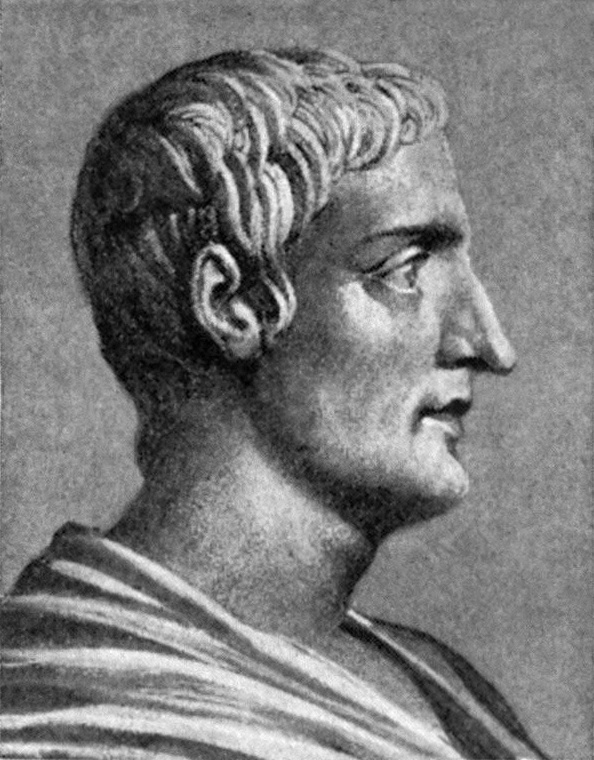
There are, however, others who wrote about Jesus at a very early date.  The next of these we’ll mention is the Roman historian Tacitus.  Edwin Yamauchi, the historian we’ve been quoting, has this to say about Tacitus: “Tacitus recorded what is probably the most important reference to Jesus outside the New Testament.  In A.D. 115 he explicitly states that Nero persecuted the Christians as scapegoats to divert suspicion away from himself for the great fire that had devastated Rome in A.D. 64.”

So what exactly did Tacitus say about Christians and Jesus?

Consequently, to get rid of the report, Nero fastened the guilt and inflicted the most exquisite tortures of a class hated for their abominations, called Christians by the populace. Christus, from whom the name had its origin, suffered the extreme penalty during the reign of Tiberius at the hands of one of our procurators, Pontius Pilatus, and a most mischievous superstition, thus checked for the moment, again broke out not only in Judea, the first source of the evil, but even in Rome, where all things hideous and shameful from every part of the world find their center and become popular. [Annals 15.44]

Tacitus, as can be seen, is no fan of Christianity, but he provides several details about Jesus and early Christians.  Here they are:

  1. Christians were named for their founder, Christus (Latin for Christ).
  2. Christus was put to death by a Roman procurator, Pontius Pilatus (again Latin).
  3. Christus was executed while Tiberius was emperor (AD 14-37) .
  4. His death ended a “superstition” for a time but it broke out again in Judea (where the teaching originated), and made its way to Rome.
  5. Christians were hated and tortured during Nero’s reign.

Again, we see that this data lines up well with the New Testament documents, and again we see that those who deny that Jesus ever existed are swimming upstream against the current of scholarship.

One additional note about Tacitus.  There has been much speculation that the “superstition” to which Tacitus refers is the resurrection of Jesus.  We can’t be sure about this, but Tacitus may be indirectly referring to it.

Tacitus’ testimony about Jesus raises an important question.  How did a swelling religious movement, which started at the far reaches of the Roman empire (in Judea) but reached Rome by the mid 60’s A.D., get started when its leader was subjected to one of the most humiliating and public deaths possible at this time?  Jesus was crucified as a common criminal, but people were following him.  If he was resurrected, then there would be an easy explanation, but if he stayed in the tomb, then how did this movement even get off the ground?  I have never heard a satisfactory answer to that question from those who deny the resurrection.

There is one more non-Christian I want to introduce to you, and I’ll do that in the next post.  Thank you for sticking with this series, which has gone on longer than I originally thought!

Did Ancient Non-Christians Write about Jesus? Part 2

Post Author: Bill Pratt

In part 1, we introduced the writings of the Jewish historian Josephus and demonstrated that he mentioned Jesus and his brother James in one section of his work, The Antiquities.

But there is an even more famous passage that talks about Jesus in The Antiquities.  This longer section is referred to as the Testimonium Flavianum.  Historian Edwin Yamauchi explains that this passage is more controversial among historians because there may be later Christian additions to the original text.  Historians refer to these possible additions as interpolations.  Below I will include the entire text and highlight in bold the most disputed phrases.

About this time there lived Jesus, a wise man, if indeed one ought to call him a man.  For he was one who wrought surprising feats and was a teacher of such people as accept the truth gladly.  He won over many Jews and many of the Greeks.  He was the Christ. When Pilate, upon hearing him accused by men of the highest standing among us, had condemned him to be crucified, those who had in the first place come to love him, did not give up their affection for him.  On the third day he appeared to them restored to life, for the prophets of God had prophesied these and countless other marvelous things about him.  And the tribe of Christians, so called after him, has still to this day not disappeared.

Yamauchi claims that “today there is a remarkable consensus among both Jewish and Christian scholars that the passage as a whole is authentic.”  But what about the possible interpolations (the bold text above)?  Why do some scholars think Josephus would not have said these things?

The first bold phrase appears to indicate Jesus is more than human, which seems unlikely coming from Josephus.  The second bold phrase flatly says that Jesus is the Messiah, instead of saying Jesus was called the Messiah.  Again, this seems unlikely.  Finally, the third alleged interpolation proclaims the resurrection of Jesus, not something that Josephus would likely report.  We can’t be sure about any of these phrases, and maybe Josephus did write them, but the current scholarly opinion is mixed on the subject.

What is left of the passage, though, is still a powerful corroboration of key facts about Jesus.  Yamauchi summarizes: “He was the martyred leader of the church in Jerusalem and . . . he was a wise teacher who had established a wide and lasting following, despite the fact that he had been crucified under Pilate at the instigation of some of the Jewish leaders.”  Those facts line up exactly with what the New Testament records about Jesus.

Given these two passages from Josephus, how significant are they?  Yamauchi explains: “Highly significant, especially since his accounts of the Jewish War have proved to be very accurate; for example, they’ve been corroborated through archaeological excavations at Masada as well as by historians like Tacitus.  He’s considered to be a pretty reliable historian, and his mentioning of Jesus is considered extremely important.”

So, we do have at least one non-Christian source that talks about Jesus from the first century in Josephus.  But there are additional sources that should be mentioned before we leave this topic.  Find out in the next post….

Is God Hiding His Will?

Post Author: Bill Pratt

Many Christians seem to think so.  Why else would they talk about finding God’s will as if it’s a game of hide-and-seek.  We’re told to listen to the still, small voice and to test a possible decision based on the peace we feel.  We’re told to pay attention to the hints God is giving us.  If we miss these hints, these unobtrusive suggestions, we will miss God’s will for our lives.

John MacArthur has this to say in his booklet, Found: God’s Will:

Some apparently think that God’s will is lost.  At least they say they are searching for it!  To them, God must appear to be a sort of divine Easter bunny who has stashed his will, like eggs, somewhere out of sight and sent us running through life trying to find it.  And He is up there saying, “You’re getting warmer!”

When one looks in the Bible to try and find this divine Easter bunny concept, it isn’t there.  When God wanted to communicate to a prophet, his message was almost always loud and clear.  He didn’t drop subtle hints over a long period of time, hoping his clueless prophets would finally figure out what he wanted them to do.  Can you imagine if Scripture had been inspired that way?

So how does God communicate to us what He wants us to do?  MacArthur answers:

Let’s begin with a simple assumption.  Since God has a will for us, He must want us to know it.  If so, then we could expect Him to communicate it to us in the most obvious way.  How would that be?  Through the Bible, His revelation.  Therefore, I believe that what one needs to know about the will of God is clearly revealed in the pages of the Word of God.  God’s will is, in fact, very explicit in Scripture.

There you have it.  The Bible is where God’s will is found.  Let’s start there instead of searching for the hidden Easter eggs everywhere else.

Archaeologist Claims to Find City Wall Built by King Solomon

Post Author: Bill Pratt

Eilat Mazar has potentially made another astounding discovery.  She has unearthed a section of an ancient city wall of Jerusalem which she believes dates from the tenth century B.C. and would have been built by King Solomon.

According to Biblical Archaeology Review, “If Professor Mazar is correct about the dating, then it would seem to support the Biblical account of Jerusalem, and Israel, as being an organized society with a strong centralized government in the 10th century B.C., the time of King Solomon.”

However, there are skeptics of the dating of the wall and more analysis needs to be done to bolster Mazar’s case.

Science Daily reports, “The section of the city wall revealed, 70 meters long and six meters high, is located in the area known as the Ophel, between the City of David and the southern wall of the Temple Mount.  Uncovered in the city wall complex are: an inner gatehouse for access into the royal quarter of the city, a royal structure adjacent to the gatehouse, and a corner tower that overlooks a substantial section of the adjacent Kidron valley.”

Mazar claims that the wall can indeed be dated to the tenth century and attributed to Solomon.  She says:

A comparison of this latest finding with city walls and gates from the period of the First Temple, as well as pottery found at the site, enable us to postulate with a great degree of assurance that the wall that has been revealed is that which was built by King Solomon in Jerusalem in the latter part of the tenth century B.C.E.

This is the first time that a structure from that time has been found that may correlate with written descriptions of Solomon’s building in Jerusalem.  The Bible tells us that Solomon built — with the assistance of the Phoenicians, who were outstanding builders — the Temple and his new palace and surrounded them with a city, most probably connected to the more ancient wall of the City of David.

Mazar specifically cites the third chapter of the First Books of Kings where it refers to “until he (Solomon) had made an end of building his own house, and the house of the Lord, and the wall of Jerusalem round about.”

We’ll see how this turns out, but it is certainly an exciting find.