All posts by Bill Pratt

Brit Hume, Christianity, and Tiger Woods

Post Author: Bill Pratt

By now I’m sure most of you have heard about Brit Hume’s comments regarding Tiger Woods.  After listening to what he said, I had a hard time understanding the hysteria.

One person told me that Christians ought not be putting down other religions in order to gain converts (Hume mentions that Buddhism does not offer what Woods needs).  We should just emphasize our own strengths.  I can see his point, but at the same time Christians do need to contrast our beliefs with others.  If our views on God, sin, salvation, and the afterlife are correct, and they contradict what other religions teach, we have to talk about those differences.  After all, eternal destiny is at stake.

It seems that Americans have become very uncomfortable talking about religious differences, scared a fist fight will break out if the topic comes up.  We have to get over this fear of discussing religion and learn how to have these conversations without personally attacking each other.  That’s one of the goals we have for this blog; we strive to avoid personally attacking anybody, although we could always do better.

In any case, you can see Hume’s comments below.  Also be sure to check out this article written by Carl Cannon, defending Hume.  It’s well done.  After seeing the video for yourself, what do you think?  Did Hume cross a line?

Did Paul Invent Christianity? Part 2

Post Author: Bill Pratt

We pick up from part 1 of this post to see why Paul could not have invented a version of Christianity foreign to Jesus’ teachings.

McFarland continues making his case:

The point is this:  the key teachings of the Gospel (Jesus is the sinless Son of God; He died for our sins and rose again; we receive Him as Savior through repentance and faith) pre-date Paul.  Paul taught these things, expounded on these things, and was used by God to write much of the New Testament.  But the core of the Gospel was being widely spread even before Paul was a believer.  In the final words of I Corinthians 15:8, Paul seemed to acknowledge that he was late getting to the party!

Look at Peter’s sermon at Pentecost, found in Acts 2:14-40.  Peter presents the core facts of the Gospel, including Jesus’ Deity, death, and resurrection.  Peter preaches the same truths again in Acts 3:12-18.  In Acts 5:29-33, Peter addressed Jewish leaders, and again gives the key facts of the Christian message.  By Acts 5:42, we read, “Day after day, in the temple courts and from house to house, they never stopped teaching and proclaiming the good news that Jesus is the Christ.”

So what can we conclude?  The core teachings of Christianity predated Paul’s conversion and his later writings.  Paul did not invent Christianity.

But there is one more important point to be made.  If Paul’s teachings contradicted those of the other disciples, the disciples that spent 3 years under Jesus’ tutelage, then surely they would have called him out.  In fact, just the opposite occurred.  The apostle Peter, who was one of Jesus’ closest companions and a recognized leader of the early church, had this to say about Paul in 2 Pet. 3:15-16: “Bear in mind that our Lord’s patience means salvation, just as our dear brother Paul also wrote you with the wisdom that God gave him. He writes the same way in all his letters, speaking in them of these matters. His letters contain some things that are hard to understand, which ignorant and unstable people distort, as they do the other Scriptures, to their own destruction.”

Take note of the fact that Paul is a “dear brother” and that his words are compared to “other Scriptures.”  Peter is effectively endorsing Paul’s teachings, so the idea that Paul hijacked Christianity from the true followers of Jesus is refuted.  We can be confident that the entire New Testament, including Paul’s writings, were inspired by one and the same God.

Did Paul Invent Christianity? Part 1

Post Author: Bill Pratt

Recently I’ve run across people who believe that the apostle Paul effectively hijacked Jesus’ teachings and invented most of what we today call Christianity.  Even though this seems to be a view with few advocates, it is still an important charge that is being made.  How do we answer this question?

Southern Evangelical Seminary President Alex McFarland wrote about this very topic in a December 2009 newsletter.  I will quote heavily from his article, as he did an excellent job of analyzing this issue.  McFarland’s approach is to show that the essential truths of Christianity were established before Paul began to write his epistles.  McFarland begins:

Saul of Tarsus–a passionate persecutor of the church–became Paul the believer about AD 35.  The book of Acts (written by Luke) records Paul’s salvation experience in chapters 9, 22, and 26.  In his own writings, Paul also explains his conversion to faith (I Corinthians 9:1, 15:3-8, and Galatians 1:11-18).  From about AD 48 until his death around AD 68, Paul wrote at least 13 of the New Testament’s books.

The fact that Paul had originally opposed and persecuted the church proves that he could not have “invented” Christianity.  Paul’s use of the words “received” and “passed on”–rabbinical terms for the handing down of teachings–is significant in I Corinthians 15:3-8.   In relating these facts about Jesus’ death and resurrection, Paul is saying that what it presents is existing truth that he himself had received.  Scholars recognize that this passage contains an early church creed (or statement of belief) that was recited by believers in the days before the New Testament had been written down.  Other Scriptures that preserve the early, verbal Christian creeds include I John 4:2, Philippians 2:6, II Timothy 2:8, and Romans 1:3-4.  Another notable passage is I Timothy 3:16.  Not only is this a confession of belief, it may have actually been part of a hymn that was sung by early believers.

In part 2 of this post, we will conclude McFarland’s argument and look at some additional evidence that he does not cover.  See you next time!


Are All Sins Equal? Part 2

Post Author: Bill Pratt

So we’ve seen that the Bible does teach that some sins are more serious than others and that some virtues are greater than others.  There is a moral law hierarchy.  But what does this practically mean?

First, let’s look at debates over public policy.  When determining where to focus your efforts on a particular law, you must consider its seriousness.  A great example is abortion.  Many Christians focus on the abortion issue because it is such a serious moral failure in our country.  Abortion kills over a million lives every year.  Taking innocent human life is pretty high up the moral law measuring stick.

Some people ask why Christians aren’t more outspoken about global warming.  My answer to that question is, “The death of millions of innocent babies today is far more serious a moral issue than the possible rise in temperature of the earth over the next 100 years.”  The consequences of global warming are surely speculative and uncertain, as any future prediction of ultra-complex climate activity must be, whereas we have a definite problem, abortion, staring us in the face today.

We have to make these kinds of decisions all the time.  What are the most serious moral issues of the day for our nation?  If we just say that all moral issues are equal, we are unable to focus our efforts on what matters more.

Second, what about the Christian life in particular?  In this life, the worse we sin, the more out of touch with God we are.  As my wife likes to say, “God keeps us from sin, and sin keeps us from God.”  If you, as a Christian, are engaging in adultery, then clearly this sin will have greater effect on your walk with God than if you once neglect to call your mother to wish her “Happy Birthday.”

Paul taught that a particular kind of sexual immorality (a man having sexual relations with his father’s wife)  should cause the expulsion of the man committing this sin (1 Cor. 5), but he didn’t write a letter demanding expulsion for someone scrawling graffiti in the streets of Corinth.  Graffiti may be a sin, but it is less serious than sleeping with your father’s wife.  Different sins demand different punishments.

There are also rewards in heaven for the Christian, based on her moral behavior in this life.  In 1 Cor. 3 Paul teaches that the good works we bring to God after we die determine our rewards in heaven.  Some of our works will be so worthless that they will be “burned up.”  Those works of high quality will survive the flames.  The kinds of moral actions we pursue in this life matter for eternity.  The Bible seems to teach that the quality of our good works on earth will determine our ability to enjoy heaven.  Again, our sins and our virtues matter for eternity.

So, how can we summarize?  All sins are equal in that they condemn us before a perfect God.  This is an important point to make when we are evangelizing the lost.  But all sins are not equal when it comes to public legislation, temporal punishment and praise, sanctification (our walk with God where we become more like Christ), and eternal rewards.  When we talk about sin, let’s make sure we consider the situation and apply the correct teaching.

Are All Sins Equal? Part 1

Post Author: Bill Pratt

In a sense, yes, but in another sense, no.  Evangelicals often point out that all sins will send you to hell, that God demands moral perfection, so whether you steal a stick of chewing gum or murder your spouse, both sins will equally damn you.  This is really just a way of explaining that all mankind sins, and thus all mankind is in need of a savior from that sin.  It is, in other words, an evangelistic appeal more than anything else.

But when we talk about sin, we’re not always evangelizing.  Sometimes we’re admonishing Christians who are already saved, and other times we’re debating public morality in the context of legislation.  In these cases, stating that all sins are the same is hardly helpful.

Leaving the issue of evangelization aside, we all intuitively know that some sins are worse than others.  Look at our legal system.  The punishment for stealing a stick of gum is quite different from the punishment for killing your spouse.  There is a wide range of punishments, from a $100 fine to the death penalty, all depending on how serious your crime is.

When we punish our children, the same rule applies.  Little Johnny may be grounded for several weeks if he makes an “F” on his report card, but he may only be sent to his room for an hour for swatting his sister on the back of the head.  Again, Mom and Dad know that all sins are not the same.

But what about the Bible?  Is there support for the view that all sins are not equal in Holy Scripture?  Yes, actually there is.

Let’s look at the words of Jesus.  In Matt. 23:23, Jesus scolds the Pharisees for neglecting “the more important matters of the law.”  If there are more important matters of the law, than there are less important matters of the law, and thus a moral law hierarchy.

In Matt. 5:19 Jesus refers to breaking the  “least of these commandments,” again indicating a hierarchy.

In Matt. 22:34-40, an expert in the law asks Jesus about the greatest commandment.  Jesus’ response isn’t, “Silly man!  All of the laws are equal!”  No, he tells him that the greatest command is to love God and the second greatest command is to love your neighbor.  Clearly the man who loves his neighbor but does not love God is committing the greater sin.  God comes first.

In John 19:11, Jesus tells Pilate that “the one who handed me over to you is guilty of a greater sin.”  If there is a greater sin, then there must be lesser sins.

What about the apostle Paul?  He says in 1 Cor. 13:13 that the greatest virtue is love.  If there is a greatest virtue, then there must be lesser virtues.  Paul also tells Timothy in 1 Tim. 1:15 that Paul is the worst sinner.  But if all sins are equal, then there can be no worst sinner.

In 1 John, the apostle John informs us that there is sin that leads to death, and other sins that do not lead to death.  Clearly some sins are worse than others.

In part 2 of this post, we’ll look at the practical consequences of some moral laws being greater than others.

What Are They So Afraid Of?

Post Author: Bill Pratt

The pattern of censorship of the intelligent design movement continues with more disappointing news from California.  Check out this summary of what’s going on with the California Science Center.

It would be so much easier to allow a real debate to go on and defeat the ID movement with scientific data and arguments, if you are opposed to it.  Why play these dirty tricks on ID proponents?  Ultimately these tactics just backfire.

What are they so afraid of?

A Law Professor’s Analysis of the Gospels – Part 2

Post Author: Bill Pratt

In part 1 of this post, we discussed Simon Greenleaf’s conclusion that the Gospel writers’ testimony about Jesus Christ should be considered true, based on the canons of legal evidence, an area in which he was an undisputed expert.  Some skeptics, however, have argued that the standards for judging the credibility of the Gospels should be much higher than what Greenleaf has proposed.  It is to this question we now turn.

Greenleaf makes a strong case for the kind of evidence that skeptics should be requesting, with regard to the Gospel narratives.  Here I provide his detailed thoughts:

It should be observed that the subject of inquiry is a matter of fact, and not of abstract mathematical truth.  The latter alone is susceptible of that high degree of proof, usually termed demonstration, which excludes the possibility of error, and which therefore may reasonably be required in support of every mathematical deduction. . . . In the ordinary affairs of life we do not require nor expect demonstrative evidence, because it is inconsistent with the nature of matters of fact, and to insist on its production would be unreasonable and absurd. . . . The error of the skeptic consists in . . . demanding demonstrative evidence concerning things which are not susceptible of any other than moral evidence alone, and of which the utmost that can be said is that there is no reasonable doubt about their truth.

In the case of the Gospel narratives, “A proposition of fact is proved, when its truth is established by competent and satisfactory evidence.”  What is competent and satisfactory evidence?

By competent evidence is meant such as the nature of the thing to be proved it requires; and by satisfactory evidence is meant that amount of proof, which ordinarily satisfies an unprejudiced mind, beyond any reasonable doubt.  The circumstances which will amount to this degree of proof can never be previously defined; the only legal test to which they can be subjected is their sufficiency to satisfy the mind and conscience of a man of common prudence and discretion, and so to convince him, that he could venture to act upon that conviction in matters of the highest concern and importance to his own interests. . . . When we have this degree of evidence, it is unreasonable to require more.  A juror would violate his oath, if he should refuse to acquit or condemn a person charged with an offense, where this measure of proof was adduced.

Greenleaf rejects the call for apodictic proof in the case of the Gospel testimonies because nobody ever requires this kind of evidence when it comes to the affairs of human history.  We only require enough evidence to show that the events were probable.  Even in courts of law, where the jury must determine whether a defendant is to die for his alleged crimes, the bar for conviction is no reasonable doubt.

When the accounts of Jesus’ life are subjected to the rigors of legal analysis, they fare quite well.  Greenleaf urges his readers to set aside their prejudices and take a look at the evidence.  If they do so, they will be left with no reasonable doubt.

A Law Professor’s Analysis of the Gospels – Part 1

Post Author: Bill Pratt

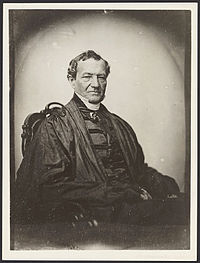
I recently read a short book entitled The Testimony of the Evangelists by Simon Greenleaf.  Greenleaf was one of the most respected American jurists of the nineteenth century.  He taught law at Harvard University and wrote a judicial classic, Treatise on the Law of Evidence. This work was used as a standard textbook for the latter half of the nineteenth century in American law schools.

The Testimony of the Evangelists is Greenleaf’s analysis of the four Gospels using the principles of legal evidence, an area in which he was an undisputed expert.  Put simply, Greenleaf treated the Gospel writers’ testimonies as if they were being presented in a courtroom.  How would they stand up?

In Greenleaf’s own words, “His business is that of a lawyer examining the testimony of witnesses by the rules of his profession, in order to ascertain whether, if they had thus testified on oath, in a court of justice, they would be entitled to credit and whether their narratives, as we now have them, would be received as ancient documents, coming from the proper custody.”

Greenleaf systematically applied the rules of evidence to the Gospel writers and found them to be entirely credible.  How did he do so?  He first argued that the documents themselves, as originally composed 2,000 years ago and reproduced from that time down to the present day, met the legal standards of admission in a court of law.  He then explained the kind of evidence needed to show that the authors of the documents were trustworthy in their testimony.

It is universally admitted that the credit to be given to witnesses depends chiefly on their ability to discern and comprehend what was before them, their opportunities for observation, the degree of accuracy with which they are accustomed to mark passing events and their integrity in relating them.

After careful historical analysis, Greenleaf finds that each Gospel writer meets these criteria, and thus their testimony about the life, death, and resurrection of Jesus should be judged true, based on the canons of legal evidence.

Some skeptics have charged that the standards for judging the truthfulness of the Gospel accounts should be much higher than the canons of legal evidence.  We will examine Greenleaf’s response to this challenge in part 2 of this post.

Can God Make a Rock So Big He Can’t Lift It? – #1 Post of 2009

Post Author: Bill Pratt

This is a common question that is asked by those who misunderstand the nature of God’s omnipotence.  Another humorous way of asking this question is: Can God make a sandwich so big he can’t eat it?  (I owe that jewel to my friend Greg).

When Christians claim that God is omnipotent (all-powerful), they do not mean that he can do anything.  We mean that God can do anything that is actually possible.  God’s omnipotence exists in concert with all of his other attributes, not as a stand-alone attribute.  Therefore, when we don’t understand the other attributes of God, we get stumped by questions like this.   Here is a brief list of some things God cannot do, based on his other attributes:

  1. cease to exist – a being whose very nature is being cannot cease to be; that’s impossible
  2. love evil – a being who is all-good cannot love evil; that’s impossible
  3. make a copy of himself – God is infinite, and two infinite beings cannot exist; that’s impossible
  4. change his nature – an unchanging (immutable) being cannot change; that’s impossible

So why can’t he make a rock so big he can’t lift it?  Simple.  God is infinite, and there can only be one infinite being (see number 3 above).  If there were two infinite beings, then neither would really be infinite because they would each be limited by the other.  But an infinite being has no limits, so they can’t both be infinite.

If a rock is created that cannot be moved by an infinite being, then that rock must be infinite.  But if we have an infinite being and an infinite rock, we have two infinite beings.  That is, as we said a moment ago, a logical impossibility.

Once we understand what infinity means (without limit) and once we understand that God cannot violate the laws of logic (which are based on his own nature), then we can easily understand how God cannot make a rock so big he can’t lift it.  It’s like asking one infinite being to create another infinite being.  Not possible!!

Does God Send People to Hell? – #2 Post of 2009

Post Author: Bill Pratt

God wishes every person to avoid hell and be saved from it (2 Pet 3:9).  Christians do not believe God sends people to hell.  Hell is freely chosen by those who reject God.

God gave every person the power of free will and the most important decision we will make with that power of free will is whether to embrace or reject God.  Since heaven is a place where we spend eternity with God, then for those who reject God, there needs to be a place where they can escape him.

If you are a person who wants nothing to do with God in this life, then wouldn’t it be hell for you to be in heaven with God forever?

C. S. Lewis summarizes this issue well, as usual.  He says, “The door of hell is locked on the inside.”  All those who go to hell will to be there and to stay there.  He adds, “There are only two kinds of people in the end: those who say to God, ‘Thy will be done,’ and those to whom God says, in the end, ‘Thy will be done.’  All that are in hell choose it.”

Why doesn’t God force everyone to ultimately choose him so that all people go to heaven?  After all, some might say, that is the right thing to do.

The problem with this solution is that God created free human beings, and if he forces them to do anything, then he is violating their freedom.  If God forces people to choose him, it comes down to a kind of “divine rape,” a coercion.  God’s love demands that he offer people a place where they can freely reject him, forever.