Update on Well-Known Young Earth Creationist – Post #10 of 2009

Post Author: Bill Pratt

GeoChristian posted an update on Kent Hovind (Dr. Dino), a well-known young earth creationist who is serving jail time for tax evasion.  I once saw Hovind on the John Ankerberg Show and thought he was extremely rude to Hugh Ross, whom he was debating.  If you are interested in Hovind and what he teaches, don’t be.  His credibility as a leader and teacher are gone.  I will pray for him as a person whom God loves, but I quit listening to his arguments a long time ago.

Top Ten Posts of 2009 and Subscribe by Email

Post Author: Bill Pratt

As 2009 rolls to a close, I thought it would be interesting to look back at the top ten posts of the year, in terms of number of page views.  Some of you who have joined our blog throughout the year may have missed these posts, so for the next couple of weeks, look out for these “greatest hits” as we count down from number 10 to number 1.

Also, please note that the blog can now be subscribed to by email.  Just click on the “Sign me up!” button on the left side of the blog web page.  This is an easy way to keep track of each post as it’s published.  We generally post about 3-4 times per week, so don’t worry about your email box becoming cluttered from our site.

When Was the Gospel of Thomas Written?

Post Author: Bill Pratt

For the last several years, a lot of hay has been made concerning the Gospel of Thomas, an alleged fifth Gospel only discovered in 1945.  A few New Testament scholars have tried to make the case that the views espoused in Thomas represent a competing strain of Christianity that was suppressed by the early church hierarchy.

These scholars, in order to make their case, must show that Thomas was written in the first century along with the other four Gospels and the rest of the New Testament writings.  Unfortunately for them, the evidence seems to place the Gospel of Thomas in the late second century, at the earliest.

Lee Strobel and John Ankerberg (see video below) explain that Thomas was completed more than a century  after Jesus lived, and that this Gospel actually draws upon the other books of the New Testament, thus removing it from contention as an early version of Christianity.  The truth is that it came along far after Christianity was well underway as a religious movement.

What Didn't Darwin Know?

Post Author: Bill Pratt

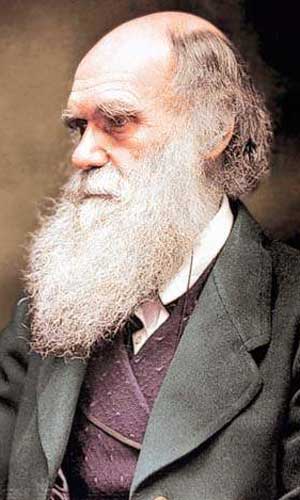
Quite a bit, it turns out.  The leaps in knowledge of cellular biology and genetics over the last 150 years would boggle Charles Darwin’s mind.  Some argue that if he were alive today, he would abandon the very theory named after him because of all the contrary evidence that now stands against it.

In any case, please follow this hyperlink to a video which features two scientists and a medical doctor who explain how they came to be skeptical of Darwinism.  They explain in very clear terms the challenges facing Darwinian evolution based on what scientists know today that Darwin never knew.

It’s well worth your time.

Deacons in the LDS Church?

Post Author: Darrell

Boys in the The Church of Jesus Christ of Latter Day Saints (LDS Church) are ordained to the office of Deacon at the age of 12. This office is the most junior in the Aaronic or lesser Priesthood and is followed by the office of Teacher and the office of Priest. Young men progress through each of these offices as they age and are eventually given the Melchizedek or higher Priesthood and ordained to the office of Elder.

I have always been puzzled at how this LDS practice compares with the teachings of The Bible. Let’s take a look at 1 Timothy 3:8-13.

Deacons, likewise, are to be men worthy of respect, sincere, not indulging in much wine, and not pursuing dishonest gain. They must keep hold of the deep truths of the faith with a clear conscience. They must first be tested; and then if there is nothing against them, let them serve as deacons. In the same way, their wives are to be women worthy of respect, not malicious talkers but temperate and trustworthy in everything. A deacon must be the husband of but one wife and must manage his children and his household well. Those who have served well gain an excellent standing and great assurance in their faith in Christ Jesus.

Paul shares a lot of information in these few short verses: 1) The moral qualities of Deacons – sober, sincere, and trustworthy; 2) The maturity of Deacons – tested, able to understand and keep deep truths of the Christian faith; and 3) The living situation of those who serve as Deacons – husband of one wife, able to manage his children and his household.

Here is the million dollar question: Do any of these standards sound like something a 12-year-old boy can meet? Personally, I do not see how. First, a 12-year-old child is not old enough to have a wife or children, so how can he be the husband of one wife? How can he manage his children or household well? In addition, a 12-year-old boy is not mature enough to understand the deep truths of the Christian faith, so how can he prove he has lived them? He has not lived long enough to be “tested” in anything except maybe a tough Playstation 3 game!

The LDS Church claims to be the restoration of early church of Jesus Christ; however, it is pretty obvious that at least in regards to the office of Deacon, they are way off base. Bottom line – this is just another example of how the teachings and practices of the LDS Church violate those of The Bible.

God Bless!

Darrell

Why Is Jesus’ Birthday Celebrated on Dec. 25?

Post Author: Bill Pratt

The usual story about why Jesus’ birthday is celebrated on Dec. 25 is that Christians were trying to convert a Roman pagan festival into a Christian festival.  But it seems this theory may not be true.

Andrew McGowan, professor of early Christian history, has written a fascinating article which links the death and conception of Jesus to his birthday.  It seems that ancient Christians tended to believe that the death of Jesus occurred on the same day as his conception in Mary’s womb, March 25.  So, to arrive at his birthdate, they added nine months to March 25, which yields Dec. 25.

If you are interested in early Christian history and the roots of Jesus’ birthdate on Dec. 25, you won’t want to miss reading this article.

Can Evil Exist Without God?

Post Author: Bill Pratt

Many skeptics of Christianity claim that the existence of evil in the world proves that a good God cannot exist.  I believe this viewpoint is exactly backwards.

If you truly believe that there is evil in the world, then you must believe that there is good in the world as well.  We can’t know what is wrong unless we know what is right.  We can’t know a crooked line unless we know a straight line.  We can’t know injustice unless we know justice.

But if there is real good and real evil in the world, then there must be an ultimate standard, a measuring stick by which to judge goodness and badness.  This measuring stick must be perfect, so that all moral activity can be compared to it, just like determining the straightness of any line requires a perfectly straight line by which to compare.

Here is the argument summarized in short from:

  1. evil implies good
  2. good implies a perfect standard by which to define it

Now, if you believe that there exists real, objective evil in the world – evil that any person from any place or time would agree is really evil – then you are stuck with admitting that there must be a perfect standard of goodness also in existence, a moral law.

Where does this perfect standard of goodness come from?  The Christian answer is that this standard originates in the nature of God.  God’s own nature is the perfect standard of good, and God has always existed as the first cause of everything.

If you’re a person who wants to escape this answer, you can claim that this moral law just sort of exists, like a floating “cloud” of goodness that just permeates the universe.  But the Christian can ask: “Where did this floating ‘cloud’ of goodness come from?”

You could say that the objective moral law, the perfect standard of goodness, comes from blind, purposeless, natural processes (the standard atheist account of everything that exists).  The Christian can ask: “Why should anyone feel obliged to follow and obey a perfect moral standard that comes from atoms randomly banging together over billions of years?”

I don’t think there is a good answer to that question.  The person who wants to affirm the existence of evil while denying the existence of God finds himself caught in a deep hole of irrationality.  He asks us to obey moral laws that come from rocks.

Some atheists, like Nietzsche, saw where this hole was leading and bailed out quickly.  They affirmed that there is no such thing as real moral evil in the world.  What we think is evil is really just our personal preferences.  You like to kill people and I don’t.  I like red and you like blue.

The consistent person who wants to affirm the existence of evil really must affirm the existence of a personal moral lawgiver – God.  If you don’t think God exists, then you should stop complaining about all the evil in the world.  You’re not making any sense.

What Do God and Science Have to Do with Each Other?

Post Author: Bill Pratt

Ever since I became an evangelical believer in Christ, about 12 years ago, I have noticed that there is uneasiness among my evangelical brothers and sisters with certain fields of science.  This uneasiness, I quickly learned, has much to do with the age of the universe and the origins of mankind.  There are other areas, as well, but those are the two primary areas of dispute.

Because of the perceived hostility of science toward basic beliefs of Christianity, some evangelicals have forsaken science altogether.  So what I want to address today is what science and God have to do with each other.

Christians have long recognized that there are two ways that God communicates with mankind: special revelation and general revelation.

Special revelation is what is communicated about God through the incarnation of Christ and the Bible.

General revelation is what is communicated about God through the natural world, including physical nature, human nature, and human history.

Science offers a method for observing and then explaining facts about the natural world, so science is the study of God’s general revelation.  Christians that forsake science are, in effect, dismissing God’s general revelation.

Why?  Because they feel that the findings of science contradict the teachings of Scripture (special revelation).

But the answer is not to throw out one of God’s revelations.  In cases where general and special revelation overlap, we must examine our fallible interpretation of Scripture and compare it to our fallible interpretation of scientific findings.

You see, the Bible is infallible, but our interpretation of it is not.  Likewise, God’s revelation about himself in nature is infallible and will never contradict his revelation in Scripture.  But our interpretation of general revelation is not infallible.

What do we do when our fallible interpretation of science conflicts with our fallible interpretation of the Bible?  We seek the interpretation that seems more certain and we go with that.  If the special revelation interpretation seems more certain than the general revelation interpretation, then we go with special revelation.  If the general revelation interpretation seems more certain than the special revelation interpretation, then we go with general revelation.  We can’t just assume one is always right and the other always wrong.  That will lead to error.

Notice that this method of seeking the right interpretation requires the Christian to study diligently the Scriptures and the findings of science.  We cannot just study the Bible, but we must also dig into science if we want any hope of finding the answers to these tough questions where science and the Bible seem to conflict.

Fortunately, these perceived areas of conflict are few, and usually do not have to do with essential doctrines of Christianity.  However, they are still important and we owe it to God to honestly and earnestly seek the answers.
Happy Thanksgiving!

Post Author: Bill Pratt

Darrell and I wish all of our blog readers a joyous Thanksgiving filled with great fellowship and food!  We are thankful for our loyal readers who continue to support the blog by telling others about it and spreading the word.  We would also like to give a special thanks to the John Ankerberg Show for giving us a forum through their wonderful ministry.  We are truly blessed!

Last, but definitely not least, we wish to thank God for everything he has given us, which is everything that we have.

Happy Thanksgiving!!

A Christian Apologetics Blog