Can We Judge God’s Intentions When People Suffer?

Post Author: Bill Pratt

Bad things happen to people all the time.  They happen to you and to me, in places nearby and in places far away.  Sometimes when we see a person or persons suffering, and we don’t like their worldview, their moral beliefs, or lifestyle, we Christians do something that we need to stop doing.  We look at the people suffering and we think to ourselves, or even say out loud, “God is punishing them because they are unrighteous.”

There are infamous examples of Christians proclaiming judgment after hurricanes, tsunamis, and earthquakes kill multitudes of people.  Those examples are bad enough, but I want to also call attention to the daily judgments we sometimes make about people who are suffering – people who we confidently believe are being punished by God because of their immoral actions.

Why should we stop judging God’s intentions in this manner?  Because we don’t know, in a given situation, what God’s intentions are.  He simply does not tell us and we need to stop acting like he does.  In addition, and more importantly, Jesus himself denies that we should judge those who suffer or die as more sinful than we are.

In Luke 13:1-5, Luke records the following conversation:

Now there were some present at that time who told Jesus about the Galileans whose blood Pilate had mixed with their sacrifices.  Jesus answered, “Do you think that these Galileans were worse sinners than all the other Galileans because they suffered this way?  I tell you, no! But unless you repent, you too will all perish. Or those eighteen who died when the tower in Siloam fell on them—do you think they were more guilty than all the others living in Jerusalem?  I tell you, no! But unless you repent, you too will all perish.”

Jesus first refers to some Galileans who were killed by Pilate as they sacrificed.  He flatly rejects the idea that these Galileans are worse sinners than others because they were killed.  Jesus then refers to eighteen people who died when a tower collapsed on them.  Again Jesus denies that these eighteen were more guilty than everyone else.

John Martin, in The Bible Knowledge Commentary, explains these verses:

Jesus taught the crowds that calamity can happen to anyone because all are human. Jesus cited two common instances about destruction. The first concerned some Galileans who were killed by Pilate while they were offering sacrifices. The second concerned 18 seemingly innocent bystanders in Siloam who were killed when a tower … fell on them. Jesus’ point was that being killed or not being killed is no measure of a person’s unrighteousness or righteousness. Anyone can be killed. Only God’s grace causes any to live. This point is brought out in verses 3 and 5—unless you repent, you too will all perish. Death is the common denominator for everyone. Only repentance can bring life as people prepare to enter the kingdom.

Next time you think you can judge God’s intentions when people suffer, think again.  Remember that even Jesus refused to make these kinds of judgments.

How Should Religion and Science Interact?

Post Author: Bill Pratt

During the Renaissance and Enlightenment, philosophers continuously changed their views on how science and religion should interact.  Philosopher William Lawhead describes the continuum chronologically in his textbook The Voyage of Discovery.

Initially, most scientists and philosophers “saw religion and science as co-equal partners in the search for truth.”

Lawhead continues: “Gradually the viewpoint emerged that the claims of revealed religion should be accepted, but only after they have been trimmed down to conform to the scientific outlook.”  Put another way, religious claims must be confirmed by science.

The third stage of development was deism – the belief that the world is wholly rational on its own and that human reason alone can answer questions of nature, religion, and morality.  The deists retained God as the Creator of the universe, but believed that God did not intervene in nature after he created it.

Following deism, “Agnosticism or religious skepticism began to appear in the works of such thinkers as David Hume.  The agnostics urged that we must suspend judgment concerning God’s existence, for reason does not give us any grounds for believing in a deity, although it cannot prove that one does not exist.”

Lawhead explains that “finally, full-blown naturalism or atheism appeared. . . . Its proponents claimed that the philosophical and scientific evidence is stacked against the God hypothesis.  Therefore the rational person will reject it, just as we have the flat-earth theory and the theory that diseases have supernatural causes.”

What is fascinating to me is that all of these views are still held by our contemporary society, hundreds of years later.  That is one reason I find the study of philosophy to be so useful; the ideas never go out of style.  In fact, the same ideas are repeated over and over again throughout history.

What about you?  Which of these five views do you hold about the interaction of science and religion?  Please vote in the poll below and leave comments explaining your vote.

Will Science and Technology Lead Us to Utopia?

Post Author: Bill Pratt

Many people in our western civilization are optimistic that things are always getting better.  If we continue to invest in education, if we produce more advanced technology, and if we push scientific understanding as far as it can go, then we will eventually reach a paradise on earth.  This paradise is inevitable, they believe.

This optimism can be traced back to the eighteenth century, to the period known as the Enlightenment.  The Enlightenment thinkers sincerely believed that man’s reasoning powers were unlimited and that science and technology would eventually prevail.  According to Professor William F. Lawhead, one of the central beliefs of the Enlightenment was that “all problems, theoretical or social, can be solved through science and concerted, rational effort.”  Sound familiar?

Those who continue to hold to the ideals of the Enlightenment, however, have at least one major counter-example to answer to, that of the Holocaust.  I was reminded of this counter-example by Professor J. T. Bridges, whose research yielded the following chilling quotation from author Michael Berenbaum:

The Holocaust, by its scope, nature, and magnitude transforms our understanding of human culture and human existence.  An unspoken premise of the advocates of culture and education is that the refinements of culture and learning somehow make us into better people and intensify our moral worth.  Yet the Holocaust was perpetrated not by the least cultured and least sophisticated of nations but by the most cultured and most advanced of societies.  Furthermore, the elements within that society that proved capable of perpetrating the evils were not the least cultured, but came from all spectrums of society including philosophers and scientists, musicians and engineers, lawyers and ministers, artists and intellectuals.  No segment of German society proved immune. . . . We see that people could love good music and kill young children.

A people with some of the most advanced science and technology, sophisticated culture, turned into Nazi Germany.  You will excuse me if I harbor some doubts about the utopian hopes of our modern day Enlightened.  Clearly science and technology, education and culture did nothing but make the Nazis into more scientifically advanced, more educated, and more culturally sophisticated killers.

Why Does Science Work?

Post Author: Bill Pratt

Very few people ever think about why science works; they just take it for granted.  Some of the great scientists, however, have wondered about this question.  Philosopher John Lennox, in his book God’s Undertaker, quotes Albert Einstein’s ruminations on the question of why the universe is comprehensible:

You find it strange that I consider the comprehensibility of the world (to the extent that we are authorized to speak of such a comprehensibility) as a miracle or as an eternal mystery.  Well, a priori, one should expect a chaotic world, which cannot be grasped by the mind in any way . . . the kind of order created by Newton’s theory of gravitation, for example, is wholly different.  Even if man proposes the axioms of the theory, the success of such a project presupposes a high degree of ordering of the objective world, and this could not be expected a priori.  That is the ‘miracle’ which is being constantly reinforced as our knowledge expands.

Einstein is saying that we should expect a chaotic world, a world which cannot be grasped by the mind.  The fact that the world is able to be understood by human minds is a ‘miracle’ that deserves explanation.  In particular, why does physical reality map to mathematics?  Surely this fact demands an accounting.

Lennox notes that Paul Davies finds this mapping to be truly astounding.  Davies comments that much of the mathematics applied to modern science “was worked out as an abstract exercise by pure mathematicians, long before it was applied to the real world.  The original investigations were entirely unconnected with their eventual application.” (emphasis mine) Why?  Surely this is strange.

Lennox continues, “The relationship between mathematics and physics goes very deep and it is very hard to think of it as some random accident.”  Professor of Mathematics Roger Penrose has this to say: “It is hard for me to believe . . . that such superb theories could have arisen merely by some random natural selection of ideas leaving only the good ones as survivors.  The good ones are simply much too good to be the survivors of ideas that have arisen in a random way.  There must be, instead, some deep underlying reason for the accord between mathematics and physics.”

Not wanting to posit an agent behind this mystery, some skeptics will say that science itself explains the accord between math and physics.  But this cannot be so.  Lennox recounts the following words of John Polkinghorne: “Science does not explain the mathematical intelligibility of the physical world, for it is part of science’s founding faith that this is so.”

So why does science work?  Why do math and physics work together so well?  Lennox offers the Christian answer to this question:

The intelligibility of the universe is grounded in the nature of the ultimate rationality of God: both the real world and mathematics are traceable to the Mind of God who created both the universe and the human mind.  It is, therefore, not surprising when the mathematical theories spun by human minds created in the image of God’s Mind, find ready application in a universe whose architect was that same creative Mind.

The non-theist is left with a real quandary.  Without a Mind behind reality, the fact that abstract mathematics directly applies to reality remains a profound mystery.  The non-theist is left, in essence, with blind faith in science.

Have Aristotle’s Metaphysics Been Proven Wrong?

Post Author: Bill Pratt

OK, those of you who have never thought about Aristotle and don’t even know what the word metaphysics means are probably already yawning, but hang on for a minute.  Briefly, why should you care about Aristotle?  Because the medieval Christian theologians (Thomas Aquinas being the most brilliant example) built their conceptions of God and humans with the help of Aristotle’s ideas.  They combined what they learned from special revelation (the Bible) with Aristotle’s philosophical ideas to bequeath us the conceptions of God and humans that most orthodox Christians still hold today.

It was Aristotle’s metaphysics, in particular, which aided these learned men of the church.  What is metaphysics?  In simplest terms, the study of being.  Metaphysics helps answer the ultimate questions.  According to the great philosopher Jacques Maritain in his book The Degrees of Knowledge, metaphysics deals with “objects [in the mind] abstracted from, and purified of, all matter.”

Maritain continues:

These are objects of thought which not only can be conceived without matter, but which can even exist without it, whether they never exist in matter, as in the case of God and pure spirits, or whether they exist in material as well as in immaterial things, for example, substance, quality, act and potency, beauty, goodness, etc.  This is the wide domain of [metaphysics], knowledge of that which is beyond sensible nature, or of being as being.

Questions of God, causality, goodness, existence – all of these are the domain of metaphysics.  So hopefully now you have an idea of why Aristotle and metaphysics are important to Christians.  And, of course, since Aristotle and metaphysics are important to us, they face constant attack from skeptics of Christianity.  One of those attacks goes like this: “Aristotle’s ideas were all disproven by Descartes and other philosophers of the Renaissance 400 years ago.”  If Aristotle’s metaphysics, and thus the metaphysics of Aquinas and other medieval Christian thinkers, have been refuted, then our conceptions of God and man are completely wrong-headed and need to be radically revised.

Has Aristotle’s metaphysics been refuted?  Not at all.  What the Renaissance thinkers did was refute some of Aristotle’s scientific ideas.  Again we learn from Jacques Maritain:

Despite what certain popularizers may say . . . , these charges do not stand up in the case of the philosophy of Aristotle when carried back to its authentic principles. . . . It should be recognized that too great a confidence in the intelligibility of things and in the processes of reason . . . has played its part (and perhaps an overwhelming part) in the errors of ancient science. . . . [However] there is no necessary link between the mechanics, the physics and the astronomy of the ancients on the one hand, and the metaphysics or natural philosophy of the scholastic tradition on the other.

Maritain further explains:

The whole structure of the experimental science of the ancients has doubtless crumbled and its collapse may well appear to anxious minds to spell the ruin of everything the ancients had thought.  But in reality, their metaphysics and their philosophy of nature, in their essential principles at least . . . , have no more been affected thereby than the soul is changed when the body disintegrates.

The fall of Aristotelian experimental science was not also the fall of Aristotelian metaphysics.  The latter was not built on the former, and thereby was quite able to stand when the former collapsed.  This means that the classical Christian conceptions of God and man remain intact and as strong as ever, and skeptics must still deal with them.

The God of the Gaps?

Post Author: Bill Pratt

A frequent refrain from skeptics of Christianity is that any time God is posited as the cause of just about anything, the Christian has committed the sin of “God of the gaps.”  Philosopher John Lennox explains the sin as follows: “the introduction of a god or God is an evidence of an intellectual laziness: we cannot explain something scientifically and so we introduce ‘God’ to cover our ignorance.”

Referring back to the previous blog post, is the supposition of Mr Ford as the cause of the motor car engine a “God of the gaps” move?  Lennox answers “no.”

Mr Ford is not to be found in the gaps in our knowledge about the workings of internal combustion engines.  More precisely, he is not to be found in any reason-giving explanations that concern mechanisms.  For Henry Ford is not a mechanism: he is no less than the agent who is responsible for the existence of the mechanism in the first place so that it all bears the marks of his handiwork – and that means the bits we do understand and the bits we don’t.

Bringing this point around to God, Lennox quotes philosopher Richard Swinburne.

Note that I am not postulating a ‘God of the gaps,’ a god merely to explain the things that science has not yet explained.  I am postulating a God to explain why science explains; I do not deny that science explains, but I postulate God to explain why science explains.  The very success of science in showing us how deeply ordered the natural world is provides strong grounds for believing that there is an even deeper cause for that order.

Science can explain what science can explain.  As we’ve developed previously on this blog, science is a limited enterprise that can give us knowledge about recurring physical mechanisms and physical events that occurred in the past.  To press science beyond these realms is folly.

Lennox concludes with these words:

The point to grasp here is that, because God is not an alternative to science as an explanation, he is not to be understood merely as a God of the gaps. On the contrary, he is the ground of all explanation: it is his existence which gives rise to the very possibility of explanation, scientific or otherwise.  It is important to stress this because influential authors such as Richard Dawkins will insist on conceiving of God as an explanatory alternative to science – an idea that is nowhere to be found in theological reflection of any depth.  Dawkins is therefore tilting at a windmill – dismissing a concept of God that no serious thinker believes in anyway.

Does Our Understanding of How the Universe Works Negate God’s Existence?

Post Author: Bill Pratt

Some skeptics of Christianity are known to argue that the great success of science revealing the physical mechanisms of the universe should lead us to conclude that the God hypothesis is totally unnecessary.  Science will ultimately reveal the laws of nature, and once we know these laws, the need for God has vanished.  Does that follow?
Not according to Philosopher John Lennox in his book God’s Undertaker.  Lennox says, “Such reasoning involves a common logical fallacy.”  Here is how he illustrates the fallacy:

Take a Ford motor car.  It is conceivable that someone from a remote part of the world , who was seeing one for the first time and who knew nothing about modern engineering, might imagine that there is a god (Mr Ford) inside the engine, making it go.  He might further imagine that when the engine ran sweetly it was because Mr Ford inside the engine liked him, and when it refused to go it was because Mr Ford did not like him.

Of course, if he were subsequently to study engineering and take the engine to pieces, he would discover that there is no Mr Ford inside it.  Neither would it take much intelligence for him to see that he did not need to introduce Mr Ford as an explanation for its working.  His grasp of the impersonal principles of internal combustion would be altogether enough to explain how the engine works.

So far, so good.  But if he then decided that his understanding of the principles of how the engine works made it impossible to believe in the existence of a Mr Ford who designed the engine in the first place, this would be patently false – in philosophical terminology he would be committing a category mistake.  Had there never been a Mr Ford to design the mechanisms, none would exist for him to understand.

How does this illustration apply to God and the universe?  Lennox explains:

It is likewise a category mistake to suppose that our understanding of the impersonal principles according to which the universe works makes it either unnecessary or impossible to believe in the existence of a personal Creator who designed, made, and upholds the universe.  In other words, we should not confuse the mechanisms by which the universe works either with its cause or upholder.

Hawking, Dawkins, and other atheistic scientists fail to understand this basic philosophical point.  One day, if there is a full and complete physical explanation of how every particle in the universe behaves, if we arrive at a set of equations that explains every physical mechanism, the fundamental question of where these equations came from will still need to be answered.  Scientists will not have eliminated the existence of Mr Ford.

What Happened In the Huxley-Wilberforce Debate?

Post Author: Bill Pratt

Another favorite story told by those who want to argue that religion and science are at complete enmity is the Huxley-Wilberforce debate of 1860.  The debate was between T. H. Huxley (a Darwin supporter) and Bishop Samuel Wilberforce, and was to be about Darwin’s The Origin of Species which had been published 7 months prior.  Philosopher John Lennox recounts the circumstances of this debate in his book God’s Undertaker, so we will rely on his synopsis.

Lennox starts by reminding us that “this encounter is often portrayed as a simple clash between science and religion, where the competent scientist convincingly triumphed over the ignorant churchman.”  Lennox says that historians have shown that “this account is also very far from the truth.”

First, Wilberforce was a learned scholar, not an ignoramus.  Wilberforce published a critique of Darwin’s work which Darwin himself regarded as “uncommonly clever; it picks out with skill all the most conjectural parts, and brings forward well all the difficulties.  It quizzes me most splendidly.”

Second, Wilberforce was adamant that the debate over Darwin’s theories be scientific.  In his summary of the critique which Darwin commended, Wilberforce wrote the following:

We have objected to the views with which we are dealing, solely on scientific grounds.  We have done so from the fixed conviction that it is thus that the truth or falsehood of such arguments should be tried.  We have no sympathy with those who object to any facts or alleged facts in nature, or to any inference logically deduced from them, because they believe them to contradict what it appears to them is taught by revelation.  We think that all such objections savour of a timidity which is really inconsistent with a firm and well-intrusted faith.

Third, there were objections to Darwin’s theory which did not come from the church.  Lennox notes that “Sir Richard Owen, the leading anatomist of the day . . . was opposed to Darwin’s theory; as was the eminent scientist Lord Kelvin.”

Fourth, at the time of the debate, opinions on how the two debaters fared were mixed; there was not a consensus that Huxley defeated Wilberforce.  According to Lennox, “The botanist Joseph Hooker grumbled that Huxley didn’t ‘put the matter in a form or way that carried the audience’ so he had to do it himself.”  Lennox also records that “The Athenaeum‘s report gives the impression that honours were about even, saying that Huxley and Wilberforce ‘have each found foemen worthy of their steel.'”

As with the Galileo affair, the Huxley-Wilberforce debate fails to live up to its hype.  The debate was not emblematic of the imaginary war on science waged by Christianity.  Historian of science Colin Russell has come to the following conclusion about the alleged war between religion and science in the west:

The common belief that . . . the actual relations between religion and science over the last few centuries have been marked by deep and enduring hostility . . . is not only historically inaccurate, but actually a caricature so grotesque that what needs to be explained is how it could have possibly achieved any degree of respectability.

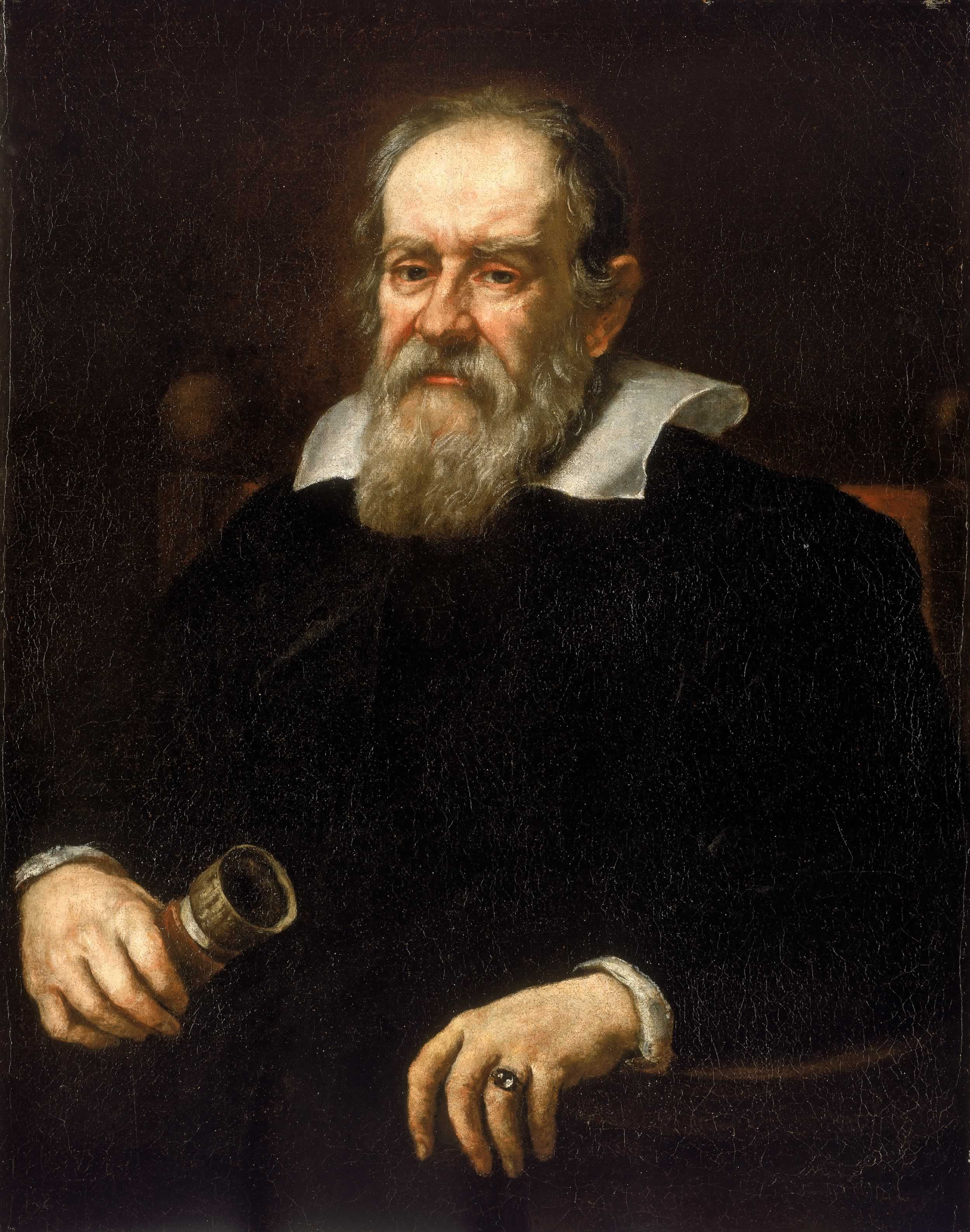
What Happened to Galileo?

Post Author: Bill Pratt

The Galileo affair has often been put to work to demonstrate that religion has always been at war with science.  But what really happened to Galileo?  Does what happened to him prove that religion – Christianity in particular – has always been in conflict with science?

Philosopher John Lennox thinks not; he provides some unique insight in his book God’s Undertaker.  The story of Galileo is not nearly as simple as many people think.

First, Lennox notes that Galileo believed in God.  According to Lennox, “Galileo was a firm believer in God and the Bible, and remained so all of his life.  He held that ‘the laws of nature are written by the hand of God in the language of mathematics’ and that the ‘human mind is a work of God and one of the most excellent.'”

Galileo, Lennox notes, was initially endorsed by the Jesuit educational institution, the Collegio Romano.  So where did his opposition first originate?  Galileo himself claimed “that it was the academic professors who were so opposed to him that they were trying to influence the church authorities to speak out against him.”  Lennox explains that the secular philosophers of the day were incensed by Galileo.  Why?  Galileo’s science was threatening the Aristotelian scientific paradigm that dominated the academic institutions.

Aristotle’s astronomical speculations were left in “tatters’ by Galileo’s telescope and the academic elite of the time would not have it.  Therefore, there was increasing pressure put on the church to quiet Galileo since the church also supported the Aristotelian scientific program.

Lennox comments additionally that Galileo “developed an unhelpfully short-sighted habit of denouncing in vitriolic terms those who disagreed with him.”  A good example would be when Galileo mocked Pope Urban VIII (an erstwhile supporter and  friend of Galileo) in his Dialogue Concerning the Two Principal Systems of the World by placing the Pope’s words in the mouth of a dull-witted character in the book.

Galileo was, finally, placed under house arrest, mostly in “luxurious private residences belonging to friends,” by the Roman Catholic Church.  Lennox points out that Galileo was never tortured, contrary to popular belief.

So, does the story of Galileo prove that Christianity is opposed to science?  Obviously not.  Instead it proves that scientists who challenge the scientific majority of their day may face serious censure.  Lennox concludes, “What is clear, in Galileo’s time and ours, is that criticism of a reigning scientific paradigm is fraught with risk, no matter who is engaged in it.  We conclude that the ‘Galileo affair’ really does nothing to confirm a simplistic conflict view of the relationship of science to religion.”

If There Is No God, Why Be Good? Part 3

Post Author: Bill Pratt

In the first 2 posts of this series, I presented Richard Dawkins’ “answer” to the question “If There Is No God, Why Be Good?”  At the end of part 2, I said that Dawkins did not actually answer the question, even though that’s what he led the reader to believe he was going to do.  In order to understand why, let’s look back at his arguments.

Recall that Dawkins first argued against the alleged Christian claim that nobody would be good if there were no God to believe in.  Fear of divine wrath is the only thing that keeps mankind in check.

What’s wrong with this argument?  Well, first and foremost, I am unaware of any Christian scholar that has ever made this argument.  Dawkins is tilting at windmills.

I am perfectly willing to admit that atheists are capable of moral actions and I am perfectly willing to admit that Christians are capable of immoral actions.  There is no dispute on either point.  What Christians do claim is that a person who is dedicated to Jesus Christ as Lord and Savior will improve morally, but Dawkins doesn’t even mention this claim.

Dawkins’ second argument was against the imaginary Christian apologist who says, in essence, that a person can only decide what is right or wrong by reading the Bible, a holy book which issues absolute moral commands.  Without a book like the Bible, there would be no way to decide between right and wrong.

Has Dawkins stopped tilting at windmills yet?  I’m afraid not.  Again, I am not aware of any apologist or Christian scholar who makes this argument.  Why?  Because the Bible itself clearly says in Romans 2:14-16 that every person is aware of the moral law, whether they have a holy book or not:

Indeed, when Gentiles, who do not have the law, do by nature things required by the law, they are a law for themselves, even though they do not have the law.  They show that the requirements of the law are written on their hearts, their consciences also bearing witness, and their thoughts sometimes accusing them and at other times even defending them.

Christians believe that God has written the basic moral law on every person’s conscience.  The Bible certainly contains what I would call advanced moral instruction, but the basics are known by everyone whether they read the Bible or not.  In fact, the Bible as we know it today wasn’t even available to Christians for hundreds of years after Jesus was resurrected, so a Christian claim that a person cannot make moral decisions without the Bible would be incredibly strange indeed.

Dawkins’ final argument, as explained in part 2 of the series, is that the Bible’s morality is outdated and “obnoxious.”  So, argues Dawkins, if the source of Christian morality is the Bible, and the Bible fails to give reasonable moral instruction, then the Bible cannot be needed for moral decision making.  Dawkins concludes that there is a human moral consensus, and that we as humans can make our moral decisions based on that consensus.

What was the question Dawkins set out to answer?  “If there is no God, why be good?”  I hope you can see that his conclusion completely fails to answer that question.  Why be good?  Dawkins answers that there is a moral consensus that we can use to make moral decisions.  Well, that’s nice, but that’s not the question.  We want to know why, rationally, should a person be good if there is no God.  It’s great that there is a moral consensus, but why should we follow it if there is no God?

On atheism, Professor Dawkins, give us a rational reason to follow the moral consensus without first just assuming that we should be moral (that’s called begging the question).  No such reason was ever offered in The God Delusion.  I wonder if Dawkins forgot that he even asked the question.

A Christian Apologetics Blog