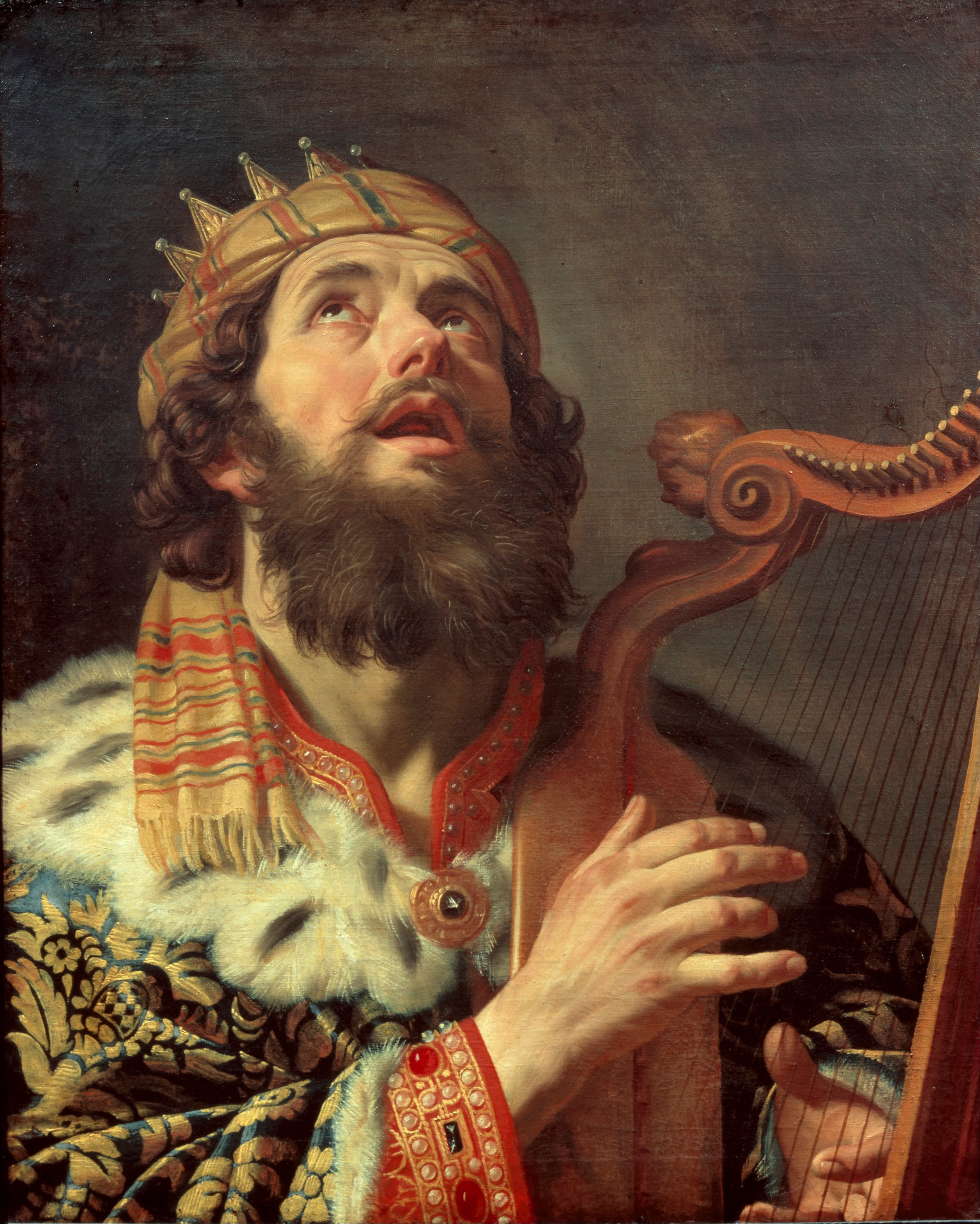
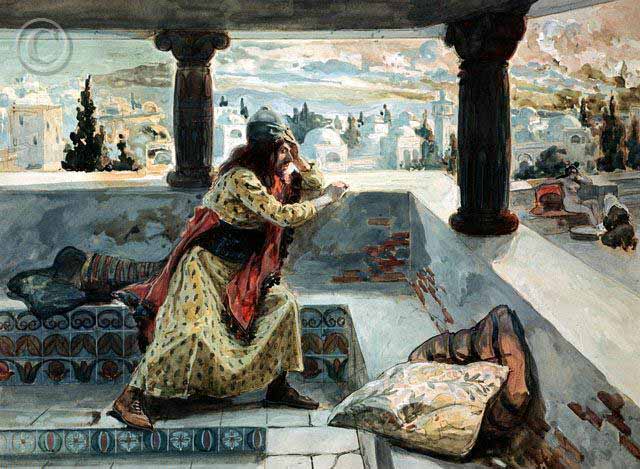
Commentary on Psalms 23, 27 (Psalms of David)

The Book of Psalms is a collection of five sets of books that were combined into a single biblical book. The psalms are primarily praises and prayers for temple worship or personal devotion.

The 150 psalms were composed over a period of about 1000 years, starting in the time of Moses (1400 BC) and stretching all the way to the Babylonian exile (586 BC). It seems that the Israelites were collecting and organizing individual psalms from the beginning of their organization as a nation.

Many of the psalms are anonymous, although all but 34 have superscripts that indicate authorship.  Of all the Psalms, at least 73 are attributed to David. Other authors are Asaph (Ps 50; 73– 83), the sons of Korah (42– 49; 84– 85; 87– 88), Moses (90), Solomon (127), Heman (88) and Ethan (89).

Psalm 23 may be the most famous of all the psalms, given that it is regularly quoted by non-Christians and non-Jews alike. Although it is brief, it has comforted millions of people for thousands of years.

Psalm 23 can be broken into two parts: God’s provision (verses 1-3) and God’s protection (verses 4-6). In verse 1, David compares God to a shepherd, a very common metaphor for God used both in the Old and New Testaments. Donald Williams and Lloyd Ogilvie explain, in Psalms 1–72, The Preacher’s Commentary Series:

In Psalm 80:1 God is addressed: ‘Give ear, O Shepherd of Israel, You who lead Joseph like a flock’ (see Gen. 49:24; Ezek. 34:11ff.). Israel’s kings are also called shepherds. After denouncing the unfaithful shepherds of His people, God promises, ‘I will set up shepherds over them who will feed them; and they shall fear no more, nor be dismayed, nor shall they be lacking’ (Jer. 23:4; cf. Ezek. 34:2). And Jesus identifies Himself as the ‘good shepherd,’ the Messianic King (John 10:11). His goodness is in His giving His life for the sheep.

A shepherd provides everything a sheep needs, and that is exactly how David sees God. A sheep needs rest, as do human beings, and God provides that rest when He makes us “lie down in green pastures.”

Sheep, like humans, also need food and drink, and God provides that as well when He leads us “beside quiet waters.” Our souls likewise need restoration, not just our bodies, and God provides that restoration. Once our souls are restored and transformed, God “guides [us] in paths of righteousness for his name’s sake.” Our restored souls do the work of God’s kingdom as representatives of the King of kings. Every good and loving deed we do is for God, our loving shepherd.

Williams and Ogilvie expand on Jesus’ role as our shepherd:

As our good shepherd, Jesus provides us with rest, food, and water. When we come to Him we enter His ‘Sabbath rest’ or salvation (Heb. 4:1–11). He feeds us with Himself because He is the bread which has come down from heaven. As Jesus tells the multitudes, ‘I am the bread of life. He who comes to Me shall never hunger, and he who believes in Me shall never thirst’ (John 6:35). Then Jesus gives us His Spirit to quench our thirst. Again He promises, ‘If anyone thirsts, let him come to Me and drink. He who believes in Me, as the Scripture has said, out of his heart will flow rivers of living water’ (John 7:37–38). John comments, ‘But this He spoke concerning the Spirit’ (John 7:39).

David also recognizes that God protects. In verse 4 we see that even though we are threatened with pain, suffering, and even death in this world, God is always with us. The destiny of a child of God is sealed, so there is no reason to fear. The rod and staff of a shepherd are used to protect a sheep from danger, and God will likewise protect His sheep.

Verse 5 then shifts the metaphor from shepherd to host. God celebrates David’s life with a banquet of food and drink, and in front of David’s very enemies. David is also anointed with oil, a sign of God’s blessing.

In verse 6, David affirms that God’s love and blessing on his life will continue throughout his life. Not only that, but David will live in God’s presence (His house) forever.

We now move to Psalm 27, another psalm of David. Verses 1-3 describe why David has no fear when his enemies attack him. David, during his life, was faced with attacks from King Saul, the Philistines, the Ammonites, the Amalekites, and even his own son. Each time, his life was in peril, so how could he possibly survive the repeated stress? Verse 1 answers the question.

God is David’s light, salvation, and stronghold. Salvation, in this sense, denotes being saved from physical death, although Christians may rightly apply the term to eternal salvation. Light refers to God’s holiness, but also to His bestowal of understanding on David. David is able to see his circumstances through God’s eyes, and not merely his own.

Williams and Ogilvie remind us of the importance of our reliance on God:

Faith or fear—these are our ultimate options. Either we can know the living God as our ‘light,’ ‘salvation,’ and ‘strength,’ or we are condemned to anguish as we move toward our final hour. The atheist philosopher Bertrand Russell put it, ‘The older I get, the more nervous I become.’ In contrast, two weeks before his death, Pope John XXIII said, ‘My bags are packed. I’m ready to go.’

In verses 4-6, David reveals what is most important to him: 1) to dwell in the house of the LORD, 2) to gaze upon the beauty of the LORD, and 3) to seek him in his temple. At the time David likely wrote this psalm, there was a tabernacle set up in Jerusalem which housed the Ark of the Covenant, the place where God promised to meet Israel on earth. Of course, the tabernacle was only meant to be a representation of God’s real home in heaven. In either case, David’s single biggest desire is to be where God is. David knows that if he is where God is, then David will be kept safe and will triumph over his enemies.

In verses 7-12, David shifts to a direct conversation with God. He is obviously in trouble and he is frustrated that God is not immediately saving him from his trouble. David wonders why it seems like God is not answering him, why it seems like God is hiding his face from David, why it seems like God is angry with Him, why it seems like God is rejecting him.

David reminds God that he desires to be led by God and that he desires to know the ways of God. It would not be right for God to turn David over to his enemies, when they are unjustly attacking David. David deserves God’s provision because he loves God, whereas his enemies are false witnesses.

In verses 13-14, though, David reminds himself and his readers that even though God does not appear to be helping him right at that moment, he is confident that He will. He will see God’s blessings while he is still alive, but he must wait for God.
Commentary on 1 Chronicles 28-29 (Death of David)

1 and 2 Chronicles were originally a single work that was separated into two books when it was translated into the Greek Septuagint. The Chronicles was written to the Jewish people after they returned from Babylonian exile in the 6th century BC.  Jewish tradition holds that Ezra was the author of Chronicles, but scholars are divided on the issue.

The book starts with genealogies stretching from Adam to the twelve sons of Jacob, to David, all the way to the exiles of Judah. It then records the accomplishments of King David and King Solomon, and lastly records the deeds of the kings of Judah after Solomon’s death. The book ends with Judah’s capture by the Babylonians and her subsequent exile, but the last couple paragraphs of 2 Chronicles skip ahead 70 years to the decree of Cyrus the Persian to allow the Jews to return to their homeland, and there the book ends. The most likely date for the book’s creation was some time after 400 BC, 150 years or so after the return from exile.

The author of the Chronicles used some non-biblical sources to compose his sweeping history, but it seems clear that he also had the following biblical books in front of him when he wrote Chronicles: the Pentateuch, Joshua, Judges, Ruth, 1 and 2 Samuel, 1 and 2 Kings, Psalms, Isaiah, Jeremiah and Lamentations.

The purposes of the author are at least three-fold. First, the exilic community needed to be reminded of its national origins, going all the way back to the dawn of mankind. Second, the Israelites needed to be reminded of their national unity under the great kings David and Solomon. Third, the Israelites needed to be reminded of the primacy of the Torah, received by Moses, and along with the Torah, the importance of proper temple worship mediated by the Levite priests.

Chapters 28-29 of 1 Chronicles record three important events: 1) David’s instructions to Solomon to build the temple, 2) Solomon’s anointing as king, and 3) David’s death. Verses 1-11 in chapter 28 get us started.

David, an old man now, summons all of the leadership of Israel to hear his final commands. We are immediately reminded of both Moses and Joshua speaking before their deaths to the leaders of Israel. David first explains that he wanted to build the temple for God, but God would not allow him because David was a warrior and had shed blood. Instead of David, God chose Solomon to build His house. Of all of David’s sons, Solomon would be the next king and he would have the honor of building the temple.

David then charges the leaders of Israel to “follow all the commands of the LORD your God, that you may possess this good land and pass it on as an inheritance to your descendants forever.” He turns to Solomon and instructs him to “acknowledge the God of your father, and serve him with wholehearted devotion and with a willing mind.” There are consequences for Solomon’s actions toward God. “If you seek him, he will be found by you; but if you forsake him, he will reject you forever.”

God will bless Solomon and Israel if they obey his commands (especially building the temple), but He will curse them if they do not follow His commands. This has been the consistent message from God to the people of Israel ever since they left the slavery of Egypt, and it is still His consistent message to us today.

Note also that David warns Solomon, “The LORD searches every heart and understands every motive behind the thoughts.” God is omniscient, or all-knowing. Neither Solomon nor anyone else can hide what they are thinking from God, as he sees everything with perfect clarity.

In verse 11, David gives Solomon detailed plans on how to build the temple, plans that are described more fully in verses 12-19. David tells the assembled crowd that these plans were inspired by God, so that there is no doubt that they should be followed to the letter. The temple is to be a continuation of the tabernacle, and so we see many parallels between David’s plans and the plans given to Moses in the Book of Exodus.

In chapter 29, verses 1-9, David announces the treasure he has donated to the temple building campaign and implores the leaders of Israel to likewise donate, so that Solomon has everything he needs to finish the divinely appointed construction project. The leadership responded with an outpouring of generosity and all Israel rejoiced.

In verses 10-13, David spontaneously praises God with a beautiful prayer. In this prayer he refers to God’s timelessness, omnipotence, beauty and majesty, sovereignty, and generosity. David thanks God, essentially, for being God! David realizes that literally nothing good is given to him or Israel without it coming from God. Of special note is that verse 11 was appropriated by the early Christian church as a doxology appended to the Lord’s Prayer: “Yours, O LORD, is the greatness and the power and the glory.”

David’s prayer continues in verses 14-19. He acknowledges that everything donated to build the temple comes from God in the first place. David knows that God can see the sincerity that accompanied the donations of the people of Israel. Their motives were pure. David then asks that God “keep this desire in the hearts of your people forever, and keep their hearts loyal to you.” Regarding Solomon, David asks God to “give my son Solomon the wholehearted devotion to keep your commands, requirements and decrees and to do everything to build the palatial structure for which I have provided.”

The next day David hosts a tremendous festival for the Lord, including sacrifices, eating and drinking, and the coronation of Solomon. It is likely that David and Solomon were co-regents for a time, until David eventually died. This was a common move by kings who wanted to ensure that their chosen successors were firmly established before the king’s death. Solomon’s rule begins with rich blessings from God and the full allegiance of the leaders of Israel.

Finally, in verses 26-30, the death of the greatest king of Israel, David, is reported. The writer informs us that David “ruled over Israel forty years—seven in Hebron and thirty-three in Jerusalem. He died at a good old age, having enjoyed long life, wealth and honor.”

J. A. Thompson, in 1, 2 Chronicles: An Exegetical and Theological Exposition of Holy Scripture (The New American Commentary) concludes:

The Chronicler presents not one but two great kings as the ideal for Israel. The one was David, the warrior-king, who subdued the enemies of the people of God and established a secure domain. He was now passing, and the other, Solomon, was taking his place. Solomon was a man of peace who would build up the prosperity of the nation. These two things together—victory over enemies and a reign of peace—are both essential. For Christian readers these two ideals are fulfilled in the one man, Jesus Christ. He conquers all his foes but at the same time establishes a reign of peace for his own people. In this the tandem of David and Solomon are a type of Christ.

Is There Extrabiblical Evidence for the Existence of David?

Skeptical scholars have long argued that David’s existence is doubtful because there was no archaeological evidence of his rule or his alleged dynasty. From roughly 850 BC onward, there have been many discoveries confirming the kings of Israel and Judah listed in the Bible, but pre-850 BC evidence has been almost nonexistent.

However, in 1993 and 1994, fragments of an Aramaic monument were discovered in Tel Dan, Israel that changed everything. Walt Kaiser and Duane Garrett provide details of this finding in the NIV Archaeological Study Bible: An Illustrated Walk Through Biblical History and Culture:

Although only a fraction of the original inscription was recovered, the preserved portion alludes to eight Biblical kings. Based on the names recorded in the document, it can be dated to around 841 B.C. Even though his name is missing, it appears that Hazael, king of Aram from approximately 842– 800 B.C., commissioned the stela (or stele) to commemorate his defeat of Joram and Ahaziah at Ramoth Gilead (2Ki 8: 28– 29). . . . Hazael is mentioned in the records of Shalmaneser III, king of Assyria from approximately 858– 824 B.C., and his name is inscribed on objects taken as booty by the Assyrians.

The initial lines of the inscription mention ‘my father,’ possibly a reference to Ben-Hadad II, Hazael’s predecessor. The names of Joram and Ahab can be restored in the phrase ‘[I killed Jo] ram son of [Ahab] king of Israel,’ where the brackets indicate [gaps] in the original text. Joram was king of Israel from approximately 852 to 841 B.C., while Ahab ruled from approximately 874 to 853 B.C. This is followed by the statement ‘and [I] killed [Ahaz]iahu son of [Jehoram kin]g of the House of David.’

Why is this so important? Kaiser and Garrett continue:

The most remarkable aspect of the Tel Dan Stele is the phrase ‘House of David,’ providing extrabiblical evidence for the existence of David. This is important because some recent scholars have denied the existence of the united kingdom under David and Solomon, treating David as a character more of legend than of reality. This inscription demonstrates that ancient kings recognized the Davidic dynasty over Jerusalem and by implication validates the historicity of David himself. Some scholars have tried to avoid this implication by arguing for an alternative translation for ‘House of David,’ claiming that the words refer to some place or to a god rather than to King David. Few are persuaded by these protests, and the inscription is widely recognized to be an extrabiblical witness to the dynasty of David.

K. A. Kitchen, in his book On the Reliability of the Old Testament, mentions two other pieces of evidence. Once the Tel Dan stela was discovered,
As often happens, one discovery can lead to others. Equally convincingly, Lemaire was subsequently able to show that bt-[d]wd is to be read in line 31 of the famous stela of Mesha king of Moab, dating to about the same period. This links the “House of David” (= Judah) with an occupation of part of southern Moab (around Horonen), corresponding to Israel’s penetration in the north under Omri and his dynasty. So we have David mentioned twice in retrospect, some six generations after his death.

Kitchen writes,

Nor is this all, it seems. After his victory over Rehoboam and Jeroboam in 926/925, Shoshenq I of Egypt had engraved at Karnak a long list of Palestinian place-names. Some of these are now destroyed, and thus lost to us; many can be readily identified with known places in Israel, Judah, the Negev, and a few in western Transjordan. But quite a few have remained obscure. Among these, in a group of names clearly located by association in the Negev/south Judah area, is ‘the heights of Dwt.

Kitchen argues that Dwt should be translated as “David,” which means that “this would give us a place-name that commemorated David in the Negev barely fifty years after his death, within living memory of the man.”

Commentary on 2 Samuel 13-18 (Absalom’s Rebellion)

Chapter 13 begins with an ominous declaration: Amnon loves Tamar. Amnon is David’s firstborn son and heir to David’s throne. His mother is Ahinoam. Tamar is the daughter of David and Maacah. Maacah and David also have a son named Absalom, so Absalom and Tamar are brother and sister. Tamar is Amnon’s half-sister.

Amnon wants to have sexual relations with Tamar, but she is still a virgin and yet to be married. In addition, the Law specifically prohibits sex/marriage between half brothers and sisters. Amnon, however, doesn’t care about the Law and wants Tamar anyway.

Jonadab, Amnon’s cousin, suggests a plan for Amnon to be alone with Tamar. He is to pretend he is sick and request that Tamar come to his house to prepare food for him. When Tamar prepares bread for him, he orders everyone else out of the house. When she is alone with Tamar in his bedroom, he asks her to have sex with him.

Tamar, as a woman who knows the Law, refuses his advances. She knows that sex between brother and sister is forbidden, and she also knows that if she loses her virginity to Amnon, she will likely never marry. Her only option is to tell Amnon that he should petition King David to allow them to marry. Amnon is not interested in marriage, so he rapes her.

Once the deed is done, he kicks her out of his house and refuses, again, to marry her. In fact, verse 15 says that he hates her after they had sex more than he loved her before they had sex. We know, for sure, that Amnon simply lusted after her. There was no love involved.

Tamar tears her ornamented robe, which marked as her one of the virgin daughters of the king. There is no hiding what was done, as Tamar publicly mourns the loss of her virginity. Her full brother Absalom finds out what happened and takes her into his home. No man will want to marry her now. Absalom hates Amnon for what he has done, but he never tells him. David also finds out what happened and he is furious, but he does nothing about it.

Dale Ralph Davis, in 2 Samuel: Out of Every Adversity (Focus on the Bible Commentaries), faults David for his inaction:

It should have led to a righteous result. His anger should have led to justice. Amnon should have been punished and Tamar exonerated. Instead Amnon is not held accountable, Tamar receives no redress, and Absalom is handed a plausible excuse for revenge. David heard. He was very angry. And he did nothing.

Two years later, Absalom hosts a party at a place called Baal Hazor centered on the shearing of his sheep. He requests that David join him for the festivities, but David declines. Since David will not come, Absalom requests that Amnon come in his place, since the firstborn could represent his father. David agrees.

In verse 28, Absalom instructs his men to kill Amnon once he’s drunk, and this is exactly what they do. After two years of plotting revenge, Absalom acts and kills his half-brother, the heir to the throne.

Absalom flees to his maternal grandfather’s home in Geshur. He stays there for three years until David finally summons him to come back to Jerusalem. When he returns to Jerusalem, David refuses to see him for 2 more years. At the prompting of his trusted general Joab, David allows Absalom to come before him and they are reconciled. It had been 5 years since the murder of Amnon.

Not content with his circumstances, and perhaps still angry at his father for not punishing Amnon himself, Absalom begins to build a political following in Israel. He acquires a chariot with horses (the transportation favored by Canaanite royalty) and an entourage of 50 soldiers that would run ahead of the chariot. These are the trappings of royalty and power which support the image he wants to convey to the people of Israel.

Robert Bergen, in 1, 2 Samuel: An Exegetical and Theological Exposition of Holy Scripture (The New American Commentary)also notes:

The biblical narratives stretching from Exodus through this point in 2 Samuel are surprisingly negative in their portrayal of horses and chariots. The texts consistently depict only enemies of the Lord and his covenant people as having them. The Egyptians (cf. Exod 14:9–15:21; Deut 11:4; Josh 24:6), northern Canaanites (Josh 11:4–9; Judg 4:15; 5:19–22), and Arameans (8:4; 10:18) all used them unsuccessfully in battle against Israel. Thus, when Absalom linked them with himself, he was joining his ambitions with symbols of hostility against the Lord and Israel, and with ultimate failure.

Absalom also intercepts numerous Israelites at the gate of Jerusalem who are seeking judicial rulings from David. He lies to them, saying that David is not fulfilling his role as judge in Israel. Absalom suggests that he is perfectly willing to serve in this capacity. He also flatters the supplicants by always agreeing that their case is just.

After 4 years of Absalom’s campaigning at the gate, he is ready to make his move. He asks David for permission to travel to Hebron to make a sacrifice to God for allowing him to come back to Jerusalem from exile. David agrees to his request. Why did Absalom really want to go to Hebron? Robert Bergen explains:

At Hebron Absalom found himself twenty miles away from his father and protected by strong walls. From this relatively safe base of operations Absalom moved quickly to usurp David’s throne. He prepared for the public phase of his plot by sending secret messengers throughout the tribes of Israel (v. 10) to make a coordinated proclamation throughout the land. Once in place, they were to await ‘the sound of trumpets’ and then announce simultaneously that ‘Absalom is king in Hebron.’ Implicit in this proclamation was a call to arms for those who supported Absalom in his efforts.

Absalom also brings along 200 men from David’s administration to Hebron, letting them think they are guests at his sacrifice. This was a brilliant move by Absalom, depriving his father of 200 of his friends and advisors during the impending crisis. They would be forced to help Absalom or be killed. While in Hebron, Absalom also sends for one of David’s top advisors, Ahithophel. Recall that Ahithophel is the grandfather of Bathsheba, the woman who David seduced. It is quite possible that Ahithophel still harbors a hatred for David for what he did to Bathsheba and Uriah.

If there was any question whether Absalom would succeed in his coup, David receives a messenger in Jerusalem who gives him the horrible news: “The hearts of the men of Israel are with Absalom.”

Since there is not enough time to comment on all the events of chapters 15-17, here is a brief synopsis. David flees Jerusalem with his family, officials, and a small army of soldiers. He leaves behind 10 concubines to tend to operation of the royal palace while he is gone. He also leaves behind spies to inform him of Absalom’s plans.

Absalom moves into David’s palace and has sexual relations with the 10 concubines on the roof of the palace to publicly declare himself as king of Israel. After consulting two advisors, Ahithophel and Hushai (a spy for David), he gathers a large military force and leads them to kill David and defeat his army, who have crossed over to the east side of the Jordan River. David’s spies warn him of Absalom’s plans.

At the beginning of chapter 18, David divides his army into 3 groups, each commanded by one of his generals. The plan is to fight Absalom in the surrounding forests, where David’s forces will have a military advantage. David wants to go to battle, but his generals convince to stay behind. Before they leave, David commands the soldiers to be gentle with Absalom if they capture him. David, evidently, wants to be reconciled with him again.

In verses 6-8, we learn that David’s army defeats Absalom’s army. Some 20,000 soldiers die. Absalom’s fate is described in verses 9-15. As he is riding his mule, he gets stuck in low-hanging tree branches and is left hanging from the tree, still alive. Some of David’s soldiers spot him and tell Joab, David’s top general.

Joab asks the soldiers why they didn’t kill Absalom and they cite David’s instructions to be gentle with him. Joab takes matters into his own hands and he kills Absalom himself by plunging three javelins into him.  Thus ends the rebellion of David’s son Absalom.

What can we learn from this whole sordid affair? First, God’s prophetic words always come true. The prophet Nathan warned David that blood would not leave his house, and that a family member would sleep with his wives, thus rebelling against David. All of this came to pass with Absalom.

Second, the sins of parents are passed on to their children. Just as David illicitly slept with Bathsheba, Amnon had illicit relations with Tamar. Just as David has Uriah murdered, Absalom had Amnon murdered.

Third, note that Absalom never consulted God or his prophets. He only sought advice from men, none of whom had a word from God. This behavior mirrored that of the kings of the Canaanite nations. What a contrast with David! Robert Bergan draws out the contrast:

At every crux in his life, David sought the word of the Lord, either through an Aaronic priest (1 Sam 23:1–6; 2 Sam 5:19, 23) or a prophet (7:3–17). Absalom’s pursuit of and compliance with human counsel brought about the hasty end of his regime. David’s pursuit of and obedience to divine revelation brought him only success and dynastic blessings. By providing contrasting narrative portraits of these two Davidic kings, the author writes a prescription for the success of all future leaders in Israel: seek the word of the Lord through its authorized mediators and obey it.

Fourth, Absalom’s death carries theological significance. Bergen writes:

The words used by the soldier to report Absalom’s condition are of great theological and thematic significance: ‘Absalom was hanging [Hb., tālûy] in an oak tree.’ The word translated ‘hanging’ here is used only once in the Torah (Deut 21:23) to declare that ‘anyone who is hung [tālûy] on a tree is under God’s curse.’ Absalom had rebelled against divine law by rebelling against his father (cf. Exod 20:12; Deut 5:16; 21:18–21) and sleeping with members of David’s harem (Lev 20:11). Absalom had the massive armies of Israel fighting to protect him, and he was personally equipped with a fast means of escape not afforded other soldiers—a mule. Nevertheless, in spite of these seemingly insurmountable advantages, Absalom could not escape God’s judgment. The Lord had declared in the Torah that one who dishonored his father was cursed (Deut 27:16) and likewise that one who slept with his father’s wife was cursed (Deut 27:20)—Absalom, of course, had done both. Although no army had been able to catch Absalom and punish him, God himself had sent a curse against him that simultaneously caught and punished the rebel. The fearful judgments of the Torah had proven credible: the Lord had upheld his law.

How Is Science Like Checkers?

Philosopher Ed Feser recently introduced another useful analogy to explain why scientism, the idea that the scientific method is the only way to gain true knowledge of reality, is false. Feser writes:

Think of it this way: you can’t find out why checkers boards exist by looking at the rules of checkers themselves, which concern only what goes on within the game. The rules tell you how each piece moves, how the game is won, and so forth. But why are the pieces governed by these rules, specifically, rather than others? Why do any checkers boards exist at all in the first place? No scrutiny of the rules can answer those questions. It is impossible to answer them, or indeed even to understand the questions, unless you take a vantage point from outside the game and its rules.

How does checkers compare to science?

Similarly, what science uncovers are, in effect, the “rules” that govern the “game” that is the natural world. Its domain of study is what is internal to the natural order of things. It presupposes that there is such an order, just as the rules of checkers presuppose that there are such things as checkers boards and game pieces. For that very reason, though, science has nothing to say about why there is any natural order or laws in the first place, any more than the rules of checkers tell you why there are any checkers boards or checkers rules in the first place.

If science cannot, in principle, answer these questions, how do we answer questions about why there is any natural order or laws in the first place?

To answer those questions, or even to understand them properly, you must take an intellectual vantage point from outside the world and its laws, and thus outside of science. You need to look to philosophical argument, which goes deeper than anything mere physics can uncover.


What Is the Age of Accountability?

In 2 Samuel 12:23, David speaks about his dead 7-day-old child, “But now that he is dead, why should I fast? Can I bring him back again? I will go to him, but he will not return to me.” This verse implies that David believes he will see his child again in the afterlife, in Heaven. But why does David have this confidence?

Many Christian theologians have argued for a concept called the age of accountability. The idea is that any person who dies before they are old enough to know the difference between right and wrong, good and evil, goes to Heaven. What biblical evidence do they give for the age of accountability? Norman Geisler and Tom Howe, in When Critics Ask: A Popular Handbook on Bible Difficulties, provide the scriptural basis:

First, Isaiah 7:16 speaks of an age before a child is morally accountable, namely, ‘before the child shall know to refuse the evil and choose the good.’ Second, David believed in life after death and the resurrection (Ps. 16:10–11), so when he spoke of going to be with his son who died after birth (2 Sam. 12:23), he implied that those who die in infancy go to heaven.

Third, Psalm 139 speaks of an unborn baby as a creation of God whose name is written down in God’s ‘book’ in heaven (vv. 14–16). Fourth, Jesus said, ‘Let the little children come to Me, and do not forbid them; for of such is the kingdom of God’ (Mark 10:14), thus indicating that even little children will be in heaven.

Fifth, some see support in Jesus’ affirmation that even ‘little ones’ (i.e., children) have a guardian angel ‘in heaven’ who watches over them (Matt. 18:10). Sixth, the fact that Christ’s death for all made little children savable, even before they believed (Rom. 5:18–19).

Finally, Jesus’ indication that those who did not know were not morally responsible (John 9:41) is used to support the belief that there is heaven for those who cannot yet believe, even though there is no heaven for those who are old enough and refuse to believe (John 3:36).

Commentary on 2 Samuel 11-12 (David and Bathsheba)

In previous chapters, Israel has been at war with the Ammonites, but they have not yet completely defeated them. As chapter 11 begins, David sends the army to finish off the Ammonites once and for all. They have retreated to a city named Rabbah, so David’s forces are besieging Rabbah.

David, however, does not travel to the front lines and instead stays home during the siege. One evening, as David walks around the roof of his palace, he sees a beautiful woman bathing on another roof. He sends word for her to come to the palace, and then he has sex with her. She quickly learns that she is pregnant and tells David.

So who is this woman? Before David even sends for her, he learns that she is Bathsheba, “the daughter of Eliam and the wife of Uriah the Hittite.” Robert Bergen, in 1, 2 Samuel: An Exegetical and Theological Exposition of Holy Scripture (The New American Commentary), explains that “she was the daughter of one of David’s best fighters, the granddaughter of his most trusted counselor, and the wife of one of his inner circle of honored soldiers.” David is thus choosing to commit adultery and betray some of his most loyal followers.

Since Bathsheba is pregnant, the only way to hide the secret is for David to entice Uriah to sleep with Bathsheba immediately so that when the child is born everyone will think it belongs to Uriah. Since Uriah is off fighting the Ammonites, David summons him back to Jerusalem and encourages him to go to back to his house to rest and rejuvenate. Surely he will have intimate relations with his wife when he goes home.

Instead, Uriah sleeps at the palace with the servants. So David gives him alcohol and gets him intoxicated, assuming that his drunken stupor will cause him to go to his house and sleep with his wife. Again, Uriah refuses to go home.

Why does Uriah refuse to go home? Robert Bergen writes:

Uriah’s refusal to have sexual contact with his wife at this time was clearly an expression of his devotion to the Lord: all sanctioned military activity was a form of service to the Lord, and it required the Lord’s blessing for success. In order to maximize the probability of receiving that blessing in military endeavors, David seems to have required soldiers carrying out military assignments to keep themselves in a state of ritual purity, which necessarily meant refraining from all sexual contact (cf. 1 Sam 21:5; Exod 19:15). If Uriah had had sexual relations with Bathsheba, he would have rendered himself temporarily unfit for military service (cf. Lev 15:18) and thus unfit for service to the Lord.

Since Uriah refuses to sleep with Bathsheba, David concocts a new plan to murder Uriah, which will allow David to legally take Bathsheba into his household as her kinsman-redeemer. David sends a message, carried by Uriah, to his general, Joab. Joab is to mount a risky assault close to the walls of Rabbah, and make sure Uriah is part of the assault. When the soldiers come under attack, Joab is to withdraw the other soldiers so that Uriah is left alone and defenseless, to be killed by the enemy.

Joab does what David commands, but he loses several other soldiers in the assault, in addition to Uriah. The Ammonite archers of Rabbah slay the soldiers because they were so close to the city walls. Keep in mind that this assault was completely unnecessary as they had Rabbah surrounded. Given enough time, the city would have surrendered without this useless attack on the city wall.

So David has now committed adultery and murder. His commands to Joab are directly responsible for the death of Uriah, but indirectly responsible for the deaths of the other soldiers in the risky assault.

Upon hearing of Uriah’s death, Bathsheba mourns. After her mourning is over, she moves into the palace with David. How did David not arouse suspicion when he moved Bathsheba into the palace, married her, and then impregnated her? Robert Bergen offers a plausible explanation:

As perhaps in the case of Abigail, David may have been acting as a royal, surrogate kinsman-redeemer (Hb. gōʾēl). David might have claimed he was taking the gōʾēl responsibility on himself since Uriah was a foreigner who had no near kinsman living in Israel. As such, David would have assumed the lifelong responsibility of caring for the needs of Uriah’s widow and was obligated to father a child in order to raise up an offspring to preserve the family line of the deceased (cf. Gen 38:8; Deut 25:5–6; Ruth 4:5). Such a pretext would have made David’s actions toward Bathsheba following Uriah’s death seem truly noble and would have accounted nicely for the birth of the son.

Even though David may have fooled everyone else, he did not fool God. Chapter 11 ends on an ominous note for David: “But the thing David had done displeased the Lord.”

At the opening of chapter 12, the confrontation between God and David takes place through the prophet Nathan. Rather than accuse David of his sin, Nathan instead tells a story to incite David to accuse himself. Nathan tells the story of a rich man (he owns a large number of sheep and cattle) who steals the beloved lamb of a poor man (who owns no livestock except the lamb) in order to feed a traveler who has arrived at the rich man’s home.

Upon hearing the story, David exclaims, “As surely as the LORD lives, the man who did this deserves to die! He must pay for that lamb four times over, because he did such a thing and had no pity.” To which Nathan responds, “You are the man!”

Nathan then reveals the word of God that he received about David’s evil deeds. God reminds David that He gave him the throne of Israel, that He gave David everything that Saul had possessed, and that He was going to bless David even further. But David murdered Uriah and stole his wife from him.

The consequences that would follow are that David’s own household would suffer tremendously. His wives and concubines would be taken by a family member and this family member would publicly sleep with them. There would be public rebellion against the reign of David from within his own household. Robert Bergen elaborates:

Uriah had died because of David’s sin, but God decreed that death would enter David’s life as well: ‘the sword will never depart from your house’ (v. 10). This dark judgment presages fatal violence within David’s family and can be seen as the literary motivation for chaps. 13–19 as well as 1 Kings 1–2. All told, four of David’s sons would experience premature death—an unnamed son (cf. 12:18), Amnon (cf. 13:29), Absalom (cf. 18:14–15), and Adonijah (cf. 1 Kgs 2:25). Traditional Jewish and Christian interpretation of this passage has correlated the death of the four sons to be the ‘fourfold’ of v. 6. To remove all doubt about why this would occur, Yahweh restated the fundamental cause: ‘You despised me and took the wife of Uriah the Hittite to be your own.’

In verse 13, David, unlike Saul, when confronted with his sin simply states, “I have sinned against the Lord.” There are no excuses, no elaborate rationalizations, only heartfelt repentance. Note that even though David sinned against Uriah, his primary offense is sinning against God. By breaking God’s commands in the Torah, David despised God Himself.

The penalty for adultery and murder, as prescribed by the Torah, is capital punishment. Would the Lord take David’s life? Nathan reassures David that his life would be spared, but the life of his son would be taken instead. God strikes the child with an illness and David prays and fasts that God will change his mind and show mercy to his son. On the child’s seventh day of life, he dies. David, hearing of his son’s death, ceases his fasting, washes himself, puts on a change of clothes and eats a meal. His servants are confused at his actions, so he tells them his rationale:

While the child was still alive, I fasted and wept. I thought, ‘Who knows? The LORD may be gracious to me and let the child live.’ But now that he is dead, why should I fast? Can I bring him back again? I will go to him, but he will not return to me.

While the child was still alive, David prayed for God’s grace and mercy, even though he knew that God had already told him his son would die. Praying for a dead child is pointless as he knows he cannot bring the child back from the dead. David assures his servants that he will see his son again in the afterlife.

David and Bathsheba then conceive another child, and name him Solomon. Solomon is loved by God and given the Hebrew name Jedidiah, which means “loved by the Lord.”

If David is anointed by God, is a man after God’s heart, has been promised a dynasty, then how can we comprehend his heinous sins in chapter 11? Dale Ralph Davis, in 2 Samuel: Out of Every Adversity (Focus on the Bible Commentaries), puts it in perspective:

The unvarnished truth is that life for God’s people can be like that even in the supposed kingdom of God. That kingdom is not safe even in David’s hands. It is only safe when Jesus Christ rules and will rule with justice and righteousness. Yet until Jesus publicly enforces that just regime at his second coming, it will not be unusual for God’s people to suffer even within (what claims to be) the kingdom of God.

Does Jesus Christ Fulfill the Promises Made to David?

In 2 Samuel 7, verses 11-14, God speaks to the prophet Nathan about King David:

The LORD declares to you that the LORD himself will establish a house for you: When your days are over and you rest with your fathers, I will raise up your offspring to succeed you, who will come from your own body, and I will establish his kingdom. He is the one who will build a house for my Name, and I will establish the throne of his kingdom forever. I will be his father, and he will be my son.

The New Testament writers certainly believed that these promises to David applied to Jesus. But why?

First, The NT writers recognized Jesus as a physical descendant of David (see Matt 1:1; Acts 13:22–23; Rom 1:3; 2 Tim 2:8; Rev 22:16). Second, God did indeed “raise up” Jesus when He resurrected Him from the dead. Third, Jesus claimed He would build a temple (see Matt 26:61; 27:40; Mark 14:58; 15:29; John 2:19–22). Fourth, Jesus claimed to possess an eternal throne and an imperishable kingdom (see Matt 19:28–29; Luke 22:29–30; John 18:36).

Fifth, Jesus’s disciples understood Him to be the literal Son of God. Robert Bergen, in 1, 2 Samuel: An Exegetical and Theological Exposition of Holy Scripture (The New American Commentary), writes,

Jesus is unambiguously understood in the New Testament to be the Son of God (Mark 1:1; John 20:31; Acts 9:20; Heb 1:5), an understanding fostered by Jesus’ own self-claims (cf. Matt 27:43; Luke 22:70). In taking this verse literally and applying it to Jesus, the New Testament connected it with Jesus’ virgin birth (cf. Luke 1:32).

Taken together, it is easy to see how the New Testament writers believed Jesus to be the fulfillment of the promises made to David in 2 Samuel 7. Jesus certainly thought of Himself as David’s successor and provided evidence that He was in a number of ways.

Commentary on 2 Samuel 7 (The Davidic Covenant)

Some time after David has placed the ark in Jerusalem, a palace has been built for him, and he has a period of rest from his enemies, he decides that he should build a temple to house the ark (God’s home on earth). David communicates his plans to Nathan, the prophet, and Nathan affirms his plans. However, that night Nathan hears from God about His plans for David, and they are not at all what Nathan expects!

The verses that follow contain some of the most important words in the entire Old Testament because they capture God’s promises to David. These promises are often referred to as the Davidic Covenant. The New Testament writers believed that the promises made to David in 2 Samuel 7 were fulfilled in Jesus Christ. In order to understand who Jesus thought He was and who His disciples thought he was, it is imperative to understand the Davidic Covenant.

In verses 5-7, God reminds Nathan that He has never requested that a permanent structure be built to house the ark. God has been content to travel with His people, Israel, wherever they have gone.

In verses 8-9, God reminds Nathan that it was God who took David from being a simple shepherd to ruler over Israel. It is God who has given David all of his military victories. The second half of verse 9 begins the Davidic Covenant, the promises God makes to David and his descendants.

First, God promises that He will make David’s “name great, like the names of the greatest men of the earth.” Second, God promises that He will give Israel the land He promised them, and give them peace from their enemies.

Third, God will build a house for David, not the other way around. What follows are the key verses of the Davidic Covenant:

“When your days are over and you rest with your fathers, I will raise up your offspring to succeed you, who will come from your own body, and I will establish his kingdom. He is the one who will build a house for my Name, and I will establish the throne of his kingdom forever. I will be his father, and he will be my son. When he does wrong, I will punish him with the rod of men, with floggings inflicted by men.  But my love will never be taken away from him, as I took it away from Saul, whom I removed from before you. Your house and your kingdom will endure forever before me; your throne will be established forever.”

These promises to David apply both to his son, Solomon, who would build the temple to house the ark, but also to all of David’s descendants. The greatest of David’s descendants would, of course, be Jesus Christ. Let’s look at each of the promises in order.

First, David’s house would not end with his death. God promises to “raise up” David’s offspring to succeed him. In fact, we learn that it is David’s son who will build a house for God. This promise is fulfilled in one sense when David’s son, Solomon, builds the temple between 966 and 959 BC. But in another sense, this promise must apply to another of David’s descendants, because Solomon’s throne is not established forever.

Second, the future descendants of David who rule Israel will be God’s sons. As the father of David’s descendants, He will manifest His love in two ways. First, He will discipline them when they sin by allowing their enemies to inflict harm on them. Second, even though they sin, His love will never be taken away from them. He will always love the descendants of David, regardless of their behavior.

Third, David’s house would endure forever. Time will not change God’s plans to establish the house of David.

How do these promises to David apply to Jesus Christ? According to Robert Bergen in 1, 2 Samuel: An Exegetical and Theological Exposition of Holy Scripture (The New American Commentary),

The divine declarations proclaimed here through the prophet Nathan are foundational for seven major New Testament teachings about Jesus: that he is (1) the son of David (cf. Matt 1:1; Acts 13:22–23; Rom 1:3; 2 Tim 2:8; Rev 22:16, etc.); (2) one who would rise from the dead (cf. Acts 2:30; 13:23); (3) the builder of the house for God (cf. John 2:19–22; Heb 3:3–4, etc.); (4) the possessor of a throne (cf. Heb 1:8; Rev 3:21, etc.); (5) the possessor of an eternal kingdom (cf. 1 Cor 15:24–25; Eph 5:5; Heb 1:8; 2 Pet 1:11, etc.); (6) the son of God (cf. Mark 1:1; John 20:31; Acts 9:20; Heb 4:14; Rev 2:18, etc.); and (7) the product of an immaculate conception, since he had God as his father (cf. Luke 1:32–35).

In verses 18-29, we read David’s response. He goes into the tent containing the ark and sits down and prays to God. David praises God from verses 18-24 and he petitions God from verses 25-29.

During his praise, David marvels over the fact that God has blessed him thus far, and then is further amazed that God has made this promise to establish his throne forever. David knows that God’s promises to David are a means to accomplish God’s will both for Israel and for all mankind. Remember that God’s original covenant with Abraham, upon which the Davidic Covenant is built, promised to bless the entire world through the descendants of Abraham.

David continues by proclaiming that God is one of a kind, that there is no other god except for Him. Likewise, the people of Israel are one of a kind because God chose them as the nation He would redeem. Their redemption demonstrated to all the people of the earth who God is.

In David’s petition to God, David boldly requests that God keep these promises He has made. David asks that God truly establish his house forever.  Dale Ralph Davis, in 2 Samuel: Out of Every Adversity (Focus on the Bible Commentaries), notes that David provides an example for us:

Here then is still the major task for prayer today: to take God’s promises and pray he will bring them to pass. We must, of course, be certain any promise is a promise that rightly applies to us. Certainly David’s promise does. For this is the promise we ask God to fulfill every time we pray that God’s name will be held sacred throughout the earth (see v. 26; cf. Ezek. 36:20–23), when we ask for God’s kingdom to come and his will to be done on earth. The final King of David’s dynasty has come, yet his kingship must yet be fully, publicly, and universally displayed. But since the promises are reliable (v. 28a: ‘And now, Lord Yahweh, you are the One who is God, and your words will prove true’) the petition is sure to be granted.

We are to pray that God will bring His promises to pass and we can be sure that our prayers will be granted.

Have Computer Simulations Proven Darwinian Evolution? Part 2

As we continue to look at computer simulations of Darwinian evolution, we come to our second major problem: even with intelligent intervention by the programmers of these simulations, they mostly fail to produce irreducibly complex systems. J. Warner Wallace resumes his analysis in God’s Crime Scene: A Cold-Case Detective Examines the Evidence for a Divinely Created Universe:

Even with the help of intelligent programmers and designers, many of these simulations fail to achieve their goal of creating the kind of complexity we see in the bacterial flagellum. Irreducibly complex structures, as first described by Michael Behe, are highly improbable systems in which the removal of a single structural element renders the system inoperable. In addition, these efficient systems are “composed of several well-matched, interacting parts that contribute to the basic function” of the system. These individual parts are also complex in their own right. The simplest building blocks in Behe’s examples are typically single proteins (which, in and of themselves, are very complex).

Many of the computer simulations we’ve described fail to produce truly irreducible structures, truly complex building pieces, or integrated systems with well-matched, interacting parts. The Ev project, for example, produced systems capable of operating when a binding site was removed. As a result, the system is not truly irreducible like the biological examples described by Behe. Adrian Thompson’s digital experiment suffers the same flaw; it also produced circuits capable of operating when some of their parts were removed and, therefore, cannot be used as a model for producing irreducible complexity.

Many of the simulations produced only trivially complex structures (on the level of an amino acid rather than a protein) and were incapable of producing the component sophistication seen in irreducibly complex biological systems. The Avida and Ev projects and Sadedin’s geometric model fall into this category. Finally, most of the computer simulations were unable to define the roles of each part in the context of the whole. This is important because “well-matched, interacting parts” can’t be evaluated unless we first know the role of each part. For this reason, computer simulations fail to address a key attribute of irreducible complexity.

In summary, computer simulations of Darwinian evolution have smuggled intelligent intervention into their models and still cannot produce the kinds of complex biological systems that are found in plants and animals. So, is Dawkins right about computer simulations proving the effectiveness of Darwinian evolution? Not really, no.

If the intelligent design movement has proven anything, it’s that biological organisms are loaded with complex, specified information. Complex, specified information only comes from intelligent agents, but Darwinian evolution does not allow for intelligent agents. Therefore, no computer simulation which accurately models Darwinian evolution will ever succeed.

A Christian Apologetics Blog