Commentary on 2 Chronicles 33-35 (Manasseh and Josiah)

The reforming king, Hezekiah, was followed by his son, Manasseh, who reigned from 697-642 BC. Chapter 33, verses 1-9, describe Manasseh as one of the worst kings of Judah, if not the worst. His list of sins includes building altars for a host of pagan gods, engaging in sorcery and necromancy, placing idols inside the temple, and sacrificing his own sons as part of divination rituals.

Verse 9 summarizes Manasseh’s reign: “Manasseh led Judah and the inhabitants of Jerusalem astray, to do more evil than the nations whom the LORD destroyed before the people of Israel.” The Judahites had even outdone the Canaanites whom God drove out of the Promised Land centuries before.

J. A. Thompson, in vol. 9, 1, 2 Chronicles, The New American Commentary, comments on Manasseh’s depravity:

This whole passage is strongly reminiscent of Deut 18:9–13. All in all, the sins of Manasseh detail the depths to which counterfeit religion will take a person. Here was the Davidic king, the heir and keeper of the promises of the covenant with David, worshiping poles and stones and the stars. Worse yet, he was murdering his own sons, one of whom otherwise might have been heir to the throne and the covenant. Paganism, whether in its ancient or modern manifestations, is not only an offense to God but is a degradation to humankind.

To punish Judah, God brings the Assyrians down from the north. Manasseh is captured and led away to captivity with a hook through his nose. While in captivity, Manasseh finally repents of his disastrous leadership and God allows him to return to his kingdom before he dies.

In verses 21-25, we see that Manasseh’s son, Amon, rules over Judah for only two years (642-640 BC). Like his father, he continues to promote worship of foreign gods. He is assassinated by his servants, likely for political reasons. Many scholars believe he was pro-Assyrian and murdered by those who desired to rebel against Assyrian authority.

Chapter 34 opens with the announcement of the reign of King Josiah. He would rule from 640-609 BC (thirty-one years). The Chronicler gives unparalleled praise to Josiah, saying the following: “And he did what was right in the eyes of the LORD, and walked in the ways of David his father; and he did not turn aside to the right hand or to the left.” No other king of Judah is given this compliment.

Verses 3-7 record Josiah’s attempts to undo everything that Manasseh had done. Altars are torn down. Idols are destroyed. Josiah even takes his reforms to the lands formerly occupied by Israel, the northern kingdom. His ability to do so is possible because of the weakening of Assyrian power during this period. The Assyrians had bigger problems than trying to retain control of this Jewish province.

Why did Josiah seek after God while his father and grandfather did the opposite? We can’t know for sure, but Thompson offers the following explanation:

The initiative for reform may not have been entirely due to Josiah, for in his boyhood he would have been under the influence and constraint of a regent or regents who might well have been from among the ‘people of the land,’ who no doubt saw the dangers of the religious policies followed by Manasseh and Amon and were anxious to return to a Yahweh-centered religious practice. One persuasive proposal is that the prophets Zephaniah and Jeremiah had an influence on Josiah before the finding of the book of the law in 621 B.C.

Beginning in verse 8, we read that Josiah begins to renovate and repair the temple, which had no doubt been seriously neglected under Manasseh. As the high priest, Hilkiah, is gathering the money donated by people all over Israel and Judah, he discovers the “Book of the Law” inside the temple.

Scholars are divided over what the Book of the Law contains. The most popular view is that it refers to the Book of Deuteronomy, which is primarily the summary and re-statement of the previous four books of the Torah. Other scholars believe that the Book of the Law actually included the entire Torah – all five books. It is truly shocking that the Levites, working in the temple, and the king himself, had lost all copies of the Torah, but that seems to be the case. Some scholars speculate that the Book of the Law was hidden during Hezekiah’s reign due to threat of invasion, or possibly during Manasseh’s reign because of his apostasy.

Hilkiah gives the book to a man named Shaphan, the king’s secretary. Shaphan takes the book to Josiah and starts reading from it. Upon hearing the words from the book, Josiah tears his clothes in mourning and sends his high priest to consult with a prophetess named Huldah.

Huldah prophesies that the people of Judah will be punished by God for their worship of other gods, just as the Book of Deuteronomy warns. Huldah, however, prophesies that Josiah will not live to see the day when Judah is destroyed. Because of Josiah’s humility before God, the kingdom will survive while he is alive.

Upon hearing these words, Josiah gathers the people of Judah to the temple in Jerusalem. He reads aloud from the Book of the Law and he rededicates the nation to the covenant between God and Israel. “And the king stood in his place and made a covenant before the LORD, to walk after the LORD and to keep his commandments and his testimonies and his statutes, with all his heart and all his soul, to perform the words of the covenant that were written in this book.”

In chapter 35, verses 16-19, Josiah celebrates the Passover for the first time in decades. The Chronicler claims that Josiah’s Passover celebration was unlike all previous. “No Passover like it had been kept in Israel since the days of Samuel the prophet. None of the kings of Israel had kept such a Passover as was kept by Josiah, and the priests and the Levites, and all Judah and Israel who were present, and the inhabitants of Jerusalem.”

The nation of Judah would walk in the ways of God for the remainder of Josiah’s reign. Sadly, Josiah is killed during military action with Egypt in the year 609 BC. With his death, God’s patience with Judah would come to an end. The Assyrians had been defeated by a new superpower, the Babylonians. God would now turn Babylonian eyes toward Jerusalem and Judah.

Is Isaiah 52-53 Speaking of National Israel Rather than the Messiah?

Many modern Jews identify the Suffering Servant in Isaiah 52-53 as the corporate nation of Israel rather than the individual Messiah. This raises two questions: 1) Has this always been the Jewish view of the passage? and 2) Does this interpretation make sense of the text?

To answer the first question, we turn to biblical scholar Michael Brown. In his book Answering Jewish Objections to Jesus: Volume 3, Brown surveys the historical positions of Jewish rabbis and scholars.

For the last thousand years, religious Jews have often interpreted Isaiah 53 with reference to the people of Israel, but that has by no means been the consensus interpretation, and it is not the interpretation of the Talmudic rabbis. So, for example, the Targum interprets the passage with reference to the Messiah— as a warring, victorious king, even to the point of completely twisting the meaning of key verses — while the Talmud generally interprets the passage with reference to the Messiah, or key individuals (like Moses or Phineas), or the righteous. Note also that Sa‘adiah Gaon, the influential ninth-century Rabbinic leader, interpreted Isaiah 53 with reference to Jeremiah. This means that virtually without exception, the earliest traditional Jewish sources— and therefore the most authoritative Jewish sources— interpret Isaiah 52: 13– 53: 12 with reference to an individual, and in some cases, with reference to the Messiah.

As stated above, this is highly significant. While it is true that Rashi, Ibn Ezra, and Radak all interpreted the passage with reference to Israel, other equally prominent leaders, such as Moses ben Nachman (called Nachmanides or the Ramban), felt compelled to follow the weight of ancient tradition and embrace the individual, Messianic interpretation of the Talmudic rabbis (found in the Midrash, despite his belief that the plain sense of the text supported the national interpretation). Noteworthy also is the oft-quoted comment of Rabbi Moshe Alshech, writing in the sixteenth century, ‘Our rabbis with one voice accept and affirm the opinion that the prophet is speaking of the Messiah, and we shall ourselves also adhere to the same view.’ This too is highly significant, since Alshech claims that all his contemporaries agreed with the Messianic reading of the text, despite the fact that Rashi, Ibn Ezra, and Radak had all come out against that reading. Could it be that Rabbi Alshech and his contemporaries came to their conclusions because the text clearly pointed in that direction?

The Messianic interpretation is also found in the Zohar as well as in some later midrashic works. Thus, it is clear that there is substantial Jewish tradition— spanning a period of up to two thousand years— that differs with [the] objection. . . .

All this is especially important when you realize that sections from Isaiah 52:13– 53:12 are quoted several times in the New Testament, and the passage as a whole can arguably be called the clearest prophecy of Jesus in the entire Tanakh. Yet many traditional Jewish commentators and teachers have still interpreted the prophecy as Messianic. How tempting it would have been for the Talmudic rabbis and their successors to interpret this passage with reference to Israel— rather than to the Messiah or any other individual— seeing that it played such an important role in Christian interpretation and polemics. Yet they did not interpret the passage with reference to the nation of Israel in any recorded traditional source for almost one thousand years, nor did they interpret it with reference to national Israel with unanimity thereafter.

Thus it seems clear that the idea of Isaiah 52-53 speaking of national Israel is not the original view of Jewish teachers at all. In fact, the more likely explanation is that prominent Jewish scholars one thousand years ago reacted against the rise of Christianity and reinterpreted these verses to avoid the conclusion that they point to Jesus. This view became the dominant position at that time and remains so to this day.

What about the second question? Does the text support this view? Biblical scholar Barry Leventhal, in Why I Am a Christian,  offers four arguments against the view.

In addition, the passage itself yields at least four arguments countering the claim that the nation Israel, or for that matter any other mere human being, is the promised Suffering Servant of the Lord. First is the Servant’s sinlessness (52:13; 53:9): The Servant of Isaiah 53 is described as without sin, that is, completely innocent in thought, word, and deed. He is perfect in his actions as well as his reactions. Where is the Jew who would dare to proclaim Israel, or for that matter even Moses or Isaiah, to be without sin? Why the need for a national Day of Atonement (Leviticus 16)? Or for Isaiah’s indictment against Israel’s sinful rebellion against God (Isaiah 1)? Or for that matter, Isaiah’s confession of his own sinfulness (Isa. 6:5–7)?

Second is the Servant’s submission (53:7): The Servant of Isaiah 53 submits (without any resistance whatsoever) to be slaughtered like a lamb. He lays down his life as a sacrifice, willingly and voluntarily, in an absolute sense. There are few exceptions in secular history and none in biblical history that Israel ever submitted passively to her fate. Quite the contrary, Israel’s heroism is well documented in the annals of history.

Third is the Servant’s cessation (death) (53:8–9, 12): The Servant of Isaiah 53 is ‘cut off out of the land of the living’ (53:8 NASB). ‘He poured out himself to death’ (53:12 NASB). The Servant is also portrayed as alive from the dead and enjoying fellowship with God and his faithful followers (52:13, 15; 53:10–12). Israel as a nation still exists and always has, even as God promised (cf. Leviticus 26; Deuteronomy 28). The nation has never ceased to exist, let alone been raised from the dead in any literal sense of the word.

Fourth is the Servant’s substitution (52:14–15; 53:4–6, 8, 10–12): The Servant of Isaiah 53 is a substitutionary atonement for others, not for himself. He is pictured as dying vicariously, punished for the sins committed by others. Israel, as well as Isaiah and all other individuals, were punished for their own sins. Accordingly, it is not surprising that Jewish prayer books make continual confessions on behalf of the Jewish people.

Leventhal concludes:

[N]o one else in all of history can come even close to fulfilling these, as well as the many other, messianic prophecies, except Yeshua himself. He alone is the promised Messiah who was born in Bethlehem, the totally unique One who died as the final Lamb of God—a vicarious and substitutionary atonement—and who was raised from the grave to enter into all of his own splendor and glory!

Commentary on Isaiah 52-53 (The Suffering Servant)

Isaiah 52:13-53:12 is recognized by many scholars as the fourth of the so-called Servant Songs in the Book of Isaiah. Henri Blocher, in The Servant Songs, entitles the four songs: (1) The Call of the Servant (Isa. 42:1–9); (2) The Commission of the Servant (Isa. 49:1–13); (3) The Commitment of the Servant (Isa. 50:4–11); and (4) The Career of the Servant (Isa. 52:13–53:12). The Servant in these songs is none other than the prophesied Messiah who would redeem both Jews and Gentiles alike, reconciling them to God.

What do these Songs say about the coming Messiah? Larry Heyler, in Yesterday, Today and Forever, summarizes the characteristics and accomplishments of the Servant:

  1. He is elected by the Lord, anointed by the Spirit, and promised success in his endeavor (42:1, 4).
  2. Justice is a prime concern of his ministry (42:1, 4).
  3. His ministry has an international scope (42:1, 6).
  4. God predestined him to his calling (49:1).
  5. He is a gifted teacher (49:2).
  6. He experiences discouragement in his ministry (49:4).
  7. His ministry extends to the Gentiles (49:6).
  8. The Servant encounters strong opposition and resistance to his teaching, even of a physically violent nature (49:5–6).
  9. He is determined to finish what God called him to do (49:7).
  10. The Servant has humble origins with little outward prospects for success (53:1–2).
  11. He experiences suffering and affliction (53:3).
  12. The Servant accepts vicarious and substitutionary suffering on behalf of his people (53:4–6, 12).
  13. He is put to death after being condemned (53:7–9).
  14. Incredibly, he comes back to life and is exalted above all rulers (53:11–12; 52:15).

Let’s zero in on the fourth song contained in Isaiah 52-53. Messianic Jew and biblical scholar Barry Leventhal, writing in Why I Am a Christian, breaks down the passage as follows:

1. In the prologue of the song (Isa. 52:13–15), the prophet Isaiah asserted (on behalf of God) that the Servant of the Lord would ultimately be highly exalted (v. 13), as well as honored among the Gentiles (v. 15), but only after dreadful personal suffering (v. 14).

2. In the body of the song (53:1–9), Isaiah confessed (on behalf of his own people) that (1) Israel utterly rejected the Servant of the Lord in his life (vv. 1–3), (2) as well as in his death (vv. 7–9), because (3) the nation misjudged the meaning of his death by assuming that he died for his own sins rather than for the nation’s (vv. 4–6).

3. In the epilogue of the song (53:10–12), the prophet asserted (on behalf of God) that by the Servant’s completed work of atonement, God would be exalted (v. 10), believers would be justified (v. 11), and the Servant himself would be honored (v. 12).

Do these verses predict the resurrection of the Messiah? Leventhal argues that they do.

It is obvious that a dramatic transition occurs between Isaiah 53:9 and 53:10. The messianic Suffering Servant ‘was cut off out of the land of the living’ [a Hebrew idiom for death] (53:8 NASB), ‘His grave was assigned to be with wicked men, . . . in His death’ (53:9 NASB), and ‘He poured out Himself to death’ (53:12 NASB). And yet in 53:10–12, he is alive and well, “prolong[ing] His days’ (53:10), justifying the many who believe on him (53:11), and sharing in the spoils of his victorious war (53:12).

Without question, this is the messianic Servant’s triumphant resurrection from the dead! This transition is similar to the break in Psalm 22, ‘The Messianic Psalm of the Cross,’ between 22:21 and 22:22. This should not be surprising since the Messiah’s resurrection from the dead was directly prophesied in the Hebrew Scriptures, specifically in Psalm 16. This psalm was used in the preaching of the early messianic community as an apologetic for the Messiah’s resurrection, with the result that thousands of Jews became believers (cf. Acts 2:25–28; 13:35–37; also, Luke 24:25–27, 44–48; 1 Cor. 15:1, 3–8; 1 Peter 1:10–12).

Perhaps the most astounding insight Isaiah has about the coming Messiah, which had never before been explicated in the Hebrew Scriptures, was the idea that a man (the Servant or Messiah) could suffer and die, and through his suffering and death, bring healing, forgiveness, and righteousness to other people. John F. A. Sawyer, in Isaiah: Volume 2, The Daily Study Bible Series, writes,

The prophet is entering new territory for an Old Testament writer, but what in essence he is saying is that somehow or other the community experiences healing, forgiveness and righteousness, as on the Day of Atonement (Lev. 16:22). Divine intervention has done what they could not do themselves: it has removed their sins and transformed suffering into a source of hope and healing. Psalm 51:10–17 offers a rough parallel, but there is no other Old Testament passage where such a way of thinking is developed. So unexpected is it that even Matthew quotes verse 4 in a totally different context (Matt. 8:17). Not until 1 Peter 2:24 is the full meaning of the passage appreciated. And Paul discovers the truth about the death of Christ without reference to Isaiah 53: ie ‘For as by one man’s disobedience many were made sinners, so by one man’s obedience many will be made righteous’ (Rom. 5:19).

After reading the fourth Servant Song, who is it that immediately comes to mind? Whose life exactly matches the predictions made in Isaiah 52-53? None other than Jesus Christ Himself.

This passage played a major role in the conversion of the Jewish college student, Barry Leventhal. When he was asked by Christians to read Isaiah 52-53 (and other messianic passages) for himself, he was convinced that Christians must have added it to the Hebrew Bible! He accused his Christian friends of fraud and deceit. Only later did he discover that this passage had always been in the Hebrew Bible, but modern Jews have been studiously avoiding it because of its obvious implication that Jesus Christ is the Suffering Servant whom Isaiah prophesied.

Another Messianic Jew and scholar, Michael Brown, in Answering Jewish Objections to Jesus: Volume 3, summarizes:

Isaiah 52: 13– 53: 12 is one of the most important Messianic prophecies in the entire Hebrew Bible, and I would not be exaggerating to say that more Jews have put their faith in Jesus as Messiah after reading this passage of Scripture than after reading any other passage in the Tanakh. To the unbiased reader, it clearly speaks about the death and resurrection of the righteous servant of the Lord on behalf of his sinful people. It speaks of Yeshua [Jesus]!

How Should We Understand Metaphorical Attributes of God?

The prophet Isaiah writes in chapter 40, verse 22, “It is he who sits above the circle of the earth, and its inhabitants are like grasshoppers; who stretches out the heavens like a curtain, and spreads them like a tent to dwell in.” Does God literally sit above the earth in a tent? How are we to understand verses that speak of God in this manner?

Theologian Norman Geisler explains the important distinction between metaphysical and metaphorical attributes of God in his Systematic Theology, Vol. 2, God/Creation:

Not all language about God in the Bible is metaphysical (or literal). Scripture does employ many metaphorical and anthropological descriptions of (attributions to) God. God is said to have ‘arms’ (Deut. 33:27), ‘eyes’ (Heb. 4:13), and even ‘wings’ (Ex. 19:4). He is called a ‘rock’ (1 Sam. 2:2), a ‘tower’ (Prov. 18:10), and a ‘shield’ (Gen. 15:1).

The difference between metaphorical and metaphysical attributions of God is found in the nature of God and what is being said of Him. Metaphysical attribution is based on the way God actually is—it results from His efficient causality. It is like its Cause; it is based in an intrinsic causal relation between an efficient cause and its effect. . . .

However, a metaphorical attribution of God is not the way God actually is. It is based on an extrinsic causal relation; it is not like its Cause.

So why do the biblical writers employ metaphors so frequently? Doesn’t this just lead to confusion?

There are several reasons for using metaphorical expressions of God.

First, metaphors often inform us what God can do, not what He is. They often describe His abilities, not His attributes. Thus, He is like a strong tower or shield that can protect us, or He has wings that can hold us up, etc.

Second, metaphors communicate what God is like in an indirect and non-literal way. The nonliteral actually depends upon the literal. We know God is not literally a stone, since we know He is literally an infinite Spirit, and a stone can be neither infinite nor a spirit. But once we know that God is not literally a stone, a metaphor does tell us what he literally is, namely, stable and immovable.

Third, metaphors (similes and other figures of speech) are often evocative, even though they are not literally descriptive; that is, they do not literally and directly describe God. Even so, they do evoke a response to Him (while metaphysical descriptions often do not). Hence, metaphors are frequently used in the Bible because God wants a response from us. For example, compare the evocative power of a metaphorical vs. a metaphysical statement about God:

  • Metaphysical: God is the uncaused Cause of our being.
  • Metaphorical: ‘Underneath are the everlasting arms’ (Deut. 33:27).
  • Metaphysical: God is omnipotent.
  • Metaphorical: ‘Who is like me and who can challenge me? And what shepherd can stand against me?’ (Jer. 49:19).
  • Metaphysical: God is omniscient.
  • Metaphorical: ‘Everything is uncovered and laid bare before the eyes of him to whom we must give account’ (Heb. 4:13).

Verse 22 in Isaiah 40 is clearly, then, a metaphorical description of God. Since we know that God is literally an immaterial spirit, then He cannot be physically sitting down under a tent. The verse is trying to communicate the metaphysical attribute of God’s infinite power.

Commentary on Isaiah 40 (Comfort for God’s People)

Chapter 39 of Isaiah ends with a prophecy that Judah will be conquered by the Babylonians sometime in the future (after King Hezekiah is dead and gone). Although Hezekiah is relieved that it will not happen in his lifetime, the people of Judah wondered what would happen to their kingdom. Hadn’t God promised them the land of Canaan? Hadn’t He promised them peace? Hadn’t He promised them a righteous king from the lineage of David?

Chapter 40 addresses these issues for the people of God. Isaiah writes to his contemporaries one hundred years before their exile to Babylon, but he also writes to the exiles who will wonder what has happened to God’s promises to Israel. Imagine that you are part of the remnant in exile around 516 BC. What does Isaiah have to say to you after your people have been in a foreign land for 70 years?

Verses 1-2 tell the exiles that their punishment is complete. God promised He would exile Israel and Judah if they were disobedient and that is exactly what He did. For 70 years Judah has been exiled in Babylon, but exile is coming to an end.

Verses 3-11 feature messages from three heralds or voices. The first herald gives the glorious news that God is coming to His people’s aid. In the ancient world, roads would be improved to enable the smooth travel of a visiting dignitary. The first herald is reassuring Israel that this will be done for God.  J. A. Motyer, in The Prophecy of Isaiah: An Introduction & Commentary, writes that the “Lord’s road is to be straight (3d), level (4ab) and free of obstacle (4cd), i.e. he will arrive without fail, travel without difficulty and be undelayed by hindrances.” All of the New Testament gospel writers refer to John the Baptist as the first herald of Isaiah 40. John was announcing the coming of God in the person of Jesus Christ.

The second herald, in verses 6-8, cries out that humans are transient beings that cannot be counted on. They physically deteriorate and they are morally unreliable as well. In contrast to human frailty, God’s word stands forever. God never fails. God never reneges on His promises.

The third herald, in verses 9-11, commands the people of Judah/Israel to spread the word that God is coming with power and tenderness. He will tend to the weak members of His flock, while executing on His plan to restore Israel.

The final section of chapter 40, verses 12-31, is an argument against a particular position that Isaiah wants to counter. The position is actually stated in verse 27 and goes like this: “God can’t see my plight and He doesn’t answer my prayers.” In essence, they are questioning 1) whether God has the capacity to see their suffering, and 2) whether He is faithful to do something about it. This is what the Israelites in exile would be saying about God, and Isaiah wants to reject this thinking. How will he do so?

Isaiah must remind the people of Israel who God is, because they have obviously forgotten what they have been taught. In poetic fashion, Isaiah describes God in verses 12-17. God alone is the Creator of everything on earth. Nobody can advise Him. Nobody can teach Him. No nation on earth can withstand Him. There aren’t enough animals in the world that could be sacrificed to dignify Him. He is unique and unparalleled, unlike all the other gods worshiped in the ancient world.

J. A. Motyer writes:

In Babylonian mythology, the creator god Marduk could not proceed with creation without consulting ‘Ea, the all-wise’, but the Lord works with unaided wisdom. In both Babylonian and Canaanite creation stories the creator must overcome opposing forces before the way opens for the work of creation. To the contrary, the Old Testament not only tells the story of creation in a way that demands a monotheistic doctrine of God (Gn. 1) but also uses the concept of creation to point to the fact of only one God (Ps. 96:5). In verse 12 the Creator was alone in the work of creation; here he is alone also in the wisdom needed for the work.

In verses 18-20, Isaiah mocks those who think that God can be represented by a man-made idol. The idea is absurd.

Isaiah continues to expound on the attributes of the incomparable God of Israel in verses 21-26. God sits above the earth and to him all of its inhabitants look like grasshoppers. He spreads out the stars like a tent where He can dwell. The princes and rulers on the earth are nothing to Him. God can blow them out of existence just as the wind blows away wheat chaff. When you look up at the stars, know that God created every single one of them, giving each one a name.

In answer to the complaint that God cannot see the plight of the exiles, Isaiah has clearly made the case that He can. After all, how can the Creator of everything not know what is happening to the exiles? The idea is silly.

In verses 28-31, Isaiah tackles the complaint that God does not care for His people, that He does not keep His promises or answer their prayers. Since God is the eternal Creator, He never grows weary and never tires. The implication is that He is fully able and willing to help His people no matter how much time has gone by. God promises that for those who wait on Him, for those who trust Him, He will give strength. He will renew them. “They shall mount up with wings like eagles; they shall run and not be weary; they shall walk and not faint.”

Commentary on 2 Kings 18-19 (Hezekiah and Sennacherib)

Chapter 18 introduces King Hezekiah of Judah, one of the godliest rulers of Judah since Solomon. As is the case with many kings of the time, he reigned with both his father and son in addition to reigning by himself. He reigned as coregent with his father Ahaz for 14 years (729–715 BC). He reigned alone for 18 years (715–697) and then as coregent with his son Manasseh for 11 years (697–686).

What is remarkable about Hezekiah is that, in direct contrast to King Hoshea of Israel, “he did what was right in the eyes of the LORD, just as his father David had done.” Only three other kings of Judah are given the same commendation: Asa, Jehoshaphat, and Josiah. We know that Hezekiah destroyed pagan worship centers, removed idols, and even broke into pieces the bronze snake that Moses had fashioned back during the exodus, for it had become an object of worship.

From the book of 2 Chronicles, we also learn that Hezekiah cleansed and re-consecrated the temple, and then reintroduced the sacred feasts and festivals that Judah had failed to observe. Hezekiah was so confident in the Lord that he rebelled against the Assyrians and successfully mounted attacks against the Philistines. As the idolatrous nation of Israel was being ransacked by the Assyrians, Judah was experiencing a revival under Hezekiah’s leadership.

Peace with Assyria would only last 14 years for Hezekiah, however. In 701 BC, the Assyrian King Sennacherib sweeps into Judah and overruns all of the fortified cities of Judah except for Jerusalem itself. (Note that the following section of 2 Kings 18:13-19:37 is also recorded in the Book of Isaiah [chaps. 36–37] with only minor changes.) What caused Sennacherib to launch this invasion?

Thomas L. Constable writes, in The Bible Knowledge Commentary (Old Testament), that

Sennacherib was a less capable ruler than his father. During Sennacherib’s first four years on the throne he was occupied with controlling Babylon. During this time an alliance had formed in which cities of Phoenicia and Philistia as well as Egypt (under Shaboka) and Judah (under Hezekiah) joined together to resist Assyria. Certain that Sennacherib would try to put down this uprising, as Sargon had done, Hezekiah prepared for an Assyrian invasion by fortifying Jerusalem (cf. 2 Chron. 32:1–8).

Sure enough, once Sennacherib had dealt with the Babylonians, he turned his attention to the rebellion in the south. After rolling through most of Judah’s territory, he sets up a temporary headquarters in the Judean city of Lachish.

Hezekiah panics and pays off Sennacherib by emptying his royal treasury and even removing the gold plating on the doors of the temple. However, this ransom does not succeed. Sennacherib sends an army along with three of his highest ranking officers to send a message to Hezekiah. The message to Hezekiah is received by three of his ministers and is summarized as:

  1. Hezekiah was foolish to align with Egypt against Assyria, since Egypt is weak.
  2. The God of Judah was obviously upset with Hezekiah because Hezekiah had removed the high places in Judah against God’s wishes. God had thus commanded Assyria to conquer Judah. Paul R. House, in 8, 1, 2 Kings, The New American Commentary, adds, “This sort of propaganda about other countries’ deities abandoning their adherents was a standard Assyrian ploy when they invaded and conquered another nation. Cogan notes that the Assyrians routinely told their enemies that their gods were angry with them, that the gods had abandoned them, and that these gods counseled them to surrender to the Assyrians. It is not unusual, then, for the spokesman to try such tactics on Judahites. What the speaker has not grasped, however, is that he addresses monotheists committed to separatist Yahwism, not the typical polytheists he is used to manipulating.”
  3. The people of Jerusalem will suffer greatly from the siege and Hezekiah cannot protect them.
  4. If they will surrender, they will be moved peacefully to a distant land where they will be able to live their lives and prosper. (This is an interesting way to sell deportation.)
  5. None of the other gods of the nations Assyria has conquered have been able to withstand the king of Assyria (who serves the Assyrian god Assur). Why would they think Judah will be the first?

In chapter 19, verses 1-7, Hezekiah sends his ministers to the prophet Isaiah to get his counsel. Isaiah assures the ministers that God will send Sennacherib away and that he will eventually be killed by the sword in his own land.

In verses 8-13, Sennacherib sends a letter to Hezekiah warning him not to be deceived by his god into believing that Jerusalem will be protected from the Assyrian army. He then lists 9 other nations that have fallen to the Assyrians and repeats that none of those gods protected those nations.

Hezekiah receives the letter, goes to the temple, and prays to God. Hezekiah appeals to God’s honor and the fact that Sennacherib has mocked Him. Hezekiah understands that Yahweh is the only real God in existence, but Hezekiah asks God to prove this fact to the rest of world by saving Jerusalem.

The prophet Isaiah announces to Hezekiah that God has heard his prayer and that He will indeed save Jerusalem. In verses 21-28, God speaks to Sennacherib and the nation of Assyria directly. God reprimands Sennacherib for thinking that he can conquer Jerusalem and for dishonoring the Holy One of Israel. Even though Sennacherib believes that all of his military successes are due to his own power and prowess, God corrects him and states that He is the One who has orchestrated everything that has occurred from the beginning. Because of Sennacherib’s arrogance, God will ensure that Assyria is treated just like she has treated her enemies.

God then speaks to the people of Jerusalem and tells them that they will survive the devastation brought by Assyria. Thomas Constable explains the meaning of verses 29-31:

For two years the people of Jerusalem would be able to eat the produce of their land. It would not be stolen by the Assyrians who would have lived off the land if they had returned to besiege the capital. The Judeans had not been able to plant crops outside the city walls because of the Assyrians’ presence. But God promised that He would feed them for two years by causing the seed that had been sown naturally to grow up into an adequate crop. The third year people could return to their normal cycle of sowing and reaping.

This provision of multiplied food was further designed to illustrate God’s plan to multiply miraculously the people of Judah who had been reduced to small numbers. Sennacherib claimed to have taken 200,150 prisoners from Judah. However, though Judah seemingly might cease to be a nation through attrition, God promised to revive it. Like the crops, a remnant of people would take root … and bear fruit, that is, be established and prosperous. God’s zeal on behalf of His people would perform this (cf. Isa. 9:7).

Finally, in verses 32-34, God reveals the immediate fate of Jerusalem:

Therefore thus says the LORD concerning the king of Assyria: He shall not come into this city or shoot an arrow there, or come before it with a shield or cast up a siege mound against it. By the way that he came, by the same he shall return, and he shall not come into this city, declares the LORD. For I will defend this city to save it, for my own sake and for the sake of my servant David.

That night, the angel of the Lord strikes down the entire Assyrian army camped outside Jerusalem. Sennacherib returns to his capital, Nineveh, without defeating Hezekiah and Jerusalem. Some 20 years later, Sennacherib is murdered by his two oldest sons in the temple of the Assyrian god, Nisroch. They were attempting a coup because Sennacherib had chosen their younger brother to succeed him as king of Assyria. Everything God said would occur did occur.

Why Is God So Concerned with Idol Worship?

The Second Commandment, as given in Exodus 20:4-6, forbids the worship of idols. The northern kingdom of Israel, starting with the reign of Jeroboam, ignores this commandment and after 200 years of existence is finally judged by God in the form of a devastating Assyrian invasion.

The author of 1 and 2 Kings writes that God’s judgment upon Israel is due to the rampant idol worship of the kings and his subjects. So why is this so important to God? We know that worshiping the creature instead of the Creator is a foolish error and disrespectful to the Creator. The Creator is a jealous God who covets the love of his creation. But I think many people miss the further implications of idol worship.

God placed the need to worship deep into the hearts of all mankind. It is not possible, as human beings, to not worship something, even if it is ourselves. When we worship something or someone besides the true Creator God, it leads inexorably to horrible consequences.

These consequences are sometimes spelled out in the Old Testament (OT) and sometimes not. The writers of the OT assumed that their readers did not always need to be reminded of the consequences of idol worship, so they would often use idol worship as shorthand for a whole host of sins. The prophetic writings clarify the list of sins that accompany idolatry.

Paul R. House, in The New American Commentary Volume 8 – 1 & 2 Kings, writes:

As a result of their idolatry, which amounts, of course, to covenant breaking of the worst sort (cf. Exod 20:3–6), the people no longer hold high ethical standards for how to treat one another. Oppression, greed, and brutality become common. Hosea notes that lies, wickedness, intrigue, and immorality are regular occurrences among both the people and their leaders (Hos 7:3–7). Amos claims Israel’s women “crush the needy,” “oppress the poor,” and exhort their husbands to hurt the poor for material gain (Amos 4:1). The men, on the other hand, love luxury, are lazy, and care nothing about their country’s moral decline (Amos 6:1–7). People are sold to pay petty debts (Amos 2:6–8). Similarly, Isaiah declares that justice is denied to the poor, the widow, and the orphan (Isa 1:17; 10:1–4). The false prophets do not restrain the people at all (Isa 28:7–13). None of these abuses are mentioned in 1, 2 Kings, so an awareness of their existence in this era helps readers understand that things were even worse than the author indicates. The people are as corrupt as their leaders.

In the Torah, Moses warns the people of Israel that if they adopt the worship of the Canaanite gods, they will inevitably commit the sins of incest, child sacrifice, bestiality, temple prostitution, and a host of other deviant practices. The author of 2 Kings 17 explicitly mentions that some Israelites were practicing child sacrifice before the Assyrian invasion.

So you see, worship of false gods leads to a society that is rotten to its core, a society that preys on the weak, a society where might makes right, where every man is a law unto himself. This is exactly what happened to the nation of Israel. Idol worship is where it all begins.

Sociologist Rodney Stark has studied the impact of different concepts of god on the behaviors of diverse human societies. Stark concludes from his studies (For the Glory of God: How Monotheism Led to Reformations, Science, Witch-Hunts, and the End of Slavery) the following :

The contrasts already drawn between supernatural beings and unconscious, impersonal, vaguely supernatural essences reveal that different conceptions of the supernatural have dramatically different effects on the human experience. Even within Godly religions, compare the social implications of belief in a pantheon of undependable and often immoral Gods with those of belief in a supreme being who imposes moral obligations on humans. As will be seen, the consequences of these and other such differences in how the supernatural is conceived are decisive.

In other words, it really matters what kind of god you worship. The famed Christian theologian, A. W. Tozer, penned the following words decades ago in The Knowledge of the Holy, and they are a fitting summary of this discussion.

What comes into our minds when we think about God is the most important thing about us.

The history of mankind will probably show that no people has ever risen above its religion, and man’s spiritual history will positively demonstrate that no religion has ever been greater than its idea of God. Worship is pure or base as the worshiper entertains high or low thoughts of God.

For this reason the gravest question before the Church is always God Himself, and the most portentous fact about any man is not what he at a given time may say or do, but what he in his deep heart conceives God to be like. We tend by a secret law of the soul to move toward our mental image of God. This is true not only of the individual Christian, but of the company of Christians that composes the Church. Always the most revealing thing about the Church is her idea of God, just as her most significant message is what she says about Him or leaves unsaid, for her silence is often more eloquent than her speech. She can never escape the self-disclosure of her witness concerning God.

Commentary on 2 Kings 17 (Fall of Israel)

The last king of Israel is Hoshea, who rules from 732 – 722 BC. Just as all the other kings of Israel, starting with Jeroboam, Hoshea disobeyed the commands of God recorded in the Torah. The author allows that Hoshea wasn’t quite as bad as his predecessors, but it does not matter.

Hoshea refuses to pay off the Assyrians and seeks a defensive pact with Egypt. This move completely backfires on Hoshea and he is attacked by the Assyrian king, Shalmaneser. Hoshea is captured and the capital of Israel, Samaria, is besieged for three years until it finally falls to the Assyrian army, thus ending the existence of the nation of Israel.

So why did God arrange for Assyria to end the nation of Israel in 722 BC? Why did He turn His back on the 10 northern tribes? The next 16 verses answer these questions.

Verse 8 gives a concise summary: Israel “walked in the customs of the nations whom the LORD drove out before the people of Israel, and in the customs that the kings of Israel had practiced.” The people of Israel mimicked the behavior of the pagan nations around them and the behavior of their corrupt kings. God had sent numerous prophets to call the nation to repentance, but none of them were heeded.

Paul R. House, in The New American Commentary Volume 8 – 1 & 2 Kings, notes:

A long time has passed since the prophet Ahijah told the wife of Jeroboam I that idolatry would lead to Israel’s exile (1 Kgs 14:14–16). Over these two hundred years Israel has seemed determined to make this prophecy come to pass. No reform occurs. No real repentance emerges. No leader calls a halt to pagan worship. No prophet is taken seriously. Thus the spare, unadorned description of Samaria’s fall is dramatic only in the sense that it is Israel’s final scene. God’s grace alone has delayed the fall this long.

Thomas L. Constable, in The Bible Knowledge Commentary (Old Testament:), remarks that “after just over two centuries the Northern Kingdom of Israel ceased to exist as a nation (931–722 B.C.). Seven of her 20 kings were assassinated. All were judged to be evil by God.”

In verses 19-20, the author of 2 Kings writes that even though Judah was spared in 722 BC, God would later render the same judgment on them. They too would be plundered and their leadership deported.

The policy of the Assyrians was to deport the leaders, administrators, and ruling class of their defeated enemies; they were re-settled in Assyrian territory. Then they would move Assyrian leaders and administrators into the conquered area to assume control. In this way, conquered nations could not easily rebel since their leadership had all been deported.  This is exactly what they did with Israel.

The Assyrians moved people from five different conquered nations into Samaria to re-populate the land. After they arrive, they suffer from frequent, deadly lion attacks. Most likely the native lion population had grown due to the human population being decimated during the war with Assyria.

Their reaction to the lion attacks is to assume that the local god of Samaria (the name given to the former nation of Israel) was displeased with them. They call upon the king of Assyria to send them a priest from Israel who could teach them how to placate the god of Samaria. A priest is sent, but would this bring a revival of true religion to the people of Samaria? No.

The author of Kings explains that worship of Yahweh was merely added to and combined with the worship of the other pagan gods. Verse 41 states, “Even while these people were worshiping the LORD, they were serving their idols. To this day their children and grandchildren continue to do as their fathers did.”

This passage of 2 Kings sheds light on why the Samaritans living during Jesus’s life were so despised by the Jews of that time. The Samaritans were a hybrid group of Jews and other near eastern peoples who had mixed true worship of Yahweh with worship of other pagan gods.

Was the Book of Isaiah Written by the Prophet Isaiah?

Although Jewish and Christian traditions, dating all the way back to the 1st millennium BC, all indicate that the 8th century prophet Isaiah wrote the book with his name on it, many modern biblical scholars claim that two, three, or even more authors actually contributed to the book over a period of several centuries.

The most popular theory, according to Walt Kaiser and Duane Garrett in the NIV Archaeological Study Bible, is that three authors contributed.

The first was Isaiah (1: 1), the eighth-century B.C. prophet. Called ‘First Isaiah’ or ‘Proto-Isaiah,’ he is thought to have produced the core of chapters 1– 39.  ‘Second’ or ‘Deutero-Isaiah’ is assumed to have been an anonymous prophet of the sixth century B.C., to whom are attributed chapters 40– 55.  Another postexilic prophet, ‘Third’ or ‘Trito-Isaiah,’ is posited to have composed most of chapters 56– 66, perhaps around 400 B.C.

What arguments and evidence do Trito-Isaiah advocates offer to convince us their position is correct?

Advocates of this theory attempt to demonstrate that the style, theology and background of Isaiah 1– 39 are unlike those of either 40– 55 or 56– 66. Second Isaiah— but not First— they argue, depicts God in purely monotheistic terms. Also, First Isaiah is seen as a prophet of judgment, who placed his hopes on the Davidic king, and Second Isaiah a prophet of comfort who pinned his expectations on the Lord’s suffering servant.

More substantial are the arguments focusing on the backgrounds of the respective chapters. The Old Testament prophets in general are widely understood to have written from their own unique historical situations. Even if one acknowledges that Isaiah could have predicted the Babylonian captivity, it is argued, it is unlikely that he wrote chapters 40– 55, since those texts were written from within the context of captivity. Also, the Persian king Cyrus (c. 539 B.C.) is mentioned by name in 44: 28 and 45: 1, 13, suggesting that Cyrus was a contemporary of the author of chapters 40– 55. The background of Third Isaiah is posited to be different again. By this point Jerusalem had been rebuilt, its citizens no longer under threat from either Assyria or Babylon.

How do critics of Trito-Isaiah respond?

An author’s style depends upon a variety of factors (age, purpose, subject matter, audience, etc.), and stylistic factors like vocabulary are apt to change.

The three ‘Isaiahs’ do share many phrases and words, suggesting stylistic unity. For example, God is called the ‘Holy One of Israel’ throughout (e.g., 10: 17; 41: 14; 60: 9).

The alleged theological differences are artificial. Isaiah is a lengthy book, but it does not incorporate any real internal tension or overt contradiction.

All of Isaiah is concerned with Canaanite idolatry. While scholars would expect such a focus from First Isaiah, they would not anticipate it in Second or Third Isaiah (e.g., 57: 13); it was not a significant issue to postexilic prophets such as Zechariah, Haggai and Malachi.

From early on Isaiah promised that the Gentiles would submit to the God of Israel (e.g., 2: 2– 4), an expectation developed throughout the book (e.g., 42: 4; 49: 6) and a unifying theological motif for the whole of Isaiah.

What about the historical perspective and predictions of Isaiah?

Isaiah did project himself into the future to describe events as though they had already occurred (e.g., 5: 13– 17; 9: 1– 7; 23: 1, 14). In fact, Isaiah 6, a foundational chapter, presents the exile as inevitable. Isaiah assumed that exile was certain and wrote chapters 40– 55 with that in mind.

Isaiah’s mention of Cyrus’s name has a parallel in the prediction of Josiah’s name in 1 Kings 13: 2. It is true that predictions of this kind are fairly rare in the Old Testament, but they do occur.

In contrast to Ezekiel, who lived in Babylon, ‘Second Isaiah’ gave no indication at all that he was familiar with life in Babylon. This suggests that the author of Isaiah 40– 55 did not in fact experience Babylonian exile— which is just what we would expect if the chapters were written by Isaiah of Jerusalem.

Finally, Kaiser and Garrett note that the “only related archaeological evidence comes from a Dead Sea Scroll designated 1QIsaa. This nearly complete text of Isaiah confirms the conservative position in that there is no break between chapters 39 and 40.”

Commentary on Isaiah 6 (Isaiah’s Commission)

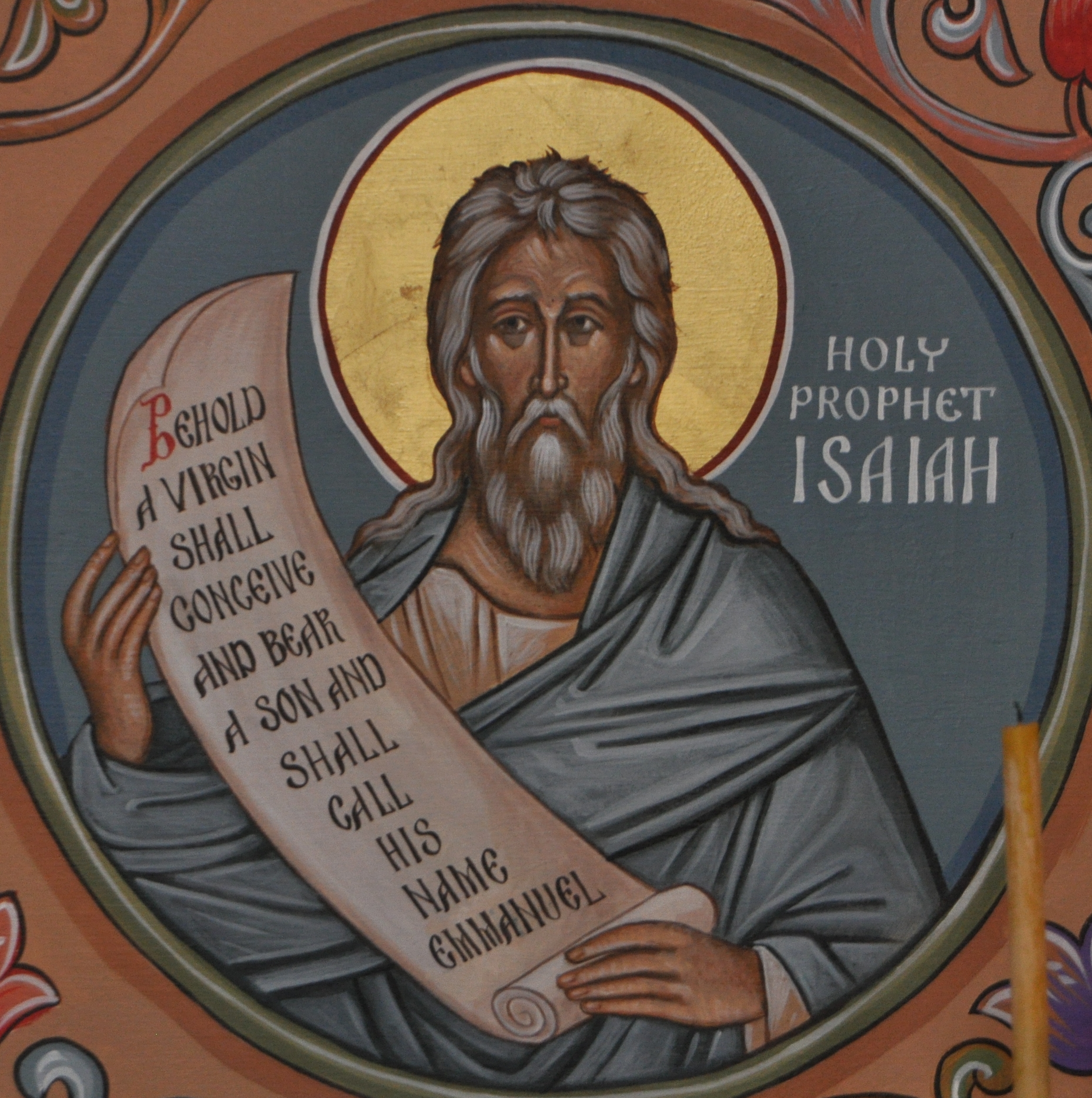
The traditional Jewish and Christian view is that the Book of Isaiah was written by the prophet of that name who lived during the 8th and possibly 7th century BC. Isaiah states that he is the son of Amoz and that his ministry coincided with the Judean kings named Uzziah, Jotham, Ahaz and Hezekiah. This indicates a prophetic ministry that lasted from about 740 to 700 BC, which is during the same time that the prophet Micah was ministering. It is likely that these two men were familiar with each other’s writings.

Isaiah’s primary audience was the people of Judah. They were failing to live according to the commands of God recorded in the Torah. Because of this disobedience, Isaiah prophesied future judgment on Judah. Isaiah didn’t stop with judgment, however. He also foretold of God’s salvation for the believing remnant of Israel, and for all those who worship Yahweh.

Isaiah is the most quoted Old Testament prophet by New Testament writers, and his book is the second most quoted in the New Testament, after Psalms.

The first five chapters of Isaiah record the sinfulness of the people of Judah, including greed, arrogance, drunkenness, injustice, oppression and murder. Because of their utter failure to follow the commands of Yahweh, judgment would be brought on them in the form of foreign aggression. God would use surrounding nations to punish Judah, eventually leading to the deportation of most of the survivors.

It is helpful to see Isaiah’s words in context with the historical situation in which he found himself. F. Derek Kidner writes, in the New Bible Commentary: 21st Century Edition:

In 740 BC the death of King Uzziah (6:1) marked the end of an ‘Indian Summer’ in which both Judah and Israel had enjoyed some fifty years’ respite from large-scale aggression. This would soon be only a memory. The rest of the century was to be dominated by predatory Assyrian kings: Tiglath-Pileser III (745–727), Shalmaneser V (726–722), Sargon II (721–705) and Sennacherib (705–681). Their ambitions were for empire, not for plunder alone; and in pursuit of it they uprooted and transplanted whole populations, punishing any sign of rebellion with prompt and hideous reprisals.

In 735 Jerusalem felt the shock wave of their approach, when the armies of Israel and Syria arrived to force King Ahaz into an anti-Assyrian coalition. Isaiah’s confrontation of the king (ch. 7) brought to light the real issue of this period, the choice between quiet faith and desperate alliances. The king’s decision to stake all, not on God but on Assyria itself, called forth an implied rejection of him and his kind, and the prophecy of a perfect king, Immanuel, to arise out of the felled stock of the Davidic dynasty.

Israel paid for her rebellion with the loss of her northern regions (‘Galilee’; 9:1) in c. 734 and of her national existence in 722. For Judah, bordered now by a cosmopolitan Assyrian province (2 Ki. 17:24) in the territory where Israel had stood, there was every discouragement to patriotic gestures.

After 5 chapters of railing against the sins of Judah, Isaiah recalls a vision he had of God. The year of the vision is about 739 BC, near the beginning of Isaiah’s ministry.

Chapter 6, verses 1-3 record these memorable words:

I saw the Lord sitting upon a throne, high and lifted up; and the train of his robe filled the temple. Above him stood the seraphim. Each had six wings: with two he covered his face, and with two he covered his feet, and with two he flew. And one called to another and said: ‘Holy, holy, holy is the LORD of hosts; the whole earth is full of his glory!’

Although God is spirit, He sometimes allows people to see a physical representation of Himself. To Isaiah, God is sitting high upon a throne in the temple that Solomon had built. His robe is so large it fills the entire room in which He is seated. While many Jews wondered where God was, Isaiah’s vision proves that He is reigning over the affairs of Judah and the rest of world.

God is surrounded by seraphim, which are angelic creatures with six wings each. This is the only place in the Bible where seraphim are mentioned. The Hebrew word means “to burn,” so many scholars suppose that the seraphim are burning with zeal for God.

John A. Martin writes, in The Bible Knowledge Commentary (Old Testament:), about the seraphim wings:

Covering their faces with two wings indicates their humility before God. Their covering their feet with two other wings may denote service to God, and their flying may speak of their ongoing activity in proclaiming God’s holiness and glory.

The seraphim are singing to one another: “Holy, holy, holy is the LORD of hosts; the whole earth is full of his glory!”

Martin continues his description of the scene unfolding in front of Isaiah.

In calling to one another the seraphs, whose number is not given, were proclaiming that the LORD Almighty is holy. The threefold repetition of the word holy suggests supreme or complete holiness. . . . Repeating a word three times for emphasis is common in the Old Testament (e.g., Jer. 22:29; Ezek. 21:27). The seraphs also proclaimed that His glory fills the earth (cf. Num. 14:21) much as His robe filled the temple. By contrast the people of Judah were unholy (cf. Isa. 5; 6:5) though they were supposed to be a holy people (Ex. 22:31; Deut. 7:6).

As the seraphs cried out, Isaiah saw the temple shake and then it was filled with smoke (Isa. 6:4). The thresholds (cf. Amos 9:1) were large foundation stones on which the doorposts stood. The shaking (cf. Ex. 19:18) suggested the awesome presence and power of God. The smoke was probably the cloud of glory which Isaiah’s ancestors had seen in the wilderness (Ex. 13:21; 16:10) and which the priests in Solomon’s day had viewed in the dedicated temple (1 Kings 8:10–13).

What is Isaiah’s reaction to be being in the presence of God? “Woe to me! I am ruined! For I am a man of unclean lips, and I live among a people of unclean lips, and my eyes have seen the King, the LORD Almighty.” Isaiah realizes that his sinfulness, along with the sinfulness of the people of Judah, render him ruined before God. He cannot do anything for God until he is forgiven.

In verses 6-7, a seraph flies to Isaiah and places a burning coal on his lips and proclaims that his sins have been paid for, taken away. As soon as Isaiah repented, God removed his sin. Now that Isaiah is reconciled to God, what will God ask him to do?

In verses 8-10, God asks for a volunteer and Isaiah steps up. What message would God have Isaiah deliver the people of Judah? Isaiah is to preach to Judah just as he has in the first five chapters of the book. He is to pronounce judgment on their sins and demand that they turn back to God.

However, God makes it clear to Isaiah that the more he preaches, the less the people will see, hear, or understand what he says to them. His preaching will be completely ineffective in bringing Judah to repentance. If God knows that the people will not repent, then why bother sending Isaiah?

John Martin explains that the “Lord did not delight in judging His people, but discipline was necessary because of their disobedience.” God does not short-circuit human psychology. He wanted to give the people of Judah every opportunity to hear the message of repentance so that they and their children would have no excuse. Nobody would ever be able to say that God never warned them, that God never commanded that they change their behavior. Isaiah was to make sure of that.

Even though God knows every human decision before it is ever made, in this instance He also allowed Isaiah to know. Perhaps this was grace from God to help Isaiah through the difficult years of his ministry. Isaiah always knew that his preaching was decreed by God, regardless of whether it ever changed anyone’s mind.

Isaiah asks God how long the people of Judah will refuse to repent. God responds that Judah will be destroyed and its people deported. This would occur when the Babylonians attack in 586 BC, some 100 years after Isaiah’s death, thus Judah would not listen to him during his lifetime. Not all will be lost, however. God would preserve a remnant of believers, a holy seed that would someday grow into the renewed people of God.

A Christian Apologetics Blog