Category Archives: General Apologetics

Can God Know Our Future Free Actions?

Post Author: Darrell

I recently had a conversation with Seth over on Markcares’s blog regarding God’s foreknowledge. Seth believes that man’s freedom is incompatible with God’s foreknowledge. As a result, he believes that God cannot know the future. Here are a couple of his comments.

A being is not “free” unless capable of acting otherwise than he ultimately does act. By definition, you cannot predict such a being’s choices.

An all-powerful God is no more capable of pre-determining a free choice than he is capable of creating a rock so large he cannot lift it.

First, allow me to say that I agree with Seth’s point that a being is not “free” unless he is capable of acting otherwise than he ultimately does act. However, this begs the question whether God’s perfect foreknowledge means that man cannot act otherwise.

If two positions are logically incompatible, then there is absolutely no way that both can be true at one and the same time. Therefore, if God’s foreknowledge and man’s freedom are logically contradictory, there is no way to explain how the two can both be true at one and the same time. If there is even one way in which these two positions can coexist, then the charge that they are logically contradictory fails.

The classic Christian position is that God exists outside of time, i.e., He is eternal. As a result, He does not view time in a linear fashion of yesterdays, todays, and tomorrows. Rather He sees time in one eternal now, being eternally present to all moments of time. This position allows God to see and know the future free acts of humans while not in any way violating their free choice.

As a helpful analogy, consider how well parents know their children. As a father, on many occasions I have been able to predict precisely what one of my children will do when faced with a certain situation. Did my foreknowledge of their future actions take away their freedom of choice? Of course not!! I had knowledge of what their future free actions would be; however, they made the choices themselves. If I as a finite time bound being have been able to do this a few times, imagine what a perfect, omnipotent, and infinite being existing outside of time is able to do.

Another problem with Seth’s position is that it contradicts the fact that God has prophesied the future free acts of humans beings repeatedly in the Bible. Consider the following prophesies given hundreds and sometimes even thousands of years before they occured.

1. That Jesus would be born of a virgin (Is. 7:14) – How did God know that Mary would remain a virgin after she was told she was pregnant?

2. Jesus would be born in Bethlehem (Micah 5:2) – How did God know exactly where Mary and Joseph would go and when they would go there?

3. Jesus would be rejected by the Jewish people (Ps. 22 and Is. 53) – How did God know that an entire race of people would reject Him?

4. Jesus would have His hands and feet pierced (Ps. 22:16) – How did God know that this is how His captors would kill him?

5. Jesus would be crucified with thieves (Is. 53:12) – How did God know that thieves would be in prison at the same time as Him and that the Romans would choose to crucify them along side Him?

6. Jesus’ side would be pierced (Zech. 12:10) – How did God know that they were going to do this?

7. Jesus would be buried in a rich man’s tomb (Is. 53:9) – How did God know that a rich man would be willing to do this and that the Romans would allow it?

8. The Roman soldiers would cast lots for His garments (Ps 22:18) – How did God know that the soldiers would even want to do this much less do it?

The Bible promises us that God is all powerful and tells us that we, as Christians, are in His tender care. What a wonderful promise!! He has perfect knowledge of all, and in Him we can find rest, knowing that our future is in His all loving and all powerful hands. All praise be to our Savior!

Darrell
A Law Professor’s Analysis of the Gospels – Part 2

Post Author: Bill Pratt

In part 1 of this post, we discussed Simon Greenleaf’s conclusion that the Gospel writers’ testimony about Jesus Christ should be considered true, based on the canons of legal evidence, an area in which he was an undisputed expert.  Some skeptics, however, have argued that the standards for judging the credibility of the Gospels should be much higher than what Greenleaf has proposed.  It is to this question we now turn.

Greenleaf makes a strong case for the kind of evidence that skeptics should be requesting, with regard to the Gospel narratives.  Here I provide his detailed thoughts:

It should be observed that the subject of inquiry is a matter of fact, and not of abstract mathematical truth.  The latter alone is susceptible of that high degree of proof, usually termed demonstration, which excludes the possibility of error, and which therefore may reasonably be required in support of every mathematical deduction. . . . In the ordinary affairs of life we do not require nor expect demonstrative evidence, because it is inconsistent with the nature of matters of fact, and to insist on its production would be unreasonable and absurd. . . . The error of the skeptic consists in . . . demanding demonstrative evidence concerning things which are not susceptible of any other than moral evidence alone, and of which the utmost that can be said is that there is no reasonable doubt about their truth.

In the case of the Gospel narratives, “A proposition of fact is proved, when its truth is established by competent and satisfactory evidence.”  What is competent and satisfactory evidence?

By competent evidence is meant such as the nature of the thing to be proved it requires; and by satisfactory evidence is meant that amount of proof, which ordinarily satisfies an unprejudiced mind, beyond any reasonable doubt.  The circumstances which will amount to this degree of proof can never be previously defined; the only legal test to which they can be subjected is their sufficiency to satisfy the mind and conscience of a man of common prudence and discretion, and so to convince him, that he could venture to act upon that conviction in matters of the highest concern and importance to his own interests. . . . When we have this degree of evidence, it is unreasonable to require more.  A juror would violate his oath, if he should refuse to acquit or condemn a person charged with an offense, where this measure of proof was adduced.

Greenleaf rejects the call for apodictic proof in the case of the Gospel testimonies because nobody ever requires this kind of evidence when it comes to the affairs of human history.  We only require enough evidence to show that the events were probable.  Even in courts of law, where the jury must determine whether a defendant is to die for his alleged crimes, the bar for conviction is no reasonable doubt.

When the accounts of Jesus’ life are subjected to the rigors of legal analysis, they fare quite well.  Greenleaf urges his readers to set aside their prejudices and take a look at the evidence.  If they do so, they will be left with no reasonable doubt.

A Law Professor’s Analysis of the Gospels – Part 1

Post Author: Bill Pratt

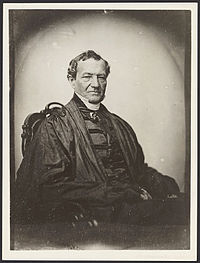
I recently read a short book entitled The Testimony of the Evangelists by Simon Greenleaf.  Greenleaf was one of the most respected American jurists of the nineteenth century.  He taught law at Harvard University and wrote a judicial classic, Treatise on the Law of Evidence. This work was used as a standard textbook for the latter half of the nineteenth century in American law schools.

The Testimony of the Evangelists is Greenleaf’s analysis of the four Gospels using the principles of legal evidence, an area in which he was an undisputed expert.  Put simply, Greenleaf treated the Gospel writers’ testimonies as if they were being presented in a courtroom.  How would they stand up?

In Greenleaf’s own words, “His business is that of a lawyer examining the testimony of witnesses by the rules of his profession, in order to ascertain whether, if they had thus testified on oath, in a court of justice, they would be entitled to credit and whether their narratives, as we now have them, would be received as ancient documents, coming from the proper custody.”

Greenleaf systematically applied the rules of evidence to the Gospel writers and found them to be entirely credible.  How did he do so?  He first argued that the documents themselves, as originally composed 2,000 years ago and reproduced from that time down to the present day, met the legal standards of admission in a court of law.  He then explained the kind of evidence needed to show that the authors of the documents were trustworthy in their testimony.

It is universally admitted that the credit to be given to witnesses depends chiefly on their ability to discern and comprehend what was before them, their opportunities for observation, the degree of accuracy with which they are accustomed to mark passing events and their integrity in relating them.

After careful historical analysis, Greenleaf finds that each Gospel writer meets these criteria, and thus their testimony about the life, death, and resurrection of Jesus should be judged true, based on the canons of legal evidence.

Some skeptics have charged that the standards for judging the truthfulness of the Gospel accounts should be much higher than the canons of legal evidence.  We will examine Greenleaf’s response to this challenge in part 2 of this post.

Some Great Pascal Quotes – #8 Post of 2009

Post Author: Bill Pratt

I am reading Pascal’s Pensees right now and couldn’t help but stop and record some of the wonderful quotes I’ve run across.

Blaise Pascal

With regard to the interaction between faith and reason, Pascal said:

The heart has its reasons, which reason does not know.

With regard to the search for God:

There are only three kinds of persons; those who serve God, having found Him; others who are occupied in seeking Him, not having found Him; while the remainder live without seeking Him and without having found Him.  The first are reasonable and happy, the last are foolish and unhappy; those between are unhappy and reasonable.

With regard to belief or non-belief in God:

I would have far more fear of being mistaken, and of finding that the Christian religion is true, than of not being mistaken in believing it true.

With regard to the person who hears the gospel and immediately believes without ever reading the Bible:

Those who believe without having read the Testaments, do so because they have an inward disposition entirely holy, and all that they hear of our religion [Christianity] conforms to it.  They feel that a God has made them; they desire only to love God; they desire to hate themselves only.  They feel that they have no strength in themselves; that they are incapable of coming to God; and that if God does not come to them, they can have no communion with Him.

And they hear our religion [Christianity] say that men must love God only, and hate self only; but that, all being corrupt and unworthy of God, God made Himself man to unite Himself to us.  No more is required to persuade men who have this disposition in their heart, and who have this knowledge of their duty and of their inefficiency.

Are Religious Folks More Irrational?

Post Author: Bill Pratt

Not according to an article published last year by the Wall Street Journal.  The columnist cites research which indicates that people who never worship at a traditional house of worship are more likely to be superstitious.  Below is an excerpt:

The Gallup Organization, under contract to Baylor’s Institute for Studies of Religion, asked American adults a series of questions to gauge credulity. Do dreams foretell the future? Did ancient advanced civilizations such as Atlantis exist? Can places be haunted? Is it possible to communicate with the dead? Will creatures like Bigfoot and the Loch Ness Monster someday be discovered by science?

The answers were added up to create an index of belief in occult and the paranormal. While 31% of people who never worship expressed strong belief in these things, only 8% of people who attend a house of worship more than once a week did.

It seems that the modern, secular myth that traditional religious folks, especially Christians, are generally more irrational and prone to believing things without evidence, is clearly false.  It turns out that everyone, and especially the non-religious, believes some things without evidence.

No group of any size has the market cornered on cold, hard, rational thinking.  In my life, I have met irrational Christians, atheists, Muslims, and Mormons, to name a few.  Each group has its share of irrational followers.

Instead of poking fun at the irrational followers of a movement, why don’t we seek out the rational and reasonable members, and speak to them?  I think it’s because those people might actually make us think, and reconsider some of our cherished beliefs.  That wouldn’t be as fun, would it?

How Should We Disagree With Each Other?

Post Author: Bill Pratt

One of the most difficult things to do is carry on a rational and calm conversation with someone that disagrees with you.  When I first started studying Christian apologetics, I figured that all I had to do was learn all the evidence for the truthfulness of Christianity and then tell people that evidence.

Boy, was I wrong!  I have learned  a great deal of that evidence through my seminary courses and also through the great past and present apologists, but often when I pass that information on, I find myself in a heated conversation where rationality has gone out the window.

One of the best apologists of our day is Greg Koukl of Stand to Reason.  In a session I attended at an apologetics conference, Koukl reminded the audience of some simple guidelines when conversing with someone who does not agree with you about Christianity.

First, he stressed that we must listen carefully.  Instead of trying to talk first, listen and let the other person do the talking.

Second, when your conversation partner makes a claim with which you disagree, instead of attacking him, ask what he means by his statement.  In other words, dig for more information and try to find out what the other person is really saying.  Often, what you think he meant is not what he meant at all.

Third, after you have learned exactly what he means, ask how he came to his conclusion.  Why does he believe what he believes?  What is the evidence or the argument that convinced him?

Once you have listened to your friend and tried to understand his point of view, you have earned the right to present your side.  Only then will your friend will be more willing to listen to you and consider your viewpoint.

This same advice can be applied to the online world where we have heated exchanges on blogs and Facebook.  I have noticed that there are precious few people who consistently try to understand what the other person is saying before attacking.  We all have a lot of information and a lot of opinions, but we stink at discussing those things with people who may not see things our way.

My hope and prayer is that Christians (including myself) can greatly improve in this area.  What about you?  Can you do better?

Are Religious People Unable to Get History Right?

Post Author: Bill Pratt

In my frequent conversations with non-Christians, I hear the following kinds of statements: “I can’t believe what the Bible authors wrote because they were religiously motivated.”

The idea seems to be that if you are religious, you will not be able to tell the truth about historical events.  You will twist history to fit your agenda.

This may surprise some of you, but I can see where this viewpoint comes from.  I run into various religious groups who do monkey around with history and fail to get the facts right.  In fact, the very reason I could never be a Mormon is because Joseph Smith manufactured an entire history of the Americas that has absolutely no external evidence to support it.

But, just because some religious groups manufacture history does not mean that all religious groups manufacture history.  As I’ve written before on this blog, the writers of the Bible get their history right whenever archaeology can confirm it (see Did the New Testament Writers Record Fact or Fiction? Part 7).

At the very least, a skeptic should acknowledge this truth about Christianity and not lump it in with religions who do not accurately portray history.  The Bible deserves the benefit of the doubt as it has proven itself many times to be historically accurate.

The well-known scholar N. T. Wright explains that the New Testament writers were clearly trying to record accurate history alongside their theological teachings.  It is only modern man who struggles with the juxtaposition of the two.  Watch this brief video clip below posted by The John Ankerberg Show.

Do We Each Get Our Own Interpretation of Scripture?

Post Author: Bill Pratt

Darrell and I were talking today about people who claim that one interpretation of Scripture can be no better than another.  Or, put another way, we can’t know what the correct interpretation of Scripture is, so we shouldn’t debate it.  To each his own interpretation.

My sense is that people who say this in the midst of a discussion of a Bible passage feel trapped in an argument they can’t win, and this is their escape hatch.  If they relativize the Scriptures, making the meaning completely subjective, they get to keep their interpretation of Scripture and deflect anyone who disagrees with them.

This is the same tactic some people use when they are in a debate about a particular immoral behavior.  When they feel trapped, they say something like, “There is no objective morality any way.  Everyone decides for themselves what’s right and wrong.”  Again, if they relativize morality, then they no longer have to defend their position and they get out of an argument that they aren’t winning.

The real irony here is that the very people who relativize the interpretation of Scripture actually do believe that their view is objectively correct.  If they didn’t, then they wouldn’t have been debating in the first place.  They would have just agreed with everything their opponent said, because, after all,  everyone can have their own subjective interpretation of Scripture.

It seems to me that the best thing to do when someone plays the “relativism card” is to help them see that they really don’t believe what they are saying.  Remind them of some of the core beliefs that they have derived from Scripture and ask them if those beliefs are objectively true.

If they are honest, they will stand by their beliefs.  If they refuse to claim that their cherished beliefs about the Bible are objectively true, it’s probably time to move on, because they are more interested in saving face than having a conversation of substance.  Come back to them when they aren’t so defensive.

Should Catholic Apologists Be Invited to Speak at an Evangelical Apologetics Conference?

Post Author: Bill Pratt

In a recent post, I mentioned some of the speakers at an upcoming apologetics conference sponsored by Southern Evangelical Seminary.  One blog commenter noticed that Catholic speakers were being featured at the event and argued that they should not be.  He believes that Catholics are not Christians, and therefore cannot properly defend the Christian faith (which is the goal of apologetics).  Specifically, the commenter mentioned the fact that Catholics do not agree with evangelical views of justification by faith alone.

I disagreed with the commenter and argued that Catholics are Christian and should be able to present at the conference, but I want to know what readers of this blog think.  Should Catholics be allowed to speak at an evangelical apologetics conference?  Tell us what you think by voting in the poll below.  Also, share your comments on this issue by commenting on this blog post.

2009 National Apologetics Conference

Post Author: Bill Pratt

Southern Evangelical Seminary is hosting their annual apologetics conference on Nov. 13 and 14 in Charlotte, NC.  The conference will feature speakers such as William Lane Craig, Chuck Colson, Dinesh D’Souza, Greg Koukl, Gary Habermas, Hank Hanegraaff, and Peter Kreeft (click here for the full speaker list).  These men are all incredible defenders of the Christian faith and many of them have deeply influenced my journey into Christian apologetics.

If you can possibly make this conference, please come.  You will learn so much that your mind and heart will be bursting by the end of it!  I have attended the conference several times and have always thoroughly enjoyed it.  I promise you’ll have a great time and you will be challenged to grow in your faith more than you can imagine.