Category Archives: Evolution

When Should We Doubt Expert Consensus? Part 1

Post Author: Bill Pratt

Lately on the blog I’ve had some people question why I side with the majority of experts on some issues and not with others.  I had never really thought about this before, but then I ran across an article written by Jay Richards, entitled, “When to Doubt a Scientific ‘Consensus’“.

Richards gives 12 reasons why a scientific consensus should be doubted, using the global warming “consensus” as his example.

1.  When different claims get bundled together, be suspicious.  Whether the earth is warming and whether human beings are causing the earth to warm are two different claims that need to be supported by two different lines of evidence.  Advocates of global warming often conflate the two and act as if they are a package.

2.  When ad hominem attacks against dissenters predominate. When dissenters of a particular scientific view are frequently called names and personally attacked, be suspicious.

3. When scientists are pressured to toe the party line. Richards reminds us that “tenure, job promotions, government grants, media accolades, social respectability, Wikipedia entries, and vanity can do what gulags do, only more subtly.”

4. When publishing and peer review in the discipline is cliquish. How open is the peer review process in a particular field?  If the same small group of people are deciding which articles get published in the scientific literature, be suspicious.

5.  When dissenting opinions are excluded from the relevant peer-reviewed literature not because of weak evidence or bad arguments but as part of a strategy to marginalize dissent. If you’ve paid any attention to the climate change or evolution debates, there is plenty of evidence that this is occurring on a regular basis.  Watch the movie Expelled to see what is going on in the evolution/intelligent design world.

6.  When the actual peer-reviewed literature is misrepresented. I have seen this occur many times in the evolution debate.  Not only is there plenty of disagreement among scientists about the mechanisms of evolution (you will often hear there is not), but there is plenty of misrepresentation of intelligent design research.

7.  When consensus is declared hurriedly or before it even exists. True science requires time before results can be properly analyzed.  According to Richards:

Scientists around the world have to do research, publish articles, read about other research, repeat experiments (where possible), have open debates, make their data and methods available, evaluate arguments, look at the trends, and so forth, before they eventually come to agreement. When scientists rush to declare a consensus, particularly when they claim a consensus that has yet to form, this should give any reasonable person pause.

In the next post, we will cover the final 5 reasons a person should doubt a scientific consensus.
Are You Skeptical of Global Warming and Evolution?

Post Author: Bill Pratt

A recent NY Times article linked people who are skeptical about evolution with people who are skeptical about global warming.  The author noted that there seems to be a correlation, that if you doubt one, then you likely doubt the other.

This really has me thinking about why that is, as there is no obvious connection between them.  I am a skeptic of both, but for different reasons.

My initial skepticism about evolution came from my religious views, because I was taught that only a young earth (which does not accommodate evolution) could align with the creation accounts in the Bible.  As I researched both biblical interpretation and the science behind evolution, I eventually moved to a new position.

I now believe that the earth is probably old and that this fits with literal interpretations of the Bible.  I also understand, though I don’t necessarily agree with, why common descent (the idea that all plants and animals are part of a gigantic family tree) is the dominant theory of the origins of species: it has a lot of explanatory power and there’s not a more developed contender out there right now.

But I think that the evolutionary community has no idea what the mechanisms are that would modify plants and animals to the massive extent we see.  Natural selection and random mutation just don’t cut it.  Other proposed mechanisms likewise remain utterly unconvincing to me.  Evolutionary theorists constantly provide micro-evolutionary mechanisms as examples of how macro-evolution works over long periods of time.  The extrapolations don’t convince me.

What about global warming?  I started out skeptical of global warming because it was being exclusively evangelized by political liberals, whom I generally distrust as people who value intentions over truth.  I moved beyond that initial skepticism and tried to think about it scientifically.  As an engineer, I understand how to analyze data and how to test models, and I fail to see how it is possible to accurately model the global climate over long periods of time, given the multitude of variables that must go into these climate models and the incredible uncertainty of predicting climate changes in the distant future.

My suspicions about the data have proved to be correct as some brave climate scientists have admitted that their models have failed to predict the flat-lining of global temperatures over the last 15 years. The truth is that models of the climate have a long way to go before we can bet the farm on them.

So, what is the common denominator for me?  I started out suspecting evolution for religious reasons, and I started out suspecting global warming for political reasons.

I am conservative politically and I am a believer in traditional Christianity, but these don’t necessarily go together.  It seems like there must be something deeper.  The author Thomas Sowell possibly offers an explanation.  In his book, A Conflict of Visions, he argues that a person’s view of the nature and capability of man drives opinions about political, moral, judicial, economic, and even scientific matters (see my post on his book).  His theory makes a lot of sense; maybe he has found the common link.

I don’t have any certain answers to this question, but I’m very curious to know what others think.  What about you?  Are you skeptical about both of these issues?  Why or why not?  Please register your vote in the poll below and leave us some comments about your choices.

Two Atheist Academics Take On Darwinism

Post Author: Bill Pratt

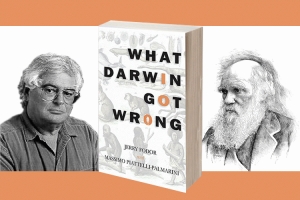
If I could count how many times I’ve been told that only ignorant, fundamentalist Christians doubt the truth of Darwinian evolution, I would be a rich man!  Alas, the worst nightmare of Darwin defenders occurs when non-Christians, and non-theists at that, write books criticizing Darwin’s ideas.

In their new book, What Darwin Got Wrong, Jerry Fodor and Massimo Piattelli-Palmarini do exactly that.  I have often told people that my doubts about Darwin have little to do with my religious beliefs, but from what I know of science.  Here are two atheists that likewise find the science to be lacking.

Salon.com interviewed Fodor recently and asked several provocative questions.  In one exchange, they ask Fodor about the standard evolutionary story about giraffes evolving long necks because they needed to adapt to food high up in trees.  Here is Fodor’s response:

The inference runs that there’s this creature that has a long neck, so this creature was selected for having a long neck. That inference is clearly invalid. A creature that has a long neck may have that neck because a different trait was selected, and the long neck came along with it.

And in a sense, there are no such things as traits. The environment selects creatures. Animals can have long necks and toenails, but if you try to break such creatures apart into traits and you say, OK, “What selected this trait?” and, “What selected that trait?” you’ve made a mistake right from the beginning. The disintegration of the organism into traits is itself a spurious undertaking. Biologists have said for a long time that organisms aren’t like Swiss apples, you can’t tap them on a table and have them fall apart into distinct wedges. Selection is operating on whole organisms.

In another exchange the interviewer asks what the implications are for Darwinism being wrong.  Fodor answers:

If this is true, then we need to rethink the implications of Darwinism. Maybe the right question to ask is not what environmental variables are doing selection, but what kinds of complexes are they selecting on. One sees, even without God, how this Darwinian story could turn out to be radically wrong. You could see a massive failure of the evolutionary project, because wrong assumptions were made.

Again, these guys aren’t fundamentalist creationists, but they recognize that the Darwinian story of the origin of species just does not work.  There are far too many holes in it.  Make sure you read the entire interview with Fodor.  It’s well worth it.

What Are They So Afraid Of?

Post Author: Bill Pratt

The pattern of censorship of the intelligent design movement continues with more disappointing news from California.  Check out this summary of what’s going on with the California Science Center.

It would be so much easier to allow a real debate to go on and defeat the ID movement with scientific data and arguments, if you are opposed to it.  Why play these dirty tricks on ID proponents?  Ultimately these tactics just backfire.

What are they so afraid of?

What is Social Darwinism? – #4 Post of 2009

Post Author: Bill Pratt

Social Darwinism is the theory that persons, societies of people, and races develop and evolve in much the same way that biological organisms evolve due to natural selection.  It is frequently described by the phrase, “survival of the fittest,” which was coined by British philosopher Herbert Spencer just a few years after Darwin wrote Origin of the Species.

The theory speculates that those people groups who are superior in intelligence, creativity, and industriousness would naturally overcome their weaker neighbors.  In doing so, they would become more successful as measured by wealth and prosperity.  This view led to a belief in the late nineteenth and early twentieth centuries that human “class stratification was justified on the basis of ‘natural’ inequalities among individuals, for the control of property was said to be a correlate of superior and inherent moral attributes such as industriousness, temperance, and frugality.”

The ethical ramifications of social Darwinism are immense.  Following its logic, if nature is removing the inferior races of men in order to preserve the superior races, then mankind ought to cooperate.  Even though this is a clear example of the is/ought fallacy, the social Darwinists employed the theory to justify all sorts of behavior.  At the individual level, there was a moral obligation to not help those people who were biologically unfit.  After all, evolution is attempting to remove these people from the population pool.  If a person is born blind, let her die of starvation rather than fit her for glasses.  If she reproduces, she is weakening the gene pool.

With regard to ethnic groups, there arose an ethical basis for racism and nationalism; if a person’s society is shown to be socio-economically superior to others, then ignoring the plight of the inferior races and societies is completely justified.  “At the societal level, social Darwinism was used as a philosophical rationalization for imperialist, colonialist, and racist policies.”

Social Darwinism saw its greatest impact in the Nazi and communist regimes of the twentieth century.  According to Sir Arthur Keith, a strong proponent of biological evolutionary theory, “We see Hitler devoutly convinced that evolution produces the only real basis for a national policy. . . . The means he adopted to secure the destiny of his race and people were organized slaughter, which has drenched Europe in blood. . . . Such conduct is highly immoral as measured by every scale of ethics, yet Germany justifies it; it is consonant with tribal or evolutionary morality.”

Nazi Germany is generally thought to have exterminated about twelve million innocent people and the regime largely based its policies on the idea that the Aryan race was superior.   It was the duty of the German people to populate the world and eliminate the inferior races.

Marxist regimes also believed that Darwinism could be used to build a legitimate philosophical framework.  Karl Marx was heavily influenced by the writings of Charles Darwin and believed that the dethroning of the bourgeoisie was completely justified to bring about the evolution of mankind that he envisioned.  Marxist governments were responsible for murdering tens of millions of people during the twentieth century.  Joseph Stalin, Pol Pot, and Mao Tse Tung massacred their own people in order to create a new order that they based ultimately upon the concept of “survival of the fittest.”

Although few people claim to be social Darwinists today, the ideas of social Darwinism still surface from time to time.  Our next post will analyze this theory of ethics to see whether it can be grounded in the seven aspects of morality we discussed in What Do We Know About Morality?

[quotation references can be provided on request]

What Didn't Darwin Know?

Post Author: Bill Pratt

Quite a bit, it turns out.  The leaps in knowledge of cellular biology and genetics over the last 150 years would boggle Charles Darwin’s mind.  Some argue that if he were alive today, he would abandon the very theory named after him because of all the contrary evidence that now stands against it.

In any case, please follow this hyperlink to a video which features two scientists and a medical doctor who explain how they came to be skeptical of Darwinism.  They explain in very clear terms the challenges facing Darwinian evolution based on what scientists know today that Darwin never knew.

It’s well worth your time.

What Do God and Science Have to Do with Each Other?

Post Author: Bill Pratt

Ever since I became an evangelical believer in Christ, about 12 years ago, I have noticed that there is uneasiness among my evangelical brothers and sisters with certain fields of science.  This uneasiness, I quickly learned, has much to do with the age of the universe and the origins of mankind.  There are other areas, as well, but those are the two primary areas of dispute.

Because of the perceived hostility of science toward basic beliefs of Christianity, some evangelicals have forsaken science altogether.  So what I want to address today is what science and God have to do with each other.

Christians have long recognized that there are two ways that God communicates with mankind: special revelation and general revelation.

Special revelation is what is communicated about God through the incarnation of Christ and the Bible.

General revelation is what is communicated about God through the natural world, including physical nature, human nature, and human history.

Science offers a method for observing and then explaining facts about the natural world, so science is the study of God’s general revelation.  Christians that forsake science are, in effect, dismissing God’s general revelation.

Why?  Because they feel that the findings of science contradict the teachings of Scripture (special revelation).

But the answer is not to throw out one of God’s revelations.  In cases where general and special revelation overlap, we must examine our fallible interpretation of Scripture and compare it to our fallible interpretation of scientific findings.

You see, the Bible is infallible, but our interpretation of it is not.  Likewise, God’s revelation about himself in nature is infallible and will never contradict his revelation in Scripture.  But our interpretation of general revelation is not infallible.

What do we do when our fallible interpretation of science conflicts with our fallible interpretation of the Bible?  We seek the interpretation that seems more certain and we go with that.  If the special revelation interpretation seems more certain than the general revelation interpretation, then we go with special revelation.  If the general revelation interpretation seems more certain than the special revelation interpretation, then we go with general revelation.  We can’t just assume one is always right and the other always wrong.  That will lead to error.

Notice that this method of seeking the right interpretation requires the Christian to study diligently the Scriptures and the findings of science.  We cannot just study the Bible, but we must also dig into science if we want any hope of finding the answers to these tough questions where science and the Bible seem to conflict.

Fortunately, these perceived areas of conflict are few, and usually do not have to do with essential doctrines of Christianity.  However, they are still important and we owe it to God to honestly and earnestly seek the answers.

Ida Not the Missing Link?

Post Author: Bill Pratt

A few months ago, the History Channel trumpeted the missing human link, Ida.  Ida is a 47 million year old fossil that was claimed to be a human ancestor.  At the time, I wrote a blog post shaming the scientific community for making sensationalistic claims like this.  The evidence from the fossil record cannot establish direct ancestral relationships over millions of years.

Here we are in October and already paleontologists are re-thinking Ida.  Check out this article at ABC News.

Bottom line: take the claims of “missing links” with a grain of salt.  Paleontologists need to stop allowing themselves to be used by the media and present new fossil discoveries with more humility.

Do "Missing Links" Prove Evolution?

Post Author: Bill Pratt

Seldom a month goes by that a major announcement isn’t made about a fossil that demonstrates the evolutionary lineage of some animal.  These announcements have always fascinated me because of the bold claims that are made.

But something I have struggled with for a long time is understanding exactly how paleontologists can make decisive claims about lineage based on the fossil record.  Recently, Greg Koukl, of Stand To Reason, wrote a fascinating article about this very topic.  In particular, he was addressing the fossil dubbed “Ida,” which is supposedly a missing link in the human evolutionary chain.  According to one scientist, “Ida is an example of a transitional fossil between primitive primates and the prosimian and anthropoid branches, the latter of which eventually led to humans. . . . She is the earliest, and one of the most significant links, ever found.”

Koukl explains the way paleontologists label a fossil a “missing link”:

If a fossil is midway in development between two other specimens (if it shares physical characteristics of both) and falls between them in time, it is considered transitional even if the distances in time are very great. This is the empirical situation paleontologists actually face when surveying the fossil record.

Since Ida existed 47 million years ago, and modern humans were found in the fossil record 100,000 years ago, there is a huge time delta between the two.  Paleontologists need to fill in the blanks between the two fossils of 46.9 million years.  There are, indeed, a handful of hominid fossils before modern humans, such as the well-known Lucy, which is one of the earliest hominid fossils ever found.  Lucy existed 3 million years, but that still leaves a 44 million year gap to Ida.

According to Koukl, “Simply because Ida’s bodily characteristics (morphology) rest between two groups on the Darwinian tree of life, she is immediately declared the common ancestor – the missing link – between both groups,” regardless of the massive amount of time separating them.

Koukl asks the reader to imagine the Darwinian tree of life as a series of roads and highways leading from east to west in the continental US.  If you have access to Google Earth, you could see the highways all interconnected from satellite photos.  But sometimes there are clouds that block your view and you cannot see all the roads as they are interconnected.  Imagine further:

A massive front covers the continental U.S. save for occasional gaps that allow you to glimpse short pieces of highway every few hundred miles.  Your task is to determine which sections of road connect with each other to form routes from the east to specific destinations in the west like L.A., San Francisco, or Seattle.

Would you be justified in inferring a connection if one section in west Texas fell between a length of highway in central New Mexico and one in southern Arkansas as long as each section ran roughly in the same direction?

I think you can immediately see the peril of this approach.  Clearly, there would be no way to tell from the empirical evidence alone which sections of road connected with other segments of highway to lead you to a specific destination. In the same way, how can we have confidence that one specimen in the fossil record is the ancestor of another specimen that is millions of years removed from it in time?

The lesson here is simple: You must first know that the highways link up before you can trust that any particular segments of the roadway connect the route. By parallel, you must first assume that evolution is true before you can place alleged transitions in their “proper” evolutionary pathways.

In other words, missing links can never answer the question as to whether common descent has really occurred.  Only after you assume that common descent is true does it make sense to try and make these ancestral connections between fossils.  The fossil record cannot prove that humans are descended from a creature that lived 47 million years ago.

If all the clouds cleared away, and we could see the millions of small transitions that occurred between Ida and Lucy, and then Lucy to modern humans, then we would have a compelling case for claiming that we know the ancestry of humans.  But the fossil record is fragmentary, leaving gaps of millions of years between fossils, which represents millions of transitional forms.

As long as large clouds block our view  (i.e., the fossil record is fragmentary), we cannot know, and it is extremely disingenuous of scientists to tell us that they do know these things.  The data does not allow for that kind of confidence.