All posts by Bill Pratt

Global Warming: Science and Rhetoric – Part 2

Save Planet Earth

Post Author: Bill Pratt

This post is a continuation from Part 1 where we introduced the recent NOAA report on global warming.  The purpose of our analysis is to try and find out what the data is actually saying by stripping out some of the non-scientific rhetoric present in the report synopsis.

After presenting the ten indicators of global warming, the report discusses where the warming has been going.  According to the NOAA, “More than 90 percent of the warming that’s happened on earth during the past 50 years has gone into the oceans.”  Why is this important?  First, it explains why sea levels are rising.  Second, the oceans will hold the heat longer, extending the warming trend.  The warming oceans set up the next section of the synopsis.

The next section begins to draw out implications of global warming, and here is where the science moves quickly into fear-mongering.  Consider this passage:

At first glance, the amount of increase each decade – about a fifth of a degree Fahrenheit – may seem small. But the temperature increase of about 1 degree Fahrenheit experienced during the past 50 years has already altered the planet. Glaciers and sea ice are melting, heavy rainfall is intensifying and heat waves are becoming more common and more intense. Continued temperature increases will threaten many aspects of our society, including coastal cities and infrastructure, water supply and agriculture. People have spent thousands of years building society for one climate and now a new one is being created – one that’s warmer and more extreme.

No mention is made of the potential positive impact of a warming planet on agriculture, water supply, etc.  The report just assumes that the climate from 1850 to 1960 is ideal for human civilization without justifying that highly dubious assumption.  Maybe warming will actually be a net positive for human civilization, but nowhere does the report even raise this as a possibility (see this recent essay on how cities will adapt to climate changes).  In addition, notice the use of these inflammatory words: “intensifying,” “intense,” “threaten,” “extreme.”  Why use these words in a dispassionate scientific report unless you are driving an agenda?  Just report the data, please.

The synopsis then anticipates those who will say that short-term temperatures may not be warmer in their location (for example, our local area was much colder than normal last winter).  The report reminds readers that these local fluctuations are to be expected, but the overall trend is toward a warmer planet.  Fair enough.

The most questionable section of the synopsis now takes the stage.  The authors present six extreme weather events from 2009, chronicling deaths and property damage from floods, heat waves, cyclones, and record winds.  Then, without comparing these 2009 weather events to weather events of previous years, the synopsis goes on to say, “Extreme weather events are unavoidable. But a warmer climate means that many of these events will be more frequent and more severe.”  (emphasis added).

The message is clear: if we don’t stop global warming, our way of life is threatened and more of us will die.  Really?  Is there no chance that warming temperatures may produce any good consequences?  Are all the consequences bad?  Surely not, but we don’t hear about any of those possibilities in this report.  It’s doom and gloom.  Why?  Because you can’t get taxpayer money without a crisis.

After analyzing the actual data in the report, there is a compelling case for global warming since 1960.  The data does seem to point in that direction.  The data also seems to indicate that the oceans are retaining the heat.

Beyond that, there is an attempt to scare people.  We are given weather anecdotes from 2009 and told that “more bad stuff like this is going to happen.”  That’s not good science and it is this kind of overblown rhetoric that makes people skeptical of global warming in the first place.  If the authors have real data showing that extreme weather events have trended up over the last 50 years, they should have presented it.

One thing the synopsis made no attempt to do was connect global warming with human causation.  The synopsis completely excludes the cause of the warming, choosing not to speculate (not sure if this is found in the detailed report).

Those are my thoughts.  What do you think about this synopsis?  What conclusions did you draw?
Global Warming: Science and Rhetoric – Part 1

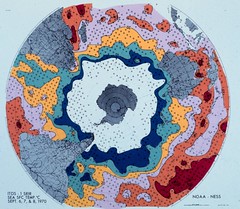
Contoured sea surface temperature map of the S...

Post Author: Bill Pratt

The NOAA has released a new report on global temperatures which indicates that there is a warming trend.  Since few people will read the full report, NOAA prepared a synopsis of the findings that is only 10 pages long.

I want to do two things in this post.  First, I want to review the contents of the synopsis to see what researchers have found.  Second, I want to analyze some of the statements in the synopsis that are not objective statements of data, but political spin.

Here is an opening paragraph:

A comprehensive review of key climate indicators confirms the world is warming and the past decade was the warmest on record. More than 300 scientists from 48 countries analyzed data on 37 climate indicators, including sea ice, glaciers and air temperatures. A more detailed review of 10 of these indicators, selected because they are clearly and directly related to surface temperatures, all tell the same story: global warming is undeniable.

Notice the last phrase: “global warming is undeniable.”  This kind of language is a tip-off that the authors are concerned to push an agenda forward.  A strictly scientific report would have no need for repeating that the evidence is undeniable; they would just let the facts speak for themselves.  It is also telling that many news outlets led with the “undeniable” phrase in their coverage of the report.

The synopsis goes on to highlight 10 indicators that best measure surface temperatures of the earth.  These indicators are: air temp near the surface, humidity, glaciers, snow cover, temp over oceans,  sea surface temp,  sea level, sea ice, ocean heat content, and temp over land.

Seven of the indicators are going up and three of them are going down (snow cover, glaciers, and sea ice).  Together, according to the report, they all point toward a warming trend.

One thing to note is that each of the 10 indicators contains data that covers different time periods.  For example, data on air temperature at the surface (troposphere) only goes back to about 1960, whereas data on air temperature over land goes back to 1850.  So, when the report says the past decade was the “warmest on record,” what they mean to say is that it is the warmest decade since 1960 (if you want to include all 10 indicators as part of the record).  Remember that human civilization has been around for many thousands of years; 50 years seems like a small sample size, doesn’t it?

I would ask the authors why they chose to say “warmest on record” when they could have been more precise.  Again, it seems that this language was clearly chosen for rhetorical impact.

More commentary on the NOAA synopsis in part 2….

How Did the Apostles Die?

William Hole's interpretation of the Beloved D...
Image via Wikipedia

Post Author: Bill Pratt

One of the most compelling apologetic arguments for the truth of the resurrection of Jesus is the fact that most of his closest followers were martyred for their beliefs.  Since these followers would have had first-hand knowledge of whether he actually did come back from the dead, their willingness to be persecuted and eventually die for this belief is hard to explain if the resurrection never did occur.

One of the challenges with making this argument is that the quality of the historical evidence for these martyr deaths varies greatly.  C. Michael Patton, of the Parchment and Pen blog, attempted to sort out the historical evidence for the deaths of 12 apostles in this blog post.  In his post, he grades the quality of the historical sources based on his own research.  He assigns a grade of “A” to the deaths with the best historical evidence (highest probability) all the way down to a grade of “D” for deaths where he considers the historical evidence to be weak (lowest probability).

For reference, here are each of the disciples along with their alleged year of martyrdom and the grade Patton assigned to their martyrdom accounts:

The Apostle James: year of death – 44-45 A.D.; grade of A

The Apostle Peter: year of death – 64 A.D.; grade of A

The Apostle Andrew: year of death – 70 A.D.; grade of B

The Apostle Thomas: year of death – 70 A.D.; grade of B

The Apostle Philip: year of death – 54 A.D.; grade of C

The Apostle Matthew: year of death – 60-70 A.D.; grade of B

The Apostle Nathaneal: year of death – 70 A.D.; grade of C

James the Brother of Jesus: year of death – 63 A.D.; grade of B

The Apostle Simon the Zealot: year of death – 74 A.D.; grade of B

The Apostle Judas Thaddeus: year of death – 72 A.D.; grade of C

The Apostle Matthias: year of death – 70 A.D.; grade of D

The Apostle Paul: year of death – 67 A.D.; grade of A

Out of the 12 martyrdom accounts he grades, 3 merited an “A,” 5 merited a “B,” 3 merited a “C,” and 1 merited a “D.”  In my opinion, the three accounts that garnered “A”s are enough evidence to uphold the apologetic argument.  What Patton demonstrates is that there is even more evidence than just these three.

Historical research can be very tricky, and these kinds of analyses are somewhat subjective.  I’m sure skeptics of Christianity might grade harder than Patton did, but I commend him for his attempt.  Please read the rest of his blog post if you want to know more of the details surrounding the deaths.

Does God Condone Slavery in the Old Testament? Part 4

Post Author: Bill Pratt

In part 3 of this series, we started to compare New World slavery to Old Testament (OT) slavery and we found that there were radical differences.  Let’s continue with the comparison.

The third characteristic of New World slavery has to do with the treatment of slaves.  From part 2 of the series, we know that “the treatment of slaves was harsh by modern standards, and punishments were extreme.”

What about OT slavery?  According to the Christian Thinktank, “The Law forbade harsh treatment, set stipulations for positive treatment, and set tight boundaries around punishment/abuse of servants.”

This difference is fleshed out in multiple ways by the Thinktank:

  1. “There are several general admonitions in the Law against harsh/abusive/oppressive behavior toward Hebrew servants” – see Lev. 25:43; Lev. 25:46; Lev. 25:53; Deut. 15:18.
  2. “In fact, the Law assumes that the situation may be lucrative enough for some servants to decide to stay with their masters for their lifetime” – see Ex. 21:5; Deut. 15:16
  3. “The general scholarly assessment is that this domestic ‘slavery’ was not very atrocious, went way beyond ‘property only’, and instead created family-like bonds.”
    1. Here is an example quoted from the book The Israelites : “However, domestic slavery was in all likelihood usually fairly tolerable. Slaves formed part of the family and males, if circumcised, could take part in the family Passover and other religious functions. Moreover, in general there were probably only a few in each household–there is no indication, for example, that large gangs of them were toiling in deplorable conditions to cultivate big estates, as in the later Roman world.”
  4. “Interestingly, when a servant was to be released at the Sabbath year (without payment of money!), the master was to send him out with gifts of material possessions!” – see Deut. 15:12-14
  5. “ALL servants were required to take the Sabbath day off–just like the masters. ” – see Ex. 20:9-10; Ex. 23:12; Deut. 5:13-15
  6. “Not only was abusive treatment of servants strictly forbidden, but the Law held masters very accountable!” – see Ex. 21:20; Ex. 21:26-27

The fourth characteristic of New World slavery is legal status.  Recall the following: “Slaves were considered ‘property’ in exclusion to their humanity. That is, to fire a bullet into a slave was like firing a bullet into a pumpkin, not like firing a bullet into a human. There were no legal or ethical demands upon owners as to how they treated their ‘property’. Other than with the occasional benevolent master, only economic value was a main deterrent to abusive treatment.”

What about OT slavery?  According to the Thinktank, “In keeping with the ‘variableness’ of notions of property in the [ancient near east] (as noted by historians and anthropologists), Israel’s notion of ‘property’ was a severely restricted one, and one that did NOT preclude the humanity of the servant nor absolve the master from legal accountability.”

A couple additional points must be made:

  1. Servants were never considered property in the sense of New World slaves.  Accordingly slave “‘property’ is therefore seen not as ‘owned disposable goods’ but as economic output (including labor)” – see Lev. 25:14-16; Ex. 21:18-19; Lev. 25:49-53
  2. Therefore, “as a ‘managed, but not owned’ human resource, servants were NOT thereby rendered ‘disposable, non-human goods’. They were still legal agents in the culture and their masters were legally accountable for how they were treated.”

Finally, the fifth characteristic of New World slavery was the fact of no exit.  “There were never any means of obtaining freedom stipulated in the arrangement. In the cases of an owner granting freedom, it was generally a ‘bare bones’ release–no property went with the freedman.”

What about OT slavery? “One of the more amazing things about Hebrew servant-status was how ‘easy’ it was to get free!”  Here are some things to consider from the Thinktank article:

  1. “Freedom could be bought by relatives” – see Lev 25:49
  2. “The servant could buy his own freedom, whether the master WANTED to let him go or not” – see Lev 25:49
  3. “Every 7th year (the Sabbath year), all servants were to automatically go free–without ANY payment of money to the master” – see Ex.21:2; Deut. 15:12
  4. “Minor injuries due to abusive treatment automatically resulted in immediate freedom (this is actually labeled as ‘to compensate’, implying rights/duties/debt)” – see Ex 21:26-27
  5. “When freedom was granted at the Sabbath year or Year of Jubilee, the master was obligated to send them out with liberal gifts–to allow them to occupy the land in sufficiency again” – see Deut 15:13

Wow!  If you’ve read all four posts, you must now understand that Hebrew “slavery” in the OT is absolutely nothing like New World slavery.  God’s primary purpose for this institution was to help the poor in Israel.  It was to provide a safety net for families that had landed on hard times and there were strict rules about how this poverty program was to be executed.  It is simply incorrect to charge that ancient Israel instituted the same kind of slavery that was found in the New World.

Since we’ve followed the Thinktank this far, let’s end this series with the Thinktank summary:

It should be QUITE CLEAR from the above, that the institution in the Mosaic law involving voluntary, fixed-term, flexible, and protected servant-laborer roles was unlike “western”, chattel labor in almost ALL RESPECTS. To label it as ‘slavery’, except in the most general/metaphorical sense of the word, is significantly inappropriate.

Does God Condone Slavery in the Old Testament? Part 3

Post Author: Bill Pratt

In part 2 of this series, we reviewed 5 characteristics of New World slavery.  Starting in part 3, we will compare the 5 characteristics of New World slavery with Hebrew slavery in the Law (first five books of the Old Testament).

Before we get started, a couple of general comments need to be made.  Since the great majority of passages in the Law are regarding instructions about Hebrew slaves serving other Hebrews, that is the situation we will analyze.  The few passages in the Law concerning foreign slaves will not be addressed (maybe another time).

First, New World “slavery was motivated by the economic advantage of the elite.”  What about in the case of Old Testament (OT) slavery?  According to the Christian Thinktank, “The ‘slavery’ of the OT was essentially designed to serve the poor!”  Yes, you read that correctly.  This is a fundamental and profound difference between New World and Hebrew slavery.

Consider this important text from Leviticus 25:35-43 on Hebrew slavery:

‘If one of your countrymen becomes poor and is unable to support himself among you, help him as you would an alien or a temporary resident, so he can continue to live among you. Do not take interest of any kind from him, but fear your God, so that your countryman may continue to live among you.  You must not lend him money at interest or sell him food at a profit.  I am the LORD your God, who brought you out of Egypt to give you the land of Canaan and to be your God.

‘If one of your countrymen becomes poor among you and sells himself to you, do not make him work as a slave.  He is to be treated as a hired worker or a temporary resident among you; he is to work for you until the Year of Jubilee.  Then he and his children are to be released, and he will go back to his own clan and to the property of his forefathers.  Because the Israelites are my servants, whom I brought out of Egypt, they must not be sold as slaves.  Do not rule over them ruthlessly, but fear your God.’

The Thinktank explains, “Notice that the sole motive–in the primary text before us– for allowing ‘slavery’ is so the poor can continue in the land, and that it is NEVER ‘forever’ (indeed, other passages indicate that it was 6 years at the most!). This is radically different than an elitest-motive.”

Second, New World entry into “slavery was overwhelmingly involuntary. Humans were captured by force and sold via slave-traders.”  What about OT slavery?  “In the OT, this relationship was overwhelmingly voluntary, and forced, non-negotiated . . . enslavement was a capital offense.”

Four specific points need to be made here:

  1. “Forced enslavement of Hebrews was punishable by death” – see Ex. 21:16 and Deut. 24:7.
  2. “The vast majority of cases would have been voluntary, with the person himself initiating the transaction” – see Lev. 25:39; Lev. 25:47; Deut. 15:12.
  3. “Although most of these arrangements were limited to six years in length (e.g., Deut. 15:12 above), continuation of this relationship was possible, but ONLY AS a strictly voluntary act of the ‘slave'” – see Ex. 21:5-6; Deut. 15:16-17
  4. “The only clear case of involuntary servitude was in the case of a thief that was too poor to make restitution for good stolen, and here is was strictly an economic measure” – see Ex. 22:3

The next three characteristics of New World slavery will be compared to OT slavery in future posts, but I hope you can already understand that Hebrew “slavery” is radically different from the slavery of the southern United States.

Does God Condone Slavery in the Old Testament? Part 2

Post Author: Bill Pratt

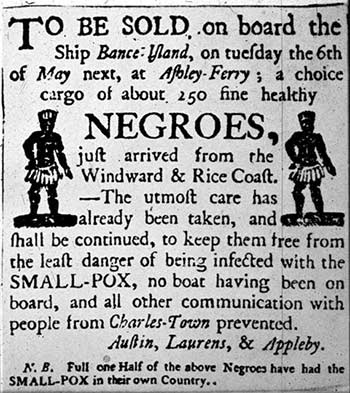
In part 1 of this series of posts, we introduced the idea that there are many different kinds of slavery.  When most Americans ponder slavery, though, we are thinking of the southern United States before the Civil War.  So what was slavery like in the southern United States?  The Christian Thinktank summarizes several aspects of this type of slavery.

First, “slavery was motivated by the economic advantage of the elite.”  The Encyclopedia of Cultural Anthropology explains, “New World slavery was a unique conjunction of features. Its use of slaves was strikingly specialized as unfree labor – producing commodities, such as cotton and sugar, for a world market.”

According to Britannica: “By 1850 nearly two-thirds of the plantation slaves were engaged in the production of cotton…the South was totally transformed by the presences of slavery. Slavery generated profits comparable to those from other investments and was only ended as a consequence of the War Between the States.”

Second, entry into “slavery was overwhelmingly involuntary. Humans were captured by force and sold via slave-traders.”  Again Britannica explains:

Slaves have been owned in black Africa throughout recorded history. In many areas there were large-scale slave societies, while in others there were slave-owning societies. Slavery was practiced everywhere even before the rise of Islam, and black slaves exported from Africa were widely traded throughout the Islamic world. Approximately 18,000,000 Africans were delivered into the Islamic trans-Saharan and Indian Ocean slave trades between 650 and 1905. In the second half of the 15th century Europeans began to trade along the west coast of Africa, and by 1867 between 7,000,000 and 10,000,000 Africans had been shipped as slaves to the New World…. The relationship between African and New World slavery was highly complementary. African slave owners demanded primarily women and children for labour and lineage incorporation and tended to kill males because they were troublesome and likely to flee. The transatlantic trade, on the other hand, demanded primarily adult males for labour and thus saved from certain death many adult males who otherwise would have been slaughtered outright by their African captors.

Third, the treatment of slaves was harsh by modern standards, and punishments were extreme.

Fourth, the legal status of New World slaves was generally like the following, according to the Christian Thinktank: “Slaves were considered ‘property’ in exclusion to their humanity. That is, to fire a bullet into a slave was like firing a bullet into a pumpkin, not like firing a bullet into a human. There were no legal or ethical demands upon owners as to how they treated their ‘property’. Other than with the occasional benevolent master, only economic value was a main deterrent to abusive treatment.”

In addition, “Slaves could not have their own property–all they had belonged to their ‘owner’. ”

Fifth, there was generally no exit from slavery.  “There were never any means of obtaining freedom stipulated in the arrangement. In the cases of an owner granting freedom, it was generally a ‘bare bones’ release–no property went with the freedman.”

We have summarized five characteristics of New World slavery, so our next step is to compare these characteristics to the characteristics of the slavery found in the Old Testament Law.  We’ll tackle that next.

Does God Condone Slavery in the Old Testament? Part 1

Post Author: Bill Pratt

Someone recently asked me about slavery in the Bible, and I decided it was time to take this topic on.  In order to stay focused, I want to answer a very specific question: does God support the institution of slavery in the Torah (first five books of the Old Testament)?

The Torah, also called the Law, is where God gave Israel detailed instructions about how to conduct their affairs as a nation.   How did slavery fit into the instructions God gave Israel?

Before I begin, I want to explain my source for this material.  I have relied on the Christian Thinktank.  In fact, my posts will be an attempt at compacting and summarizing the 29,000 word article written on this topic on the Thinktank.  If you would like to read the article and skip my summary, please do so, for it is a truly excellent treatment.  For those who want the summary, read on.

The first requisite step is to consider what the word slavery means.  Most of us, when we hear the word slavery, think of the institution that existed in the southern United States before the Civil War brought it to an end.   However, it turns out that the word slavery is a slippery one, for there have been many different kinds of slavery throughout world history.

Here is a quote from the Encyclopedia of Cultural Anthropology:

Scholars do not agree on a definition of “slavery.” The term has been used at various times for a wide range of institutions, including plantation slavery, forced labor, the drudgery of factories and sweatshops, child labor, semi-voluntary prostitution, bride-price marriage, child adoption for payment, and paid-for surrogate motherhood. Somewhere within this range, the literal meaning of “slavery” shifts into metaphorical meaning, but it is not entirely clear at what point. A similar problem arises when we look at other cultures. The reason is that the term “Slavery” is evocative rather than analytical, calling to mind a loose bundle of diagnostic features. These features are mainly derived from the most recent direct Western experience with slavery, that of the southern United States, the Caribbean, and Latin America. The present Western image of slavery has been haphazardly constructed out of the representations of that experience in nineteenth-century abolitionist literature, and later novels, textbooks, and films. . . From a global cross-cultural and historical perspective, however, New World slavery was a unique conjunction of features. . . In brief, most varieties of slavery did not exhibit the three elements that were dominant in the New World: slaves as property and commodities; their use exclusively as labor; and their lack of freedom.

What I will do in the next few posts is lay out what New World slavery was like, and then contrast that type of slavery with the kind found in the Torah.  You will discover that there are profound differences, so please come back for the rest of the series.

Design in the Universe as Evidence of God – Peter Kreeft audio

Post Author: Bill Pratt

Philosopher Peter Kreeft gives a brilliant overview of the argument from design in the audio below.  The audio is excerpted from one of Kreeft’s podcasts where he lectures on five arguments for the existence of God.  I beg you to set aside just 7 minutes to listen to this audio.  You won’t be sorry.

[audio:https://www.toughquestionsanswered.org/wp-content/uploads/2010/07/Arguments-for-the-Existence-of-God-Design.mp3|titles=The Design Argument]

What Is Christian Faith?

Post Author: Bill Pratt

One of the most abused words in the English language is the word faith.  For skeptics, faith is believing in something despite reason.  For some religious folks, faith is simply the expression of positive emotions toward God.  Others claim faith is purely intellectual.

Can we more rigorously define what faith is?  I think we can, and I will call on Peter Kreeft and Ronald Tacelli to help out, from their book Handbook of Christian Apologetics.

Kreeft and Tacelli first differentiate between the object of faith and the act of faith.

The object of faith includes all the things that are believed about God, as communicated by the Bible.  These things that are believed are expressed in propositions (e.g., Jesus is the Son of God).  These propositions, however, are only pointers.  They direct our attention to the real object of faith, God.  If the real object of faith is God, then why do we need all the propositions that capture our beliefs about God?  Kreeft and Tacelli explain, “Without propositions, we cannot know or tell others what God we believe in and what we believe about God.”

The act of faith consists of more than just belief.  There are four components of faith: 1) emotional, 2) intellectual, 3) volitional, and 4) heart.  Let’s look at each of these one at a time.

Emotional faith is “feeling assurance or trust or confidence in a person.  This includes hope (which is much stronger than just a wish) and peace (which is much stronger than mere calm).”  Emotional faith is the weakest component of faith because emotions change so frequently.

Intellectual faith is belief.  According to Kreeft and Tacelli, intellectual faith is more stable than emotional faith.  Strongly held beliefs will tend not to change often.  They cite the definition of intellectual faith from the Baltimore Catechism: “the act of the intellect, prompted by the will, by which we believe everything God has revealed on the grounds of the authority of the One who revealed it.”

Volitional faith is an act of the will.  “This faith is faithfulness, or fidelity.  It manifests itself in behavior, that is, in good works. . . . For the root of volitional faith – the will – is the faculty or power of the soul that is closest to . . . the ‘heart’.”

Heart faith is the very center of a person’s being, the center of their soul.  This is the “I” where the emotions, intellect, and will reside.  “The heart is where God the Holy Spirit works in us. . . . With the heart we choose our ‘fundamental option’ of yes or no to God, and thereby determine our eternal identity and destiny.”

All four of these components of faith work together, with the heart being the intersection of them all.  Faith is, therefore, not just about emotions or intellect.  Faith involves the entire person – every part.

The interaction of the intellect and the will are particularly interesting.  Kreeft and Tacelli describe how they work together:

The intellect is the soul’s navigator, but the will is its captain. . . . The will can command the intellect to think, but the intellect cannot command the will to will, only inform it, as a navigator informs the captain.  Yet the will cannot simply make you believe.  It can’t force the intellect to believe what appears to it to be false, or to disbelieve what seems to it to be true.

We could also add that if the emotions are predisposed against believing, then faith can be thwarted.  This is why purely intellectual appeals to a non-believer may not be effective.  If their emotions and/or will are set against faith, then intellectual arguments cannot bring them to God.  Likewise, purely emotional appeals may appear to work for a short time until that person has time to think about their beliefs and decide they are not reasonable (they have an intellectual problem).  There are even people who will to believe, but their intellect and/or emotions stand in the way.

Christian faith deals with the whole individual, so the takeaway is that the church can never become one dimensional and forget that will, intellect, emotions, and finally the very heart of a person must all express faith.

Who Is Portrayed in the Earliest Existing Biblical Painting?

Post Author: Bill Pratt

The earliest existing painting portraying a biblical scene was found in a building called the House of the Physician in the ruins of the city of Pompeii, a city destroyed in AD 79 by Mount Vesuvius.  The painting is a striking rendition of the scene from 1 Kings 3 where two women lay claim to the same child and Solomon wisely determines who is the real mother of the child.

According to art expert Theodore Feder, this painting was likely commissioned by a non-Jew living in Pompeii in the time period just before the city was destroyed.  What makes this painting even more fascinating is that Feder thinks he has discovered the identities of two individuals who are in the bottom left of the painting and who are portrayed admiring the wisdom of Solomon.

In a recent article published in the Biblical Archaeology Review, Feder argues that the two individuals shown admiring Solomon are none other than Socrates and Aristotle, two of the most famous Greek philosophers of antiquity.

I believe these two figures are stand-ins for Socrates and Aristotle, introduced as a way of associating the wisdom of Solomon with that of the Greek philosophers. Put another way, their presence in the composition attests to the respect Greek philosophy could accord to Hebrew wisdom. Such a juxtaposition in art of wise men from the two civilizations was unprecedented, has rarely been done since, and is of great cultural and historical significance.

That Solomon was painted along with Socrates and Aristotle was a testament to the great respect that the Hebrew Bible was afforded as a book of wisdom in the 1st century Roman empire.  Feder concludes his article with this statement:

In selecting an episode from the Hebrew Bible, the patron departed from the canon of classical religious subject matter and elevated one from the Scriptures of a people whose influence at the time was spreading throughout the empire and would one day, in its Christian formulation, pervade it.