Post Author: Bill Pratt
 Some naturalists are betting on it, because ultimately physical laws, in their worldview, have to explain everything. For the naturalist, there is nothing but physical reality which is governed by physical laws. That being the case, everything, including the human mind, must be reduced to the purely physical and mechanistic.
Philosophers have pointed out serious problems with this attempt to reduce the mind to physics. In a fascinating discussion of the origins of modern science, philosopher Richard Swinburne explains that mental states have been purposefully excluded by scientists because mental states were not seen as anything that science could measure or investigate. Here is Swinburne:
Thermodynamics was conceived with the laws of temperature exchange; and temperature was supposed to be a property inherent in an object. The felt hotness of a hot body is indeed qualitatively distinct from particle velocities and collisions. The reduction was achieved by distinguishing between the underlying cause of the hotness (the motion of the molecules) and the sensations which the motion of molecules cause in observers. . . . But this reduction has been achieved at the price of separating off the [sensation] from its causes, and only explaining the latter. All reduction from one science to another dealing with apparently very disparate properties has been achieved by this device of denying that the apparent properties (i.e., the ‘secondary qualities’ of colour, heat, sound, taste, etc.) with which one science dealt belonged to the physical world at all. It siphoned them off to the world of the mental.
But then, when you come to face the problem of the sensations themselves, you cannot do this. If you are to explain the sensations themselves, you cannot distinguish between them and their underlying causes and only explain the latter. In fact the enormous success of science in producing an integrated physico-chemistry has been achieved at the expense of separating off from the physical world colours, smells, and tastes, and regarding them as purely private sensory phenomena. The very success of science in achieving its vast integrations in physics and chemistry is the very thing which has made apparently impossible any final success in integrating the world of mind into the world of physics.
Swinburne’s point is profound. Modern science was never meant to deal with the mind and its mental states. Not only that, but its very avoidance of explaining the mind is what has made it so successful. Naturalists who demand that science explain the mind are asking it to do the impossible. Maybe the mind is not reducible to physical laws. Maybe it’s just the opposite – physical laws are ultimately reducible to The Mind.
 The conventional wisdom these days is that what you do in your home is your business. If you have children, and you let them watch inappropriate TV shows or movies, then who am I to judge? After all, what you allow your kids to consume doesn’t affect me. Sometimes you’ll hear people say, “If you don’t like that movie or TV show, then don’t watch it. Change the channel.” You have your life and I have mine.
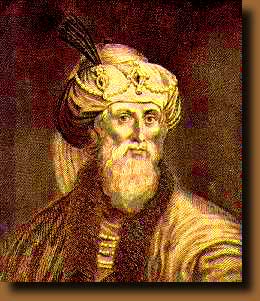 Recently I was in a discussion with a skeptic of Christianity, a man who had been Roman Catholic for 55 years, and then decided that he couldn’t believe Christianity any longer. During our conversation, he asked what historical evidence I could provide that Christianity was true, so I immediately went into the
  According to church historian John Hannah, there were four major Protestant streams that developed during the Reformation in the 16th century: Anglicanism, Lutheranism, Calvinism, and Anabaptism. Each of these streams placed great stress on the idea of salvation by faith alone, yet they did not all agree on what infant baptism means or whether it should even be done.