All posts by Bill Pratt

Is the Human Mind Like Computer Software?

Post Author: Bill Pratt

The question of the origin of human rationality plagues the atheistic naturalist worldview – the worldview that says that all that exists ultimately is matter governed by the laws of physics.  If every event that has ever occurred and ever will occur is determined by physical laws, then how are humans able to make decisions that are free from that determinism?

Rationality is mere illusion under naturalism, as everything we say and think is the result of antecedent physical conditions and physical laws.  We can’t help what we say and think, because all our thoughts and words are the result of physical processes that we have no control over.  Judging a person’s beliefs would be like blaming a leaf for falling to the ground.

On a recent Unbelievable? podcast, atheist Norman Bacrac posited the following solution to the problem.  He claimed that the human brain represents the hardware that obeys the physical laws of nature.  But running on this hardware is the software of the rational mind, software which evolved out of the hardware of human anatomy.  According to Bacrac, even though the hardware is determined by natural laws, the software is not.  Software represents the thoughts and arguments made by humans when they are reasoning.

Does this software proposal really help?  I don’t think so.  Consider what hardware and software mean in the computer world.  Hardware consists in physical electronic circuits.  Software performs the function of the program it implements by directly providing instructions to the computer hardware.  Software is non-physical information.  It can be instantiated into a physical medium, but the medium is not the software – it merely contains the software.

If we are using the analogy of computer hardware and software to explain the difference between the human brain and human rationality, then we need to explain where the non-physical software came from.  Bacrac claimed that the hardware of the brain evolved through standard Darwinian processes, but what about the software?  Ultimately, for the naturalist, the software must come from physical matter.  So, we have physical hardware producing non-physical software, but this is certainly not the case in the world of computers.  Microprocessors don’t produce spreadsheet applications; human minds produce spreadsheet applications.

In order for Bacrac’s analogy to work, he needs to explain the incredible leap from the determined, physical hardware of the brain to the undetermined, non-physical software of human rationality.  On naturalism, I fail to see how this leap can occur, and thus the solution that Bacrac posits does not seem to work.
Where Do God Substitutes Lead?

Post Author: Bill Pratt

In a recent post, we discussed the fact that whenever a person makes something or someone their highest love in place of God, divisiveness occurs.  Tim Keller, in stark fashion, also shows us what the other negative effects of placing our faith in these God substitutes can be.  Here is an extended excerpt from The Reason for God:

  • If you center your life and identity on your spouse or partner, you will be emotionally dependent, jealous, and controlling. The other person’s problems will be overwhelming to you.
  • If you center your life and identity on your family and children, you will try to live your life through your children until they resent you or have no self of their own. At worst, you may abuse them when they displease you.
  • If you center your life and identity on your work and career, you will be a driven workaholic and a boring, shallow person. At worst you will lose family and friends and, if your career goes poorly, develop deep depression.
  • If you center your life and identity on money and possessions, you’ll be eaten up by worry or jealousy about money. You’ll be willing to do unethical things to maintain your lifestyle, which will eventually blow up your life.
  • If you center your life and identity on pleasure, gratification, and comfort, you will find yourself getting addicted to something. You will become chained to the “escape strategies” by which you avoid the hardness of life.
  • If you center your life and identity on relationships and approval, you will be constantly overly hurt by criticism and thus always losing friends. You will fear confronting others and therefore will be a useless friend.
  • If you center your life and identity on a “noble cause,” you will divide the world into “good” and “bad” and demonize your opponents. Ironically, you will be controlled by your enemies. Without them, you have no purpose.
  • If you center your life and identity on religion and morality, you will, if you are living up to your moral standards, be proud, self-righteous, and cruel. If you don’t live up to your standards, your guilt will be utterly devastating.

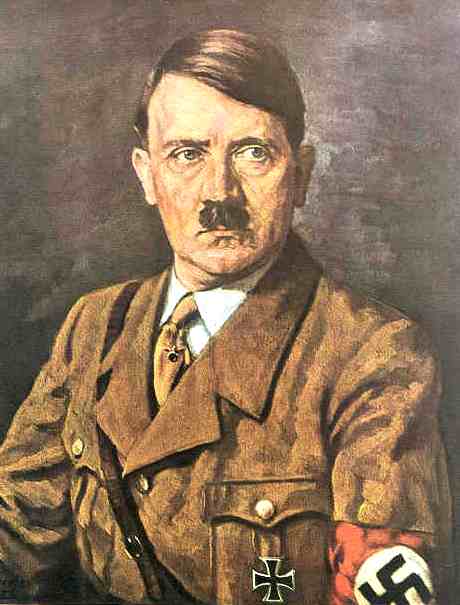
Would God Let Hitler in Heaven?

Post Author: Bill Pratt

I find that many non-believers are hopelessly confused about salvation by God’s grace.  This confusion was amply illustrated the other day on an Unbelievable? podcast when the atheist debater challenged the Christian debater with the following: “Isn’t it true that the Christian God would have allowed Hitler into heaven if he had repented and trusted in Christ on his deathbed?”

The  atheist questioner clearly believed that Hitler, based on his numerous evil deeds (I still don’t understand how atheists can say that Hitler did anything objectively evil, but that’s another issue altogether), did not deserve to be accepted by God, and the fact that the Christian God would accept Hitler under any circumstances was simply unacceptable.   He (the atheist) could never believe in a God that would let Hitler into heaven because justice would be denied if this were to occur.

One can sympathize with this point of view if we are dealing with the God of Islam, who weighs everyone’s good deeds and bad deeds on a scale to determine where they will spend the afterlife.  It is hard to imagine that Hitler could ever get into heaven under that system, but that is not how the God of Christianity works.

The Christian debater correctly pointed out that nobody deserves to be accepted by God, but that through Christ’s work on the cross, God will accept those who have placed their trust in what Christ did for them.  God will apply Christ’s atoning sacrifice to every person who desires it by dedicating themselves to their Savior.  Christ paid the penalty for all of mankind’s sins, including Hitler’s.  If Hitler had truly repented and trusted in Christ before he died, like the thief on the cross, he would have been welcomed into paradise by God.  There is no reason to believe that he ever did this, so this is a purely hypothetical exercise meant to illustrate a point.

That is why Christians are always talking about the grace of God.  God offers us eternity with him, but only because of Christ.  God knows that if a scale of justice were applied, every single one of us would be condemned for our thoughts and our deeds.  According to the Bible and to anyone who has really looked within their soul, we are a million miles away from the goodness that God expects of us.  The scale, after all, is calibrated to weigh our deeds against the standard of the righteousness of God.  Does anyone really believe they can stand before God on their own merit?

I thank God that I will never have to, and if you’ve trusted Christ, neither will you.

What Is the Difference Between Religion and the Gospel? Part 2

Post Author: Bill Pratt

I have just completed reading The Reason for God by Timothy Keller, which has provided me much material for the blog in recent days.  In one powerful section of the book, Keller carefully draws out the distinction between one definition of “religion” and the Christian gospel.  Today I pick up the discussion where I left off in Part 1 of the series.

Keller gets back to the issue of divisiveness that we touched on a few days ago.  Those who are “religious,” who believe that God accepts them because of their good deeds, inevitably imagine themselves to be more advanced, of higher rank, than members of other faiths.

Religion and the gospel also differ fundamentally in how they treat the Other—those who do not share one’s own beliefs and practices. Postmodern thinkers understand that the self is formed and strengthened through the exclusion of the Other—those who do not have the values or traits on which I base my own significance. We define ourselves by pointing to those whom we are not. We bolster our sense of worth by devaluing those of other races, beliefs, and traits.

If we understand that God accepts us because of Christ, our views toward others change radically.

This gospel identity gives us a new basis for harmonious and just social arrangements. A Christian’s worth and value are not created by excluding anyone, but through the Lord who was excluded for me. His grace both humbles me more deeply than religion can (since I am too flawed to ever save myself through my own effort), yet it also affirms me more powerfully than religion can (since I can be absolutely certain of God’s unconditional acceptance). That means that I cannot despise those who do not believe as I do.

Keller continues:

Since I am not saved by my correct doctrine or practice, then this person before me, even with his or her wrong beliefs, might be morally superior to me in many ways. It also means I do not have to be intimidated by anyone. I am not so insecure that I fear the power or success or talent of people who are different from me. The gospel makes it possible for a person to escape oversensitivity, defensiveness, and the need to criticize others. The Christian’s identity is not based on the need to be perceived as a good person, but on God’s valuing of you in Christ.

Since one of the most fundamental characteristics of being human is feeling defensive about ourselves, we can know how much progress we’ve made as Christ-followers when these feelings come under control, when they start to subside.  They may never completely go away, but the more we come under the Kingship of Christ, the less we will see those who do not believe as we do as enemies, but as people Christ died for.

What Is the Difference Between Religion and the Gospel? Part 1

Post Author: Bill Pratt

I have just completed reading The Reason for God by Timothy Keller, which has provided me much material for the blog in recent days.  In one powerful section of the book, Keller carefully draws out the distinction between one definition of “religion” and the Christian gospel.  First, Keller clarifies what he means by “religion” in this particular context:

In the broader sense, religion is any belief system of ultimate values that shapes our pursuit of a particular kind of life in the world. This is the reason that it is quite fair to call secularism a religion, and Christianity as well. However, virtually all religions require to one degree or another a form of self-salvation through merit. They require that people approach God and become worthy through various rites, observances, and behaviors. This is also what most people think of when they think of religion, and in this sense Christianity as presented in the New Testament is radically distinct. That is why for the purposes of this chapter we will speak of Christianity as distinct from “religion.”

According to Keller, religion “operates on the principle ‘I obey – therefore I am accepted by God.'”

The operating principle of the gospel is “I am accepted by God through what Christ has done – therefore I obey.”  This is what the concept of grace is in Christianity, that God accepts us because of what Jesus has done, not because of our own efforts.  Thus religion and gospel play out quite differently in people’s lives.

Two people living their lives on the basis of these two different principles may sit next to each other in the church pew. They both pray, give money generously, and are loyal and faithful to their family and church, trying to live decent lives. However, they do so out of two radically different motivations, in two radically different spiritual identities, and the result is two radically different kinds of lives.

The primary difference is that of motivation. In religion, we try to obey the divine standards out of fear. We believe that if we don’t obey we are going to lose God’s blessing in this world and the next. In the gospel, the motivation is one of gratitude for the blessing we have already received because of Christ. While the moralist is forced into obedience, motivated by fear of rejection, a Christian rushes into obedience, motivated by a desire to please and resemble the one who gave his life for us.

The distinction between religion and gospel also plays out in our own personal identity – what we think of ourselves.  Here Keller reminds us that the person who believes that God accepts them based on their deeds feels superior to everyone else, whether they are liberal or conservative.

Another difference has to do with our identity and self-regard. In a religious framework, if you feel you are living up to your chosen religious standards, then you feel superior and disdainful toward those who are not following in the true path. This is true whether your religion is of a more liberal variety (in which case you will feel superior to bigots and narrow-minded people) or of a more conservative variety (in which case you will feel superior to the less moral and devout). If you are not living up to your chosen standards, then you will be filled with a loathing toward yourself. You will feel far more guilt than if you had stayed away from God and religion altogether.

In part 2 of this series, I will continue to examine Keller’s thoughts on the differences between religion and gospel.

Why Are We So Divided?

Post Author: Bill Pratt

A couple of years ago, I asked one of my good atheist friends what he thought the biggest problem facing mankind was.  His answer: our propensity to form exclusionary groups.  He explained that everywhere he looked, people were grouping themselves and casting everyone not in their group as “the enemy.”  He especially felt this to be a problem with religious people, as he was excluded from these communities because he was an atheist.

I’ve often thought about his assessment of the human tendency to exclude and to label outsiders as enemies.  Recently I encountered some thoughts on this human predisposition, captured by Tim Keller in The Reason for God.  Keller’s answer is drawn from the great theologian Jonathan Edwards.

In The Nature of True Virtue, one of the most profound treatises on social ethics ever written, Jonathan Edwards lays out how sin destroys the social fabric. He argues that human society is deeply fragmented when anything but God is our highest love.

How so?  Can’t we dedicate our lives to our family, to our nation, to our own interests?  Keller continues:

If our highest goal in life is the good of our family, then, says Edwards, we will tend to care less for other families. If our highest goal is the good of our nation, tribe, or race, then we will tend to be racist or nationalistic [Bill’s note: the Nazis dedicated their highest love to national Germany]. If our ultimate goal in life is our own individual happiness, then we will put our own economic and power interests ahead of those of others.

So how does making God our highest love solve the problem?

Edwards concludes that only if God is our summum bonum, our ultimate good and life center, will we find our heart drawn out not only to people of all families, races, and classes, but to the whole world in general.

Since God created each of us in his image, since we are all equally valuable in his eyes, since he desires that every one of us spend eternity with him, it is easy to see how the proper Christian response to every man, woman, and child, regardless of race, nation, or creed, is love, not exclusion.

Maybe you’re not convinced that setting our sights on other things cannot bring unity and break down divisions among people.  Can’t politics or ethnicity or socioeconomic status or tolerance or morality fit the bill?  Aren’t these worthy objects of our highest love?

If we get our very identity, our sense of worth, from our political position, then politics is not really about politics, it is about us. Through our cause we are getting a self, our worth. That means we must despise and demonize the opposition. If we get our identity from our ethnicity or socioeconomic status, then we have to feel superior to those of other classes and races. If you are profoundly proud of being an open-minded, tolerant soul, you will be extremely indignant toward people you think are bigots. If you are a very moral person, you will feel very superior to people you think are licentious. And so on.

There is no way out of this conundrum. The more we love and identify deeply with our family, our class, our race, or our religion, the harder it is to not feel superior or even hostile to other religions, races, etc. So racism, classism, and sexism are not matters of ignorance or a lack of education. Foucault and others in our time have shown that it is far harder than we think to have a self-identity that doesn’t lead to exclusion. The real culture war is taking place inside our own disordered hearts, wracked by inordinate desires for things that control us, that lead us to feel superior and exclude those without them, and that fail to satisfy us even when we get them.

I think Keller and Edwards are right.  The solution to my friend’s problem is to make God our highest love; everything other answer is a dead end.  I hope that some day he will agree with me.

Can Man Save Himself?

Post Author: Bill Pratt

If there is no benevolent and omnipotent God, then man seems to be the only viable solution to solving man’s problems.  We have to pull ourselves up by our bootstraps because there is nobody to help us.

Nowadays it seems laughable to think, after all we’ve been through in the last hundred years as a race, that we will create a paradise on earth by ourselves.  In the early 20th century, however, there were those who thought that mankind was on the brink of something wonderful, that we could solve all our problems.

Take the famous author, H. G. Wells.  Here is an excerpt from his book, A Short History of the World, written in 1937.

Can we doubt that presently our race will more than realize our boldest imaginations, that it will achieve unity and peace, and that our children will live in a world made more splendid and lovely than any palace or garden that we know, going on from strength to strength in an ever-widening circle of achievement? What man has done, the little triumphs of his present state…form but the prelude to the things that man has yet to do.

As Christians, this viewpoint is ruled out by Scripture.  Man cannot pull himself out of the quicksand he is in – we need a divine hand to reach down and pull us out.  The sin nature that resides in each person renders Wells’ assessment of the abilities of man hopelessly naive.  Man has boundless capacity for evil when given the power to do so, and there is nothing we as a race can do to completely eradicate this propensity.

After Wells witnessed the atrocities of WWII, he came to understand how far he had misjudged mankind:

The cold-blooded massacres of the defenseless, the return of deliberate and organized torture, mental torment, and fear to a world from which such things had seemed well nigh banished—has come near to breaking my spirit altogether…“Homo Sapiens,” as he has been pleased to call himself, is played out. — A Mind at the End of Its Tether (1946)

If you are a Christian, you not only know that we need a divine hand, you know that we are getting it.  Victory over sin is certain.  Rather than placing our hope in the violent heart of man, we place our hope in the Prince of Peace.


Anne Rice on Liberal Jesus Scholars

Post Author: Bill Pratt

Vampire novelist Anne Rice announced in 1998 that she was converting to Christianity after having turned her back on it for thirty years as an atheist.  She then announced in 2010 that she was leaving organized religion, but still believed wholeheartedly in Jesus Christ.  In essence, Rice struggled with some of the public policies that conservative Christians were advocating, but she claims that she absolutely retained her faith.

One thing interesting about Rice is that she is a writer and a researcher; she did extensive research on the historical Jesus and she had some harsh things to say about some of the historical Jesus scholarship she had read for so many years as an atheist.  Tim Keller, in his book The Reason for God, quotes Rice on this topic:

Some books were no more than assumptions piled on assumptions…. Conclusions were reached on the basis of little or no data at all…. The whole case for the nondivine Jesus who stumbled into Jerusalem and somehow got crucified…that whole picture which had floated around the liberal circles I frequented as an atheist for thirty years—that case was not made. Not only was it not made, I discovered in this field some of the worst and most biased scholarship I’d ever read.

I sometimes encounter people who have only read liberal or skeptical Jesus scholars and have based their entire view of the historical Jesus on those writings.  Rice is a perfect example of what can happen when you start to balance out your skeptical reading and begin to question the presuppositions that are sometimes brought into skeptical, historical Jesus scholarship.

I know that it’s difficult to become conversant with all the scholars in the field of historical Jesus research.  I’m certainly not, but I ask those who are seeking the truth to make sure they give time to both liberal and conservative scholars.  There are highly respected conservative scholars in the field who are well worth reading, men like N. T. Wright, Craig Blomberg, and Craig Evans, to name a few.  Buy their books and give them a reading.

Should We Legislate Christian Moral Values if Christianity Is False?

Post Author: Bill Pratt

I recently heard another excellent podcast of Unbelievable? where apologist Os Guinness debated “atheist” Mary Warnock.  I put “atheist” in quotation marks because of Warnock’s beliefs, which you will see are central to her positions on morality and public policy.

Warnock insisted that she is a Christian because she regularly attends her Anglican church and participates in Christian fellowship and ritual.  But, when she was asked if she actually believed in the historical truth of the biblical accounts, she replied that she did not.  She believes that the stories are man-made.

The issue of their historical truthfulness, however, did not seem to bother her at all.  She repeatedly stated that the biblical stories are some of the greatest imaginative literature ever produced by man, that the morality taught in the Bible is right on target and exactly what the British people should base their laws upon.  In fact, she agreed with Guinness several times that the modern democratic west is built on the teachings of Christianity.

Having pointed to the impact of Christianity on the UK, and having agreed that she wishes for that impact to continue, she then went on to say that the historical truthfulness of Christianity has nothing to do with public policy, and should, in fact, be strictly kept out of any public policy discussion.  Why?  Because the basis for Christian moral beliefs (the historical truthfulness of the events in the Bible) is completely irrelevant to the issue of which moral code is legislated.  The UK should largely adopt the moral teachings of Christianity and leave aside the question of Christianity’s truthfulness – just like Warnock does in her personal life.

Guinness, as you would expect, raised several issues with this approach.  First, why should the Muslim or Hindu go along with this approach?  Why shouldn’t their imaginative literature, their holy writings, be made the basis of British law?  Why should the secularist who finds Christian morality to be too restrictive go along with Warnock?  Surely the secularist also has his imaginative literature.  How can the Christian or anyone else argue over morality without eventually bringing in the basis for their moral beliefs?  If Christianity is false, shouldn’t that have some bearing on whether we adhere to its moral teachings?

Warnock seems to be saying something like the following.  Christianity has the best set of stories of any worldview, the best set of stories to promote the values that Warnock prefers.  Other worldviews have inferior stories that do not promote the kind of values that Warnock prefers.  Having the best stories is enough to establish Christian morality as the basis for public policy.

Perhaps I’ve misunderstood Mary Warnock, but this is what I heard during the discussion.  It seems to me that the truthfulness of Christianity has everything to do with whether we should adopt its teachings.  Eventually, the topic of worldview must come into the public policy discussion.  After all, Christians base many of their moral standards on the idea that every human is made in the image and likeness of God.  If there is no God, then the Christian foundation for human dignity completely crumbles.  Warnock does not seem to see this point.

I don’t understand how we can avoid these worldview discussions in the realm of public policy.  Rather than pretending our worldviews don’t matter, let’s follow Guinness’ lead and cultivate a climate of civility where we can learn to how to interact with each other without coming to violence.

What Is the One True Christian View on Evolution?

Post Author: Bill Pratt

Trick question!  There isn’t one, despite what some people will tell you.  You see, the issue of exactly how God brought forth life on earth is just not something that is part of the essential teachings of Christianity.  What are the essential teachings of Christianity?  Those doctrines that were elucidated by the creeds and councils of the first five centuries of the church.  The question of how life formed was never a central part of these creeds and councils, so we can safely assume that the apostolic tradition was not particularly concerned with it.

Today, there are a great variety of views on the formation of life within orthodox Christianity.  Tim Keller gives a nice survey of the wide spectrum of views:

Some Christians in the highly publicized Creation Science movement . . . insist that Genesis 1 teaches that God created all life-forms in a period of six twenty-four-hour days just several thousand years ago.  At the other end of the spectrum are Christians who take the independence model and simply say that God was the primary cause in beginning the world and after that natural causes took over.  Other thinkers occupy the central positions.  Some hold that God created life and then guided natural selection to develop all complex life-forms from simpler ones.  In this view, God acts as a top-down cause without violating the process of evolution.  Others, believing there are gaps in the fossil record and claiming that species seem to “appear” rather than develop from simpler forms, believe that God performed large-scale creative acts at different points over longer periods of time.

I tend to lean toward the last view Keller mentions, but I am not completely certain and stand ready to hear differing points of view.

Why am I bringing this up?  Because there are too many non-Christians who are letting the question of evolution get in the way of their turning to Christ.  My plea is simple.  Focus on the central teachings of Christianity first.  Take a good look at Jesus Christ – who he is and what he accomplished.  After getting those things straight, you may want to investigate the origins of life to try and figure out how God created all the organisms we see around us.  Please put first things first and don’t let the debates over evolution divert you from the most important decision you’ll ever make.