What is God's Will for You?

Post Author: Bill Pratt

Ronnie Jones, a commenter on our blog, recently sent me some insight from John MacArthur about discovering God’s will for our lives.  It is simple and right to the point of the matter.  You may not agree with his view, but you have to deal with it, because MacArthur is a well-respected pastor and theologian.  Here is what he said, as quoted by Mr. Jones:

The will of God is not meant to be a secret we must uncover. God wants us to understand His will far more than we want to understand it. He always makes His will clear to those who seek it with an obedient heart.

Most of the real problem areas in the question of God’s will are settled for us in Scripture. The Bible reveals that it is God’s will for all of us to be:

Saved
(1 Timothy 2:3-4; 2 Peter 3:9)

Spirit-filled
(Ephesians 5:17-18)

Sanctified
(1 Thessalonians 4:3-7)

Submissive
(1 Peter 2:13-15)

Suffering
(Philippians 1:29; 2 Timothy 3:12)

If all those things are true in your life, you may do whatever you want. Psalm 37:4 says, “Delight yourself in the Lord; and He will give you the desires of your heart.” That means that if you are conforming to God’s will in all the five ways listed above, He will place in your heart desires that reflect His will. So do what you want to do!

The Case for Faith, the DVD

Post Author: Bill Pratt

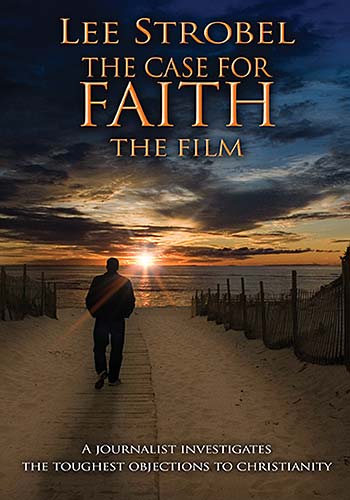
Last night I watched the DVD, The Case for Faith, featuring Lee Strobel.  The Case for Faith DVDThe video deals with two issues from the book that bears the same name: 1) How can Jesus be the only way? and 2) How can God exist and there be so much evil, pain, and suffering?

In the DVD, Strobel features the words of Charles Templeton prominently and lets his challenges to the Christian faith drive the discussion.  Templeton, if you recall, was a co-evangelist with Billy Graham back in the 1940’s.  Templeton suffered a crisis of faith and eventually turned his back on Christianity.  Strobel interviewed Templeton for his book, The Case for Faith, which quickly became a Christian apologetics classic.

The DVD answers these tough questions by interviewing some of Christianity’s greatest living apologists and scholars.  Some of those who participated were Craig Hazen, Greg Koukl, J. P. Moreland, N. T. Wright, Ben Witherington, and Peter Kreeft.  I may be leaving some out, but those are the ones that come to mind.

Along with these scholars, the film also features the stories of two people who suffered greatly, and how their suffering affected their relationship with God.  These stories are truly powerful and balance the documentary between intellectual arguments and heart-felt experience.

All in all, I highly commend this DVD to all Christians who have ever thought about these two key issues and to skeptics who are open to hearing for themselves from some of Christianity’s best and brightest.  This DVD was truly fantastic.  I regret waiting so long to see it.

Is God a Crutch?

Post Author: Bill Pratt

Critics of Christianity and of religion, in general, like to take a page from Sigmund Freud and accuse believers of forming their beliefs for purely psychological reasons.  Freud held that believers are projecting their need for a father figure on God.  God is merely a psychological projection of the ideal father.  God, in other words, is just a crutch for those who can’t face the difficulties of life.  Larry King once asked a Christian pastor if Christianity was a crutch, and the pastor replied, “No, I see it as more of a hospital.  We are all in serious condition and desperately need help!”

Are there psychological reasons for belief in God?  Of course there are.  There are psychological reasons for everything we do and everything we believe, but this fact has nothing to say about whether God really exists.  That, my friends, is an entirely different question.

I may very much want to believe that my wife loves me, for psychological reasons, but does the fact that I have this need prove my wife does not love me?  No.  It just doesn’t follow.  Likewise, I may yearn for a heavenly father, but does my yearning prove he doesn’t exist.  Obviously not.

Christians may have their psychological reasons for wanting God to exist, but atheists have their psychological reasons for wanting God to not exist.  According to Paul Vitz, a psychologist who has extensively studied the psychology of atheism, many atheists don’t believe in God because they have unresolved hatred for their earthly father figure.  I have seen this in my friends who are atheists.  Philosopher J. P. Moreland recounts his experience: “I have spoken on more than 200 college campuses and in more than 40 states in the last 40 years, and it has become apparent to me that atheists regularly have deep-seated, unresolved emotional conflicts with their father figures.”

Moreland continues to explain a second psychological reason for atheism.  “People want to be liberated from traditional morality so they can engage in any sexual behavior that satisfies them without guilt, shame, or condemnation.”  If you are a person who is engaged in all sorts of illicit sexual activity, it is absolutely in your interest to reject God.  A few atheists that have visited this blog have admitted that they enjoy sexual pursuits that Christians would find objectionable.  They argue that what they are doing is harmless, and that any religion which tells them the opposite cannot be true.

There are undoubtedly other reasons for denying God’s existence, but the point is that atheists, like believers, have psychological motives.  We all do.

What do we do with this information?  Well, first of all, we should all look within ourselves and reflect on what our motivations are.  Let’s face them and not deny them.

But let’s all remember that at the end of the day, all of these psychological reasons are not ultimately why we should believe or disbelieve.  Our view of God should be based on solid, rational arguments.  We should all know why we believe what we believe and we should stop accusing those who disagree with us of being completely irrational.  It gets us nowhere.

Debating psychology will never determine whether God exists or not, or whether Jesus was resurrected from the dead.  Psychology can only tell us some of the motives for our beliefs.  While that is interesting, it is not the most important question.

How Should We Communicate the Truths of Christianity?

Post Author: Bill Pratt

Any serious student of the Bible knows that the biblical authors employed a large variety of written literary genres.  The Bible contains poetry, historical narrative, wisdom literature, personal letters, parables, theological and philosophical arguments, and much more.

As an apologist, I have always been drawn to the theological and philosophical argumentation found in the Bible and in later Christian authors.  When I present Christianity, I usually use logical and rational arguments from the fields of history, theology, philosophy, and science.  Rational argumentation can be very effective with certain kinds of people, but completely ineffective with others.

Jesus certainly presented a rational case for believing he was the Son of God (see Geisler and Zukeran, The Apologetics of Jesus).  However, one of his favorite communication techniques was the parable.  Parables were fictional stories that Jesus used to teach powerful lessons about the Kingdom of God.  Why did Jesus speak in parables instead of just using his unparalleled knowledge and wisdom to slay opponents with irrefutable, logical arguments?

Several years ago I was speaking to a skeptic about Christianity and he said that if God really wanted to reveal himself, then the Bible should read like a textbook.  It should be expository, non-literary, and full of lists and facts.

As an engineer, I could relate to this skeptic.  But as I’ve learned over the years, story is the absolute supreme way that human beings communicate to each other.  Think about it.  We love to read stories, see stories played out in movie theaters, and hear stories from our friends.  Our conversations are often built around story-telling.  Our free time is spent listening to and watching stories.  There is nothing more intriguing to human beings than stories.

The Bible, it turns out,  is a sweeping narrative about God’s interaction with the human race.  God, through the human authors of the Bible, has woven together the world’s greatest story, and with multiple literary genres throughout.  Jesus’ use of the parable is a reflection of the power of story-telling.  Why tell parables?  Because they are effective!

God used the primary vehicle, story, to reveal himself to mankind, but he made sure that within The Story there was poetry, wisdom literature, rational argumentation, and all kinds of other literary forms to capture readers.  These other literary forms are there to support the overarching narrative.

Christians need to communicate the  truths of Christianity employing all means of communication.  All of our methods, however, must always point back to The Story.  The arguments, the sermons, everything we say and do, always have to lead back there.

Why Should the State Endorse Gay Marriage?

Post Author: Bill Pratt

I wrote a post recently about why the state endorses and promotes marriage between a man and a woman.  Simply put, the state needs children and it needs children raised in the ideal environment for them to become productive adult citizens, which is a family headed by a man and a woman.  Biology, common sense, and vast empirical research prove this to be the case.  Additionally, traditional marriage domesticates men and protects mothers.

Based on these societal interests, why would the state want to endorse gay marriage?

Gay marriages do not produce children.  In fact, the only way a same sex couple can “produce” children is to use people from outside their marriage.  They cannot procreate by themselves and they rely on traditional male-female sexual unions to provide children.

Gay marriages are not the ideal environment to raise children.  Every single gay marriage deprives a child of either a father or a mother.  Again, nature, common sense, and empirical research all demonstrate that children thrive best when they are raised in a family with a father and mother.

Gay marriage does nothing to domesticate men.  The great majority of gay men are not monogamous; they seek sexual gratification outside their primary relationship.  One study tracked 100 gay male couples, and after 5 years not one couple could boast that both partners had remained sexually faithful.  The idea of two men gay men living faithfully in a long-term commitment is a myth.  The research proves just the opposite.

Only gay marriages between women provide any sort of security or protection for a mother.  The quality of that security is debatable, but it seems like it could provide better security than single motherhood.

So, to summarize, at least 3 out of the 4 primary reasons that the state promotes traditional marriage do not apply to gay marriages.  It is only if marriage is completely redefined and its purpose fundamentally altered that same sex marriage advocates have any kind of argument.

You may think same sex marriage is harmless to our society (I disagree but that is a topic for another day), but I want to know why the state should endorse it.  After all, that is what gay marriage advocates want – a state endorsement of their relationship.  There are plenty of relationships that are harmless that the state does not promote.  What is so special about this one?

Make an argument for why we should radically alter our marriage laws.  Show us why, if you are a gay marriage proponent, this is so good for our entire nation.

Addendum: For additional information on whether homosexuality is inherited, please see this post, and for additional arguments against gay marriage, please see this post.

Why Do Civilizations Care about Marriage?

Post Author: Bill Pratt

The ultimate reason that virtually every civilization since the dawn of man has recognized and promoted marriage between a man and a woman is because this is the one natural union that produces children.  Yes, marriage is about procreation and every civilization needs to produce children to survive and thrive.  Without children, which are produced between the sexual union of a man and woman, every nation, state, and civilization dies.  It is, therefore, supremely important to protect and promote the institution of marriage.

But there are also other reasons.  In addition to procreation, marriage between a man and woman is the best environment to raise children.  It always has been and it always will be.  Biology cannot be overruled.  Children must be raised and families with a married mother and father are the best means by which they are raised, so it is in the state’s interest to promote marriage as the best way for children to be looked after and guided toward productive adulthood.

In addition, marriage civilizes men.  Married men are more productive and well-behaved members of a society.  Single men tend to cause far more trouble for a society, so marriage is a great vehicle for the domestication of men.

Marriage protects women.  Mothers who are married are far less likely to experience violence of any kind than single mothers.  They are also protected financially if they raise their children and forgo a career outside the home if they are married to a committed husband.

These are some of the reasons why human societies have always recognized marriage between a man and a woman and why they have promoted and celebrated this institution.  These reasons are not only backed by traditional wisdom and common sense, but by empirical research.

Like it or not, healthy marriages between men and women are the bedrock of any society, so think carefully about tampering with the definition and purpose of marriage.  Think carefully about weakening this institution in any way.  If you do, you will severely degrade our national immune system.

What Movies Should Our Kids be Watching? Part 2

Post Author: Bill Pratt

Part 1 of this post discussed the use of Internet sites to help parents decide whether a movie is appropriate.  Today, we talk about how we know something is inappropriate.

There are at least two kinds of appropriateness, which I think a lot of parents miss.  First, there is age appropriateness.  A movie that is dealing with subjects like romance, or realistic war depictions, or other historical events that include intense human pain and misery, is not appropriate for younger children.  Their immature minds cannot process what they are seeing and they will not understand these themes until they are older.

A couple examples would be The Passion of the Christ and Band of BrothersThe Passion depicts the excruciating torture and death of Jesus while Band of Brothers portrays the true story of World War II soldiers.  Both of these are inappropriate for younger children because of the thematic content, but worth seeing once a person is well into their teenage years.

When deciding age appropriateness, you also have to consider your child.  My children do not struggle with violent streaks.  They are not aggressive toward other kids and they also have a good understanding of the difference between fantasy and reality.  So, we may let them watch movies that include violence, as long as it isn’t too realistic or intense.  If your child is aggressive toward other kids and is obsessed with violent role playing, you need to steer them clear of violent movies.

On the other hand, we are very concerned about exposing our kids to sexual themes and profanity.  We believe that there are real consequences if we allow our children to be inundated with foul language and sex.  When they enter their teenage years, their thoughts and deeds will be impacted by the language and sexual situations they see in movies.  Those things impacted me, so I assume they will impact my kids.  Therefore, movies that major on these themes are off-limits.

The second kind of inappropriateness is more difficult for parents to accept.  Some movies should not be seen by anyone because they are garbage.    These movies may glorify extra-marital sex, gratuitous violence, drug use, and so forth.  I can remember watching Natural Born Killers (lots of gratuitous violence) about 15 years ago with my wife.  When it was over, we both looked at each other and said, “That was a complete waste of time!  Why did we subject ourselves to that kind of filth?”  The movie actually left us both depressed.

Not only should your kids not watch these kinds of movies, but neither should you!  Unfortunately, many parents go ahead and watch these kinds of movies and their kids know that they watch these movies, and their kids see their parents as hypocrites.  Mom and Dad are always talking about certain movies being inappropriate but they routinely watch inappropriate movies!  If you, as a parent, expect to have any credibility when it comes to movies, you need to practice what you preach.

Some of you may object, “I’m an adult and I can watch whatever I want.  These kinds of movies don’t affect me like they affect a child.”  I used to think that until I came across Philippians 4:8: “Finally, brethren, whatever is true, whatever is honorable, whatever is right, whatever is pure, whatever is lovely, whatever is of good repute, if there is any excellence and if anything worthy of praise, dwell on these things.”  God expects you to expose yourself to media which contributes to your wisdom and virtue.  This verse is directed at adults, not children.

I’m not saying that you can’t watch movies for the sake of entertainment.  I am saying that entertainment should not come at the cost of your soul.  Every time you expose yourself to movie sewage, you are shriveling your soul.  You are growing away from God and therefore away from wisdom and virtue.  Christian adults need to restrict their own movie viewing.  If they don’t then they shouldn’t expect their children to take them seriously as God’s representatives.

I don’t think I have all the answers on this topic, and I’m sure some of you would disagree with my conclusions.  Please let me know how you see this issue.  I am truly interested in other perspectives!
What Movies Should Our Kids be Watching? Part 1

Post Author: Bill Pratt

As a parent, one of the perennial battles we fight with our children is over movies.  Our son, in particular, started pushing us to watch every movie under the sun when he was about 7 years old, and he has not let up since that day.

My wife and I had to make a choice.  Either we let him watch whatever he wants, which is the approach some parents take, or we restrict his movie selection.  But restricting movies is easier said than done.  There are a couple approaches I have seen.

The ad hoc approach is the parent who decides what their kids can watch based primarily on the movie rating and their gut feeling about a movie from what they see in a TV commercial or some other advertisement.  Many parents I know follow this approach.  They argue that they don’t have time to study every movie and so they just make their decision based on the rating and their parental instincts.

I thought this approach might work until I started seeing that movie ratings and instincts were often wrong.  Some movies that looked benign were not, once we saw them.  And some movies that I thought would be objectionable just were not, once we saw them.  My conclusion was that if I was going to decide what movies the kids could watch, I needed more than movie ratings and instincts.

I should mention this is especially true about movies rated PG before the PG-13 rating was introduced in 1984.  Some of the movies from the 1970’s and 1980’s that were rated PG contain really bad language and even nudity!  If you, as a parent, are counting on the PG rating to ensure the movie is appropriate, think again.  In fact, you might want to read this Wikipedia article on the MPAA ratings system for more information.  The standards that have been applied to rate movies have changed often throughout the years.

So, if I can’t trust the ratings and my own instincts, what can I do?  I can’t see every movie first before I allow my kids to see it (kudos to the parents that do this, but it’s totally unrealistic for most parents).  What we decided to do was use Internet movie ratings sites to get more information on a movie before letting the kids see it.  We have used many sites over the years, but our present favorite is Commonsense Media.  This site provides a lot of details about each movie with the goal of helping parents decide whether it is appropriate.  We review this site before we allow the kids to watch any movie.

Using a web site is fine, but the hard part is determining what is appropriate and what is inappropriate.  The web site only gives you information about a movie.  It cannot tell you whether it is appropriate for your kids (although Commonsense Media does recommend minimum ages for each movie).

In part 2 of this post, I will discuss the issue of appropriateness.  See you then.

How Do Textual Critics Choose Among New Testament Manuscript Variants?

Post Author: Bill Pratt

Textual critics are the scholars who study the manuscript evidence for the New Testament and determine which readings among the various manuscripts are likely to be the original (see previous post for background).  Although the vast majority of the variants are simple spelling or word order errors made by copyists, there are some variants in the manuscripts that are more significant.

Textual critics use some basic criteria to help determine which readings are most likely the original and which variants were added or modified by copyists.

The first category of criteria is external.  External evidence has to do with the kinds of manuscripts that support a reading.

The first criteria is the age of a manuscript.  Generally, the older the manuscript, the more likely it contains the original text.

Second, the number of manuscripts that support a reading must be taken into consideration.  If we only have a variant reading in a single manuscript, it probably was not in the original text.

Third, the geographical range of a textual variant must be considered.  If a variant reading can be found in manuscripts from many different locations, it is more likely original.  A reading found in manuscripts from only one geographical region is more suspect.

Fourth, many, but not all, textual critics favor the readings from the Alexandrian family of manuscripts, as opposed to the Byzantine and Western families of manuscripts.  Why?  They argue that the Christian scribes in Egypt were more careful copyists.

The second category of criteria is internal.  Internal evidence has to do with the actual words of the text.

The first criteria has to do with intrinsic probabilities, probabilities based on what the author of the text most likely would have written.  Textual critics study the vocabulary, writing style, and theology of an author and see if the textual variant is something that author would have written.  If the text in question is completely different in style, vocabulary, and theology, it renders the reading somewhat suspect.  The opposite is, of course, true.

The second internal criteria is called transcriptional probability.  This criteria asks whether a textual variant is more or less likely to have been created by a scribe or copyist.  Copyists generally tended to harmonize texts that appeared contradictory and expanded upon shorter texts.  So when there are two variants to be compared, the shorter one which does not attempt to harmonize is to be preferred.  Another way to state this is that readings which are more difficult to explain and which are shorter in length are usually preferred.

None of these criteria can be applied in isolation, but these are the kinds of questions that textual critics ask.  It is obviously not an exact science, but most of the time these kinds of questions can lead scholars to the most likely reading of a text.  In fact, no essential doctrines of Christianity are in question because of textual variants.  There is almost no question that we have the words of the original authors in 99+% of the text of the New Testament.

If you’re interested in some of these variants, many of them are found in the footnotes of most English Bible translations.  Check them out for yourself!

Did God Tell You?

Post Author: Bill Pratt

I was once having an impassioned discussion with a fellow Christian about the curriculum of the upcoming discipleship classes to be held at our church.  This Christian brother wanted to focus the curriculum on the subject of prayer, while I was adamant that we should teach a class on the attributes of God, which did not strictly align with the topic of prayer.

During our conversation, my friend made a statement to me which he believed should have ended the conversation, a statement which I sometimes hear other Christians make.  He said, in effect, “I’ve been praying about this and God has told me that the curriculum on prayer is what He wants us to teach.”

My response to him, which admittedly was a bit contentious, was, “God told me to teach about His attributes, so it looks we have a stalemate!”  I knew that a contest between the two of us about which idea God really preferred, based on our own subjective feelings, was pointless, but I wanted my friend to see where his comment would logically lead us.

The truth is that God speaks to us, foremost, from His word in the Bible.  The Bible speaks about both the subject of prayer and the subject of God’s attributes.  Nowhere, however, do you find a verse in the Bible telling our specific church which topic should be taught in the upcoming semester!  Given that we are limited in space, we cannot teach everything and choices have to be made, but those choices will have to be made without pointing to any one Bible verse.

It concerns me when Christians claim God told them something that cannot be found in the Bible, and especially when they are using this claim to shut off debate.  There are many subjects that the Bible covers which are not up for debate, but there are many subjects which the Bible does not cover which are up for debate (e.g., choosing a discipleship curriculum).  For those topics, we should have the debate and pray for wisdom to come to a reasonable answer, but we should not play the “God told me” card.

I am personally very uncomfortable claiming God told me things which I cannot point to in Scripture.  Who am I to represent new revelation from God?  If you are one of these Christians who find yourself saying this kind of thing frequently, ask yourself why.  If it is to cut off debate where debate is perfectly acceptable, then stop!  Argue your point of view, but don’t claim that God is somehow on your side when you have no objective way of knowing that.

A Christian Apologetics Blog