Best of the GeoChristian

Post Author: Bill Pratt

One of the first bloggers that ever reached out to me when we started Tough Questions Answered in November of 2008 was Kevin Nelstead, who authors the blog called  The GeoChristian.  I noticed recently that Kevin was building a “best of” page and I want to encourage our readers to see what’s on there.  Kevin, as a geologist, is especially knowledgeable about the interaction between science and Christianity.

Kevin, thanks again for your encouragement!

Did Ancient Non-Christians Write about Jesus? Part 3

Post Author: Bill Pratt

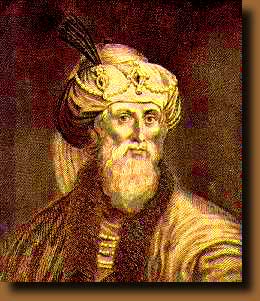
In parts one and two of this series of posts, we discussed the writings of Josephus and we saw that most historians agree that Josephus did indeed write about Jesus, even if Christians may have added a few phrases later on (this is still debatable, but possible).

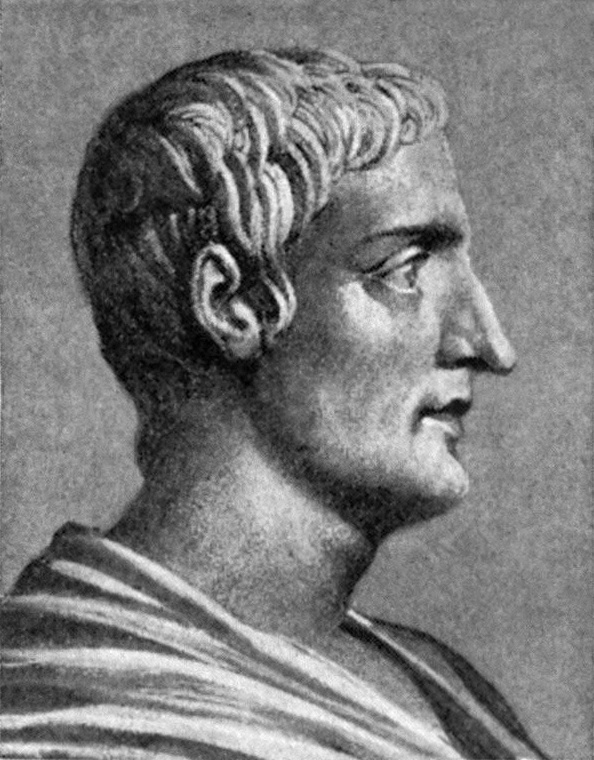
There are, however, others who wrote about Jesus at a very early date.  The next of these we’ll mention is the Roman historian Tacitus.  Edwin Yamauchi, the historian we’ve been quoting, has this to say about Tacitus: “Tacitus recorded what is probably the most important reference to Jesus outside the New Testament.  In A.D. 115 he explicitly states that Nero persecuted the Christians as scapegoats to divert suspicion away from himself for the great fire that had devastated Rome in A.D. 64.”

So what exactly did Tacitus say about Christians and Jesus?

Consequently, to get rid of the report, Nero fastened the guilt and inflicted the most exquisite tortures of a class hated for their abominations, called Christians by the populace. Christus, from whom the name had its origin, suffered the extreme penalty during the reign of Tiberius at the hands of one of our procurators, Pontius Pilatus, and a most mischievous superstition, thus checked for the moment, again broke out not only in Judea, the first source of the evil, but even in Rome, where all things hideous and shameful from every part of the world find their center and become popular. [Annals 15.44]

Tacitus, as can be seen, is no fan of Christianity, but he provides several details about Jesus and early Christians.  Here they are:

  1. Christians were named for their founder, Christus (Latin for Christ).
  2. Christus was put to death by a Roman procurator, Pontius Pilatus (again Latin).
  3. Christus was executed while Tiberius was emperor (AD 14-37) .
  4. His death ended a “superstition” for a time but it broke out again in Judea (where the teaching originated), and made its way to Rome.
  5. Christians were hated and tortured during Nero’s reign.

Again, we see that this data lines up well with the New Testament documents, and again we see that those who deny that Jesus ever existed are swimming upstream against the current of scholarship.

One additional note about Tacitus.  There has been much speculation that the “superstition” to which Tacitus refers is the resurrection of Jesus.  We can’t be sure about this, but Tacitus may be indirectly referring to it.

Tacitus’ testimony about Jesus raises an important question.  How did a swelling religious movement, which started at the far reaches of the Roman empire (in Judea) but reached Rome by the mid 60’s A.D., get started when its leader was subjected to one of the most humiliating and public deaths possible at this time?  Jesus was crucified as a common criminal, but people were following him.  If he was resurrected, then there would be an easy explanation, but if he stayed in the tomb, then how did this movement even get off the ground?  I have never heard a satisfactory answer to that question from those who deny the resurrection.

There is one more non-Christian I want to introduce to you, and I’ll do that in the next post.  Thank you for sticking with this series, which has gone on longer than I originally thought!

Did Ancient Non-Christians Write about Jesus? Part 2

Post Author: Bill Pratt

In part 1, we introduced the writings of the Jewish historian Josephus and demonstrated that he mentioned Jesus and his brother James in one section of his work, The Antiquities.

But there is an even more famous passage that talks about Jesus in The Antiquities.  This longer section is referred to as the Testimonium Flavianum.  Historian Edwin Yamauchi explains that this passage is more controversial among historians because there may be later Christian additions to the original text.  Historians refer to these possible additions as interpolations.  Below I will include the entire text and highlight in bold the most disputed phrases.

About this time there lived Jesus, a wise man, if indeed one ought to call him a man.  For he was one who wrought surprising feats and was a teacher of such people as accept the truth gladly.  He won over many Jews and many of the Greeks.  He was the Christ. When Pilate, upon hearing him accused by men of the highest standing among us, had condemned him to be crucified, those who had in the first place come to love him, did not give up their affection for him.  On the third day he appeared to them restored to life, for the prophets of God had prophesied these and countless other marvelous things about him.  And the tribe of Christians, so called after him, has still to this day not disappeared.

Yamauchi claims that “today there is a remarkable consensus among both Jewish and Christian scholars that the passage as a whole is authentic.”  But what about the possible interpolations (the bold text above)?  Why do some scholars think Josephus would not have said these things?

The first bold phrase appears to indicate Jesus is more than human, which seems unlikely coming from Josephus.  The second bold phrase flatly says that Jesus is the Messiah, instead of saying Jesus was called the Messiah.  Again, this seems unlikely.  Finally, the third alleged interpolation proclaims the resurrection of Jesus, not something that Josephus would likely report.  We can’t be sure about any of these phrases, and maybe Josephus did write them, but the current scholarly opinion is mixed on the subject.

What is left of the passage, though, is still a powerful corroboration of key facts about Jesus.  Yamauchi summarizes: “He was the martyred leader of the church in Jerusalem and . . . he was a wise teacher who had established a wide and lasting following, despite the fact that he had been crucified under Pilate at the instigation of some of the Jewish leaders.”  Those facts line up exactly with what the New Testament records about Jesus.

Given these two passages from Josephus, how significant are they?  Yamauchi explains: “Highly significant, especially since his accounts of the Jewish War have proved to be very accurate; for example, they’ve been corroborated through archaeological excavations at Masada as well as by historians like Tacitus.  He’s considered to be a pretty reliable historian, and his mentioning of Jesus is considered extremely important.”

So, we do have at least one non-Christian source that talks about Jesus from the first century in Josephus.  But there are additional sources that should be mentioned before we leave this topic.  Find out in the next post….

Are Experiences Reliable Tests For Truth?

Post Author:  Darrell

Some religious organizations emphasize that knowledge of truth is obtained through an experience.  For example, The Church of Jesus Christ of Latter Day Saints (LDS Church) proclaims to be the only true church of Jesus Christ on the earth today, and they encourage those researching the church to gain a Testimony (belief/knowledge) of the truthfulness of The Book of Mormon and church by praying and receiving a spiritual witness.  Their missionaries typically refer to Moroni 10:4 in The Book of Mormon.

And when ye shall receive these things, I would exhort you that ye would ask God, the Eternal Father, in the name of Christ, if these things are not true; and if ye shall ask with a sincere heart, with real intent, having faith in Christ, he will manifest the truth of it unto you, by the power of the Holy Ghost.   

Many Mormons say they have followed this teaching and have prayed and received an answer via an experience.  Some claim to have had a burning in the bosom; others a warm feeling in their heart; and still others say they have had visions and/or spiritual manifestations. 

At first glance Moroni’s challenge appears harmless; after all, it is simply encouraging us to ask God.  However, a closer analysis reveals several problems and dangers with this proposition.

First, looking closely at the verse, one notices that it has setup a scenario where the answer can never be no, for it specifically states that if you ask with real intent, a sincere heart, and faith in Christ, you will be told that it is true.  As a result, if you pray and receive no for an answer, the automatic assumption, based upon the verse, is that you do not have a sincere heart, real intent, or faith in Christ.  In fact, while I was LDS, it was not uncommon to hear the missionaries challenge people who had not received a positive answer to “exercise more faith” and “keep praying.” 

Second, the verse completely overlooks the fact that God has warned us that some spirits are evil.  They will masquerade as true spirits from God, but will teach false Christs and false gospels.  1 John 4:1 cautions us about believing every spirit and commands us to test them.

Dear friends, do not believe every spirit, but test the spirits to see whether they are from God, because many false prophets have gone out into the world. 

As a result, praying and receiving a spiritual witness is not sufficient to demonstrate that a church or book are in fact true, for the spiritual witness could be from a false spirit. 

Third, using an experience as a test for truth has several philosophical problems. 

  1. No experience as such is either true or false. An experience is something we have; it is a condition of persons. But truth is something we express; it is a characteristic of propositions, e.g., Mormonism is true or not true. Hence, no experience as such is true; only expressions about the experience can be true.
  2. No experience is logically connected with the truth of a worldview or belief. Logical necessity is a characteristic of propositions (as noted above) not of experience. Truth statements can be uttered without the experience and one can have an experience without uttering a truth statement. Therefore, no experience is logically connected with any given truth statement.
  3. An experience cannot be used to prove the truth of that particular experience. To use an experience to prove its own truth is begging the whole question. The only truth established by an experience is the truth that one has had that experience. Therefore, an experience cannot be used to prove the truth of that experience.
  4. Experiences are not self interpreting. Experiences do not come with unchallengeable truth labels on them, and the same experience is capable of different interpretations depending upon the overall framework one gives to it. Therefore, no experience as such is an adequate test for the truth of a worldview or belief.

Spiritual experiences can be and often are wonderful aspects of faith.  They help to bring the abstract knowledge of our faith into reality, provide comfort in times of pain, and bring us closer to God.  However, looking solely to an experience as the ultimate test of truth is very dangerous.  God has warned us that Satan will transform himself into an angel of light in an attempt to deceive us (2 Cor. 11:14).  Consequently, we should not look to experiences alone to discover if something is true.  We should also look to God’s special revelation, the Bible, and use its teachings as a standard by which all proclamations of truth are judged.  2 Timothy 3:16 puts is so well.

All Scripture is God-breathed and is useful for teaching, rebuking, correcting and training in righteousness…

Praise God that He has preserved His Word for us!

Is God Hiding His Will?

Post Author: Bill Pratt

Many Christians seem to think so.  Why else would they talk about finding God’s will as if it’s a game of hide-and-seek.  We’re told to listen to the still, small voice and to test a possible decision based on the peace we feel.  We’re told to pay attention to the hints God is giving us.  If we miss these hints, these unobtrusive suggestions, we will miss God’s will for our lives.

John MacArthur has this to say in his booklet, Found: God’s Will:

Some apparently think that God’s will is lost.  At least they say they are searching for it!  To them, God must appear to be a sort of divine Easter bunny who has stashed his will, like eggs, somewhere out of sight and sent us running through life trying to find it.  And He is up there saying, “You’re getting warmer!”

When one looks in the Bible to try and find this divine Easter bunny concept, it isn’t there.  When God wanted to communicate to a prophet, his message was almost always loud and clear.  He didn’t drop subtle hints over a long period of time, hoping his clueless prophets would finally figure out what he wanted them to do.  Can you imagine if Scripture had been inspired that way?

So how does God communicate to us what He wants us to do?  MacArthur answers:

Let’s begin with a simple assumption.  Since God has a will for us, He must want us to know it.  If so, then we could expect Him to communicate it to us in the most obvious way.  How would that be?  Through the Bible, His revelation.  Therefore, I believe that what one needs to know about the will of God is clearly revealed in the pages of the Word of God.  God’s will is, in fact, very explicit in Scripture.

There you have it.  The Bible is where God’s will is found.  Let’s start there instead of searching for the hidden Easter eggs everywhere else.

Archaeologist Claims to Find City Wall Built by King Solomon

Post Author: Bill Pratt

Eilat Mazar has potentially made another astounding discovery.  She has unearthed a section of an ancient city wall of Jerusalem which she believes dates from the tenth century B.C. and would have been built by King Solomon.

According to Biblical Archaeology Review, “If Professor Mazar is correct about the dating, then it would seem to support the Biblical account of Jerusalem, and Israel, as being an organized society with a strong centralized government in the 10th century B.C., the time of King Solomon.”

However, there are skeptics of the dating of the wall and more analysis needs to be done to bolster Mazar’s case.

Science Daily reports, “The section of the city wall revealed, 70 meters long and six meters high, is located in the area known as the Ophel, between the City of David and the southern wall of the Temple Mount.  Uncovered in the city wall complex are: an inner gatehouse for access into the royal quarter of the city, a royal structure adjacent to the gatehouse, and a corner tower that overlooks a substantial section of the adjacent Kidron valley.”

Mazar claims that the wall can indeed be dated to the tenth century and attributed to Solomon.  She says:

A comparison of this latest finding with city walls and gates from the period of the First Temple, as well as pottery found at the site, enable us to postulate with a great degree of assurance that the wall that has been revealed is that which was built by King Solomon in Jerusalem in the latter part of the tenth century B.C.E.

This is the first time that a structure from that time has been found that may correlate with written descriptions of Solomon’s building in Jerusalem.  The Bible tells us that Solomon built — with the assistance of the Phoenicians, who were outstanding builders — the Temple and his new palace and surrounded them with a city, most probably connected to the more ancient wall of the City of David.

Mazar specifically cites the third chapter of the First Books of Kings where it refers to “until he (Solomon) had made an end of building his own house, and the house of the Lord, and the wall of Jerusalem round about.”

We’ll see how this turns out, but it is certainly an exciting find.

Joseph Smith’s “New Translation”of Romans 4:4-5

Post Author: Darrell

Romans 4:4-5 are two absolutely beautiful verses of scripture, for they put the gospel message into thirty-five short words. The King James Version reads as follows.

Now to him that worketh is the reward not reckoned of grace, but of debt. But to him that worketh not, but believeth on him that justifieth the ungodly, his faith is counted for righteousness. [emphasis mine]

What a glorious message!! We don’t work to get to God. In fact, we can’t! Instead, God justifies us when we don’t work, i.e., when we seek not to justify ourselves and simply trust in God for our salvation.

The founder of the LDS Church, Joseph Smith, revised portions of the Bible that he believed to be in error. His work was published by Herald Publishing House and is titled Joseph Smith’s “New Translation” of the Bible. In addition, Smith’s alterations are included in the LDS Publication of the King James Version of the Bible.

Romans 4:4-5 contains, in my opinion, one of Smith’s more startling changes. It reads as follows.

Now to him who is justified by the law of works, is the reward reckoned, not of grace, but of debt. But to him who seeketh not to be justified by the law of works, but believeth on him who justifieth not the ungodly, his faith is counted for righteousness. [emphasis mine]

Besides the fact that Smith destroyed a beautiful piece of scripture, there are numerous problems with his “translation”. First, there is absolutely no support in the Greek for the addition of the word not after justifieth. In Greek the word for not is mē. only appears once in the original Greek version of verse 5, being applied to ergazomenō, the word that has been translated as works.

As a result, there are no grounds in the Greek for Smith applying not to justifieth. Of course, no student of Mormonism will find this surprising as Smith demonstrated little regard for his source text in most all of his translations. When the papyrus that he “translated” The Book of Abraham from was later analyzed by experts, it was discovered to be nothing more than an Egyptian Funeral Text, having absolutely nothing to do with Abraham. So much for Smith’s attention to detail!

A second problem with Smith’s addition of not is that it is counter intuitive to Paul’s entire message in Romans. In the first three chapters, Paul builds the case for how all of mankind is ungodly.

Romans 2:1 says, “You, therefore, have no excuse, you who pass judgement on someone else, for at whatever point you judge the other, you are condemning yourself, because you who pass judgement do the same things.” [emphasis added]

Romans 3:10 says, “There is no one righteous, not even one… .” [emphasis added]

Romans 3:12 says, “…there is no one who does good, not even one.” [emphasis added]

As these verses demonstrate, Paul believed and preached that all mankind is unrighteous and in need of a Savior. Therefore, the idea of him stating that God does not justify the ungodly makes no sense, for he held the view that everyone is ungodly! Unfortunately for Mormons who believe Smith to be a prophet of God, it appears that Smith’s “prophetic” ability failed him in his task of “correcting” the Bible. In reality, he completely overlooked these verses when he so willingly added the word not.

Fortunately, those who trust in Christ for their salvation need not worry about Smith’s butchery of the Bible. We are knowledgable of the fact that God does, in fact, justify the ungodly. We realize how ungodly we truly are, and we realize that our salvation is not dependent upon anything that we do. Instead, it is dependent upon Him, and He has already paid the price.

All praise be to our Lord, God, and Savior, Jesus Christ!

Darrell
If Jesus Is God, Why Did He Get Tired?

Post Author: Bill Pratt

If Jesus is God, and God is uncaused, immaterial, omniscient, omnipotent, and eternal (and lots of other things), then don’t we have a problem with Jesus being a real man who lived in 1st century Palestine?  After all, Jesus grew tired, but God doesn’t get tired; Jesus sometimes didn’t know things, but God knows everything; Jesus died, but God can’t die; Jesus has a human body, but God doesn’t have a body.  I think you get the point.  How does the Christian church deal with this problem?

Well, before we get to the Christian church, one approach that has been taken by some religious groups over the last two millennia is just to give up on the idea that Jesus is God.  If he is less than God, then all these questions go away.  Mormons and Jehovah’s Witnesses are two groups that took this approach, but they are just the latest in a long line.  The problem with this approach is that it contradicts the Bible’s clear teaching that Jesus is God (see the series of posts on how we know Jesus is God).  So this approach fails to take seriously the biblical data.

The approach that the Christian church has taken is to accept the fact that the Bible teaches that Jesus is both God and man.  In the early church, there was a couple centuries of debate about how this works, until the Council of Chalcedon came together in AD 451 to settle the issue.  Here is the creed that resulted from the Council:

We, then, following the holy Fathers, all with one consent, teach men to confess one and the same Son, our Lord Jesus Christ, the same perfect in Godhead and also perfect in manhood; truly God and truly man, of a rational soul and body; consubstantial with the Father according to the Godhead, and consubstantial with us according to the Manhood; in all things like unto us, without sin; begotten before all ages of the Father according to the Godhead, and in these latter days, for us and for our salvation, born of the Virgin Mary, the Mother of God, according to the Manhood; one and the same Christ, Son, Lord, Only-begotten, to be acknowledged in two natures, unconfusedly, unchangeably, indivisibly, inseparably; the distinction of natures being by no means taken away by the union, but rather the property of each nature being preserved, and concurring in one Person and one Subsistence, not parted or divided into two persons, but one and the same Son, and only begotten, God the Word, the Lord Jesus Christ, as the prophets from the beginning have declared concerning him, and the Lord Jesus Christ himself has taught us, and the Creed of the holy Fathers has handed down to us.

What does all that mean?  It means, among other things, that Jesus is one person composed of two natures: human and divine.  The creed repeats the words Godhead and Manhood several times to hammer the point home.  So, whenever we ask any question about Jesus, we have to specify whether we are asking about his divine nature or his human nature.  In his divine nature, he is omniscient, eternal, and uncaused.  In his human nature, he was tired, he needed food, he didn’t know everything, and he even died.  Two natures, two sets of questions about Jesus.

The church never went so far as to try and explain how exactly Jesus’ two natures interacted; they set boundaries around what was acceptable, based on Scripture, and captured it in the above creed.  Many theologians have attempted to go further with this doctrine and explain in more detail how this is possible, but these details, to my knowledge, have never been formally adopted into creeds of the church.

Two Atheist Academics Take On Darwinism

Post Author: Bill Pratt

If I could count how many times I’ve been told that only ignorant, fundamentalist Christians doubt the truth of Darwinian evolution, I would be a rich man!  Alas, the worst nightmare of Darwin defenders occurs when non-Christians, and non-theists at that, write books criticizing Darwin’s ideas.

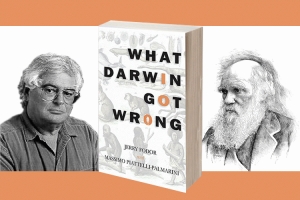
In their new book, What Darwin Got Wrong, Jerry Fodor and Massimo Piattelli-Palmarini do exactly that.  I have often told people that my doubts about Darwin have little to do with my religious beliefs, but from what I know of science.  Here are two atheists that likewise find the science to be lacking.

Salon.com interviewed Fodor recently and asked several provocative questions.  In one exchange, they ask Fodor about the standard evolutionary story about giraffes evolving long necks because they needed to adapt to food high up in trees.  Here is Fodor’s response:

The inference runs that there’s this creature that has a long neck, so this creature was selected for having a long neck. That inference is clearly invalid. A creature that has a long neck may have that neck because a different trait was selected, and the long neck came along with it.

And in a sense, there are no such things as traits. The environment selects creatures. Animals can have long necks and toenails, but if you try to break such creatures apart into traits and you say, OK, “What selected this trait?” and, “What selected that trait?” you’ve made a mistake right from the beginning. The disintegration of the organism into traits is itself a spurious undertaking. Biologists have said for a long time that organisms aren’t like Swiss apples, you can’t tap them on a table and have them fall apart into distinct wedges. Selection is operating on whole organisms.

In another exchange the interviewer asks what the implications are for Darwinism being wrong.  Fodor answers:

If this is true, then we need to rethink the implications of Darwinism. Maybe the right question to ask is not what environmental variables are doing selection, but what kinds of complexes are they selecting on. One sees, even without God, how this Darwinian story could turn out to be radically wrong. You could see a massive failure of the evolutionary project, because wrong assumptions were made.

Again, these guys aren’t fundamentalist creationists, but they recognize that the Darwinian story of the origin of species just does not work.  There are far too many holes in it.  Make sure you read the entire interview with Fodor.  It’s well worth it.

Are Christians Arrogant for Believing They Are Right?

Post Author: Bill Pratt

One of the most common accusations hurled at Christians is arrogance.  If Christians believe that only they are right about who God is, that is arrogant.

Usually, but not always, I hear this accusation from atheists.  They say something like, “If you think that the Christian God is the only true God, then you are excluding the rest of world who believe in other gods.  You are also excluding those who don’t believe in any god.  That betrays an incredible arrogance and narrow-mindedness.”

Typically these kinds of statements put Christians on the defensive and a few of us, unfortunately, will even claim that all religious concepts of God are basically the same so as not to seem narrow-minded.  After all, who wants to be seen as arrogant?

But there’s a problem with this accusation, especially for atheists.  Most religion surveys indicate that there are about 2 billion Christians in the world, which is about 1/3 of the world’s population.  That means that about 4 billion people don’t believe in the Christian God, or 66% of the world.

If we look at the number of atheists, those who deny that any kind of god exists, it’s probably around 150 million people, or 2.5% of the world population (see this link for data).  Even if we double that number, we get 300 million people.  That means that approximately 5.7 billion people are wrong about the existence of god, or 95% of all the people living in the world.

Now who is calling who arrogant?  If anybody is exclusive, if anybody is narrow-minded, it is atheists far more so than Christians.  As an atheist, you have to believe that 95% of all people alive are wrong about the existence of a higher power, a god or gods.  In fact, if numbers are how we determine arrogance, Christians are the least arrogant of any religious group because they have the most adherents!

Do I really believe atheists are arrogant for saying that no gods exist, a belief that contradicts 95% of the rest of the world?  No, of course not.  Truth claims are narrow, by definition, because they rule out falsehoods.  Numbers don’t determine truth, and it’s certainly possible that atheists are right, despite their relatively small numbers.  But that means that the accusation that Christians are arrogant also needs to be put to rest.  The atheist claiming that Christians are arrogant is sawing off the limb he is sitting on.

Let’s drop these silly accusations of arrogance and get back to reasonable and rational discussions about the existence or non-existence of God.  Can I get an atheist “Amen?”

A Christian Apologetics Blog