#1 Post of 2013 – You Might Be a Hyper-Skeptic of Christianity If . . .

After producing the TQA blog for 5 years, we have had hundreds of skeptics comment on our blog posts. With so many skeptics, I’ve seen patterns of behavior that have led me to refer to some of the skeptical commenters as hyper-skeptics. A hyper-skeptic is someone who will not ever consider any evidences, arguments, or reasoning given for Christianity.

For those fair-minded skeptics out there who don’t want to become like this, here are the warning signs I’ve seen. What makes a person a hyper-skeptic? Well, you might be a hyper-skeptic if …

You don’t need to read anything actually written by Christian scholars, because you are just smarter than they are (and you’ve heard it all before).

You think it’s doubtful that Jesus ever lived.

You believe that Christian apologists are lying most of the time.

You actually think that the evidence for a flying spaghetti monster is as good as the evidence for the Christian God.

When you read a blog post written by a Christian, you aren’t reading for understanding; you’re reading to find isolated phrases or sentences that you can attack.

You believe that Antony Flew renounced atheism only because of old age and senility.

You don’t understand theology or metaphysics, but you’re certain it’s just a bunch of made-up mumbo-jumbo.

You almost never agree with anything a Christian apologist writes, even on the most uncontroversial subjects.

You believe that if you ever publicly agree with a Christian, you are contributing to the downfall of civilization.

You are 100% certain that people cannot rise from the dead, and no amount of historical evidence would ever be convincing.

You think that the strength of the historical evidence supporting the stories in the Book of Mormon is roughly equivalent to the strength of the historical evidence supporting the New Testament accounts of Jesus’s life, death, and resurrection.

You think that The God Delusion is a tour de force that annihilates all of the best Christian arguments for God.

You think that the Bible contains nothing of value.

There are plenty of fair-minded skeptics that comment on the blog, and I appreciate them (at least I try to). But if you’re a skeptic and you find yourself fitting much of the criteria I’ve listed above, you need to step back and ask yourself why. Why have you become as dogmatic and fundamentalist as the religious folks you like to deride?

If you are a hyper-skeptic, you are not reasonable and you are not thinking clearly when it comes to Christianity.  Take some time off from the blogosphere and figure out why you’ve crossed this line. I sincerely doubt it is a purely intellectual issue.
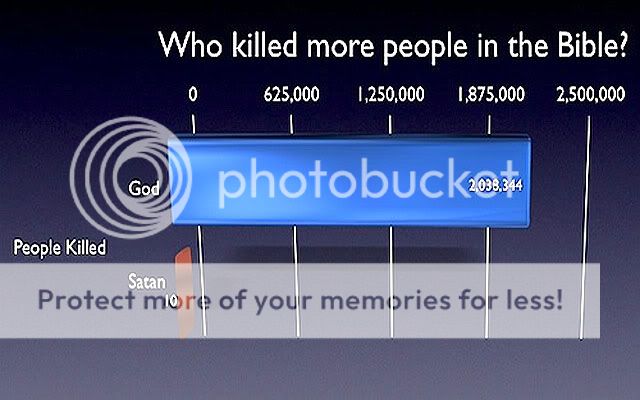
#2 Post of 2013 – If God Cannot Change, Then Why Should We Pray?

Post Author: Bill Pratt

The Bible teaches, and theology argues, that God cannot change. This is called divine immutability. But if God cannot change, then why do we pray to him? After all, when we pray, aren’t we trying to change God’s mind?

Norm Geisler answers this question in his Systematic Theology, Volume Two: God, Creation. Listen to what he says:

God is omniscient . . . , and an all-knowing Being cannot change His mind. If He does, He is not really all-knowing. Therefore, God cannot change His mind in answer to prayer.

When we pray (or have prayed), God not only knew what we were going to pray, but He ordained our prayer as a means of accomplishing His purpose. Prayer is not a means by which we change God; it is a means by which God changes us.

Prayer is not a means of our overcoming God’s reluctance; it is a way for God to take hold of our willingness. Prayer is not a means of getting our will done in heaven, but a means of God getting His will done on earth.

If you think about it for a minute, we don’t want to change God’s mind anyway. After all, who knows what is best? Us or God? Geisler reminds us of why we should rejoice in the fact that God is immutable:

Since God is unchangeable, we can trust His Word: “God is not a man, that he should lie, nor a son of man, that he should change his mind. Does he speak and then not act? Does he promise and not fulfill?” (Num. 23:19).

Also, we can trust God’s promises completely: “In the beginning you laid the foundations of the earth, and the heavens are the work of your hands. They will perish, but you remain; they will all wear out like a garment. Like clothing you will change them and they will be discarded. But you remain the same, and your years will never end” (Ps. 102:25–27).

Further, we can be sure of our salvation, because “if we are faithless, he will remain faithful, for he cannot disown himself” (2 Tim. 2:13). What is more, God’s immutability provides an anchor for our souls: “Because God wanted to make the unchanging nature of his purpose very clear to the heirs of what was promised, he confirmed it with an oath. God did this so that, by two unchangeable things in which it is impossible for God to lie, we who have fled to take hold of the hope offered to us may be greatly encouraged” (Heb. 6:17–18).

Finally, we have a stable foundation for service. Paul wrote, “Therefore, my dear brothers, stand firm. Let nothing move you. Always give yourselves fully to the work of the Lord, because you know that your labor in the Lord is not in vain” (1 Cor. 15:58).

God is unchanging and we can all give praise for that. I don’t know about you, but I would have a hard time worshiping a God whose mind I could change.

#3 Post of 2013 – If God Can Kill, Why Can’t We?

Critics of Christianity sometimes point to passages in the Bible where God takes human life, and they ask, “Isn’t God breaking his own commandment to not kill?” If God can ignore the sixth commandment, then isn’t it hypocritical for him to expect us to obey it?

Does this argument really work, though? No. It fails in multiple ways.

First, the sixth commandment is not a blanket command to never take human life. It is a command to not take human life without proper justification. This can be clearly seen by reading the commandment in context with the rest of the Bible. God allows human life to be taken in self-defense and he upholds the right of the state to administer capital punishment. Clearly, then, the sixth commandment does not simply mean, “Never kill for any reason whatsoever.”

Second, the ten commandments were God’s commands to mankind, so they are not to be applied to God in the same way they are applied to us. God is infinite in being; we are not. God is the first cause of everything that exists; we are not. God is the creator (efficient cause) of human life; we are not. God is all-knowing; we are not. God is all-wise; we are not.

Third, since God possesses divine attributes that we do not possess, it is a gross error to compare God’s taking human life with our taking human life. As the guarantor of life after death, philosopher Paul Copan reminds us that “any harm caused [by God] due to specific purposes in a specific context would be overshadowed by divine benefits in the afterlife.”

This is a crucial point: God promises an afterlife for everyone. Only he can do that, as no human has that power. As the all-wise, all-knowing guarantor of the afterlife, he is uniquely justified in taking human life.

Analogously, we grant judges the power to send people to prison because they are in a unique position to know the facts of the case, and they are uniquely trained to know and administer the law. We don’t allow random citizens to sentence criminals, as they lack the knowledge and experience to imprison people in a just way. Power over human life is granted depending on the knowledge and wisdom of the one who would be in power.

Why can’t we kill? Because we lack God’s knowledge, his wisdom, and his creative power. We are finite beings who see through a glass darkly. That is why we leave life and death decisions to God.

Should Christians Celebrate Christmas? Part 2

Post Author: Bill Pratt

In part 1, we introduced the question of whether Christians should celebrate Christmas, and in part 2 we finish answering the question.

What about Santa Claus?  Are we deceiving our children by letting them believe in Santa Claus?  It turns out that the origin of Santa Claus may actually be historical.  CRI explains: “The name ‘Santa Claus’ is an Anglicized form of the Dutch Sinter Klaas, which in turn meant ‘Saint Nicholas.’  Nicholas was a Christian bishop in the fourth century about whom we know little for sure.  He apparently attended the Council of Nicea in A.D. 325, and a very strong tradition suggests that he did show unusual kindness toward children.”  Obviously the traditions about a red-suited man with flying reindeer is not historical, but it seems there was an actual Saint Nicholas.

Fine, you say, but aren’t we lying to our children, and won’t we cause them not to believe us when we tell the truth about Jesus?  The reality of childhood is that children under the age of roughly eight are developing an awareness of the difference between reality and fantasy.  They don’t understand the difference between the two, so, as parents,  we pretend there are invisible friends, a tooth fairy that leaves money, and a Santa Claus who delivers gifts.  Are we deceiving them?  I don’t think so.  Instead, I think we are encouraging their natural sense of wonder and their fertile imaginations.

Every child comes to an age when they are ready to separate fantasy from reality, and this is when we should be clear that Santa Claus is pretend and Jesus is real.  The age depends on each child, so parents have to make a judgment call, but it seems highly dubious to me that a 6-year old child believing in Santa Claus is going to destroy her belief in God.  Virtually everyone I know grew up believing in Santa Claus and doesn’t experience post-traumatic-Santa syndrome.

What about Christmas trees?  Are they pagan symbols?  The CRI article cites the following information from the Encyclopedia Britannica:

The modern Christmas tree originated in western Germany.  The main prop of a popular medieval play about Adam and Eve was a fire tree hung with apples (Paradise tree) representing the Garden of Eden.  The Germans set up a “Paradise tree” in their homes on December 24, the religious feast day of Adam and Eve.  They hung wafers on it (symbolizing the host, the Christian sign of redemption); the hosts eventually became cookies of various shapes.  Candles, too, were often added as a symbol of Christ.  In the same room, during the Christmas season, was the Christmas pyramid, a triangular construction of wood, with shelves to hold Christmas figurines, decorated with evergreens, candles, and a star.  By the 16th century, the Christmas pyramid and Paradise tree had merged, becoming the Christmas tree.

Christmas trees would only be a problem if Christians were worshiping them, but clearly they only serve as decorations; they seem harmless.

So, what is the conclusion?  Should Christians celebrate Christmas?  It seems that we are free to do so, as long as we keep the emphasis and focus on the birth of Christ, advice we’ve all heard before.  There is no need to fear the celebration of Jesus’ birth, or Santa Claus, or Christmas trees.  On the other hand, nobody need feel that they must celebrate Christmas.  If you don’t feel that the holiday, as it is currently practiced, is spiritually nurturing your family, then you are well within your rights to skip it.   Our family enjoys the Christmas season, and we have tried to emphasize the Christ-ness of this celebration, so we will continue to celebrate Christmas.

What about your family?  Do you celebrate Christmas?

Should Christians Celebrate Christmas? Part 1

Post Author: Bill Pratt

There are many reasons why a Christian may not want to celebrate Christmas: it’s too commercial, it encourages greediness, it focuses too much on Santa Claus.  I want to consider another reason, which is that Christmas is based on pagan beliefs and influences, and that if we celebrate Christmas, we are celebrating a form of paganism.

The Christian Research Institute (CRI) published an article directly dealing with this topic, so I will use some of their thoughts as I proceed.

First, some argue that since the Bible does not command us to celebrate birthdays, then we shouldn’t celebrate Jesus’ birthday on Christmas.  CRI counters this argument with a couple of points.  “First of all, the fact is that the Bible says nothing against the practice of celebrating birthdays.”  Celebrating birthdays is nowhere forbidden, so we are not left with any explicit biblical command in the matter.  “Second, what the Bible does not forbid, either explicitly or by implication from some moral principle, is permissible to the Christian, as long as it is edifying (Rom. 13:10; 14:1-23; 1 Cor. 6:12; 10:23; Col. 2:20-23; etc.).”  In conclusion, there is no good reason, biblically, to not celebrate Jesus’ birthday, as long we do it in an edifying way.

What about the date of Dec. 25?  Isn’t it true that this is not likely Jesus’ actual birthday and that it was, in fact, the date of a Roman pagan festival in the fourth century?  In answer, we should first say that whether Jesus’ actual birthday was on Dec. 25 is not relevant to the celebration of his birth.  We routinely commemorate the birthdays of great individuals of the past on days that do not correspond to their actual birthdays (e.g., George Washington).  It is the intent to celebrate their births that really matters, not that we get the day correct.

Does it matter that Dec. 25 was a pagan festival?  It should be noted that the origin of the Dec. 25 date for Christmas is somewhat disputed and that at least one scholar believes it had little to do with pagan festivals.  However, the most common theory is that the purpose of the church in co-opting this date was to replace a pagan festival with the celebration of the birth of Jesus.  As the CRI article argues, the Christians were saying, “Rather than celebrate in immorality the birth of Mithra, a false god who was never really born and who cannot save you, let us celebrate in joyful righteousness the birth of Jesus, the true God incarnate who is the Savior of the world.”

Is it wrong to replace a pagan holiday with a Christian holiday?  According to CRI, this is exactly what God did in ancient Israel.  “Historical evidence shows conclusively that some of the feasts given to Israel by God through Moses were originally pagan agricultural festivals, which were filled with idolatrous imagery and practices.  What God did, in effect, was to establish feasts which would replace the pagan festivals without adopting any of the idolatry or immorality associated with them.”

Please read part 2 of this post where we discuss the jolly North Pole dweller himself, Santa Claus.

#4 Post of 2013 – When Did the Idea That Jesus Never Existed Originate?

Post Author: Bill Pratt 

Contemporary Jesus mythicists like Richard Carrier, Robert Price, and Earl Doherty have argued that Jesus, as a historical figure, never really existed. They, however, are hardly the first to make this claim.

Biblical scholar Robert Van Voorst, in his book Jesus Outside the New Testament: An Introduction to the Ancient Evidence, traces the historical development of Jesus mythicism from the 1700’s in Europe. It is fascinating to see how this movement began. According to Van Voorst,

At the end of the eighteenth century, some disciples of the radical English Deist Lord Bolingbroke began to spread the idea that Jesus had never existed. Voltaire, no friend of traditional Christianity, sharply rejected such conclusions, commenting that those who deny the existence of Jesus show themselves “more ingenious than learned.”

Nevertheless, in the 1790s a few of the more radical French Enlightenment thinkers wrote that Christianity and its Christ were myths. Constantin-François Volney and Charles François Dupuis published books promoting these arguments, saying that Christianity was an updated amalgamation of ancient Persian and Babylonian mythology, with Jesus a completely mythological figure.

These ideas, however, did not seem to gain much traction until another gentleman, Bruno Bauer, came on the scene in the mid-1800’s to further the arguments.

Bauer was the most incisive writer in the nineteenth century against the historicity of Jesus. In a series of books from 1840 to 1855, Bauer attacked the historical value of the Gospel of John and the Synoptics, arguing that they were purely inventions of their early second-century authors. As such, they give a good view of the life of the early church, but nothing about Jesus.

Bauer’s early writings tried to show that historical criticism could recover the main truth of the Bible from the mass of its historical difficulties: that human self-consciousness is divine, and the Absolute Spirit can become one with the human spirit. Bauer was the first systematically to argue that Jesus did not exist. Not only do the Gospels have no historical value, but all the letters written under the name of Paul, which could provide evidence for Jesus’existence, were much later fictions. Roman and Jewish witnesses to Jesus were late, secondary, or forged.

With these witnesses removed, the evidence for Jesus evaporated, and Jesus with it. He became the product, not the producer, of Christianity. Christianity and its Christ, Bauer argued, were born in Rome and Alexandria when adherents of Roman Stoicism, Greek Neo-Platonism and Judaism combined to form a new religion that needed a founder.

How can Bauer’s arguments be summarized? Van Voorst explains that

Bauer laid down the typical threefold argument that almost all subsequent deniers of the existence of Jesus were to follow (although not in direct dependence upon him). First, he denied the value of the New Testament, especially the Gospels and Paul’s letters, in establishing the existence of Jesus. Second, he argued that the lack of mention of Jesus in non-Christian writings of the first century shows that Jesus did not exist. Neither do the few mentions of Jesus by Roman writers in the early second century establish his existence. Third, he promoted the view that Christianity was syncretistic and mythical at its beginnings.

Obviously Bauer’s arguments were highly controversial. How did academia and church authorities respond to him?

Bauer’s views of Christian origins, including his arguments for the nonexistence of Jesus, were stoutly attacked by both academics and church authorities, and effectively refuted in the minds of most. They gained no lasting following or influence on subsequent scholarship, especially in the mainstream.

Perhaps Bauer’s most important legacy is indirectly related to his biblical scholarship. When the Prussian government removed him from his Berlin University post in 1839 for his views, this further radicalized one of his students, Karl Marx. Marx would incorporate Bauer’s ideas of the mythical origins of Jesus into his ideology, and official Soviet literature and other Communist propaganda later spread this claim.

The ideas of Bauer, however, have obviously not died. In the next post, we’ll look at the most prolific contemporary proponent of Jesus mythicism, a man named George A. Wells.

Is It Hateful to Say that Homosexual Behavior Is Sinful?

Post Author: Bill Pratt 

This whole Phil Robertson (Duck Dynasty) thing has me very confused. I see person after person claiming that what Phil Robertson said about homosexual behavior being sinful was hateful. Hateful? Really?

I used to think that hate was wishing evil upon another person. I am really struggling to understand how Phil Robertson wished evil upon anyone. I have read the GQ interview; it’s not there.

All I can conclude is to just say that homosexual behavior is sinful has now become equated with hatefulness in 2013 America.

Is this correct? Is it hateful to say that homosexual behavior is sinful? Please vote and leave comments.

#5 Post of 2013 – How Does Atheism Answer Our Most Important Questions?

Post Author: Bill Pratt 

Old-school atheists like Friedrich Nietzsche recognized that atheism utterly failed to answer the most profound of human questions, and thus atheism, he believed, led inexorably to nihilism.

Nowadays, most atheists are very uncomfortable with nihilism and want to distance themselves from their intellectual forefathers. Just because God doesn’t exist doesn’t mean that life can’t be vibrant and meaningful, right?

Well, it seems that not every atheist has abandoned Nietzsche’s insights. Atheist professor Alex Rosenberg provides the following summary of atheism’s answers to life’s most profound questions (as quoted from the Reasonable Faith website):

Is there a God? No.

What is the nature of reality? What physics says it is.

What is the purpose of the universe? There is none.

What is the meaning of life? Ditto.

Why am I here? Just dumb luck.

Is there a soul? Are you kidding?

Is there free will? Not a chance!

What is the difference between right/wrong, good/bad? There is no moral difference between them.

He concludes, “So much for the meaning of history, and everything else we care about.”

Rosenberg left out other depressing atheist answers like the following:

Will there be justice for all those who have been wronged? No way.

Is there life after death? Are you joking?

Where did mankind come from? A prebiotic slime.

Wow! What a positive outlook on life! No wonder more people don’t become atheists. It casts such a stunning vision for mankind, doesn’t it?

#6 Post of 2013 – Can We Know Moral Values Without Knowing God?

Post Author: Bill Pratt 

Clearly the answer must be “yes.”  In fact, the apostle Paul teaches this very truth in the book of Romans. There are some moral truths that can be known without a person ever acknowledging God’s existence. In fact, the world would be a complete disaster if everyone had to agree on the existence and attributes of God before anyone could know moral truths.

But it seems that atheists often think that Christians are making this claim. They think that Christians are saying a person cannot be moral or know right from wrong without believing in God. No Christian thinker of any stature has ever said this, though.

When Christians present moral arguments for God’s existence, or when they argue that moral values cannot exist unless God exists, they are making a very different point. David Baggett and Jerry Walls explain what is going on in their book Good God: The Theistic Foundations of Morality:

[I]t might seem inconsistent to argue that moral truth is dependent on God if we can know it without even thinking of God. This alleged inconsistency can be dispelled if we recognize, as numerous classical thinkers have pointed out, that the order of being is different from the order of knowing. That is, the order in which we come to know things might be different from the order in which things exist, or have come to exist.

The order of being has to do with metaphysics and the order of knowing has to do with epistemology. Christian arguments about God and morality are almost always about metaphysics (the order of being) and not about epistemology (the order of knowing). Baggett and Walls add:

Certain moral truths might be as evident to us as anything can be, but may still leave unanswered the question of where morality came from. Likewise, the foundations of morality might be at a greater distance from us in terms of immediate knowledge than morality itself. This is a fundamental distinction, but one that is often missed, resulting in needless confusion.

Baggett and Walls point out that many atheists just seem to completely miss this distinction:

Recent books defending atheism have perpetuated this confusion, unfortunately, but not surprisingly. For instance, Richard Dawkins seems to ignore this distinction when he asks, “if we have independent criteria for choosing among religious moralities, why not cut out the middle man and go straight for the moral choice without the religion?”

Nobody disagrees that we can gather a bunch of people from different worldviews together in a room and agree on a basic set of moral values.  This simply is not in dispute. What is in dispute is the question of where these moral values come from. Answering this question is what atheists need to work on.

#7 Post of 2013 – You Might Be In a Cult If…

Post Author: Bill Pratt 

I watched a Dateline special the other night on the FLDS and the downfall of their “prophet,” who is now imprisoned for life. Here are some things I noticed about the FLDS that would apply to other cults as well. You might be in a cult if…

Your leaders tell you to never believe anything anyone says but them.

Your leaders tell you that everyone in the outside world are liars.

You are told to never question what your leadership tells you.

You are discouraged from reading any opinions about important topics outside your group.

You are told that certain things about reality that are obviously true are false.

You are discouraged from interacting with those who disagree with your beliefs.

You find yourself fearing or hating those who disagree with your beliefs.

You are absolutely 100% convinced that everything you’ve been taught by your leaders is true.

You believe that the more you learn on your own, the worse off you’ll be.

You believe that everyone outside your group has totally evil motives.

You have been told that even the smallest doubts about your beliefs will ultimately lead you to ruin.

A Christian Apologetics Blog