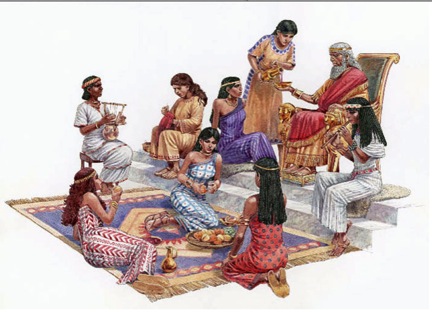
Does Solomon’s Hundreds of Wives Mean That the Bible Promotes Polygamy?

In 1 Kings 11, verse 3, we read that Solomon, the king who ruled at the pinnacle of Israelite power, had 700 wives and 300 concubines. Other great men of the Old Testament also had more than one wife. Are we to conclude that God encourages polygamy?

Norman Geisler and Thomas Howe, in When Critics Ask: A Popular Handbook on Bible Difficultiesargue that the Bible unequivocally teaches that monogamy is God’s standard for the human race.

This is clear from the following facts: (1) From the very beginning God set the pattern by creating a monogamous marriage relationship with one man and one woman, Adam and Eve (Gen. 1:27; 2:21–25). (2) Following from this God-established example of one woman for one man, this was the general practice of the human race (Gen. 4:1) until interrupted by sin (Gen. 4:23). (3) The Law of Moses clearly commands, ‘You shall not multiply wives’ (Deut. 17:17). (4) The warning against polygamy is repeated in the very passage where it numbers Solomon’s many wives (1 Kings 11:2), warning ‘You shall not intermarry with them, nor they with you.’ (5) Our Lord reaffirmed God’s original intention by citing this passage (Matt. 19:4) and noting that God created one ‘male and [one] female’ and joined them in marriage. (6) The NT stresses that ‘Each man [should] have his own wife, and let each woman have her own husband’ (1 Cor. 7:2). (7) Likewise, Paul insisted that a church leader should be ‘the husband of one wife’ (1 Tim. 3:2, 12). (8) Indeed, monogamous marriage is a prefiguration of the relation between Christ and His bride, the church (Eph. 5:31–32).

How do the biblical texts treat the practice of polygamy?

Polygamy was never established by God for any people under any circumstances. In fact, the Bible reveals that God severely punished those who practiced it, as is evidenced by the following: (1) Polygamy is first mentioned in the context of a sinful society in rebellion against God where the murderer ‘Lamech took for himself two wives’ (Gen. 4:19, 23). (2) God repeatedly warned polygamists of the consequences of their actions ‘lest his heart turn away’ from God (Deut. 17:17; cf. 1 Kings 11:2). (3) God never commanded polygamy—like divorce, He only permitted it because of the hardness of their hearts (Deut. 24:1; Matt. 19:8). (4) Every polygamist in the Bible, including David and Solomon (1 Chron. 14:3), paid dearly for his sins. (5) God hates polygamy, as He hates divorce, since it destroys His ideal for the family (cf. Mal. 2:16).

Geisler and Howe summarize the argument for monogamy:

In brief, monogamy is taught in the Bible in several ways: (1) by precedent, since God gave the first man only one wife; (2) by proportion, since the amount of males and females God brings into the world are about equal; (3) by precept, since both OT and NT command it (see verses above); (4) by punishment, since God punished those who violated His standard (1 Kings 11:2); and, (5) by prefiguration, since marriage is a typology of Christ and His bride, the church (Eph. 5:31–32). Simply because the Bible records Solomon’s sin of polygamy does not mean that God approved of it.

Commentary on 1 Kings 11 (Death of Solomon)

Under Solomon, Israel reached its historical pinnacle with regards to geography, peace with her neighbors, and material wealth for the king and his administration. Solomon also established a large military, trade with nearby nations, and an impressive bureaucracy to administer the kingdom of Israel.

For many years, Solomon more or less obeyed the Torah, as his father David did. But as time passed, Solomon accumulated hundreds of wives who would become his downfall. This is where chapter 11 of 1 Kings picks up the narrative.

In verses 1-3, we learn that Solomon has married hundreds of foreign women, most of them for the purpose of making treaties with other nations. It was common practice for kings of this era to marry princesses from other nations to stabilize political relations. However, Solomon was not the king of a typical nation. Paul R. House, in 1, 2 Kings: An Exegetical and Theological Exposition of Holy Scripture (The New American Commentary), describes Solomon’s errors:

First, he has disobeyed Moses’ law for marriage, which constitutes a breach of the agreement Solomon makes with God in 1 Kgs 3:1–14; 6:11–13; and 9:1–9. Moses says in Deut 7:3–4 and Exod 34:15–16 that Israelites must not intermarry with noncovenant nations. Why? Because God says ‘they will turn your sons away from following me to serve other gods’ (Deut 7:4). Judgment will then result. Second, Solomon has broken Moses’ commands for kings (cf. Deut 17:14–20). Moses explicitly says, ‘He must not take many wives or his heart will be led astray’ (Deut 17:17).

In verses 4-8, the author of Kings reports that Moses’s dire predictions all come true with Solomon. Solomon not only tolerates his wives’ gods, he builds worship centers for them. Thus the Lord punishes Solomon in verses 9-13.

Because of Solomon’s sins against God, Solomon’s son would lose part of the kingdom. God tells Solomon,

I will most certainly tear the kingdom away from you and give it to one of your subordinates. Nevertheless, for the sake of David your father, I will not do it during your lifetime. I will tear it out of the hand of your son. Yet I will not tear the whole kingdom from him, but will give him one tribe for the sake of David my servant and for the sake of Jerusalem, which I have chosen.

Solomon’s son, Rehoboam, would rule over the tribes of Judah and Benjamin, but another king would rule over the other 10 tribes of Israel. Who would this other ruler be? The answer lies in verses 26-40.

One of Solomon’s own administrators, Jeroboam, is met on the road out of Jerusalem by the prophet Ahijah. Ahijah tells Jeroboam that God is going to make him king over the 10 tribes of Israel, excluding Judah and Benjamin. The reason he is taking this part of the kingdom away from Solomon’s son (and David’s grandson), Rehoboam, is because Solomon has worshipped other gods and has not followed the Law (or Torah) as his father David did. God promises Jeroboam that if he obeys the Torah, as David did, God will bless him with a dynasty. Solomon learns of this promise to Jeroboam and he tries to kill him, but Jeroboam escapes to Egypt until Solomon dies.

Chapter 11 ends with the death of King Solomon. He ruled 40 years and his son, Rehoboam, succeeded him. What can we learn from chapter 11 about God? Paul R. House writes,

Theologically, the passage reemphasizes God’s faithfulness. This time the author depicts the Lord as the God who keeps promises even when the person who is the object of the promise fails to be righteous. For David’s sake, and for the sake of Solomon, the Lord refuses to obliterate the nation. Despite this mercy, however, Israel must still face the consequences of idolatry. God does judge.

House also emphasizes what the chapter says about leaders who sin:

Further, the text stresses how a leader’s sin can impact others. Although it is doubtful that Solomon can be held responsible for introducing idolatry into Israel (cf. the Book of Judges), his religious open-door policy serves to legitimize the practice in a way that no commoner’s similar actions could. Just as one holy person, such as Abraham or Moses, can bless a whole people, so one significant idolater can create spiritual cancer in a people. Had Solomon continued to seek God’s favor rather than wealth and power, he could have helped Israel continue to enjoy prosperity. Instead, he illustrates the principle that sin always affects others.

A final point to be made is that God still expects obedience even in a multicultural, pluralistic society. Solomon could not use the excuse that he needed to bend the rules of the Torah to survive in the ancient near east. Likewise, we can’t expect God to bend the rules for us today when His principles become unpopular. He simply will not do that.

What Is the Purpose of Life? Part 11

The only thing that our soul yearns for more than anything else is to know and experience the Perfect Good. According to Aquinas, the Perfect Good of man, the thing that will give him ultimate happiness, cannot be something which was created. “It is impossible for any created good to constitute man’s happiness. For happiness is the perfect good, which lulls the appetite altogether; else it would not be the last end, if something yet remained to be desired. Now the object . . . of man’s appetite is the universal good. . . . Hence it is evident that naught can lull man’s will, save the universal good. This is to be found, not in any creature, but in God alone.”

Jesus said, “But seek first his kingdom and his righteousness, and all these things will be given to you as well” (Mt 6:33).

Speaking to God, St. Augustine said “Thou has made us for thyself and our hearts are restless until they rest in thee.”

“Aim at heaven and you will get earth thrown in. Aim at earth and you get neither.” – C. S. Lewis

There is a void in every person’s life that only God can fill. Nothing on this earth can fill it. How do we know this? From experience. Nobody has ever found anything in this world which completely satisfies their desires. We always want more.

The only way we can be totally satisfied and at rest is when we find the Perfect Good. The perfect good is God. It can be found nowhere else.

So how do we experience ultimate happiness now, in this life?

I do not even pretend to have all the answers for how to come to know God in this life, but let me offer a couple of things from my life that might help you grow in your happiness.

First, spend as much time as you can around people who know who God is, who have godly wisdom, and who follow God’s moral commands. Learn from them how to think and how to act. Watch them and see how they live their lives. In my case, I have one of those people in my own house, and she happens to be married to me. If you’re not that fortunate, then find a mentor. Find someone who you can emulate.

A.W. Tozer said that “What comes into our minds when we think about God is the most important thing about us.” In order to know who God is, you need to read. You will learn about God much quicker if you read His Words to us. Read as much as you can of the Bible, first and foremost. I know it’s difficult, but there are truckloads of study Bibles and commentaries out there to help you. So you really have no excuse.

Also, read as many books as you can written by great Christians, preferably those that are dead. There is little being written today that can match the lofty insights of Augustine, Aquinas, Lewis, and Tozer. Give them a try and you won’t be disappointed.

Third, live out the commands of God by serving others. Serve your family members, your co-workers, your church family, the poor, the imprisoned, and the outcasts of society.

Even if you read about God, emulate a godly Christian, and serve others in every possible way, you cannot be perfectly happy in this life. Even the greatest saints of the church were not perfectly happy in this life.

Aquinas says,

For since happiness is a ‘perfect and sufficient good,’ it excludes every evil, and fulfills every desire. But in this life every evil cannot be excluded. For this present life is subject to many unavoidable evils; to ignorance on the part of the intellect; to inordinate affection on the part of the appetite, and to many penalties on the part of the body; . . . Likewise neither can the desire for good be satiated in this life. For man naturally desires the good, which he has, to abide. Now the goods of the present life pass away; since life itself passes away, . . . Wherefore it is impossible to have true Happiness in this life.

But this life is not all there is. Aquinas argues that it is only in the next life that we reach perfect happiness, because that is when we see God face to face. This is the Beatific Vision, which means the “blessed vision.” John describes the Beatific Vision this way: “Dear friends, now we are children of God, and what we will be has not yet been made known. But we know that when he appears, we shall be like him, for we shall see him as he is” (1 Jn 3:2).

The Beatific Vision brings direct knowledge of God and perfect love of God, who is the ultimate good. This, my friends, is true happiness. The rest we seek, the fulfillment of all of our desires, the state of perfect good will finally be reached.

“Now we see but a poor reflection as in a mirror; then we shall see face to face. Now I know in part; then I shall know fully, even as I am fully known” (1 Co 13:12).

Let me summarize all we’ve learned about happiness. If you focus on God, then you will very likely gain great wisdom and virtue, the goods of the soul. If you focus on God, you will receive pleasure along the way. If you focus on God, you will receive a perfect body at the resurrection. If you focus on God, the power you have will be used to achieve great things. If you focus on God, you will spend this life and the next honoring Him, because everything good in you was put there by Him. If you focus on God, you will pile up treasures in heaven.

On the contrary, if you don’t focus on God, you will squander your wealth, seek honor and fame for yourself, abuse your power, waste away your body, regret many of your pleasures, and ultimately lose your soul.

Therefore, since we are surrounded by such a great cloud of witnesses, let us throw off everything that hinders and the sin that so easily entangles, and let us run with perseverance the race marked out for us. Let us fix our eyes on Jesus, the author and perfecter of our faith, who for the joy set before him endured the cross, scorning its shame, and sat down at the right hand of the throne of God (Heb 12:1-2).

What Is the Purpose of Life? Part 10

OK, we’re down to the final two candidates now. The runner-up is goods of the soul. There are two primary goods of the soul: wisdom and virtue. Wisdom is the good of the mind and virtue is the good of the will. Wisdom is knowing the best means to get to the best ends. Put another way, wisdom is knowing the best way to accomplish the best goal.

Virtue is simply moral excellence. Love, kindness, courage, generosity. These are all virtues.

Likewise, wisdom encompasses all of the goods of the mind. The mind and the will are what make up our souls.

So, why would the goods of the soul be the best candidate for happiness? Well, it seems that we’ve excluded everything external to the human being, meaning wealth, honor, fame, and power. We’ve also excluded bodily health and pleasure. By the process of elimination, the soul must be it. The health of the soul must be the thing that makes us happy.

Indeed, this is the conclusion that many people come to. It is common for people to say that love and wisdom are our purpose in life. Even Monty Python said we should live in peace and harmony with others. John Lennon said “All you need is love.” Jimi Hendrix said, “When the power of love overcomes the love of power the world will know peace.”

Wisdom is also a popular goal for many. Ralph Waldo Emerson said “Life is a festival only to the wise.” Wise people attract a crowd and nobody tires from spending time with them. King Solomon asked God for wisdom and he commended wisdom to his son: “Get wisdom, get understanding; do not forget my words or swerve from them. Do not forsake wisdom, and she will protect you; love her, and she will watch over you. Wisdom is supreme; therefore get wisdom” (Pr 4:5-7).

Surely the goods of the soul are the meaning of life, the thing that gets us to ultimate happiness. How can we do better than love and wisdom?

But alas, even though it is through the soul that we reach happiness, the soul itself cannot be the ultimate goal of human life. Why? The soul is like an arrow heading toward a bull’s-eye. The bull’s-eye is happiness. It doesn’t make sense to say that the arrow is flying toward itself. The arrow cannot be its own bull’s-eye, but to say that the soul seeks itself for ultimate happiness is saying that the arrow flies toward itself.

Our soul strives for our entire lives to reach happiness. We gain knowledge and wisdom, we learn to love others, but those things are all aimed at our ultimate goal. To say that our soul is that goal is to say that we are going in circles for our entire life, like a cat chasing its own tail. It may be true that we attain happiness with our souls, but our souls are not what gives us final happiness. What is it that our souls long for? What is the bullseye? What is our destination?

What Is the Purpose of Life? Part 9

The next candidate for happiness is pleasure. Here we re-introduce the modern concept of happiness, which is a “sense of pleasurable satisfaction.” This is what Aquinas means by pleasure. Everyone seeks pleasure. Most parents will tell you that the single most important thing they want for their children is for them to be happy. That is the motto of modern parents. We want our children to have a life of pleasurable satisfaction.

Why do so many believe this is the purpose of life? One reason is that pleasure seems to be an end or goal, rather than a means. It is silly to ask a person why they seek pleasure! They seek pleasure because it’s pleasing. Pleasure is something sought for itself. Pleasure is not a means to anything, but an end. In addition, it seems that whenever we have true happiness, in the traditional sense, we also have pleasure. They go together.

Another indicator of our passion for pleasure is in the way we seek to have fun. Fun is another word for pleasure and we’re always chasing after it. How do we pursue fun?

We watch TV. We play sports. We go to the movies. We go to amusement parks. We eat our favorite foods. We read books. We also love to hear jokes.

The list of things we do for fun and pleasure could go on and on. We all want pleasure and we certainly seem to spend much of our lives pursuing it, so maybe it is the ultimate purpose of life.

According to Aquinas, it can’t be. First of all, remember that we defined happiness as reaching the supreme good of man. Well, think about some of the pleasures you’ve had in your life. I bet you regret some of them. Maybe you were inebriated at a party once; you had fun that night, but later regretted it because you acted like a fool. Maybe you ate a huge meal at your favorite restaurant; you certainly enjoyed eating at the time, but later wished you hadn’t gorged yourself. Maybe you’ve had fun playing video games or watching TV for hours at a time; later you came to realize that you were wasting your precious time.

If pleasures can be regretted, then they cannot be the ultimate good for your life. True happiness is not characterized by regret, but by rest in the supreme good. Pleasure is a result of true happiness, not the cause of it.

In addition, we know from experience that pleasure is fleeting and that we cannot count on most things to consistently bring us pleasure. Has this ever happened to any of you? You watch a movie and a particular scene is hilarious and makes you to laugh until it hurts. You really get a lot of pleasure from the scene. Years go by, and you decide to watch the movie again, because you’re convinced you can get that same pleasure again. This time, though, it’s really not that funny.

If you obsessively chase pleasure, it’s like chasing after the wind. It’s often uncatchable. This cannot be what constitutes happiness because there is no ultimate rest in pleasure. There is always a desire for more that never ends.

What Is the Purpose of Life? Part 8

Bodily health seems to be a good candidate for ultimate happiness. Every person desires to be in good health. It is a passion for modern Americans to stay physically healthy and extend their lives for as long as possible. After all, you’ve heard the saying, “If you’ve got your health, you’ve got everything!”

Listen to these figures on American healthcare expenditures provided by the Kaiser Family Foundation. In 1970, spending on healthcare was 7.2% of the GDP, or $356 per resident. In 2007, spending on healthcare was about 16% of the GDP. That equates to about $2.2 trillion, or just under $7500 per US resident. Based on current trends, it is projected that in 2016, health care spending will be over $4 trillion, or 19.6% of the GDP.

There is no doubt that many Americans are also interested in keeping their bodies fit. Home exercise equipment sales were around $4 billion in 2002. We spend tens of billions of dollars per year on diet products to keep weight off.

It seems that Americans will go to great lengths to prolong their lives and to keep their bodies healthy, so perhaps bodily health is what makes us ultimately happy.

I think we should concede that bodily health is indeed a component of happiness. After all, a person in extreme pain or lacking certain body functionality is going to find it difficult, if not impossible, to be happy.

One of the primary missions of Jesus, while He was on earth, was to heal people of their bodily illnesses. He healed lepers, the blind, and the lame. He even brought Lazarus back from the dead. If bodily health wasn’t important, then Jesus wouldn’t have wasted His time healing people.

Likewise, in the book of Genesis, we are reminded that our bodies reflect the image of God. We are composed of a mind-body unity. Paul reminds us in 1 Cor 6:19-20 that our bodies are important. “Do you not know that your body is a temple of the Holy Spirit, who is in you, whom you have received from God? You are not your own; you were bought at a price. Therefore honor God with your body.”

It seems obvious that our bodily health is more important than wealth, honor, fame, or power. After all, without your health, none of those things can be enjoyed.

But I don’t think we can say that bodily health is what brings ultimate happiness. First, it seems clear that humans can experience far greater happiness than animals. As Christian philosopher Peter Kreeft quips, “What ape can fall in love, or weep with joy at a symphony?” Yet, there are animals that exceed human beings in certain respects. The cheetah is faster than the human, sea turtles live longer, and gorillas are stronger. So if happiness consists in bodily health, these animals would be happier than humans, but that is ridiculous.

Second, the ultimate purpose of a thing cannot be its mere survival. The captain of a ship is not tasked with merely preserving the ship. The captain is meant to sail the ship, as that’s what the ship was created for. If the survival of the ship was his ultimate purpose, then he would never leave the port! Likewise, the ultimate purpose of a human being cannot just be to live as long as possible. There must be more.

Jesus believed that the soul was more important than the body. He said “Do not be afraid of those who kill the body but cannot kill the soul. Rather, be afraid of the One who can destroy both soul and body in hell.” (Mt 10:28).  This is exactly what the disciples understood AFTER the resurrection. This band of frightened men became the greatest missionary force in world history because they were no longer afraid of those who could kill the body. They were willing to lay down their lives for the Gospel.

The body is meant to serve the soul. The body is like a horse, and the soul is its rider. Jesus felt so strongly about the soul that He sacrificed His body at the cross to preserve our souls. Bodily health, then, cannot be the purpose of life. Greater is the health of the soul.

What Is the Purpose of Life? Part 7

I thought I would google the “meaning of life” and see what people thought about it. I got 16,100,000 hits.

When asked the meaning of life, Conan the Barbarian had an interesting take on it. He said it was “to crush your enemies, to see them driven before you, and to hear the lamentations of their women.”

A slightly different take on the meaning of life comes from Monty Python’s The Meaning of Life film. At the end of the movie, Michael Palin, one of Python’s members, is handed an envelope, opens it, and provides the viewers with “the meaning of life.” His answer was, “Well, it’s nothing very special. Uh, try to be nice to people, avoid eating fat, read a good book every now and then, get some walking in, and try to live together in peace and harmony with people of all creeds and nations.”

Everybody has an opinion on this subject, but rather than learning the meaning of life from a barbarian or a group of British comedians, it seems better to consult the Bible and Thomas Aquinas, a great student of the Bible. What we’ve covered in the previous 6 blog posts, and what we will continue to cover, are the answers to the question of the meaning of life, given by Aquinas.

In part 1, we determined that the meaning or purpose of life is happiness. But before we could go further, we had to define what happiness is. The modern version of happiness is “a sense of pleasurable satisfaction.” It’s a pleasant feeling that is largely dependent upon your circumstances.

The traditional version of happiness is “a life of virtue characterized by wisdom, love, and goodness.” It is a state of reaching the perfect good of man.

It is the traditional definition of happiness that we are using as we try to figure out the meaning of life. So, we know what happiness is, but we don’t know how to go about getting it. What is it that makes us ultimately happy? If we have the answer to that question, then we have found the purpose for our lives.

In the first 6 parts of this blog series, we considered 4 possible answers to the question of happiness, based on Aquinas’ analysis of the problem. Aquinas considered wealth, honor, fame, and power. He concluded that the ultimate good, or happiness, cannot consist in these. None of them fit the bill.

Wealth cannot buy the most important things in life. Honor and fame are merely signs pointing to good things inside of us. Power is only a means to do good, not an end in itself.

In part 8, we will look at bodily health.

What Is the Purpose of Life? Part 6

The next candidate Aquinas considers is power. Remember, we are working our way up from the most foolish to the most wise. Power, in this context, refers to the ability to control the actions of oneself and of others. Why do people think that power brings ultimate happiness?

Well, like our other candidates for happiness, power seems to be something that everyone wants. Nobody wants to be the low man on the totem pole. We all want the power to control our own actions, and most of us would like to be in charge of other people’s actions.

For most of us, when we get promoted to a management position, we’re happy. Why? One reason is because we’re in charge. Virtually everyone says things like, “If I were in charge, things would be different,” or “I could do a better job than my boss can.” Few people turn down an offer to be king. The desire to rule over others seems like an almost universal desire, so power must make us ultimately happy.

Is this true? I think not.

Certainly, having the power to control your own destiny is a good thing, so like the other candidates we’ve considered, power can bring some happiness. But there is an important thing to understand about power. The more powerful a person is, the more spectacular the consequences of their actions will be. What do I mean by that?

Consider a man who has no power over anyone but himself. If he gives some of his personal income to the poor, he commits a virtuous act. But if that same man had control over a corporation with thousands of people, his donations to the poor could be far greater because he has access to the resources of the corporation he controls. As an individual, his impact is much smaller than his impact as a business leader. Greater power gives him the ability to do greater good.

Take the same individual, but this time he is a murderer. Before the age of 30, he manages to kill 10 people. This is horrible enough, but let’s say this same man comes to power over an entire nation, and he uses the people of his nation to kill millions of people. This is exactly what dictators do and we have numerous examples of this happening throughout history.

The communist and fascist regimes of Hitler, Stalin, Pol Pot, and Mao Tse Tung killed over 100 million of their own people during the 20th century. They all had great power. But greater power gives a person the ability to do much greater evil. Do you see how power enables an individual to amplify his good or evil actions?

God has ultimate power and it seems, that as Christians, we’re supposed to be like God. So shouldn’t we desire power for its own sake?

No, we are only to emulate God’s moral attributes, not his power. Jesus never said, “Be powerful, as your Father in Heaven is powerful.” There is one important difference between God’s power and ours. God can only use His power for good. We can use ours for either good or evil, and we tend to often use it for evil. Therefore, power, by itself, cannot be the ultimate good that brings happiness.

Power, in the hands of a good man, is a means to doing greater good deeds. It is not the end. As Lord Acton said of human rulers, “All power tends to corrupt, and absolute power corrupts absolutely.” Only God can wield unlimited power.

Wealth, honor, fame, and power are all incapable of providing ultimate happiness to a human being. They cannot be the ultimate purpose for our lives. Each of them can certainly contribute to happiness, but the person that mistakes them for ultimate happiness is in great danger of missing true happiness. Next we will consider four more options and continue the countdown to what will bring us ultimate happiness.

What Is the Purpose of Life? Part 5

Speaking of honor and fame, Jesus warned his followers not to confuse the finger with the moon, so to speak. He said,

Be careful not to do your ‘acts of righteousness’ before men, to be seen by them. If you do, you will have no reward from your Father in heaven. So when you give to the needy, do not announce it with trumpets, as the hypocrites do in the synagogues and on the streets, to be honored by men. I tell you the truth, they have received their reward in full. But when you give to the needy, do not let your left hand know what your right hand is doing, so that your giving may be in secret. Then your Father, who sees what is done in secret, will reward you. (Mt 6:1-4)

Acts of righteousness beget rewards from the Father in heaven. The honor of men is a poor substitute for that.

Following is an illustration of why honor and fame cannot be what brings ultimate happiness.

Imagine there was a man named Joe. Joe was extremely lazy and always made bad grades in high school, but he was mistakenly accepted into Wake Forest as a freshman undergrad. Joe’s dorm mates and professors quickly found out that Joe really didn’t belong at Wake because he slept all the time and never studied.

However, they got together when Joe wasn’t around and decided to pretend that Joe was really a brilliant pre-law student. In every class, Joe would ask really dumb questions but the professors would say, “What a great question, Joe! I had never thought of that before.” His dorm mates would drop by his room and tell him that he was the most gifted student they had ever seen at Wake. He was given “A’s” in every single class. When he graduated, the school arranged for him to graduate with high honors.

It didn’t stop there, because Joe still wanted to be a lawyer and his professors encouraged him to apply to the most prestigious law schools around the country. The law schools Joe applied to were secretly asked to play along and so Harvard eventually accepted him. Once he was in Harvard, he was given the opportunity to clerk for a supreme court justice, to study under the most brilliant law professors, and he continued to receive nothing but “A’s” on every assignment, even though he never learned anything and continued in his lazy ways. Eventually Joe received his law degree and again graduated with honors.

When he applied to find a job, his professors secretly convinced potential employers to go along with the charade, and he received numerous job offers to law firms around the country. Joe accepted a position at one of the law firms and was quickly promoted to be a senior partner.

What do you think of Joe’s life? Do you want to be like him?

Joe received abundant honor and fame in school and in his profession even though he hadn’t earned any of it. Joe didn’t know the first thing about law. He was completely clueless and deserved to flunk out of Wake Forest his first semester. It was all a sham. Do you think Joe led a meaningful life?

I think the answer is obvious. Joe’s life wasn’t meaningful at all. It was a waste. All of the honor and fame he received didn’t amount to anything because Joe didn’t deserve any of it. Joe’s whole existence consisted of confusing the finger for the moon. Happiness does not consist in honor and fame.

What Is the Purpose of Life? Part 4

The next two things Aquinas considers, after wealth, are similar, so I’ve combined them. They are honor and fame. By honor, I mean high respect or public esteem given to an individual by other people. Some might call it popularity. Fame is merely the multiplication of honor to a large number of people.

A person can receive honor from only one person, but a person can only receive fame from a very large number of people. But in both cases, honor and fame are given to one person by other people. So why would anyone think happiness consists in honor or fame?

The main argument goes like this: Almost everyone desires to be recognized for something good they do, and that is what honor and fame are, positive recognition. If we achieve something extraordinary in our lives, most of us would like to be honored for it, and if we achieve something truly outstanding, we might even receive fame. Whether it means kind words from a co-worker or a gold medal at the Olympics, we all want to be honored. So fame and honor seem to be a reward for great achievement, and so they both make us happy.

Are honor and fame the ultimate purpose of life? No, because the argument misunderstands what they are.

Here is the crucial thing to understand about honor and fame. Honor and fame are given to a person because that person possesses some achievement or trait that is outstanding. This outstanding thing in a person is what causes other people to esteem or respect them.

For example, I may have a generous spirit and give money to the poor, and thus be honored at a philanthropy awards dinner. I may be a gifted quarterback for my high school football team, and my team may honor me by voting me most valuable player for the season. In each case, the honor or fame is a sign pointing to the excellence in the person. It’s only a sign.

A famous Zen Buddhist proverb says, “A finger is useful for pointing to the moon, but woe to him who mistakes the finger for the moon.”

Here are a couple of illustrations of this concept. Receiving a good grade in school is the sign of your accomplishments in class. If you only care about getting the good grade, and not getting the knowledge that should have been gained from the class, you are a fool because you’ve confused the knowledge with the grade. The grade is only the sign pointing to the knowledge. The grade is the finger and the knowledge is the moon.

We don’t go on a vacation in order to just take pictures to return home and show people. The pictures are a sign of your vacation, not the vacation itself, which should be enjoyed whether pictures are taken or not. The wise person focuses on the vacation first, and the pictures second. The pictures are the finger and the vacation the moon.

If you’ve ever been to Disney World, you drive by huge signs indicating that you’ve arrived. Even though I feel a sense of excitement when I see the signs, that feeling pales in comparison to the experience of actually walking into the park itself. I never confuse the signs with the park.

The discussion of honor and fame continues in part 5.


A Christian Apologetics Blog