Category Archives: Philosophy

Global Warming: Science and Rhetoric – Part 1

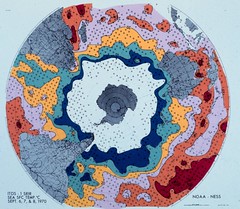
Contoured sea surface temperature map of the S...

Post Author: Bill Pratt

The NOAA has released a new report on global temperatures which indicates that there is a warming trend.  Since few people will read the full report, NOAA prepared a synopsis of the findings that is only 10 pages long.

I want to do two things in this post.  First, I want to review the contents of the synopsis to see what researchers have found.  Second, I want to analyze some of the statements in the synopsis that are not objective statements of data, but political spin.

Here is an opening paragraph:

A comprehensive review of key climate indicators confirms the world is warming and the past decade was the warmest on record. More than 300 scientists from 48 countries analyzed data on 37 climate indicators, including sea ice, glaciers and air temperatures. A more detailed review of 10 of these indicators, selected because they are clearly and directly related to surface temperatures, all tell the same story: global warming is undeniable.

Notice the last phrase: “global warming is undeniable.”  This kind of language is a tip-off that the authors are concerned to push an agenda forward.  A strictly scientific report would have no need for repeating that the evidence is undeniable; they would just let the facts speak for themselves.  It is also telling that many news outlets led with the “undeniable” phrase in their coverage of the report.

The synopsis goes on to highlight 10 indicators that best measure surface temperatures of the earth.  These indicators are: air temp near the surface, humidity, glaciers, snow cover, temp over oceans,  sea surface temp,  sea level, sea ice, ocean heat content, and temp over land.

Seven of the indicators are going up and three of them are going down (snow cover, glaciers, and sea ice).  Together, according to the report, they all point toward a warming trend.

One thing to note is that each of the 10 indicators contains data that covers different time periods.  For example, data on air temperature at the surface (troposphere) only goes back to about 1960, whereas data on air temperature over land goes back to 1850.  So, when the report says the past decade was the “warmest on record,” what they mean to say is that it is the warmest decade since 1960 (if you want to include all 10 indicators as part of the record).  Remember that human civilization has been around for many thousands of years; 50 years seems like a small sample size, doesn’t it?

I would ask the authors why they chose to say “warmest on record” when they could have been more precise.  Again, it seems that this language was clearly chosen for rhetorical impact.

More commentary on the NOAA synopsis in part 2….

Can Words Describe God? Part 2

Post Author: Bill Pratt

In the last post, we talked about how equivocal God-talk is self-defeating and how univocal God-talk lowers God to the level of a finite being.  The only solution seems to be analogous God-talk.  So how does analogous God-talk work?

Analogous God-talk ultimately tells us what God is like, but it does not describe him exactly as He is.

How does this work?  According to Geisler, “The definition of the attribute applicable to both God and creatures must be the same, but the application of it differs, for in the one case (God’s) it is applied without limits, while in the other (humankind’s) it is predicated with limitations.” (emphasis added)

Take the example of goodness.  The definition of good is “that which is desired for its own sake.”  Now, when we take that concept of good and use it to describe God and man, we retain the same definition.  But when we apply it (predicate it) to God, we apply it in an unlimited way.  God is unlimited good, whereas man is limited good.  God is good infinitely while man is good finitely.  God is to be desired for his own sake absolutely, while man is to be desired for his own sake relatively.

Another example would be the concept of being.  Geisler says, “Likewise, being may be defined univocally as “that which is,” but this univocal concept is predicated of God and creatures in an analogous way. God is “that which is” infinitely; a creature is “that which is” only finitely. Or, more properly, God is Existence and creatures merely have existence.”

Geisler further explains:

Generic concepts are univocal when abstracted, but analogical when asserted of different things, as man and dog are equally animal but are not equal animals. Animal is defined the same way (say, as “a sentient being”), but animality is predicated differently of Fido and of Socrates (c. 470–399 B.C.). (Socrates possesses animality in a higher sense than Fido does.) Likewise, both the flower and God are said to be beautiful, but God is beautiful in an infinitely higher sense than flowers are.

While this tells us nothing directly about the similarity between God and creation, it does inform us about the difference between an infinite being and a finite being. For if beauty means “that which, being seen, pleases,” then the pleasure of the beatific vision of God is infinitely greater than the pleasure of viewing a flower.

What about all the concepts of God that are applied negatively, such as eternal (non-temporal), uncaused (not caused), and immutable (not changing)?  The reason these concepts are negated is because their definitions contain limits or imperfections.  God, as an infinite (not limited) being, cannot be limited by any concept when it is applied to Him.  Time, causation, and change are all concepts which would make God dependent on something else – they all limit his being.  Therefore these terms must be negated.

Here is the bottom line.  We can never describe, with language, exactly who God is, but we can say what He is like.  We can take finite concepts and apply them to God in an infinite (unlimited) way.  That is the best we can do using human language.

An additional point needs to be made.  Some people find analogous God-talk to be difficult to understand (it can be more abstract that some people are comfortable with), and so they brush it aside and collapse their language back to univocal God-talk.  The danger, of course, is that when you start talking about God as a finite being, then you are lowering him to a creature.

Mormon theology is the poster child for univocal God-talk gone wild.  God is created, God is material, God is in time, and so forth and so on.  The Mormon God is not transcendent, is not infinite, is not uncaused –  he is just like the rest of us, a creature.  Is this the God that is presented in Scripture?  I think not.

Can Words Describe God? Part 1

Post Author: Bill Pratt

Recently some of my skeptical friends who frequently comment on the blog raised a very important issue: how do we use language when talking about God?  Is God so transcendent that our words communicate nothing about him?  Is the Christian God so “other” that words completely fail us?

There seem to be three options about God-talk.

First, that it is equivocal (totally different from the way God really is).  According to theologian Norman Geisler in his Systematic Theology. Vol. 1, “Equivocal God-talk leaves us in total ignorance about God. At best, one can only feel, intuit, or sense God in some experiential way, but no human expressions can describe what it is that is being experienced.”

This option has several problems.  Geisler clarifies, “First, it is self-defeating, since it affirms with human language about God that we cannot affirm anything about God. Religious mystics certainly write books about God. In brief, any attempt to express the equivocal view about God implies that some non-equivocal language about God is possible.”  Total agnosticism about God, in other words, is self-defeating, as soon as the agnostic says anything about God.

“Second, the Bible declares that God can be described in human language. Indeed, Scripture as a whole is an attempt to inform us about God and to evoke a response from us.”  Equivocal God-talk is totally contradicted by Scripture, where the writers clearly believed they were communicating truths about God.

“Third, there is a continual and consistent tradition in orthodox theology from the earliest centuries to the present that assumes human language can express truth about the transcendent God. This is manifest in the great confessions, creeds, and councils of the Christian church, to say nothing of all the theological treatises of the great Fathers of the church from the second century to the present.”  The history of the church demonstrates that even the earliest believers thought they could use language to talk about God.

For these reasons, equivocal God-talk must be rejected.

The second option for God-talk is that it is univocal (totally the same as God really is).  This view claims that the words we use can be applied directly to God, in the same exact way we would apply those words to finite creatures, such as human beings.

This option also has problems.  Geisler explains, “First, how can our understanding of God be entirely the same as God’s (i.e., univocal)? Our understanding and expressions are finite, and God’s are infinite, and there is an infinite gulf between finite and infinite. As transcendent, God is not only beyond our limited understanding, but He is also beyond our finite expressions.”  Because God’s nature is understood to be infinite in being, we cannot use finite language to capture exactly who God is.

“Second, the Bible makes it clear that God is far above our thoughts and words. As the prophet Isaiah aptly put it, “’For my thoughts are not your thoughts, neither are your ways my ways,’ ” declares the LORD. “’As the heavens are higher than the earth, so are my ways higher than your ways and my thoughts than your thoughts’ ” (Isa. 55:8–9). For a mortal human being to know as God knows, he would have to be God, since only God knows infinitely.”

For these reasons, univocal God-talk must be rejected.

That brings us to the third option, that God-talk is analogous (similar to the way God really is).  This seems to be the only alternative if we are to avoid self-defeating skepticism (equivocal God-talk) on the one hand, and avoid lowering God to the level of finite beings (univocal God-talk) on the other hand.

In the next post, we will discuss in more detail what analogous God-talk is and how Christians use this kind of language to speak about God.

The Meaning of Life According to Malcolm Muggeridge

Post Author: Bill Pratt

Below is another great quote from Malcolm Muggeridge, a man who in many ways was extremely successful.  Every day I see people who think that just a little more money, or a little more pleasure, is all they need to be content.  How sad and how foolish.  Money, fame, and pleasure will never fill you up.  Just go ask the rich and famous whether they’re content with their lives.

The philosopher Peter Kreeft once remarked that suicide rates are much higher in wealthy nations than poor nations.  Think about that for a good long minute.  If money and pleasure are truly what life is about, then suicide rates should be lower in wealthy nations, not higher.  Something is askew!

In any case, please enjoy the quote below from Malcolm Muggeridge:

I may, I suppose, regard myself, or pass for being, as a relatively successful man. People occasionally stare at me in the streets–that’s fame. I can fairly easily earn enough to qualify for admission to the higher slopes of the Internal Revenue–that’s success. Furnished with money and a little fame even the elderly, if they care to, may partake of trendy diversions– that’s pleasure. It might happen once in a while that something I said or wrote was sufficiently heeded for me to persuade myself that it represented a serious impact on our time–that’s fulfillment. Yet I say to you — and I beg you to believe me–multiply these tiny triumphs by a million, add them all together, and they are nothing–less than nothing, a positive impediment–measured against one draught of that living water Christ offers to the spiritually thirsty, irrespective of who or what they are.

Does Mankind Really Need God?

Post Author: Bill Pratt

In studying church history, I’ve  been looking at the period often called the Enlightenment.  During this time, a movement swept through Europe which attempted to throw off the authority of divine revelation and place man on his rightful throne as the center of all knowledge and wisdom.

Historian Clyde Manschreck suggested that:

Man’s rational powers in league with science made dependence on God seemingly unnecessary.  Men were confident that they had the tools with which to unlock the mysteries of the universe.  Former distrust of human reason and culture, as seen in the traditional emphases on depravity, original sin, predestination, and self-denial, gave way to confidence in reason, free will, and the ability of man to build a glorious future.

Enlightenment values have continued to this day.  Many of the skeptics I know have a deep distrust of authority figures and tend to think of their own abilities as more than adequate to get them through life successfully.  One skeptical friend of mine told me that the only person he could count on to solve any of his problems was himself.  If all you need is yourself, then what need have you of God?

The Enlightenment, in some respects, strikes me as a philosophical temper tantrum against the authority and rightful rule of God over man.  Is man truly able to go it alone?  Is the world getting better due to secular human wisdom?  How you answer these questions has a lot to do with whether you believe in or trust God.

If man needs no authority over him, if he can get the job done on his own, than the Enlightenment was correct.  God, as another friend of mine recently told me, is unnecessary.  We can get along just fine without him.

I don’t know about you, but I think that coming out of the 20th century, a century with more killing of human life than all other centuries combined, you have to be nuts to think we can solve our own problems.  But that’s just me… maybe we just hit a little bump in the road.

Are You Skeptical of Global Warming and Evolution?

Post Author: Bill Pratt

A recent NY Times article linked people who are skeptical about evolution with people who are skeptical about global warming.  The author noted that there seems to be a correlation, that if you doubt one, then you likely doubt the other.

This really has me thinking about why that is, as there is no obvious connection between them.  I am a skeptic of both, but for different reasons.

My initial skepticism about evolution came from my religious views, because I was taught that only a young earth (which does not accommodate evolution) could align with the creation accounts in the Bible.  As I researched both biblical interpretation and the science behind evolution, I eventually moved to a new position.

I now believe that the earth is probably old and that this fits with literal interpretations of the Bible.  I also understand, though I don’t necessarily agree with, why common descent (the idea that all plants and animals are part of a gigantic family tree) is the dominant theory of the origins of species: it has a lot of explanatory power and there’s not a more developed contender out there right now.

But I think that the evolutionary community has no idea what the mechanisms are that would modify plants and animals to the massive extent we see.  Natural selection and random mutation just don’t cut it.  Other proposed mechanisms likewise remain utterly unconvincing to me.  Evolutionary theorists constantly provide micro-evolutionary mechanisms as examples of how macro-evolution works over long periods of time.  The extrapolations don’t convince me.

What about global warming?  I started out skeptical of global warming because it was being exclusively evangelized by political liberals, whom I generally distrust as people who value intentions over truth.  I moved beyond that initial skepticism and tried to think about it scientifically.  As an engineer, I understand how to analyze data and how to test models, and I fail to see how it is possible to accurately model the global climate over long periods of time, given the multitude of variables that must go into these climate models and the incredible uncertainty of predicting climate changes in the distant future.

My suspicions about the data have proved to be correct as some brave climate scientists have admitted that their models have failed to predict the flat-lining of global temperatures over the last 15 years. The truth is that models of the climate have a long way to go before we can bet the farm on them.

So, what is the common denominator for me?  I started out suspecting evolution for religious reasons, and I started out suspecting global warming for political reasons.

I am conservative politically and I am a believer in traditional Christianity, but these don’t necessarily go together.  It seems like there must be something deeper.  The author Thomas Sowell possibly offers an explanation.  In his book, A Conflict of Visions, he argues that a person’s view of the nature and capability of man drives opinions about political, moral, judicial, economic, and even scientific matters (see my post on his book).  His theory makes a lot of sense; maybe he has found the common link.

I don’t have any certain answers to this question, but I’m very curious to know what others think.  What about you?  Are you skeptical about both of these issues?  Why or why not?  Please register your vote in the poll below and leave us some comments about your choices.

Time, The Succession of Moments, and An Actual Infinite

Post Author:  Darrell

I recently did a couple of posts regarding the incoherence of an actual infinite and how, as a result, the eternality of matter as taught in Mormonism is impossible.  These posts can be found here and here.

I want to address another way of analyzing the concept of “eternal matter” as taught in the Mormon Church.  Let’s assume for a moment that an actual infinite is possible; could matter have always existed, i.e., could it be eternal?  Unfortunately for Mormons who hold to creation ex materia, the answer is a resounding “no.”

According to Einstein’s Theory of Relativity if matter has always existed, time has always existed, for time and matter are relative, i.e., you can’t have one without the other.   In addition, if time has always existed, the past is actually infinite.  In otherwords, prior to today there have existed an actually infinite number of moments (see the above referenced posts which discussed this fact).  However, time is a series of events or moments formed by successive addition, and it is impossible to form an actual infinite through successive addition. 

In successive addition, the collection is instantiated sequentially.  For example, if I am given one M&M at a time, no matter how many M&M’s I receive it is always possible for me to be given “one more.”  Thus, one could never say that I have an actually infinite number of M&M’s. 

In the same sense, since time is formed through successive addition, i.e., one moment followed by another, no matter how much time has passed, more time is always possible.  You can always have “one more moment.”  As a result, it is never possible to say that prior to today there has been an actually infinite amount of time.   

There are additional philosophical issues with eternal matter and the succession of moments in a beginningless/eternal universe.  Paul Copan and William Lane Craig share some of their thoughts in The New Mormon Challenge.

In order for us to have “arrived” at today, existence has, so to speak, traversed an infinite number of prior events.  But before the present event could arrive, the event immediately prior to it would have to arrive; and before that event could arrive, the event immediately prior to it would have to arrive; and so on ad infinitum.  No event could ever arrive, since before it could elapse there would always be one more event that had to have happened first.  Thus, if the series of past event were beginningless, the present event could not have arrived, which is absurd! (Copan and Craig, The New Mormon Challenge, Zondervan, 2002, 135)

The temporal series of events we call time cannot be actually infinite, and as a result, the universe, time, and matter all had to have a beginning.  The universe could not have been created ex materia, for eternal matter is impossible.  In addition to the the philosophical arguments, there is a wealth of scientific data to support the finite nature of matter, time, and the universe.  It can easily be said that nearly all signs point towards creation ex nihilo just as traditional Christianity has been declaring for nearly 2000 years.

God Bless!

Darrell

Is An Actual Infinite Coherent? Part 2

Post Author:  Darrell

In my last post I discussed how an actual infinite number of things is incoherent.  How does this apply to the universe, time, and Mormonism?

The Mormon Church denies creation ex nihilo, choosing instead to teach creation ex materia, the position that God organized the universe from pre-existing matter.  In fact, Mormonism takes this position even a step further, teaching that matter, the stuff everything is made of, has always existed.

Time and matter are relative, i.e., one cannot exist without the other (see Einstein’s theory of relativity).  Therefore, if matter has always existed, time has always existed.  Time is the succession of moments; in otherwords, one moment following another makes up time.  If time has always existed, prior to today there existed an actual infinite amount of time.  As a result, there were an actual infinite number of moments prior to today.

However, an actual infinite number of things is incoherent, and whatever is incoherent is impossible.  Therefore, an actual infinite number of moments prior to today, as well as the Mormon belief of the eternal existence of matter and the universe are all impossible.

Darrell

Is An Actual Infinite Coherent? Part 1

Post Author:  Darrell

In short, no.   The story of Hilbert’s Hotel helps to demonstrate this fact.  It goes like this…  Let’s say we have a hotel that has an infinite number of rooms and an infinite number of guests; as a result, the hotel is full.  If a prospective guest walks in and asks for a room, can he check in?  Since there are an infinite number of rooms, the answer must be “Yes.”  How about if an infinite number of guests arrive wanting to check in.  Can they?  Again, despite the fact that the hotel already has an infinite number of guests, since there are an infinite number of rooms, guests can always check in – even an infinite number more.

Now, let’s say that the guests in all of the odd-numbered rooms check out, how many guests are left?  There are an infinite number of total rooms.  However, there are also an infinite number of odd-numbered rooms, the guests of which checked out, and there are also an infinite number of even-numbered rooms, the ones still left occupied.  So in reality, there are still an infinite number of guests left in the hotel even though an infinite number of guests just checked out.  This means when you take an infinite away from an infinite, you still get an infinite.

Where does this leave us?  Even though Hilbert’s Hotel has an infinite number of guests and rooms, more rooms and guests can always be added.  In addition, no matter how many guests check out there will always be an infinite number of guests left.  As a result, the hotel could have a sign which reads, “Hilbert’s Hotel: Always full, Yet Rooms Are Always Available.”

This illustration points out how an actual infinite is incoherent.  In an actual infinite the whole and the parts are always equal.  You can take half away and still have an infinite, or you can add more and still have the same amount – an infinite.  However, in reality, a part can never equal a whole.  For example, two is part of four (half of it to be exact). Thus, two can never equal four.

Is there any infinite that is coherent?  Yes, a potential infinite.   A potential infinite is always finite and the whole is always greater than the parts.  In a potential infinite you can always add more, but it will never become actually infinite.  For example, let’s say you have 100 Jelly Beans in a pile.  You can always add more Jelly Beans to the pile.  In fact, you can continue to add Jelly Beans and never reach a maximum.  As a result, you could say that the pile you are creating as you add more is potentially infinite.  It is not an actual infinite because no matter how many you add, there are always a finite number of Jelly Beans in the pile.  However, it is potentially infinite because more can always be added.

In the next post, we will look at how the concept of an actual infinite applies to the universe, time, creation, and Mormonism.  Stick around.

Darrell

Can God Know Our Future Free Actions?

Post Author: Darrell

I recently had a conversation with Seth over on Markcares’s blog regarding God’s foreknowledge. Seth believes that man’s freedom is incompatible with God’s foreknowledge. As a result, he believes that God cannot know the future. Here are a couple of his comments.

A being is not “free” unless capable of acting otherwise than he ultimately does act. By definition, you cannot predict such a being’s choices.

An all-powerful God is no more capable of pre-determining a free choice than he is capable of creating a rock so large he cannot lift it.

First, allow me to say that I agree with Seth’s point that a being is not “free” unless he is capable of acting otherwise than he ultimately does act. However, this begs the question whether God’s perfect foreknowledge means that man cannot act otherwise.

If two positions are logically incompatible, then there is absolutely no way that both can be true at one and the same time. Therefore, if God’s foreknowledge and man’s freedom are logically contradictory, there is no way to explain how the two can both be true at one and the same time. If there is even one way in which these two positions can coexist, then the charge that they are logically contradictory fails.

The classic Christian position is that God exists outside of time, i.e., He is eternal. As a result, He does not view time in a linear fashion of yesterdays, todays, and tomorrows. Rather He sees time in one eternal now, being eternally present to all moments of time. This position allows God to see and know the future free acts of humans while not in any way violating their free choice.

As a helpful analogy, consider how well parents know their children. As a father, on many occasions I have been able to predict precisely what one of my children will do when faced with a certain situation. Did my foreknowledge of their future actions take away their freedom of choice? Of course not!! I had knowledge of what their future free actions would be; however, they made the choices themselves. If I as a finite time bound being have been able to do this a few times, imagine what a perfect, omnipotent, and infinite being existing outside of time is able to do.

Another problem with Seth’s position is that it contradicts the fact that God has prophesied the future free acts of humans beings repeatedly in the Bible. Consider the following prophesies given hundreds and sometimes even thousands of years before they occured.

1. That Jesus would be born of a virgin (Is. 7:14) – How did God know that Mary would remain a virgin after she was told she was pregnant?

2. Jesus would be born in Bethlehem (Micah 5:2) – How did God know exactly where Mary and Joseph would go and when they would go there?

3. Jesus would be rejected by the Jewish people (Ps. 22 and Is. 53) – How did God know that an entire race of people would reject Him?

4. Jesus would have His hands and feet pierced (Ps. 22:16) – How did God know that this is how His captors would kill him?

5. Jesus would be crucified with thieves (Is. 53:12) – How did God know that thieves would be in prison at the same time as Him and that the Romans would choose to crucify them along side Him?

6. Jesus’ side would be pierced (Zech. 12:10) – How did God know that they were going to do this?

7. Jesus would be buried in a rich man’s tomb (Is. 53:9) – How did God know that a rich man would be willing to do this and that the Romans would allow it?

8. The Roman soldiers would cast lots for His garments (Ps 22:18) – How did God know that the soldiers would even want to do this much less do it?

The Bible promises us that God is all powerful and tells us that we, as Christians, are in His tender care. What a wonderful promise!! He has perfect knowledge of all, and in Him we can find rest, knowing that our future is in His all loving and all powerful hands. All praise be to our Savior!

Darrell