All posts by Bill Pratt

Why Don’t Atheists Want There to Be a God? #4 Post of 2012

Post Author: Bill Pratt

A common theme we have revisited on this blog is that the decision to believe in God or not believe in God is more than an intellectual exercise – there are always psychological and emotional factors at play as well.  This is contrary to the received wisdom of many atheists who argue that belief in God is about wish fulfillment and emotional neediness, and that atheism is arrived at primarily through rational analysis.  I have challenged this received wisdom many times on the blog, but sometimes it is helpful to review.

When thinking about this issue, it is especially enlightening to find well-known atheists in moments of candor explaining why they do not believe in God.  One such atheist is the eminent philosopher Thomas Nagel.  Edward Feser, in his book The Last Superstition: A Refutation of the New Atheism, reports Nagel’s comments on the atheist “fear of religion.”  Nagel writes:

I speak from experience, being strongly subject to this fear myself: I want atheism to be true and am made uneasy by the fact that some of the most intelligent and well-informed people I know are religious believers.  It isn’t just that I don’t believe in God and, naturally, hope that I’m right in my belief.  It’s that I hope there is no God!  I don’t want there to be a God; I don’t want the universe to be like that.  My guess is that this cosmic authority problem is not a rare condition and that it is responsible for much of the scientism and reductionism in our time.  One of the tendencies it supports is the ludicrous overuse of evolutionary biology to explain everything about human life, including everything about the human mind.

My frequent interactions with atheists over the last 9 years has also drawn me to the conclusion that more often than not, the cosmic authority problem, as Nagel puts it, is at the root of many atheist complaints about God.  Feser picks up this point after quoting Nagel:

It is true that a fear of death, a craving for cosmic justice, and a desire to see our lives as meaningful can lead us to want to believe that we have immortal souls specially created by a God who will reward or punish us for our deeds in this life.  But it is no less true that a desire to be free of traditional moral standards, and a fear of certain (real or imagined) political and social consequences of the truth of religious belief, can also lead us to want to believe that we are just clever animals with no purpose to our lives other than the purposes we choose to give them, and that there is no cosmic judge who will punish us for disobeying an objective moral law.

Feser concludes his thoughts:

Atheism, like religion, can often rest more on a will to believe than on dispassionate rational arguments.  Indeed, as the philosopher C.F.J. Martin has pointed out, the element of divine punishment – traditionally understood in the monotheistic religions as a sentence of eternal damnation in Hell – shows that atheism is hardly less plausibly motivated by wishful thinking than theism is.  For while it is hard to understand why someone would want to believe that he is in danger of everlasting hellfire, it is not at all hard to see why one would desperately want not to believe this.
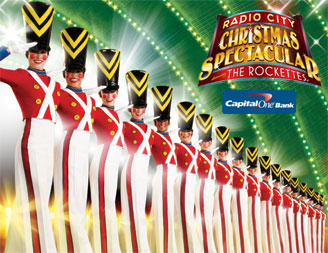
Jesus at Radio City Music Hall?

Post Author: Bill Pratt

Several years ago my family attended the Christmas Spectacular at Radio City Music Hall in Manhattan.  It was one of the most phenomenal shows I have ever seen, and for one surprising reason.  It was full of worship.  Yes, that’s right.  In the middle of New York City at Radio City Music Hall, my family experienced a wonderful time worshiping God.  If you don’t believe me, and many don’t when I tell them, read this short essay below that was scrolled across a giant screen at the close of the show, right after the live nativity scene.

One Solitary Life

rccs-08-rockettes-3283

Here is a man who was born in an obscure village, the child of a peasant woman. He grew up in another village. He worked in a carpenter shop until He was thirty. Then for three years He was an itinerant preacher.

He never owned a home. He never wrote a book. He never held an office. He never had a family. He never went to college. He never put His foot inside a big city. He never traveled two hundred miles from the place He was born. He never did one of the things that usually accompany greatness. He had no credentials but Himself…

While still a young man, the tide of popular opinion turned against him. His friends ran away. One of them denied Him. He was turned over to His enemies. He went through the mockery of a trial. He was nailed upon a cross between two thieves. While He was dying His executioners gambled for the only piece of property He had on earth – His coat. When He was dead, He was laid in a borrowed grave through the pity of a friend.

Nineteen long centuries have come and gone, and today He is a centerpiece of the human race and leader of the column of progress.

I am far within the mark when I say that all the armies that ever marched, all the navies that were ever built; all the parliaments that ever sat and all the kings that ever reigned, put together, have not affected the life of man upon this earth as powerfully as has that one solitary life.

This essay was adapted from a sermon by Dr James Allan Francis in “The Real Jesus and Other Sermons” © 1926 by the Judson Press of Philadelphia (pp 123-124 titled “Arise Sir Knight!”).

Why Is Paul So Important to Historians Studying the Resurrection of Jesus? #5 Post of 2012

Post Author: Bill Pratt

Historical scholar Mike Licona, in his book The Resurrection of Jesus: A New Historiographical Approach, asks just this question.  His answer is important to understand.

A priority must be assigned to Paul because he is the earliest known author to mention the resurrection of Jesus, and there are numerous extant texts he wrote that give us clues pertaining to the nature of Jesus’ resurrection.  Paul’s letters are the only verifiable reports by a verifiable eyewitness of the risen Jesus himself.  And he personally knew the other disciples, who were also claiming that the risen Jesus had appeared to them in both individual and group settings.

Paul’s conversion is especially interesting because he was an enemy of the church when his experience of the risen Jesus occurred.  Therefore Jesus’ resurrection is reported not only by his friends but also by at least someone who was a vehement foe at the time of the experience.  Paul’s belief that he had witnessed the risen Christ was so strong that he, like the original disciples, was willing to suffer continuously for the sake of the gospel, even to the point of martyrdom.

Let’s recap what Licona is saying.  Paul is important because:

  1. He is the earliest known author to mention the resurrection of Jesus.
  2. There are numerous extant texts he wrote that give us clues pertaining to the nature of Jesus’ resurrection.
  3. Paul’s letters are the only verifiable reports by a verifiable eyewitness of the risen Jesus himself.
  4. He personally knew the other disciples, who were also claiming that the risen Jesus had appeared to them in both individual and group settings.
  5. He was an enemy of the church when his experience of the risen Jesus occurred.
  6. He was willing to suffer and be martyred because his belief in the risen Jesus was so strong.

In future posts, we will look at a couple of skeptical arguments as to why we should discount Paul’s writings as evidence of the resurrection.  Licona presents these arguments and then responds to them, so stay tuned.

How Did the Early Church Recognize the Canonicity of a Book? #6 Post of 2012

Post Author: Bill Pratt

There is a misconception, popularized by books like The Da Vinci Code, that the way the books of the Bible were chosen consisted of politically infused church councils voting on the books they liked, and voting out the books they didn’t like.  However, a careful reading of church history totally disproves this misconception.

As noted in a previous post, the church understood its role as recognizing what books God, himself, had inspired.  This job of recognition was something the early church took very seriously, but how did they go about doing it?  What were the criteria they used?

We know that propheticity was a necessary condition for canonicity, but sometimes church fathers who were trying to assess propheticity of a book were removed by decades, or even centuries, from the original composition of the books.  So what did they do?

Norman Geisler and William Nix, in their book A General Introduction to the Bible, describe the criteria that were actually employed by the early church in this process.

  1. Was the book written by a prophet of God?  This was the most fundamental criteria.  Once this was established, the book’s inspiration was recognized.
  2. Was the writer confirmed by acts of God?  If there were doubts about the author’s being a true prophet of God, miracles served as divine confirmation.
  3. Did the message tell the truth about God?  According to Geisler and Nix, “Any teaching about God contrary to what His people already knew to be true was to be rejected. Furthermore, any predictions made about the world which failed to come true indicated that a prophet’s words should be rejected.”
  4. Does it come with the power of God?  Geisler and Nix explain, “Another test for canonicity was the edifying effect of a book. Does it have the power of God? The Fathers believed the Word of God is “living and active” (Heb. 4:12), and consequently ought to have a transforming force for edification (2 Tim. 3:17) and evangelization (1 Peter 1:23).”
  5. Was it accepted by the people of God? Geisler and Nix point out that “the initial acceptance of a book by the people to whom it was addressed is crucial. Paul said of the Thessalonians, “We also constantly thank God that when you received from us the word of God’s message, you accepted it not as the word of men, but for what it really is, the word of God” (1 Thess. 2:13). For whatever subsequent debate there may have been about a book’s place in the canon, the people in the best position to know its prophetic credentials were those who knew the prophet who wrote it. Hence, despite all later debate about the canonicity of some books, the definitive evidence is that which attests to its original acceptance by the contemporary believers.”

Geisler and Nix summarize:

The most important distinction to be made at this point is between the determination and the discovery of canonicity. God is solely responsible for the first, and man is responsible merely for the last. That a book is canonical is due to divine inspiration. How that is known to be true is the process of human recognition. How men discovered what God had determined was by looking for the “earmarks of inspiration.”

It was asked whether the book (1) was written by a man of God, (2) who was confirmed by an act of God, (3) told the truth about God, man, and so on, (4) came with the power of God, and (5) was accepted by the people of God. If a book clearly had the first earmark, the remainder were often assumed. Of course the contemporaries of the prophet (apostle) knew his credentials and accepted his book immediately. But later church Fathers sorted out the profusion of religious literature, discovered, and gave official recognition to the books that, by virtue of their divine inspiration, had been determined by God as canonical and originally recognized by the contemporary believing community to which they were presented.

Is There Ever Enough Evidence for the Hyper-Skeptic? #7 Post of 2012

Post Author: Bill Pratt

Recently I was listening to the Unbelievable podcast and heard something telling from atheist James Croft.  As he was discussing the historical, eyewitness evidence of Jesus’s resurrection with Christian Chris Sinkinson, he said the following (this is a paraphrase of what he said):

The amount of eyewitness testimony of the death and resurrection of Jesus can never be enough to convince me, and it shouldn’t be enough to convince any reasonable person.  I would never accept any amount of testimony as evidence of the resurrection.  The only way I would accept the death and resurrection of anyone is if there were detailed medical records, and there were medical professionals there to verify the death, and I could stand beside the corpse myself, watching what happened.

Croft, therefore, would never accept any testimony of any resurrection from the dead unless he saw it for himself and there were medical professionals there to certify all the facts.  But, of course, this means that he has conveniently set the bar so high that no resurrection claim from history could ever be believed.

By setting this impossibly high standard, Croft has to do no work, no investigation, no research, no thinking, no considering of the central claim of Christianity, the resurrection of Jesus.  For him, this would all be a colossal waste of time, because he has decided, based on his atheistic presuppositions, that resurrections don’t happen.

Croft is a classic example of the hyper-skeptic.  Anybody who would say that no amount of eyewitness testimony from the past should ever convince anyone that a person came back from the dead is arguing not from a position of neutrality, but from an extreme philosophical skepticism in the tradition of David Hume.

Of course, the typical hyper-skeptic has no problem believing highly fantastical things such as the assembly of the first self-replicating organism by pure chance 4 billion years ago, even though the hyper-skeptic wasn’t there to see it, there were no scientific experts standing around watching it, and there are no written records from that time that we can examine.

Intelligent Design proponent Bill Dembski once asked hyper-skeptic Michael Shermer if Shermer would allow Dembski to write skeptical articles about Darwinian evolution in Shermer’s Skeptic magazine.  Shermer declined.  It seems that Skeptic magazine isn’t skeptical about everything.

The critical point to take home is this: hyper-skeptics are usually only skeptical about a small number of select topics, and are thus hopelessly inconsistent in their skepticism.  Their skepticism is, in most cases, just a philosophical cover for being anti-whatever-they-don’t-like.

What Are the Best Arguments for Traditional Marriage? #8 Post of 2012

Post Author: Bill Pratt

The citizens of North Carolina voted Tuesday, May 8, 2012, 61% to 39% in favor of adding an amendment to the state constitution that re-affirms the traditional view of marriage between one man and one woman.  Even though this was an overwhelming victory, it still saddens me that so many people in our state have failed to understand what is at stake in this debate.

As I’ve researched this issue for the last several years I have read numerous excellent treatments on marriage.  Recently, though, I discovered, thanks to the Manhattan Project, the best concise, scholarly treatment I’ve ever read on marriage.  The article is entitled “What Is Marriage?” and it was originally published in the Harvard Journal of Law and Public Policy.  The authors are Sherif Girgis, Robert George, and Ryan T. Anderson.

Below is the table of contents, to give you an idea of the ground that the authors cover in the paper:

I. ……………………………………………………………………..248

A. Equality, Justice, and the Heart of the Debate …………………………………………..248

B. Real Marriage Is—And Is Only—The Union of Husband and Wife…………………..252

1. Comprehensive Union ………………………253
2. Special Link to Children ……………………255
3. Marital Norms…………………………………..259

C. How Would Gay Civil Marriage Affect You or Your Marriage? ………………..260

1. Weakening Marriage …………………………260
2. Obscuring the Value of Opposite‐Sex Parenting As an Ideal ………………………..262
3. Threatening Moral and Religious Freedom ……………………………………………263

D. If Not Same‐Sex Couples, Why Infertile Ones? ………………………………..265

1. Still Real Marriages……………………………266
2. Still in the Public Interest…………………..268

E. Challenges for Revisionists ……………………..269

1. The State Has an Interest in Regulating Some Relationships? ……….269
2. Only if They Are Romantic?………………271
3. Only if They Are Monogamous? ……….272

F. Isn’t Marriage Just Whatever We Say It Is? ……………………………………………274

II . …………………………………………………………………….275

A. Why Not Spread Traditional Norms to the Gay Community? ………………………….275

B. What About Partners’ Concrete Needs? ……………………………………..280

C. Doesn’t the Conjugal Conception of Marriage Sacrifice Some People’s Fulfillment for Others’? …………….281

D. Isn’t It Only Natural? ………………………………284

E. Doesn’t Traditional Marriage Law Impose Controversial Moral and Religious Views on Everyone? …………………………………………..285

CONCLUSION……………………………………………………….286

When you click on the link to the article, it will take you to the abstract.  All you have to do to get the complete article is click on the “Download This Paper” link on the same web page.  In order to entice you to read the whole paper, I quote the conclusion of the paper below:

A thought experiment might crystallize our central argument.  Almost every culture in every time and place has had some institution that resembles what we know as marriage. But imagine that human beings reproduced asexually and that human offspring were self‐sufficient. In that case, would any culture have developed an institution anything like what we know as marriage?  It seems clear that the answer is no.

And our view explains why not.  If human beings reproduced asexually, then organic bodily union—and thus comprehensive interpersonal union—would be impossible, no kind of union would have any special relationship to bearing and rearing children, and the norms that these two realities require would be at best optional features of any relationship. Thus, the essential features of marriage would be missing; there would be no human need that only marriage could fill.

The insight that pair bonds make little sense, and uniquely answer to no human need, apart from reproductive‐type union merely underscores the conclusions for which we have argued: Marriage is the kind of union that is shaped by its comprehensiveness and fulfilled by procreation and child‐rearing.  Only this can account for its essential features, which make less sense in other relationships.  Because marriage uniquely meets essential needs in such a structured way, it should be regulated for the common good, which can be understood apart from specifically religious arguments.  And the needs of those who cannot prudently or do not marry (even due to naturally occurring factors), and whose relationships are thus justifiably regarded as different in kind, can be met in other ways.

So the view laid out in this Article is not simply the most favorable or least damaging trade‐off between the good of a few adults, and that of children and other adults.  Nor are there “mere arguments” on the one hand squaring off against people’s “concrete needs” on the other.  We reject both of these dichotomies.  Marriage understood as the conjugal union of husband and wife really serves the good of children, the good of spouses, and the common good of society.  And when the arguments against this view fail, the arguments for it succeed, and the arguments against its alternative are decisive, we take this as evidence that it serves the common good.  For reason is not just a debater’s tool for idly refracting arguments into premises, but a lens for bringing into focus the features of human flourishing.

In addition to this paper, if you want to hear an outstanding podcast that features a traditional marriage advocate debating a gay marriage advocate, you cannot do better than listening to the Unbelievable? podcast entitled “The Gay Marriage Debate – Peter Tatchell vs Peter D Williams.”  Peter Williams verbally makes many of the same arguments you will read in the marriage paper, and he does a truly exceptional job of it.

Are Children Worse Off When Raised in Same-Sex Homes? #9 Post of 2012

Post Author: Bill Pratt

Traditional marriage advocates have often argued that children are better off when they are raised by their married biological mother and biological father.  The data is overwhelmingly in favor of married parents as opposed to single parents.

Those who support gay marriage almost always counter this data by saying that single parent homes may be worse for children, but homes where there are two loving gay parents are just as good for kids as homes where  a traditional married couple raises children.  They point to studies that purport to show no difference between the two different kinds of households.

Traditional marriage proponents have always countered by saying that the studies referred to by the gay marriage side are methodologically flawed, mostly because the sample sizes are too small and the gay couples taking part in the research almost always volunteer to be part of that research.

Where do we go from here?  Who is right?  Are same-sex households equivalent to opposite-sex households when it comes to outcomes for children?  New answers seem to be emerging that do not look good for same sex couples.

On June 10, the Washington Times reported on two new studies that were released which undermine the gay marriage argument that children are no worse off when raised by same sex couples.  Here are some excerpts from the article:

Two studies released Sunday may act like brakes on popular social-science assertions that gay parents are the same as — or maybe better than — married mother-father parents.

“The empirical claim that no notable differences exist must go,” University of Texas sociology professor Mark Regnerus said in his study in Social Science Research.

Using a “gold standard” data set of nearly 3,000 randomly selected American young adults, Mr. Regnerus looked at their lives on 40 measures of social, emotional and relationship outcomes.

He found that, when compared with adults raised in married, mother-father families, adults raised by lesbian mothers had negative outcomes in 24 of 40 categories, while adults raised by gay fathers had negative outcomes in 19 categories.

Findings like these contradict claims that there are no differences between gay parenting and heterosexual, married parents, said Mr. Regnerus, who helped develop the New Family Structures Study at the University of Texas.

Instead, “[C]hildren appear most apt to succeed well as adults when they spend their entire childhood with their married mother and father, and especially when the parents remain married to the present day,” he wrote.

Mr. Regnerus’ study of 2,988 people ages 18 to 39 — including 175 adults raised by lesbian mothers and 73 adults raised by gay fathers — marks the first research from the new data set, which initially included some 15,000 people.

Here are a sample of some of the 24 negative outcomes for children raised in a home where their mother had lesbian relationships:

  • Family received welfare growing up: 17% of children with married parents, 69% of children with lesbian mothers
  • Recently or currently in therapy: 8% of children with married parents, 19% of children with lesbian mothers
  • Had an affair while married or cohabiting: 13% of children with married parents, 40% of children with lesbian mothers
  • Was ever forced to have sex unwillfully: 8% of children with married parents, 31% of children with lesbian mothers

The article goes on to report on second study released:

The second study, also in Social Science Research, takes a critical look at the basis of an oft-cited American Psychological Association report on gay parenting.

The APA brief says, “Not a single study has found children of lesbian or gay parents to be disadvantaged in any significant respect relative to children of heterosexual parents.”

After looking at the 59 studies that undergird this assertion, however, “The jury is still out,” said Loren Marks, an associate professor at the School of Human Ecology at Louisiana State University. “The lack of high-quality data leaves the most significant questions [about gay parenting] unaddressed and unanswered.”

Problems with the APA-cited studies were their small size; dependence on wealthy, white, well-educated lesbian mothers; and failure to examine common outcomes for children, such as their education, employment and risks for poverty, criminality, early childbearing, substance abuse and suicide. Instead, the APA studies often looked at children’s gender-role behaviors, emotional functioning and sexual identities.

The results of these studies, especially that of Regnerus, are extremely important.  Finally we have larger sample sizes, coupled with a random data set.  The results are certainly very troubling for same-sex marriage advocates.  Their claims that same-sex households are equivalent to heterosexual households cannot be sustained without ignoring these new major studies.  Certainly more research is needed, but at least we are starting to see data collected with proper methodology.

Note: If you would like to see a Q and A with Mark Regnerus, click on this link.

How Do Other Ancient Texts Compare to the New Testament? #10 Post of 2012

Post Author: Bill Pratt

When considering the trustworthiness of the New Testament (NT) documents, the first question we need to ask is, “Have these documents been accurately transmitted to us since they were originally written?”

In order to answer this question about the textual transmission of documents of the ancient world, historians look at the number of existing manuscript copies (MSS) of the original text and they look at the time gap between the earliest existing MSS and the date when the original document was written.  The more MSS, the better we are able to reconstruct the original.  The shorter the time gap, the better we are able to reconstruct the original.  This is referred to as the bibliographical test.

Christians have pointed out for decades that the NT documents are far superior in both dimensions of the bibliographical test.  There are more existing MSS and the time gap for those MSS is the shortest when compared to other documents of ancient history.

Clay Jones, professor at Biola University, has recently updated the data that compares the Greek NT documents (as a group) to other documents of ancient history in an article published in the Christian Research Journal.  Below are the results of his research:

Author Work Date Written Earliest MSS Time Gap Number of MSS
Homer Iliad 800 BC c. 400 BC 400 1757
Herodotus History 480-425 BC 10th C 1350 109
Sophocles Plays 496-406 BC 3rd C BC 100-200 193
Plato Tetralogies 400 BC AD 895 1300 210
Caesar Gallic Wars 100-44 BC 9th C 950 251
Livy History of Rome 59 BC-AD 17 Early 5th C 400 150
Tacitus Annals AD 100 AD 850 750-950 33
Pliny, the Elder Natural History AD 49-79 5th C fragment: 1; Rem. 14-15th C 400 200
Thucydides History 460-400 BC 3rd C BC 200 96
Demosthenes Speeches 300 BC Some fragments from 1 C BC 1100+ 340
Greek NT AD 50-100 AD 130 40 5795

The table illustrates that the Greek NT does extremely well with both the time gap (40 years) and the number of MSS (5795), as compared to all the other documents in the table.  But the situation is even better for the NT because we haven’t yet mentioned all the MSS of the NT in other languages.

Jones reveals that there are over 2000 Armenian, almost 1000 Coptic, 6 Gothic, more than 600 Ethiopian, more than 10000 Latin, more than 350 Syriac, 43 Georgian, and more than 4000 Slavic manuscript copies of the NT.

The only conclusion one can reasonably reach is that we have more confidence in the textual transmission of the NT than in any other document of ancient history.  To question the transmission accuracy of the NT texts we have today is to question all of ancient history.

What Is Happening on the Blog in December?

Post Author: Bill Pratt

For those of you who have followed the blog for a few years, you know that every December I re-run the top ten posts of the year. The top ten is solely determined by number of page views, so I am not picking out my personal favorites – just going by the numbers.

While the top ten is re-posting over the next few weeks, I will be writing new material which will start publishing in January.  It’s always possible that I will sneak a couple of new posts in before the end of the year, but I generally like to take a break this time of year.

I want to thank all of you again for subscribing to the blog, whether by email, Facebook, Twitter, or RSS feed. Our readership grew tremendously this year, mostly by word of mouth and links from other sites, and I’m grateful to all of you who have passed along Tough Questions Answered to your friends.

God bless all of you and don’t let Christmas stress you out!  After all, it’s the birth of our Savior we’re celebrating.  What a  wonderful time of year!