How Did Mormonism Originate? Part 2

Post Author: Bill Pratt

In part 1, we reviewed Grant Palmer’s conclusions about the true origins of the Book of Mormon.  There are three more foundational experiences of Mormonism that Palmer analyzes: the first vision, the angel Moroni, and priesthood restoration.  Again, if you would like to read more about these experiences, pick up Palmer’s book An Insider’s View of Mormon Origins.

Palmer explains, about these three experiences, that they

appear to have developed from relatively simple experiences into more impressive spiritual manifestations, from metaphysical to physical events.  Joseph added new elements to his later narratives that are not hinted at in his earlier ones.  His first vision evolved from a forgiveness epiphany to a call from God the Father and Jesus Christ to restore the true order of things.  His original golden plates story was largely borrowed from his environment and then altered, becoming more religious and Christianized.  His form-changing archivist [a character in a literary work by which Smith was likely inspired] became a resurrected angel named Moroni who dispensed heavenly wisdom and quoted liberally from the Bible.  Likewise, Joseph’s accounts of priesthood restoration developed from spiritual promptings into multiple, physical ordinations by resurrected angels.

Palmer revisits the origins of the Book of Mormon and the witnesses’ testimony:

The witnesses to the Book of Mormon reportedly saw both secular and spiritual treasure guardians by “second sight” or through “the eyes of our understanding.” Their testimony of the Book of Mormon was not of a secular event. Their emphasis was on seeing an angel and handling plates of gold, which was impressive for its metaphysical aspects.

Where has the Mormon church gone wrong, then, in its accounts of these foundational experiences?

Today we see the witnesses as empirical, rational, twenty-first-century men instead of the nineteenth-century men they were. We have ignored the peculiarities of their world view, and by so doing, we misunderstand their experiences. Over time, we have reinterpreted their testimony so that, like with the other foundation stones, it appears to be a rational, impressive, and unique story in the history of religion.

The foundation events were rewritten by Joseph and Oliver and early church officials so the church could survive and grow.  This reworking made the stories more useful for missionary work and for fellowshipping purposes. But is this acceptable? Should we continue to tell these historically inaccurate versions today? It seems that, among the many implications that could be considered, we should ask ourselves what results have accrued from teaching an unequivocal, materialistic, and idealized narrative of our church’s founding. The first question would be whether it has brought us closer to Christ. Has it made us more humble and teachable or more secure in our exclusivity and condescending toward others? Has it made us reliant on the expectation of infallible guidance and therefore, to a degree, gullible? It is appropriate to tell simplified, faith-inspiring stories to children, but is it right to tell religious allegories to adults as if they were literal history?

Palmers’ answer to this question is “no.”  He concludes his book with an appeal to his Mormon brothers and sisters to return to what he believes to be the true core of Mormonism, Jesus Christ.  For Palmer’s conclusions, he was disfellowshipped from the Mormon Church two years after he wrote this book.
How Did Mormonism Originate? Part 1

Post Author: Bill Pratt

Fourth generation Mormon Grant Palmer collected a mountain of historical scholarship on the origins of Mormonism and wrote a book about it in 2002: An Insider’s View of Mormon Origins.  Palmer’s goal was to communicate to Mormon laypeople the progress that had been made over the previous 30 years toward an accurate and historical understanding of Mormon origins.

If you want a great overview of Mormon origins, I commend this book to you.  With the possible future president of the United States being a Mormon, it is extremely important for all Americans to understand this faith tradition.  Below I have excerpted some of Palmer’s conclusions.  Obviously, you will have to read the complete book to get the details.

Palmer first writes about the origins of the Book of Mormon and the golden plates.  Recall that Mormon tradition claims that Smith discovered some golden plates which contained engravings of an ancient Reformed Egyptian language.  Smith claimed to be able to translate these engravings, and the result of his translation was the Book of Mormon.  Here is Palmer’s answer to the question of the golden plates and the Book of Mormon:

That Joseph Smith literally translated ancient documents is problematic.  He mistranslated portions of the Bible, as well as the Book of Joseph, the Book of Abraham, the Kinderhook plates, and a Greek psalter.  There is no evidence that he ever translated a document as we would understand that phrase.

Furthermore, there are three obstacles to accepting the golden plates as the source of the Book of Mormon.  First, although these records were said to have been preserved for generations by Nephite prophets, Joseph Smith never used them in dictating the Book of Mormon.  If we accept the idea that he dug up a real, physical record, then we must account for the fact that he never used it in the translation process.

Second, much of the Book of Mormon reflects the intellectual and cultural environment of Joseph’s own time and place.  We find strands of American antiquities and folklore, the King James Bible, and evangelical Protestantism woven into the fabric of the doctrines and setting.  A few people want to maintain that something like the Protestant Reformation occurred 2,500 years ago in America.  It is more reasonable to accept that the evolving doctrines and practices of Protestantism down to Joseph Smith’s time influenced the Book of Mormon.  There is also an interesting syncretism in the Book of Mormon that shows the work of Joseph’s creative mind.  He draws from these major sources and fashions a message that was especially relevant to nineteenth-century America.

Third, the only other conceivable reason for preserving the gold plates would have been to show the witnesses a tangible artifact that would verify the antiquity of the translation.  Yet, the eleven witnesses gazed on and handled the golden plates the same way they saw spectral treasure guardians and handled their elusive treasures, in the spirit, not in the flesh.

Notice some of the key points that Palmer’s research unearthed.  Smith did not use the golden plates to translate the Book of Mormon.  Instead the Book of Mormon is demonstrably a compilation of KJV Bible passages, commentary on those Bible passages, identifiable American folklore that was popular in Smith’s day, and evangelical Protestant influences where Smith grew up.

In addition, the eleven witnesses who supposedly saw the golden plates merely saw them with their “spiritual” eyes.  In other words, they, at best, had visions of the plates.  One particularly powerful piece of evidence for this claim is that, according to Palmer, “On 25 March 1838, Martin Harris [one of the witnesses who allegedly saw the golden plates] testified publicly that none of the signatories to the Book of Mormon saw or handled the physical records.”  Palmer recounts additional confessions by other witnesses as to the real nature of their visions.

In part 2 of this series, we will consider Palmer’s remaining thoughts about the origins of Mormonism.

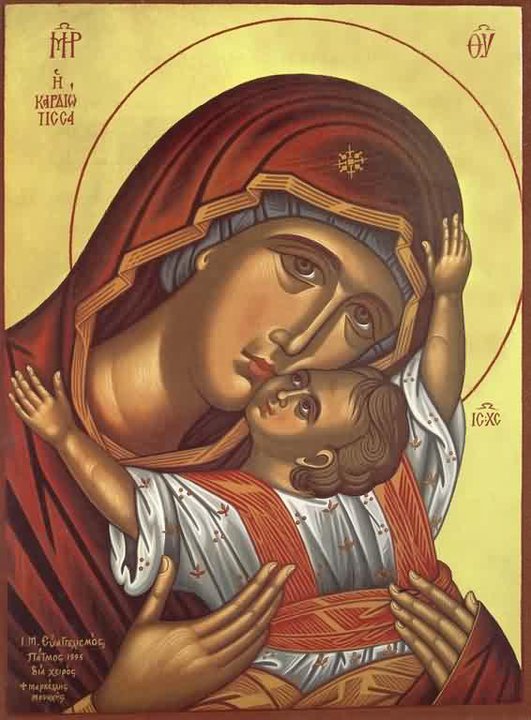
Was Mary the Mother of God?

I recently had a conversation with a Christian on Facebook regarding some of the passages in the Bible that refer to Mary.  During the conversation, I referred to Mary as The Mother of God (Theotokos).  This brought a rather stern reaction from him.  He stated, “Mary isn’t the Mother of God.  God is not born or created.  That’s heresy. Mary is the mother of Jesus’ flesh of his human body, not of His Divinity, which already existed before Mary was born.”  While I can understand his concerns, I wonder if this gentleman realizes that his position was thoroughly discussed, analyzed, and subsequently rejected by the Church roughly 1600 years ago.

During the first 500 years of Christianity, the Church dealt with the rise of several Christological heresies that necessitated the formulation of a clear theological expression of Christ’s Person and Nature.  In the early fifth century, one of these heresies questioned how Christ’s two natures, that of God and Man, related to one another. Following the teachings of Theodore of Mopsuestia, Nestorius, Patriarch of Constantinople, taught that Christ’s nature as God was utterly separate from His nature as man.  In this understanding, Christ’s early life was that of a human being in contact with God.  God foresaw that Christ would lead a virtuous life and chose Him to be a vessel of divinity.  At Christ’s birth, his contact with divinity was incomplete, becoming so later in His life.  Nestorius preferred the term Christotokos (Mother of Christ) to that already accepted as part of Holy Tradition, Theotokos (Mother of God), for He believed that Mary’s baby was not fully divine.

This teaching, which came to be known as Nestorianism, led to the calling of the Third Ecumenical Council in 431 AD.  In this Council, the Fathers of the Church upheld the teaching that in Christ the dual natures of divinity and humanity do not merely come in contact with one another, but that they are, rather, in union.  At the Incarnation, the Second Person of the Trinity, Christ, took on human nature, adding it to His Person, while at the same time retaining the fullness of His Divinity.  At the birth of Christ, Mary gave birth to a baby who was both God and human, each in the fullest sense of the word.  As a result, to deny that Mary was the Mother of God is to deny the full reality of the Incarnation and its resulting efficacy in our salvation.

In a letter to John of Antioch in 433 AD, Saint Cyril summed up this aspect of Christology very well.

Thus we confess that our Lord Jesus Christ, the only-begotten Son of God, is perfect God and perfect man, consisting of a rational soul and body, that he was begotten from the Father before all ages according to the Divinity, and that in these latter times was begotten for us and for our salvation from the Virgin Mary; that he is consubstantial with the Father in his Divinity and consubstantial with us in his humanity, for in him there was accomplished the unity of two natures.  Therefore we acknowledge one Christ, one Son, one Lord.  On the basis of this union without confusion, we confess the Most Holy Virgin to be the Mother of God because God the Word was incarnate and became man and in the conception itself united with himself the temple received from her. . . God the Word came down from heaven and, taking the form of a servant, emptied himself, and was called the Son of man, remaining that which he is – God.

The title Mother of God is a confession about Christ.  As I have heard said in the past, it says more about Him than it does about Mary.

How Do the Witnesses of the Gold Plates Compare to the Witnesses of the Resurrection? Part 4

Post Author: Bill Pratt

In this final post in the series, we will review apologist Rob Bowman’s final thoughts on Joseph Smith’s golden plates.  Bowman writes:

Whereas the resurrection of Jesus and his appearances were obviously miraculous, supernatural occurrences, there is nothing supernatural or miraculous about a set of metal plates with engravings on them.  Showing skeptics the metal plates should not have been any more problematic than showing skeptics the Great Isaiah Scroll today is.  Joseph had no hesitation or reluctance to show people the Egyptian papyri on which he claimed were the writings of Abraham and Joseph, even to complete strangers. Yet someone could be in a room with Joseph, with the plates supposedly sitting right there on the table under wraps, and Joseph would not allow them to look at the plates.  If we’re going to compare the Resurrection appearances with the gold plates, it’s a bit like Peter telling Thomas, “Jesus is right behind that wall over there—Hi, Lord!—but I’m sorry Tom, you’re not allowed to see him now.”

So what are we to make of the golden plates?  Were they real or were they fake?  According to Bowman,

It isn’t clear how many people actually saw the plates or closely inspected them.  The three witnesses say they saw the plates, but give no details, and evidently did not even touch them.  The testimony of the eight witnesses appears to have been written out for them to sign; it claims they handled the plates and saw the engravings, but there are reasons to find this claim dubious.

The simplest explanation for Joseph’s behavior is that he had something, perhaps metal plates of some kind, but not gold plates with modified Egyptian characters.  I don’t think we have enough information to determine if Joseph found the plates somewhere or if he made them, or what. But the best explanation for why he didn’t show the plates openly was that they weren’t what he claimed they were.  That explains why the only people who testified to seeing the plates were a small group—people in his family and a few others, people who were either invested in the project in some way or were easy to manipulate or convince or both—such as Martin Harris.

Here are some additional thoughts I have about the resurrection vs. the golden plates.  As Bowman suggests, coming up with a plausible natural explanation of the golden plates is trivial.  Smith could have made the plates, bought the plates, or even found the plates.  There is nothing supernatural about golden plates.

None of the witnesses of the plates appeared to be in a position to understand the Reformed Egyptian language allegedly engraved on the plates, including Smith himself.  None of the witnesses saw an angel telling Smith where the plates were.  Nobody was with Smith when he allegedly found the plates.  Nobody can know if Smith correctly translated the Book of Mormon from the plates.  In fact, Mormon historians have carefully documented that the plates were rarely even around when Smith was dictating the Book of Mormon.  Much of the material in the Book of Mormon can be directly traced from the King James Bible and contemporary sources that Smith borrowed from – hardly miraculous.

By contrast, the public execution and subsequent resurrection of Jesus, who was then seen by both friends and enemies, over many days, in many different places, screams for a supernatural explanation, especially because Jesus predicted, before he died, that these things would happen.  Skeptics have attempted for 2,000 years to explain what happened without invoking the supernatural, and have utterly failed.

There is simply no comparison between the resurrection of Jesus and the golden plates of Joseph Smith.  Any attempts to claim that they are similar, are, in my opinion, foolish.  My special thanks to Rob Bowman for making his comments available to me.  I think you would all agree that they were quite helpful!

How Do the Witnesses of the Gold Plates Compare to the Witnesses of the Resurrection? Part 3

Post Author: Bill Pratt

In part 2, we continued looking at Rob Bowman’s online exposition of how the witnesses of Jesus’s resurrection and the witnesses of Joseph Smith’s golden plates compare to each other.  In part 3, we will compare the lives of the witnesses after their experiences of either the resurrection or the viewing of the golden plates.  Bowman writes:

The witnesses to the Resurrection gained credibility after their experience, becoming consistently reliable, faithful witnesses to Jesus Christ and honorable members of the Christian movement.  Cowardly Peter, doubting Thomas, and persecuting Paul each became unwavering witnesses to Christ and remained so for the rest of their lives.  Peter and Paul were both martyred for their faith, as were some of the other apostles (e.g., James the son of Zebedee in Acts 12).  Not one of the known witnesses of the Resurrection ever undermined his or her testimony.  Not one ever left the Christian church.  Not one was ever excommunicated or excluded from the church.  Not one ever tarnished his or her witness by engaging in wicked behavior.  Not one ever diluted his or her witness by also bearing witness to other religious claims in conflict with the Christian faith.

What about the golden plate witnesses?  Did they live out their lives in a similar fashion?

The witnesses to the gold plates, far from gaining in credibility following their signing the testimonies, lost credibility over the years. Martin Harris diluted his witness by also bearing witness later to the Shakers and the Strangites.  Hiram Page had his own seer stone and claimed to receive revelations that Joseph condemned as from the devil!  Several of the witnesses were excommunicated (some eventually returned, others did not).  Several of the witnesses over the years gave conflicting testimony as to whether they actually saw the plates with their natural eyes or physically handled the plates.  Joseph [Smith] claimed that God had commanded him to take over thirty women, some of them already married to living men, as his wives.  David Whitmer maintained, not without cause, that Joseph was a fallen prophet.  Joseph and Hyrum were killed, not for their testimony to the Book of Mormon, but because of violent mob reaction to their polygamy and other illegal activities.

There is simply no comparison between these two groups of witnesses.  What a stark contrast!  Bowman continues:

Mormons routinely argue that the checkered history of the witnesses all the more underscores the fact that they never disavowed their testimony that Joseph did have the plates.  There is some question about this claim with regard to Cowdery and Harris, but letting that pass, one may accept that Joseph had something like metal plates without concluding that the whole story is true and Joseph really did translate gold plates with Egyptian characters by the gift and power of God.  The lack of credibility of the witnesses is a real evidential difficulty that cannot be turned into an apologetic asset.

In the last post of this series, Bowman explains some final difficulties with the golden plates.  You won’t want to miss it.

How Do the Witnesses of the Gold Plates Compare to the Witnesses of the Resurrection? Part 2

Post Author: Bill Pratt

In part 1, we started looking at Rob Bowman’s online exposition of how the witnesses of Jesus’s resurrection and the witnesses of Joseph Smith’s golden plates compare to each other.  We pick up where we left off.

Bowman next looks at the “contrast between the makeup of the collection of publicly identified witnesses to the Resurrection and the publicly identified witnesses to the gold plates.”

The witnesses to the Resurrection included at least five women (with Mary Magdalene as the first such witness); the witnesses to the gold plates included no women.

The witnesses to the Resurrection identified as family members of Jesus actually consisted only of, perhaps, two such family members, James and Cleopas (if, as some scholars think, he was the man by that name elsewhere identified as a family member).  An appearance to Jude may be implied, and it isn’t unreasonable to speculate that Jesus also appeared to other family members such as Mary.  Still, the named individuals who functioned as public witnesses to the Resurrection included only one or two family members of Jesus. The rest of the named witnesses were drawn from a dozen or more families, with at most two individuals from any one family (such as Simon Peter and Andrew, or James and John the sons of Zebedee).

By contrast, the witnesses to the gold plates were drawn almost entirely from two families, the Smith family and the Whitmer family.  Hiram Page married into the Whitmer family, which means that all of the “eight witnesses” were from the Whitmer and Smith families.  Oliver Cowdery was Joseph Smith’s second or third cousin.  David Whitmer was one of the “three witnesses.”  Thus, ten of the eleven witnesses were relatives of either Joseph Smith or David Whitmer!

Think about this.  Jesus’s resurrection was witnessed by numerous people who were not related to Jesus.  In the case of the golden plates, the witnesses mostly came from two families, one being Smith’s own – hardly a diverse group.  This puts into question the overall credibility of the golden plate witnesses, and certainly cannot compare to the diversity of the resurrection witnesses.

Bowman next looks at, perhaps, the most interesting comparison of the witnesses – their credibility after their experience.  In part 3 , we will look at the lives of the resurrection witnesses and the lives of the golden plate witnesses.  The contrast is glaring, to say the least.  See you then.

How Do the Witnesses of the Gold Plates Compare to the Witnesses of the Resurrection? Part 1

Post Author: Bill Pratt

Mormons believe that their founder Joseph Smith was shown the location of some golden plates by an angel.  These plates, which were allegedly engraved in a language called Reformed Egyptian, were then translated by Smith into the Book of Mormon.

What is interesting about these golden plates is that they are sometimes compared to the resurrection of Jesus.  The idea is that just as the resurrection of Jesus confirmed him as the Son of God, so also the discovery and translation of the golden plates are a confirmation that Joseph Smith was a prophet of God.  But are these two events comparable?  More importantly, are the witnesses of the resurrection and the witnesses of the golden plates comparable?

First, it must be stated that the actual discovery of the golden plates was only witnessed by Smith himself.  Nobody else was there.  But what of the existence of the golden plates?  What about those who claim to have witnessed the plates themselves?

Apologist Rob Bowman, in an on-line response to a Mormon, lays out a detailed comparison of the witnesses of both.  First, Bowman clarifies the make-up of the witnesses:

In the case of Christ’s resurrection, Christ appeared to at least one family member who had rejected him during his mortal ministry and to Saul of Tarsus when he was the archenemy of the Christian movement.  The two disciples on the Emmaus road had heard about Jesus’ resurrection but were so hardened to the possibility that they were walking away from Jerusalem, where he had appeared, so Jesus came after them and surprised them.  Peter had denied Jesus three times.  Thomas missed the first appearance to the apostolic band and expressed skepticism about the Resurrection, insisting he would not believe unless he saw for himself.

These facts negate the argument, which others have made, that the plates were only shown to select individuals because one had to be worthy in order to be allowed to see them.  That criterion obviously did not apply in the case of the Resurrection.  By contrast, no one saw the gold plates except people who had already agreed to support Joseph Smith.  The contrast is dramatic.

What about the number of witnesses?

According to Paul, Christ appeared to hundreds of people (1 Cor. 15:6), whereas only a dozen people or so claimed to have seen the gold plates (and only four claimed to see the angel).  Even if one dismisses Paul’s statement as puffery (though I know of no good reason to do so), the texts inform us that a fairly large number of people saw the risen Jesus.  These included the five or more women at the tomb; the two men on the road to Emmaus; the eleven apostles; James the Lord’s brother; Joseph Barsabas, Matthias, and others among the 120 that gathered after the Ascension; and later Saul (Paul).  So even apart from 1 Cor. 15:6  we can count at least two dozen men and women who saw the risen Jesus.

Bowman then notes the circumstances under which Jesus appeared in contrast to the circumstances under which people witnessed the golden plates:

It isn’t just the larger number of people who saw the risen Christ that is significant but the lack of any mortal human’s involvement in deciding or orchestrating those appearances.  Jesus appeared to various individuals of his choosing when and where and how he wished.  Those appearances were never announced in advance; no one knew ahead of time when they would happen.  No spiritual “preparation” was needed (recall what is said above about Thomas, the two on the Emmaus road, and Saul).

The appearances took place just outside the tomb, in locked rooms, on open roads, by the lake shore, under varying conditions not subject to any mortal’s control.  By contrast, the eleven witnesses [of the gold plates] were evidently shown the plates with advance notice and preparation, under closely controlled circumstances.

In part 2 of this series, we will continue to look at Rob Bowman’s comparison of the witnesses.  There is much more to discuss!

Can Historians Use Anonymous Sources?

Post Author: Bill Pratt

A common complaint about the reliability of the letters and books contained in the New Testament is that we don’t know, for sure, who wrote all of these documents.  In particular, the four Gospels are singled out as being anonymous since there is nothing in the text of the four Gospels that says, “So-and-so wrote this Gospel.”

There are many historical scholars who do believe that we can identify the authors of the Gospels and most of the other letters in the New Testament, but what if we could not?  What if the authors of these documents were unknown?  Would we have to throw out the contents?  Are they worthless, in that case, for historical investigation?

Historical scholar Mike Licona, in his book The Resurrection of Jesus, says “no.”  Licona first answers the charge that the Gospels were not written by eyewitnesses:

Bracketing the fact that a number of scholars have taken a contrary position, this challenge is not unique to the New Testament literature.  No surviving account of the life of Alexander the Great was written by an eyewitness.  Tacitus and Suetonius were not eyewitnesses to the majority of the events they reported.  Nevertheless, historians remain confident that they are able to recover the past to varying degrees without ever knowing who their sources were.

Historian C. Fasolt argues that Paul’s letter to the Roman church is helpful as a historical source “only on the assumption that it was written by Saint Paul.”  Is Fasolt right?  Licona notes historian M. S. Cladis’s response to Fasolt:

This is going to be news to countless social historians of the religions of the ancient Mediterranean basin who investigate archaeological and textual work without always knowing the specifics of the exact agents involved.  Indeed, these historians are investigating the society that shaped the agents, even if they do not know most of the agents’ names (and all that this means).

They collect, analyze, and interpret evidence from a variety of sources—monuments and tombs, literary texts and shopping lists—in order to learn something important about the socio-historical circumstances in which people, like Paul, lived, moved, and had their being.  The historian of antiquity, then, can learn much about the past from the ‘Letter to the Romans’ whether or not that text was actually written by Paul.

Here is the takeaway point: even if we grant that the books and letters of the New Testament are anonymous, we can still gather important historical information from those texts.  Anonymity of the sources is not a death knell for historical New Testament studies, and should not be used as some kind of sweeping indictment of the texts.  We can know what happened to Jesus and his disciples two thousand years ago, using the New Testament documents as our sources.

Question for My Readers

Post Author: Bill Pratt

Regular readers of the blog know that I often write blog post series with multiple parts that I publish in sequence.  The reason I do this is because I want to keep the length of each post down to around 500 or so words.  This makes each post easy to read in one 5-minute sitting.

The downside to this approach is that it breaks up continuity for my readers.  You may have to go back and read previous posts to catch up with the latest in the series.

So, my question to all of you is this: Do you like the current approach of breaking up long posts into parts, or would you prefer that I publish longer blog posts and not break them into parts?  Please register your votes by leaving a comment.

I really appreciate your feedback and thank you for helping me make the blog better!

Will There Ever Be a Historical Consensus that Jesus Was Resurrected? Part 2

Post Author: Bill Pratt

If you are a Christian who is waiting for the day when most historical scholars, both Christian and non-Christian, affirm that the evidence does indeed indicate that Jesus was resurrected, I’m afraid you’ll be waiting until the Second Coming, when there will be no doubt.  Why is that?  If, as we say on this blog, the historical evidence for the resurrection is so strong, then shouldn’t every scholar be lining up behind it?

In part 1 of this two-part series, we started looking at the writings of historical scholar Mike Licona on the issue of consensus in historical Jesus studies.  Excerpts are taken from his book The Resurrection of Jesus.  We pick up where we left off.  

Given the challenges of historical consensus, especially with regard to the historical Jesus, what should we expect in the future?  According to Licona,

It is highly unlikely that a consensus will ever exist pertaining to the historicity of the resurrection of Jesus. While strong agreement exists regarding a number of “facts” often used as evidence to support the resurrection hypothesis, no consensus will ever exist for the conclusion that the resurrection hypothesis is an accurate description of what actually occurred.

After all, how likely is it that historians who are Muslims and atheists will confess that the resurrection hypothesis is the best explanation or that Christian historians will confess that the resurrection hypothesis is not the best explanation? Yet, either Jesus rose from the dead or he did not; and historians holding one of these positions are more correct than those holding the other.

Because of the uncertainty of historical knowledge, many historical descriptions will never receive a stamp of approval from the consensus of the relevant scholars.  This should not restrain the historian from stating that his or her hypothesis is probably true.

Licona concludes that a consensus that Jesus was resurrected will elude us for the foreseeable future.  This fact does not mean that Jesus did not rise from the dead, only that consensus across a broad spectrum of scholars is impossible given the major influence of worldviews.  After all, an admission that Jesus rose from the dead would usually entail a radical realignment of the worldview of a non-Christian scholar.  Although this may happen from time to time, it is highly unlikely to happen at a high enough rate to create a consensus.

As Christians, where does this leave us?  I think it means that we are free to point out where there is a positive consensus about the historical facts about Jesus, but we must realize that those facts will only give us a minimal list of true facts.  Beyond the minimal consensus facts, we may argue for additional facts using solid historical criteria, but we should not expect non-Christian scholars to always agree with our arguments.

We also now have an idea why there are such divergent views on the historical Jesus.  Although scholars may agree on a short list of facts, many of them feel free to argue for additional “facts” that suit their worldview.  As lay people reading books written by historical Jesus scholars, we must always be on guard for the author’s worldview nosing its way into the book.

Another implication is that reading historical Jesus works from one side of the philosophical or theological spectrum will never be enough to get a reasonable view of the historical evidence.  Readers must force themselves to pick up works from the other side of the spectrum as well. 

A co-worker of mine once told me he longer believed in the historical Jesus of Christian tradition after reading a book by a liberal Jesus scholar.  When I asked if he read works by believing Christians or conservatives, he answered “no.”  He just assumed that the scholar he read had the final word.  As Licona has shown, no scholar has the final word.  We must all engage the evidence for ourselves.