Post Author: Bill Pratt
I’ve mentioned Paul Copan’s book Is God a Moral Monster?: Making Sense of the Old Testament God
httpv://youtu.be/4lap_BdOJQo
Post Author: Bill Pratt
I’ve mentioned Paul Copan’s book Is God a Moral Monster?: Making Sense of the Old Testament God
httpv://youtu.be/4lap_BdOJQo
Post Author: Bill Pratt
One of our goals with this blog, from the beginning, was to try to answer honest questions that people have about the Christian faith. Why do I stress the word honest? Because one of the first things you learn when you write a blog about ultimate issues (i.e., God, morality , meaning of life) is that many of the questions you get asked are not from people who are honestly seeking an answer. Instead, these folks think they already know the answer and their goal is to merely make the post author look bad.
This makes running a blog like Tough Questions Answered challenging, because there are people who do have honest questions, and you don’t want to ignore them or let them get drowned out by the first group I mentioned.
I ran across a blog post recently, written by Barnabas Piper, that sheds some light on the difference between the honest questioner and the person who has already made up his mind. Here is an extended quote from the post:
There’s a fine line . . . between being someone who questions things and being a skeptic. In fact, many people would call someone who questions everything a skeptic. Here’s the thing; I don’t think many skeptics actually question anything. They may phrase their challenges as questions, but their heart is set on rejection and disproving. To truly question something is to pose questions to it and about it for the sake of understanding. This may lead to disproving or rejecting, but the heart behind it is in learning. . . . If the heart of the questioning is to learn, then ask away.
I think he put his finger on it. If the questioner is set on learning, then these are the people I want to spend the most time with. I do not mind spending some time, also, with those who are dogmatically opposed to me, but I have to realize in those situations that the dialogue is an illusion – they are not trying to understand a thing I’m writing.
One commenter, Daron, said the following in reaction to Piper’s post:
It is very easy to spot the type of “Skeptic” being discussed. They gainsay everything they read on a Christian blog – usually the most picayune detail or lowest-hanging fruit – because no matter what they find to question, it justifies their predetermined rejection of belief.
I can relate to this comment. Often I will write a blog post about topic X, but instead of responding to topic X, commenters will pick up on some detail in the blog post that has little to do with the central point and blast me for it. Why? I can honestly say I have never, to my recollection, gone to someone’s blog or website and made comments with the sole purpose of making them look bad. It just seems like such a waste of time.
Let me end this post with a plea I’ve made before. When you read our blog posts, or someone’s comments about a post, please try to understand what they are saying, and above all, be charitable! Assume the author is well intended. Give each other the benefit of the doubt, and all of our conversations will be so much more fruitful. By the way, I am preaching to myself as much as anyone else; we all need to work on being more charitable toward each other.
Post Author: Bill Pratt
Please spend 10 minutes watching this talk by Alexander Tsiaras where he takes the audience through a visualization of the growth of a human being from conception to birth. It is truly amazing!
httpv://youtu.be/fKyljukBE70
Please remember to thank the one person who makes your life worth living, the Lord Jesus Christ.
“I will praise the name of God with a song; I will magnify him with thanksgiving.” Psalm 69:30
Post Author: Bill Pratt
Thomas, the disciple of Jesus, is famous for the following statement: “Unless I see the nail marks in his hands and put my finger where the nails were, and put my hand into his side, I will not believe it.”
There have always been people like Thomas who demand that they directly experience something before they believe it exists. During the Enlightenment in Europe, the philosophical theory of empiricism came to embody this principle for the modern world.
According to Garrett DeWeese, “the Enlightenment doctrine of empiricism holds that all knowledge of the world is empirical,” or all knowledge comes from our sensory experience. The philosopher David Hume took this notion so far that he denied that we could know that our selves exist.
DeWeese continues:
Today the spectacular successes of the natural sciences have enshrined empirical investigation as by far the best – and for most people, the only – way to know. But what about things we can’t sense? Is nonempirical knowledge possible? The question is crucial, for a great many important things can’t be known through our senses – things such as whether we have a soul and whether God exists.
If empiricism is true, then our knowledge becomes incredibly limited, and, in fact, the Romantics and German idealists that came after Hume and Kant were repelled by empiricism and rejected it as far too limiting of human knowledge. Is empiricism true?
No. Notice first that the claim “All knowledge of the world is empirical” is itself not an empirical statement. How could we know that [claim] through our senses? The claim is self-refuting. But beyond that, there are good reasons to think that at least some knowledge of the world is nonempirical . . . . Beliefs that certain things exist may be inferred from empirical observations. This is how we justify belief in such things as electrons, gravitational fields, beauty, or love. And similarly for belief in God.
DeWeese further explains:
We can know some things without using our senses at all. For example, we can know much about ourselves through introspection (a nonempirical process). We can know that we have minds that think, believe, hope, fear, and so on, and that we are not identical to our bodies. Many ethicists claim that moral knowledge is accessible through intuition or conscience or pure reason.
Here is the bottom line. Our senses serve us well, but they are limited. We are more than our senses, and we can know more than what we directly experience with our senses. Our lives would, in fact, be unlivable if we could only know what our senses directly bring to us.
Unlivable? Look at the words of David Hume, one of the most famous empiricists of modern history, speaking of his empiricist theories:
Most fortunately it happens, that since reason is incapable of dispelling these clouds, nature herself suffices to that purpose, and cures me of this philosophical melancholy and delirium. . . . I dine, I play a game of backgammon, I converse, and am merry with my friends; and when after three of four hours of amusement, I wou’d return to these speculations, they appear so cold, and strain’d, and ridiculous, that I cannot find in my heart to enter into them any farther.
Post Author: Bill Pratt
Patti, a reader of Tough Questions Answered, asked the other day if Jesus lied to his brothers in John 7:8-10. She claims that an atheist pointed these verses out to her.
So, what’s going on here? Must we read these verses in John 7 as Jesus purposely deceiving his brothers? First, let’s look at the passage in question, starting at John 7:1:
After this, Jesus went around in Galilee, purposely staying away from Judea because the Jews there were waiting to take his life. But when the Jewish Feast of Tabernacles was near, Jesus’ brothers said to him, “You ought to leave here and go to Judea, so that your disciples may see the miracles you do. No one who wants to become a public figure acts in secret. Since you are doing these things, show yourself to the world.” For even his own brothers did not believe in him.
In these verses, Jesus’ brothers are taunting him. They are urging him to go to the Feast and perform public miracles instead of avoiding Judea, where the Feast would be held. What was Jesus’ response to them?
Therefore Jesus told them, “The right time for me has not yet come; for you any time is right. The world cannot hate you, but it hates me because I testify that what it does is evil. You go to the Feast. I am not yet going up to this Feast, because for me the right time has not yet come.” Having said this, he stayed in Galilee.
Jesus tells his brothers twice that “the right time has not yet come.” He tells them to go to the Feast without him. What does Jesus do next?
However, after his brothers had left for the Feast, he went also, not publicly, but in secret. Now at the Feast the Jews were watching for him and asking, “Where is that man?” Among the crowds there was widespread whispering about him. Some said, “He is a good man.” Others replied, “No, he deceives the people.” But no one would say anything publicly about him for fear of the Jews.
Here is where the alleged deception occurs. In verse 10, Jesus goes to the Feast after all, but in secret. Did Jesus ever publicly reveal himself at the Feast or did he remain at the Feast in secret?
Not until halfway through the Feast did Jesus go up to the temple courts and begin to teach. The Jews were amazed and asked, “How did this man get such learning without having studied?”
Jesus chose to publicly reveal himself halfway through the Feast, or about the fourth day. So, did he purposely try to deceive his brothers? I think not.
As is clear from the context of the passage, Jesus’ brothers were encouraging him to make a public spectacle of himself at the beginning of the Feast.
Jesus tells them, simply, that his timing for a public appearance at the Feast is not their timing. He arrives at the Feast in secret and he does not appear publicly until halfway through the Feast. Verse 14 pointedly refers to Jesus’ timing, a piece of information that would seem irrelevant if we did not know about Jesus’ conversation with his brothers.
There is simply no deception going on here. If Jesus were lying to his brothers, and did not want them to know he was going to the Feast, then why did he appear publicly in the middle of the Feast, where he could be sure his brothers would see and hear him preaching? That scenario does not make sense.
The straightforward reading of this text indicates that the author (John) is trying to contrast Jesus’ timing with his brothers’ taunting. In order to show that Jesus lied, one has to prove that Jesus told his brothers that he was not going to the Feast at all, and that interpretation of these verses is highly implausible.
Post Author: Bill Pratt
Immanuel Kant is a famous philosopher who lived in the eighteenth century. One of Kant’s most lasting contributions to philosophy was in the field of ethics. He believed that moral laws could be derived from reason, and that all immoral behavior was, therefore, unreasonable or irrational.
Kant argued for the idea of the categorical imperative, a law of morality that all humans have a duty to obey. His first formulation of this categorical imperative is the following: “Act only on that maxim whereby thou canst at the same time will that it should become a universal law.” Kant believed that all moral duties could be deduced from this categorical imperative.
What does this categorical imperative mean? In essence, if you want to decide whether an act is morally good, then you should be able to will that everyone else would act in the same way. In other words, the act must be universalizable.
What about abortion? Kant would say to the woman who wants to have an abortion: “Can you will that every other woman would have an abortion when she is pregnant?” If the woman says “yes,” then abortion is moral. If she says “no,” then abortion cannot be moral.
It seems to me that a woman who wanted to have an abortion could not will that every other woman also have an abortion when she is pregnant. Why? Because in one generation the human race would go extinct and nobody could have an abortion. To will that all women have abortions would mean that no women could have an abortion after the current generation died off. By Kant’s reasoning, this makes abortion irrational and, therefore, immoral.
Again, according to Kant, abortion would be immoral because it would be irrational to will that every pregnant woman have an abortion. The act of every pregnant woman aborting the fetus inside her would, ultimately, end abortion, which is completely irrational.
You may not agree with Kant’s categorical imperative, but it does give us an interesting perspective on the issue of abortion. Fundamentally, those who support a woman’s choice to have an abortion can only support some women choosing abortion, not all. Presumably and ironically, if all women decided to have abortions, the pro-choice movement would have to become pro-life.
 Post Author: Darrell
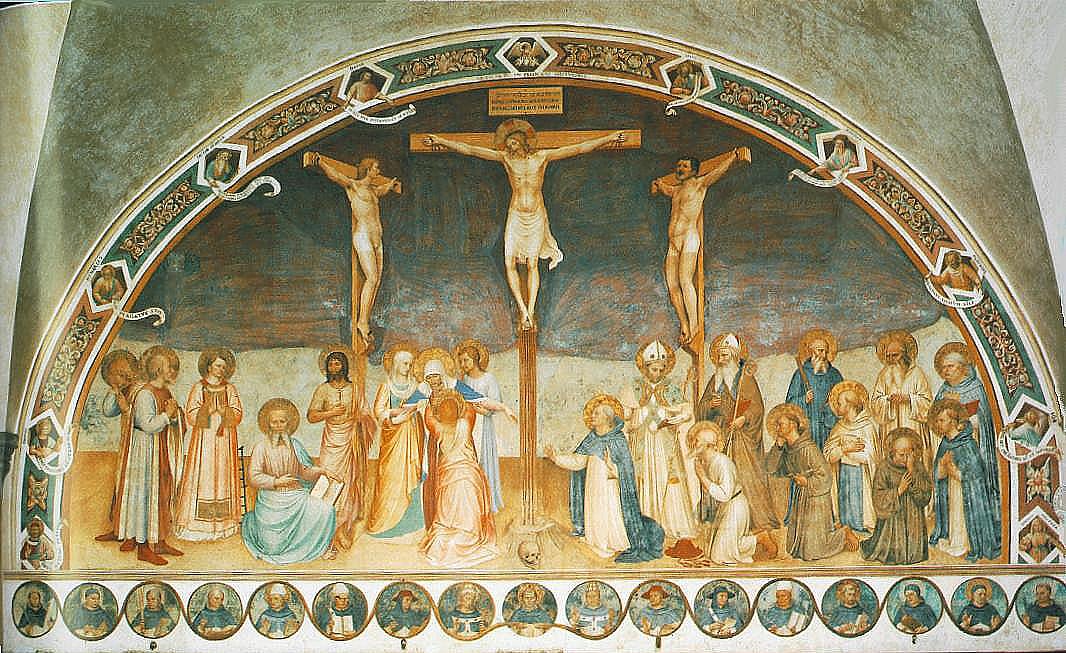
Many of those in the Protestant and Catholic traditions are familiar with the Penal Substitutionary Theory of the Atonement (hereafter referred to as Substitutionary Atonement). However, I have found many to be unfamiliar with the predominant atonement view held by those in the Eastern Orthodox Church, which is commonly called The Recapitulation Theory.
The Recapitulation Theory dates to very early in the Church. Many believe it had its beginnings with Saint Irenaeus in the second century. We find it throughout the writings of the early Church Fathers. Saint Athanasius, the giant of the Nicaean Council, wrote a wonderful book in AD 318 which explains the overall view very well. It is titled On The Incarnation and was originally written as a letter to one of his disciples.
Substitutionary Atonement focuses on Christ’s suffering and death as the price for man’s sin. In many ways, the model for Substitutionary Atonement is a courtroom. Due to his sin, man needed to be made right with a perfect and just God. Therefore, Christ came to suffer and pay the price in our place, i.e., He substituted Himself for us. Now, in the courtroom of God, those who accept Christ as their Lord and Savior are judged innocent. They have a forensic righteousness imputed upon them.
The Recapitulation Theory agrees that God needed to deal with man’s sin. Man was separated from God as a result of the fall and, left to his own devices, was incapable of returning to God. However, Recapitulation sees the model through which God dealt with man’s sin as a hospital rather than a courtroom. Instead of viewing the atonement as Christ paying the price for sin in order to satisfy a wrathful God, Recapitulation teaches that Christ became human to heal mankind by perfectly uniting the human nature to the Divine Nature in His person. Through the Incarnation, Christ took on human nature, becoming the Second Adam, and entered into every stage of humanity, from infancy to adulthood, uniting it to God. He then suffered death to enter Hades and destroy it. After three days, He resurrected and completed His task by destroying death.
By entering each of these stages and remaining perfectly obedient to the Father, Christ recapitulated every aspect of human nature. He said “Yes” where Adam said “No” and healed what Adam’s actions had damaged. This enables all of those who are willing to say yes to God to be perfectly united with the Holy Trinity through Christ’s person. In addition, by destroying death, Christ reversed the consequence of the fall. Now, all can be resurrected. Those who choose to live their life in Christ can be perfectly united to the Holy Trinity, receiving the full love of God as Heavenly bliss. However, those who reject Christ and choose to live their lives chasing after their passions will receive the love of God as hell.
Because of its focus on unification between God and man in the person of Christ, Recapitulation places great importance on the teaching that Christ is both fully man and fully God. If Christ did not have both natures, He would have been incapable of uniting humanity to divinity, which was the entire purpose of the Incarnation. As Saint Gregory of Nazianzus said in the fourth century, “That which is not assumed is not healed, but that which is united to God is saved.” The doctrine of the dual nature of Christ came to the forefront with the third Ecumenical Council in AD 431. During this council, the Church answered the Nestorian heresy and affirmed Christ’s humanity and divinity and upheld the title of Theotokos (Mother of God) for Mary. By giving Mary this title, the Church believed we would preserve the teaching of the dual nature of Christ. If Mary is the Mother of God, then, by necessity, Christ truly is God. In addition, since Mary is both human and Christ’s mother, Christ is also fully human.
Post Author: Bill Pratt
I’ve been reading the famous eighteenth century philosopher Immanuel Kant lately. Kant’s theory of knowledge only allowed for human knowledge to extend to those things we can directly experience through our senses. Kant argued that we could not have direct experience of our self, the cosmos, or God.
Kant’s empiricism ruled out rational knowledge of these three things, so he argued that we must remain agnostic about their existence. He also argued that for practical reasons, most of us believe that the self exists, that the whole universe (cosmos) exists, and that God exists, but these are positions of faith, not rational knowledge.
Kant’s agnosticism was a turning point in the history of epistemology (the study of knowledge). What I find interesting is that his brand of agnosticism seems to have fallen by the wayside.
Why do I say this? Kant argued that since the self, God, and the cosmos cannot be experienced by our senses, we cannot, in principle, make any rational statements about their existence or non-existence. We just don’t know one way or another. Kant believed that people who argued that God does not exist are just as foolish as people who argue that God does exist. Both positions are rationally unprovable.
Most people who call themselves agnostic today don’t seem to hold Kant’s views any longer. When I meet someone who says they are agnostic, they generally mean something like the following: “I haven’t seen enough evidence to know if God exists.”
The modern agnostic implicitly believes that one can have evidence of God’s existence, and thus rational knowledge of God’s existence, whereas Kant denies that there is ever any chance of there being evidence one way or another.
What is going on? It seems to me that there are generally two kinds of agnostics today. The first kind really is undecided on God’s existence and is waiting to hear evidence. Given that evidence, they may come to decide that God exists.
The second kind of agnostic really believes that all the available evidence is stacked against God’s existence, but they don’t want to call themselves an atheist; maybe the “atheist” label seems too dogmatic. In everything but name, however, they are an atheist – they know God does not exist.
Kant would think both of these kinds of agnostics are equally wrongheaded. But where are the Kantian agnostics today? Are there any left? Are there any agnostics who truly believe that knowledge of God is impossible and that we must remain forever on the fence about it? Do these same agnostics believe the same thing about the self and the cosmos?
Just wondering . . .
Post Author: Bill Pratt
I recently wrote a series of three blog posts discussing the argument to design from analogy. I concluded that this approach to arguing that life is designed is a live option, but that it falls short of the kind of certainty we would like the argument to have.
Philosopher of science Stephen Meyer, in his book Signature in the Cell, points out the weakness in any design argument from analogy:
The status of such design arguments inevitably turns on the degree of similarity betwee the systems in question. If the two effects are very similar, then inferring a similar cause will seem more warranted than if the two effects are less similar. Since, however, even advocates of these classic design arguments admit there are dissimilarities as well as similarities between living things and human artifacts, the status of the analogical design argument has always been uncertain. Advocates argued that similarities between organisms and machines outweighed dissimilarities. Critics claimed the opposite.
Do modern intelligent design proponents rely solely on design arguments from analogy? No. Meyer’s approach is to argue from DNA to design by inference to the best explanation, or abduction. This is the dominant method used in the historical sciences such as forensic science, evolutionary biology, paleontology, geology, archaeology, and cosmology.
Meyer explains the difference between argument from analogy and inference to the best explanation with regard to DNA and design:
But the DNA-to-design argument does not have an analogical form. Instead, it constitutes an inference to the best explanation. Such arguments do not compare degrees of similarity between different effects, but instead compare the explanatory power of competing causes with respect to a single kind of effect.
So what is the single effect that needs explaining?
As noted, biological information, such as we find in DNA and proteins, comprises two features: complexity and functional specificity. Computer codes and linguistic texts also manifest this pair of properties (“complexity” and “specificity”), what I have referred to . . . as specified information. Although a computer program may be similar to DNA in many respects and dissimilar in others, it exhibits a precise identity to DNA insofar as both contain specified complexity or specified information.
Accordingly, the design argument developed here does not rely on a comparison of similar effects, but upon the presence of a single kind of effect – specified information – and an assessment of the ability of competing causes to produce that effect. The argument does not depend upon the similarity of DNA to a computer program or human language, but upon the presence of an identical feature in both DNA and intelligently designed codes, languages, and artifacts.
Meyer continues his argument:
Because we know intelligent agents can (and do) produce complex and functionally specified sequences of symbols and arrangements of matter, intelligent agency qualifies as an adequate causal explanation for the origin of this effect. Since, in addition, materialistic theories have proven universally inadequate for explaining the origin of such information, intelligent design now stands as the only entity with the causal power known to produce this feature of living systems. Therefore, the presence of this feature in living systems points to intelligent design as the best explanation of it, whether such systems resemble human artifacts in other ways or not.
To summarize, there is specified information in DNA, and the only cause of specified information we know of is intelligent agency. Therefore the cause of DNA is intelligent agency or design. To refute this argument, you must demonstrate that there is not specified information in DNA, or that specified information can be caused by non-intelligent processes. Neither of these has been done, to my knowledge, so this argument to design seems to remain valid.