What Happened In the Huxley-Wilberforce Debate?

Post Author: Bill Pratt

Another favorite story told by those who want to argue that religion and science are at complete enmity is the Huxley-Wilberforce debate of 1860.  The debate was between T. H. Huxley (a Darwin supporter) and Bishop Samuel Wilberforce, and was to be about Darwin’s The Origin of Species which had been published 7 months prior.  Philosopher John Lennox recounts the circumstances of this debate in his book God’s Undertaker, so we will rely on his synopsis.

Lennox starts by reminding us that “this encounter is often portrayed as a simple clash between science and religion, where the competent scientist convincingly triumphed over the ignorant churchman.”  Lennox says that historians have shown that “this account is also very far from the truth.”

First, Wilberforce was a learned scholar, not an ignoramus.  Wilberforce published a critique of Darwin’s work which Darwin himself regarded as “uncommonly clever; it picks out with skill all the most conjectural parts, and brings forward well all the difficulties.  It quizzes me most splendidly.”

Second, Wilberforce was adamant that the debate over Darwin’s theories be scientific.  In his summary of the critique which Darwin commended, Wilberforce wrote the following:

We have objected to the views with which we are dealing, solely on scientific grounds.  We have done so from the fixed conviction that it is thus that the truth or falsehood of such arguments should be tried.  We have no sympathy with those who object to any facts or alleged facts in nature, or to any inference logically deduced from them, because they believe them to contradict what it appears to them is taught by revelation.  We think that all such objections savour of a timidity which is really inconsistent with a firm and well-intrusted faith.

Third, there were objections to Darwin’s theory which did not come from the church.  Lennox notes that “Sir Richard Owen, the leading anatomist of the day . . . was opposed to Darwin’s theory; as was the eminent scientist Lord Kelvin.”

Fourth, at the time of the debate, opinions on how the two debaters fared were mixed; there was not a consensus that Huxley defeated Wilberforce.  According to Lennox, “The botanist Joseph Hooker grumbled that Huxley didn’t ‘put the matter in a form or way that carried the audience’ so he had to do it himself.”  Lennox also records that “The Athenaeum‘s report gives the impression that honours were about even, saying that Huxley and Wilberforce ‘have each found foemen worthy of their steel.'”

As with the Galileo affair, the Huxley-Wilberforce debate fails to live up to its hype.  The debate was not emblematic of the imaginary war on science waged by Christianity.  Historian of science Colin Russell has come to the following conclusion about the alleged war between religion and science in the west:

The common belief that . . . the actual relations between religion and science over the last few centuries have been marked by deep and enduring hostility . . . is not only historically inaccurate, but actually a caricature so grotesque that what needs to be explained is how it could have possibly achieved any degree of respectability.
What Happened to Galileo?

Post Author: Bill Pratt

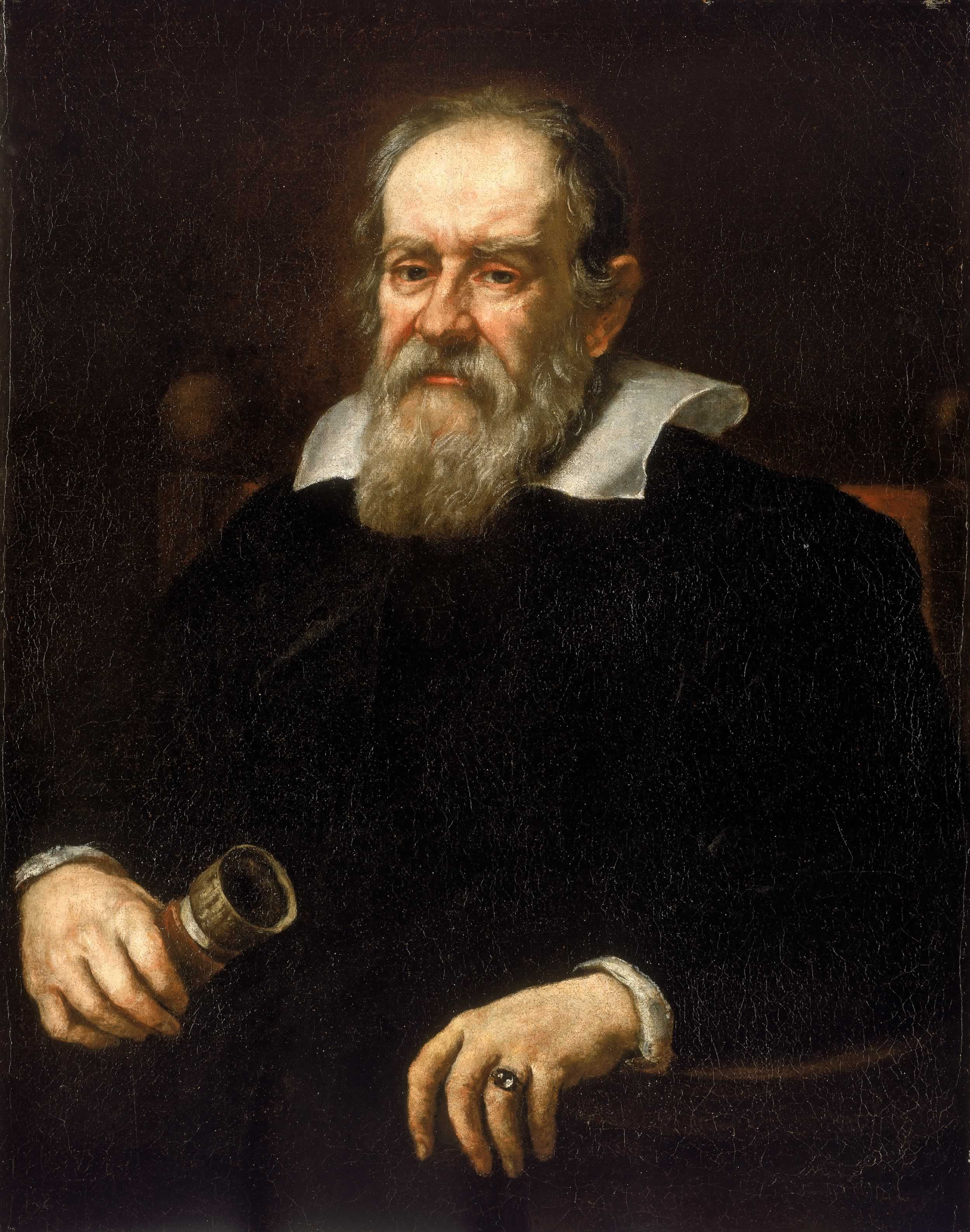
The Galileo affair has often been put to work to demonstrate that religion has always been at war with science.  But what really happened to Galileo?  Does what happened to him prove that religion – Christianity in particular – has always been in conflict with science?

Philosopher John Lennox thinks not; he provides some unique insight in his book God’s Undertaker.  The story of Galileo is not nearly as simple as many people think.

First, Lennox notes that Galileo believed in God.  According to Lennox, “Galileo was a firm believer in God and the Bible, and remained so all of his life.  He held that ‘the laws of nature are written by the hand of God in the language of mathematics’ and that the ‘human mind is a work of God and one of the most excellent.'”

Galileo, Lennox notes, was initially endorsed by the Jesuit educational institution, the Collegio Romano.  So where did his opposition first originate?  Galileo himself claimed “that it was the academic professors who were so opposed to him that they were trying to influence the church authorities to speak out against him.”  Lennox explains that the secular philosophers of the day were incensed by Galileo.  Why?  Galileo’s science was threatening the Aristotelian scientific paradigm that dominated the academic institutions.

Aristotle’s astronomical speculations were left in “tatters’ by Galileo’s telescope and the academic elite of the time would not have it.  Therefore, there was increasing pressure put on the church to quiet Galileo since the church also supported the Aristotelian scientific program.

Lennox comments additionally that Galileo “developed an unhelpfully short-sighted habit of denouncing in vitriolic terms those who disagreed with him.”  A good example would be when Galileo mocked Pope Urban VIII (an erstwhile supporter and  friend of Galileo) in his Dialogue Concerning the Two Principal Systems of the World by placing the Pope’s words in the mouth of a dull-witted character in the book.

Galileo was, finally, placed under house arrest, mostly in “luxurious private residences belonging to friends,” by the Roman Catholic Church.  Lennox points out that Galileo was never tortured, contrary to popular belief.

So, does the story of Galileo prove that Christianity is opposed to science?  Obviously not.  Instead it proves that scientists who challenge the scientific majority of their day may face serious censure.  Lennox concludes, “What is clear, in Galileo’s time and ours, is that criticism of a reigning scientific paradigm is fraught with risk, no matter who is engaged in it.  We conclude that the ‘Galileo affair’ really does nothing to confirm a simplistic conflict view of the relationship of science to religion.”

If There Is No God, Why Be Good? Part 3

Post Author: Bill Pratt

In the first 2 posts of this series, I presented Richard Dawkins’ “answer” to the question “If There Is No God, Why Be Good?”  At the end of part 2, I said that Dawkins did not actually answer the question, even though that’s what he led the reader to believe he was going to do.  In order to understand why, let’s look back at his arguments.

Recall that Dawkins first argued against the alleged Christian claim that nobody would be good if there were no God to believe in.  Fear of divine wrath is the only thing that keeps mankind in check.

What’s wrong with this argument?  Well, first and foremost, I am unaware of any Christian scholar that has ever made this argument.  Dawkins is tilting at windmills.

I am perfectly willing to admit that atheists are capable of moral actions and I am perfectly willing to admit that Christians are capable of immoral actions.  There is no dispute on either point.  What Christians do claim is that a person who is dedicated to Jesus Christ as Lord and Savior will improve morally, but Dawkins doesn’t even mention this claim.

Dawkins’ second argument was against the imaginary Christian apologist who says, in essence, that a person can only decide what is right or wrong by reading the Bible, a holy book which issues absolute moral commands.  Without a book like the Bible, there would be no way to decide between right and wrong.

Has Dawkins stopped tilting at windmills yet?  I’m afraid not.  Again, I am not aware of any apologist or Christian scholar who makes this argument.  Why?  Because the Bible itself clearly says in Romans 2:14-16 that every person is aware of the moral law, whether they have a holy book or not:

Indeed, when Gentiles, who do not have the law, do by nature things required by the law, they are a law for themselves, even though they do not have the law.  They show that the requirements of the law are written on their hearts, their consciences also bearing witness, and their thoughts sometimes accusing them and at other times even defending them.

Christians believe that God has written the basic moral law on every person’s conscience.  The Bible certainly contains what I would call advanced moral instruction, but the basics are known by everyone whether they read the Bible or not.  In fact, the Bible as we know it today wasn’t even available to Christians for hundreds of years after Jesus was resurrected, so a Christian claim that a person cannot make moral decisions without the Bible would be incredibly strange indeed.

Dawkins’ final argument, as explained in part 2 of the series, is that the Bible’s morality is outdated and “obnoxious.”  So, argues Dawkins, if the source of Christian morality is the Bible, and the Bible fails to give reasonable moral instruction, then the Bible cannot be needed for moral decision making.  Dawkins concludes that there is a human moral consensus, and that we as humans can make our moral decisions based on that consensus.

What was the question Dawkins set out to answer?  “If there is no God, why be good?”  I hope you can see that his conclusion completely fails to answer that question.  Why be good?  Dawkins answers that there is a moral consensus that we can use to make moral decisions.  Well, that’s nice, but that’s not the question.  We want to know why, rationally, should a person be good if there is no God.  It’s great that there is a moral consensus, but why should we follow it if there is no God?

On atheism, Professor Dawkins, give us a rational reason to follow the moral consensus without first just assuming that we should be moral (that’s called begging the question).  No such reason was ever offered in The God Delusion.  I wonder if Dawkins forgot that he even asked the question.

If There Is No God, Why Be Good? Part 2

Post Author: Bill Pratt

In Dawkins’s next chapter, “The ‘Good’ Book and the Changing Moral Zeitgeist” he “exposes” the Bible’s moral commands to be largely immoral and hopelessly outdated.  What the reader will find in this chapter is Dawkins riffing on how morally backward the Bible is.  In fact, Dawkins concludes that “those who wish to base their morality literally on the Bible have either not read it or not understood it.”  Scriptural moral teachings, “if followed through religiously . . . , encourage a system of morals which any civilized modern person, whether religious or not, would find—I can put it no more gently—obnoxious.”

What are these “obnoxious” biblical passages that Dawkins highlights?  If you’ve ever conversed with a skeptic before, the list is fairly standard.  He starts with the Noahic Flood, then moves to the story of Lot and Sodom and Gomorrah, the story of the Levite concubine in Judges 19, the stories of Abraham lying about Sarah being his wife, the story of Abraham almost sacrificing Isaac, and so forth and so on.

Dawkins also makes sure that his readers understand that the unpleasantness of the Bible carries over to the New Testament as well.  Dawkins accuses Jesus of teaching poor family values and God of sado-masochism.  Why?  Because “God incarnated himself as a man, Jesus, in order that he should be tortured and executed in atonement for the hereditary sin of Adam.”

Dawkins chronicles several other flaws of biblical moral teaching with the overall purpose of proving the Bible to be a complete disaster for moral instruction.  Again, none of these accusations are new to Dawkins.  I had personally seen almost all of them before ever reading The God Delusion.

If you’ll recall, we started out with a question that we hoped Dawkins would answer (hint: the title of the blog post).  Now we finally get to the payoff.  At the end of his biblical shop of horrors, Dawkins finally concludes his analysis of the question, “If There Is No God, Why Be Good?”  Here is his summary:

This chapter began by showing that we do not—even the religious among us—ground our morality in holy books, no matter what we may fondly imagine. How, then, do we decide what is right and what is wrong? No matter how we answer that question, there is a consensus about what we do as a matter of fact consider right and wrong: a consensus that prevails surprisingly widely. The consensus has no obvious connection with religion. It extends, however, to most religious people, whether or not they think their morals come from scripture. With notable exceptions such as the Afghan Taliban and the American Christian equivalent, most people pay lip service to the same broad liberal consensus of ethical principles. The majority of us don’t cause needless suffering; we believe in free speech and protect it even if we disagree with what is being said; we pay our taxes; we don’t cheat, don’t kill, don’t commit incest, don’t do things to others that we would not wish done to us. Some of these good principles can be found in holy books, but buried alongside much else that no decent person would wish to follow: and the holy books do not supply any rules for distinguishing the good principles from the bad.

There you have it.  Dawkins’ answer to the question, “If There Is No God, Why Be Good?” is to say that there just is a wide consensus on morality.  Based on that consensus, we can come up with our own morality and, even more importantly to Dawkins, we do not need a holy book to tell us what to do.  That’s pretty much it.

Do you feel cheated?  Do you feel like he didn’t answer the question at all?  Join the club.  In the third post of this series, I will analyze Dawkins’ arguments to see where he went wrong.

If There Is No God, Why Be Good? Part 1

Post Author: Bill Pratt

In Richard Dawkins’ The God Delusion, there is a section entitled “If there is no God, why be good?”  I eagerly devoured this section as I sincerely wanted to see what answer Dawkins would give.  After all, he is the most prominent intellectual atheist in the world today, right?  What did he say?

First, he addressed the alleged Christian claim that the only reason anyone acts morally is for fear of divine retribution.  If you take God’s punishments away, everyone goes bad.  Dawkins points out to Christians: “If, on the other hand, you admit that you would continue to be a good person even when not under divine surveillance, you have fatally undermined your claim that God is necessary for us to be good.”

By Dawkins’s understanding of the Christian view of morality, we need God to scare us into behaving, and if belief in God were to disappear, every person would immediately cease doing good.  Dawkins thinks this view is obviously wrong.  He explains:

It seems to me to require quite a low self-regard to think that, should belief in God suddenly vanish from the world, we would all become callous and selfish hedonists, with no kindness, no charity, no generosity, nothing that would deserve the name of goodness.

According to Dawkins, Christians assert that without a person actively believing in God, they would do nothing good.  He then provides some brief statistical evidence to illustrate that religious people don’t always act very morally (it’s only a couple paragraphs that are meant to get this simple point across).

After “proving” God isn’t needed to motivate moral behavior, Dawkins quickly moves to another alleged Christian argument.  He imagines a Christian apologist saying the following:

Wherever the motive to be good comes from, without God there would be no standard for deciding what is good. We could each make up our own definition of good, and behave accordingly. Moral principles that are based only upon religion (as opposed to, say, the ‘golden rule’, which is often associated with religions but can be derived from elsewhere) may be called absolutist. Good is good and bad is bad, and we don’t mess around deciding particular cases by whether, for example, somebody suffers. My religious apologist would claim that only religion can provide a basis for deciding what is good.

Dawkins is claiming that Christians believe that a person can only decide what is right or wrong by reading the Bible, a holy book which issues absolute moral commands.  Without a book like the Bible, there would be no way to decide between right and wrong.  Dawkins then wonders whether it is necessary for moral laws to be absolute.

To examine that question, Dawkins briefly introduces Immanuel Kant, a philosopher who tried to explain absolute moral duties without God.  Dawkins isn’t overly impressed with Kant’s attempt and admits that “it is tempting to agree with my hypothetical apologist that absolutist morals are usually driven by religion.”  Dawkins quickly adds, however, that “morals do not have to be absolute” and so ends the section of his book entitled “If There Is No God, Why Be Good?”

Here is where Dawkins has taken the argument so far.  He has demonstrated that religious people are often immoral, which defeats the Christian claim that believing in God motivates morality.  He then stated that Christians believe that the only way a person can decide between right and wrong is by following the absolute moral commands of the Bible.  Dawkins leaves the argument at this point and invites the reader to continue to the next book chapter where he will address the subject of whether the Bible can be successfully used as a source of absolute moral commands.

In part 2 of this post, we will examine the next chapter, entitled “The ‘Good’ Book and the Changing Moral Zeitgeist,” to see how Dawkins answers the question, “If There Is No God, Why Be Good?”

Who Is God? Part 2

Post Author: Bill Pratt

In part 1 of this post, we looked at Edward Feser’s first 2 gradations of conceptions of God.  In this second part, we will finish looking at the last three gradations and than talk about why this is important.

Grade 3: God is not an object or substance alongside other objects or substances in the world; rather, He is pure being or existence itself, utterly distinct from the world of time, space, and things, underlying and maintaining them in being at every moment, and apart from whose ongoing conserving action they would be instantly annihilated.  The world is not an independent object in the sense of something that might carry on if God were to “go away”; it is more like the music produced by a musician, which exists only when he plays and vanishes the moment he stops.

None of the concepts we apply to things in the world, including to ourselves, apply to God in anything but an analogous sense.  Hence, for example, we may say that God is “personal” insofar as He  is not less than a person, the way an animal is less than a person.  But God is not literally “a person” in the sense of being one individual thing among others who reasons, chooses, has moral obligations, etc.  Such concepts make no sense when literally applied to God.

According to Feser, “Grade 3 is the conception of classical philosophical theology: of Augustine, Anselm, Aquinas, and other such thinkers.”  Grade 3 captures Aquinas’s doctrine of analogous language to describe God.  “God is not personal, or good, or powerful, or intelligent in the same sense in which a human being is, but He can nevertheless correctly be described in these terms if they are understood analogously.”

Grade 4: God as understood by someone who has had a mystical experience of the sort Aquinas had.

Here, Feser is referring to an experience that Aquinas reported late in life where he experienced God in a deeply profound way that made him feel like all his previous conceptions of God were totally inadequate.

Grade 5: God as [those in heaven] know him now, i.e., as known in the beatific vision attained by the blessed after death.

Feser adds that grades 4 and 5 are only attainable if “granted supernaturally by God,” while grade 3 is “about the best we can do with unaided reason.”

So where does this leave us?  I think I want to address two audiences.  First, since Grade 3 is the highest Christian conception of God without being granted a supernatural vision from God, it follows that Grade 3 is the conception that skeptics should address when they are challenging the attributes of the Christian God.  A skeptic who is constantly challenging grade 1 or grade 2 is not dealing with the best of Christian philosophy and theology; he is ducking the fight to score easy points.

Second, since Grade 3 is the highest Christian conception of God without being granted a supernatural vision from God, it follows that Grade 3 is the conception that every Christian adult should attempt to understand.  Merely stopping at grade 1 or grade 2 is an intellectual cop-out.  Grade 3 stretches human reason about as far as it can go and so it represents the apex of Christian theology.  That’s where all Christians should want to be, at the apex.

Who Is God? Part 1

Post Author: Bill Pratt

Is God a bearded old man living in the sky somewhere or is he completely unknowable?  Both of these conceptions of God are held by various religious believers.  When presenting a Christian conception of God on this blog, we have striven to follow the traditional, mainstream views of the church as elucidated by Augustine, Aquinas, Anselm, and similar thinkers.  If I were a skeptic of Christianity and wanted to critique the Christian conception of God, this is the conception I would address.

Edward Feser, in his book The Last Superstition, laments that very often skeptics do not even attempt to engage the traditional conception of God, but a much simpler conception.  To help readers understand his point, he offers five gradations of conceptions of God, from simple to more complete.

Grade 1: God is literally an old man with a white beard, a kind if stern wizard-like being with very human thoughts and motivations who lives in a place called Heaven, which is like the places we know except for being very far away and impossible to get to except through magical means.

Feser notes that Grade 1 “represents a child’s conception of God, and perhaps that of some uneducated adults.”  This does not mean that Grade 1 is totally without merit.  “Some individuals, and certainly young children, find it difficult to understand God in anything but grade 1 terms, and such imagery can be more or less useful in giving them at least a rudimentary idea of Him.”

Grade 2: God doesn’t really have a bodily form, and his thoughts and motivations are in many respects very different from ours.  He is an immaterial object or substance which has existed forever, and (perhaps) pervades all space.  Still, he is, somehow, a person like we are, only vastly more intelligent, powerful, and virtuous, and in particular without our physical and moral limitations.  He made the world the way a carpenter builds a house, as an independent object that would carry on even if he were to “go away” from it, but he nevertheless may decide to intervene in its operations from time to time.

Feser explains that “Grade 2 represents the conception of some educated religious believers, of popular apologetics, and of arguments like Paley’s ‘Design argument.'”  Grade 2 is better than Grade 1 because it eliminates the “limitations inherent in physical imagery, which cannot apply to God.”

There are are three more grades to go and we will cover them in part 2 of the post.

How Do You Prove a Contradiction in the Bible?

Post Author: Bill Pratt

As I’ve corresponded with skeptics of Christianity over the years, I have been amazed at what I call hyper-skeptics.  These are people who throw the word “contradiction” around when they should really use the word “difference.”

A contradiction occurs between two statements when one statement is “A is B” and the other statement is “A is not B.”  A has to mean the exact same thing at the exact same time in the exact same sense in both statements for there to be a contradiction, and B has to mean the exact same thing at the exact same time in the exact same sense in both statements for there to be a contradiction.  If there is not total and complete identity between A in both statements and B in both statements, there is no contradiction.

Hyper-skeptics often, however, call two statements in the Bible contradictory without ever showing that A and B are identical in both statements, but this is what they must do before claiming a contradiction.  Or to put it another way, hyper-skeptics demand that if two witnesses report the same crime, they must report the facts of the crime in exactly the same way, down to the most minute detail.  Any deviation between the two reports at all renders a verdict of contradiction.  The problem is that two different reports about an event do not constitute a contradiction unless the two different reports make opposite claims (i.e., A is B and A is not B).  Most of the time, the hyper-skeptic fails to show this.

C. Michael Patton of the Parchment and Pen Blog has obviously seen hyper-skeptics in action; he wrote a blog post recently that shed much light on the issue for those of you who are interested.  It’s one of those posts that I wish I had written after I read it.  Take a look and see what you think.


Why Talk So Much About Atheism?

Post Author: Bill Pratt

If you’ve read this blog for any period of time, you’ve probably noticed that there are quite a few blog posts dedicated to discussions of atheism (there is no god or gods) and the philosophy of naturalism (all that exists is found in the material universe).  Atheism and naturalism generally go together, although not always.

Some of you may wonder why I (Bill) should spend so much time talking about atheistic naturalism when less than 5% of the population explicitly subscribes to this worldview.  Most of us don’t personally know practicing, outspoken atheists, so why bother addressing this worldview so often?  That’s a good question and one that I’ve asked myself.

The answer is that although the general populations of Europe and North America (the areas of the world that impact American culture the most) are not explicitly atheist, the percentages go way up for those who inhabit the highest levels in academia.  The academic world’s embrace of atheistic naturalism is unique among all the challengers to Christianity.

This may just confirm for some of you that academics are “not right in the head” or “out in left field” and that we should just ignore them.  While some of them may be like that, we ignore them at our peril.  I firmly believe that the ideas that are imbibed in the universities among academics eventually make their way to the general population.  History has proven this out time and again.

The battle of worldviews is being fought at our western universities and the major contenders are Christian theism and atheistic naturalism.  As a Christian apologist, I feel drawn to this battle as I consider it to be the heavyweight bout.

Now, I am not saying that we should ignore other worldviews that attack Christianity.  On the contrary, on this blog we have addressed many other worldviews, especially Mormonism, as my co-blogger Darrell is a former Mormon and understands that worldview extremely well.  I am merely saying that atheistic naturalism deserves a lot of ink because of the devotion of many western intellectuals.

Even though our friends and neighbors are rarely hard core atheists, atheistic naturalism impacts our culture often in ways we don’t even realize.  There are more and more people who are practical atheists, even if they don’t call themselves atheists.  They live as if God does not exist, even though they would not say they don’t believe in God if they were asked.  Our friends and neighbors are taking in naturalistic ideas without even knowing it.

How are they taking in these ideas?  Through the pop culture.  How is pop culture picking up on these ideas?  From western intellectuals.  We cannot just ignore the academic world.  We owe it to our fellow man to counter atheistic naturalism.  C. S. Lewis, as always, is ready with a helpful bit of advice.  “Good philosophy must exist, if for no other reason, because bad philosophy needs to be answered.”

Was Individual Resurrection a Common Belief in the Ancient World? Part 2

Post Author: Bill Pratt

In part 1 of this post, Tim Keller presented historian N. T. Wright’s analysis of Jewish and Greco-Roman attitudes toward an individual resurrection. Would the ancient world have accepted the story of Jesus’s resurrection without serious skepticism? According to Keller, Wright’s research indicates that the Greco-Roman world would not have been at all receptive.

But what about Jews in particular? Keller mines Wright’s historical research to further examine two skeptical theories which attempt to explain how the story of Jesus’s resurrection could have originated.

Over the years, skeptics about the resurrection have proposed that the followers of Jesus may have had hallucinations, that they may have imagined him appearing to them and speaking to them. This assumes that their master’s resurrection was imaginable for his Jewish followers, that it was an option in their worldview. It was not.

Others have put forth the conspiracy theory, that the disciples stole the body and claimed he was alive to others. This assumes that the disciples would expect other Jews to be open to the belief that an individual could be raised from the dead. But none of this is possible. The people of that time would have considered a bodily resurrection to be as impossible as the people of our own time, though for different reasons.

Keller notes that in the first century there were many other Jews who claimed to be the Messiah, and who were executed for those claims. What role did resurrection play in those cases? Here is Wright:

In not one single case do we hear the slightest mention of the disappointed followers claiming that their hero had been raised from the dead. They knew better. Resurrection was not a private event. Jewish revolutionaries whose leader had been executed by the authorities, and who managed to escape arrest themselves, had two options: give up the revolution, or find another leader. Claiming that the original leader was alive again was simply not an option. Unless, of course, he was.

There is only one Jew who claimed to be Messiah and whose followers proclaimed that he rose from the dead after he was executed. Perhaps they proclaimed it because it actually happened.