What Can Historians Tell Us About Jesus’ Resurrection?

Post Author: Bill Pratt

Bart Ehrman and Mike Licona locked horns once again over the resurrection of Jesus on the Unbelievable? podcast last April.  The two scholars discussed various elements of the New Testament that historians could use to reconstruct the life of Jesus for much of the radio show.  In the final segment of the debate, however, Ehrman once again charged that historians cannot tell us whether Jesus was resurrected – the conclusion that Jesus was resurrected is simply not one that the methods of historical analysis will allow.

Ehrman has made this charge before.  I witnessed him say the same thing at a debate between him and Licona two years ago.  This time, though, some nuances of his position appeared.  When Ehrman argues that historians cannot conclude that the resurrection of Jesus occurred, we have to ask what he means by resurrection.  Ehrman seems to mean the following: Jesus died and then a few days later was supernaturally re-animated by the Christian God in a miraculous act.

Why does Ehman say that historians cannot draw this conclusion?  As far as I could tell, it is because of the words supernaturally, Christian God, and miraculous.  Ehrman seems to be saying that these are theological words, not historical words.  They are words used by people of faith, not by professional historians.

So how did Licona respond?  He agreed to define the resurrection of Jesus as follows: Jesus died and then a few days later came back to life.  Notice that Licona completely dropped the theological words that seemed to give Ehrman so much heartburn.  Now the two scholars could move on and talk about the historical evidence supporting the non-theological resurrection.  Unfortunately, and much to my disappointment, the show ran out of time and the new discussion was never pursued.

What’s the point in recounting their conversation?  First, it cleared up what Ehrman’s real beef was.  Second, it gives me an occasion to call for Ehrman and his admirers to drop this approach, as the point has been made.  I, like Licona, am glad to use the non-theological definition of the resurrection in order to advance the historical debate.  Let’s get on with it.

How Can We Trust Science in Richard Dawkins’ Middle World?

Post Author: Bill Pratt

In the last chapter of Richard Dawkins’ The God Delusion, he introduces the metaphor of Middle World.  The idea of Middle World is that the human sensory organs have only evolved in order to help humans survive in a world of medium-sized objects moving at relatively slow speeds (compared to the speed of light).  Dawkins observes that “our brains are themselves evolved organs: on-board computers, evolved to help us survive in a world — I shall use the name Middle World — where the objects that mattered to our survival were neither very large nor very small; a world where things either stood still or moved slowly compared with the speed of light.”

We are ill-equipped to deal with the vast distances to other galaxies or the sub-atomic world.  In fact, the way we perceive objects is misleading.

Science has taught us, against all evolved intuition, that apparently solid things like crystals and rocks are really composed almost entirely of empty space. The familiar illustration represents the nucleus of an atom as a fly in the middle of a sports stadium. The next atom is right outside the stadium. The hardest, solidest, densest rock, then, is ‘really’ almost entirely empty space, broken only by tiny particles so far apart that they shouldn’t count.

Our senses, then, do not give us an accurate picture of reality.  According to Dawkins, “Our brains are not equipped to imagine what it would be like to be a neutrino passing through a wall, in the vast interstices of which that wall ‘really’ consists. Nor can our understanding cope with what happens when things move at close to the speed of light.”

If Dawkins had stopped at this point, all would be well.  Nobody would argue that we are ill-equipped to see sub-atomic particles, that our sensory organs are limited.  Dawkins doesn’t stop here, though, because he wants to hammer home just how limited we are.  What we really perceive as reality, argues Dawkins, is only a mental model.

What we see of the real world is not the unvarnished real world but a model of the real world, regulated and adjusted by sense data—a model that is constructed so that it is useful for dealing with the real world. The nature of that model depends on the kind of animal we are.

Once the mental model concept is introduced, it is my contention that Dawkins ends up eviscerating our very ability to know anything about reality.  He is arguing that we really don’t know what reality is like because we only have the mental models that our species has evolved, and those mental models have proven to be incomplete and inaccurate time and again. In fact, humans are constantly surprised by just how wrong our models are.

But wait!  There is a savior that will rescue us from our ignorance.  Dawkins elates, “Science flings open the narrow window [of Middle World] through which we are accustomed to viewing the spectrum of possibilities. We are liberated by calculation and reason to visit regions of possibility that had once seemed out of bounds or inhabited by dragons.”

How can this be, though?  On the atheist worldview, do not science, calculation, and reason all depend completely on the severely limited human brain which has consistently given us inaccurate mental models of reality?  How is it that the very organ which has constantly misled us about reality will be our savior?  Isn’t this the classic case of the blind leading the blind?

Dawkins, like most atheists, just assumes that human reason magically works, that science marches inexorably to the Truth. But on the atheist view, reason and the ability to do science, all comes from the evolved human brain, an organ that, according to Dawkins, can’t be trusted to see the world as it really is, an organ that fools us.  There is no soul, no rational God that guarantees that our reason actually works.  So, I ask, how can we trust science in Richard Dawkins’ Middle World?

Does God Have a Perfect Will And A Permissive Will?

Post Author:  Darrell

Over the past few years, I have heard several Christians I know utter statements such as, “I need to find out what job God wills for me to have.” or  “I’m praying to find out who God wills for me to marry.”  These statements are from people who believe that God has a “Perfect Will” for certain aspects of their lives, e.g., what job they should have, whom they should date or marry, or where they should live.  God’s Perfect Will is contrasted with His Permissive Will, i.e., that which falls outside of what He Perfectly Wills for us, but which He permits to happen.  God’s Perfect Will is seen as the goal for Christians, and finding it and living within it lead to blessings, while not seeking it or finding it leads to living inside God’s Permissive Will and missing out on blessings.    

How realistic is this viewpoint?  Does God have a Perfect Will for aspects of our lives such as the jobs we hold and the person we marry?  A couple of months ago I heard a wonderful podcast by Matthew Gallatin on Ancient Faith Radio where he shared a story that illustrates a serious challenge with the idea of God having a Perfect Will versus a Permissive Will.

John is a 24 year old Christian, and Jill is a 23 year old Christian.  God’s Perfect Will is for them is to meet, fall in love, marry one another, and raise a beautiful family together.  After meeting and going through 2 years of courtship, they fall in love, John proposes to Jill, and she happily accepts.  They are both excited for their future and set their wedding date.  When the big day comes, John waits at the altar while beautiful music plays.  However, while sitting in the dressing room, Jill gets cold feet and changes her mind.  She secretly dashes out the back door of the Church and catches the next flight to Las Vegas where she starts a new life.  She walks away from her Christian faith, meets Jack, a casino owner, and marries him.  She spends the rest of her life in an unhappy marriage with Jack.  Eventually, realizing that Jill is never returning to him, John moves on and marries a very nice Christian girl named Tammy.

God’s Perfect Will was for John and Jill to marry and raise a family together.  However, Jill chose to rebel against God and follow another path, living her life outside of God’s Perfect Will and inside His Permissive Will.  As a result, she missed out on the blessings God had prepared for her.  But where does this leave John?  John was seeking God’s Perfect Will for his life, and he found it in Jill.  He made the right decisions, asked her to marry him, and waited for her at the altar.  However, though no fault of his own, John is forced to live outside of God’s Perfect Will and inside His Permissive Will.  Because of Jill’s decision, he will now spend the rest of his married life in God’s Permissive Will, and he too will miss out on the blessings that flow from walking in God’s Perfect Will in relation to his marriage.

Does this seem right? Should John, who is seeking to live His life and follow God, be forced to live the rest of his life outside of God’s Perfect Will simply because Jill chose to rebel?  I would suggest not, especially given the fact that God has promised us that “…all things work together for good to those who love God…”  John loved God and was seeking His Perfect Will, so God would not hold out blessing him simply because Jill chose to rebel.  That makes absolutely no sense.

So what is God’s Will for our lives?  Bill has addressed this in a previous blog post here.  I will just add my thoughts that I believe God’s Will for us is pretty well summed up in Jesus’ High Priestly prayer in John 17:21-23:

That they all may be one, as You, Father, are in Me, and I in You; that they also may be one in Us, that the world may believe that You sent Me.  And the glory which You gave Me I have given them, that they may be one just as We are one:  I in them, and You in Me; that they may be made perfect in one, and that the world may know that You have sent Me, and have loved them as You have loved Me.

God wants us to be one with one another and one with the Holy Trinity.  He wants us!  That’s all… nothing more… nothing less.

Did The Church Fall Away?

Post Author: Darrell

One of the foundational teachings of Mormonism is that shortly after the death of the Apostles, the bulk of mankind rejected the teachings of Christ and the Apostles, and the world fell away from the plain and precious truths of the Gospel of Jesus Christ.  As a result, the Church and the authority to act in God’s name were taken from the earth, and the world entered into a period known as the Great Apostasy.  It was not until God’s appearance to Joseph Smith in 1820, and his subsequent call to be a Prophet, that the Fullness of the Gospel of Jesus Christ and God’s Church were once again restored to the earth.  Today, this fullness is known and taught only in The Church of Jesus Christ of Latter-Day Saints. 

During my last few years as a Mormon, I struggled with this teaching as I came to realize that it does not line up with what Christ promised us.  In Matthew 16:18, Christ says, “And I also say to you that you are Peter, and on this rock I will build My church, and the gates of Hades shall not prevail against it.”   Mormonism teaches that with the restoration of the Gospel, Temples have been reestablished upon the earth.  Within these Temples, Mormons perform various Ordinances that are believed to be binding not only on earth, but also in heaven.  Two of these Ordinances are known as Baptism for the Dead and Endowment for the Dead.  They are performed vicariously for and in behalf of individuals who did not receive them in this life. 

LDS doctrine teaches that when a person who is either an unfaithful Mormon or a non-Mormon dies, they go to a place known as Spirit Prison.  According to LDS.org, Spirit Prison is another name for Hell or Hades.[1]  It is contrasted with Paradise, the place where righteous Mormons go upon their death.  Those who reside in Spirit Prison have the opportunity to hear the teachings of the LDS Gospel.  If they accept them and their Temple Work (Ordinances of Baptism and Endowment) has been performed vicariously on their behalf, they can leave Hell and enter Paradise.[2]

This is where I found the LDS teaching to be problematic, for what does this mean for those individuals who lived and died during the Great Apostasy?  If Christ’s Church was really taken from the earth, and it was not restored until after Joseph Smith, what, according to Mormonism, has happened to all those individuals who lived and died during the period of the Great Apostasy?  Well, the reality of the fact is that they are in Hell.  Even if they accepted Christ, believed in Him, and strove to live by His teachings, they are still in Hell.  It is not until their Temple Work has been done that they can be released from Hell.   Even worse is the fact that the Temple Work for the majority of the Earth’s past population has not been done and will not be done for many years to come because we do not have their names.  Our records don’t go back that far. 

In my opinion, this teaching does not line up at all with Christ’s promise.  He told us that the Gates of Hell would not prevail against the Church He established.  However, if LDS teaching is true, the Gates of Hell are prevailing against Christ’s Church and have been doing so since shortly after Christ’s ascension.  His Church was taken from the earth and those who lived lives seeking Him and living by His commandments are suffering in Hell as a result.  Not only is this teaching demeaning to the power of God, it also makes a complete mockery of Christ’s redeeming work.  He came to earth to unite humanity with divinity, bridging the gap between fallen mankind and the Creator of all.  However, according to Mormonism, many of those who have sought to follow Him are suffering in Hell for no other reason than they were born at the wrong time.

To be fair to Mormons, I must submit that Christ’s promise does not present a problem to their teachings alone.  Those who hold to strong fundamentalist Protestantism also encounter problems when comparing their beliefs to Christ’s promise.  I have spoken to many Protestants who believe that one cannot be a “faithful Catholic” or a “faithful Eastern Orthodox Christian” and still be saved.  They believe that the teachings of both of these great Churches are a corruption of what Christ taught and that if one holds to their teachings they are “non-Christian.”  However, the truth is that many of the core teachings of these Churches date back to the earliest times in Christianity, so if they are corruptions, they are corruptions that instilled themselves in the Church from virtually the very beginning of Christendom.  For example, the teaching that the Eucharist contains the Real Presence of Christ was a fundamental teaching of the Church from around the year 100, and the veneration of Mary can be dated to at least the middle 100’s.  By default then, stating that those who hold these beliefs are non-Christian is to state that the Church, from the earliest of times, apostatized in some of its key doctrines very early and remained that way until after the reformation.  Therefore, at its heart, this is to believe that the Gates of Hell prevailed against the Church for nearly 1500 years, dooming those who held to its key teachings to Hell.  Do we really believe that?

Think about it. 

 [1]http://classic.lds.org/ldsorg/v/index.jsp?index=8&locale=0&sourceId=a5352f2324d98010VgnVCM1000004d82620a____&vgnextoid=bbd508f54922d010VgnVCM1000004d82620aRCRD.  Accessed 7/18/011.

Is the Human Mind Like Computer Software?

Post Author: Bill Pratt

The question of the origin of human rationality plagues the atheistic naturalist worldview – the worldview that says that all that exists ultimately is matter governed by the laws of physics.  If every event that has ever occurred and ever will occur is determined by physical laws, then how are humans able to make decisions that are free from that determinism?

Rationality is mere illusion under naturalism, as everything we say and think is the result of antecedent physical conditions and physical laws.  We can’t help what we say and think, because all our thoughts and words are the result of physical processes that we have no control over.  Judging a person’s beliefs would be like blaming a leaf for falling to the ground.

On a recent Unbelievable? podcast, atheist Norman Bacrac posited the following solution to the problem.  He claimed that the human brain represents the hardware that obeys the physical laws of nature.  But running on this hardware is the software of the rational mind, software which evolved out of the hardware of human anatomy.  According to Bacrac, even though the hardware is determined by natural laws, the software is not.  Software represents the thoughts and arguments made by humans when they are reasoning.

Does this software proposal really help?  I don’t think so.  Consider what hardware and software mean in the computer world.  Hardware consists in physical electronic circuits.  Software performs the function of the program it implements by directly providing instructions to the computer hardware.  Software is non-physical information.  It can be instantiated into a physical medium, but the medium is not the software – it merely contains the software.

If we are using the analogy of computer hardware and software to explain the difference between the human brain and human rationality, then we need to explain where the non-physical software came from.  Bacrac claimed that the hardware of the brain evolved through standard Darwinian processes, but what about the software?  Ultimately, for the naturalist, the software must come from physical matter.  So, we have physical hardware producing non-physical software, but this is certainly not the case in the world of computers.  Microprocessors don’t produce spreadsheet applications; human minds produce spreadsheet applications.

In order for Bacrac’s analogy to work, he needs to explain the incredible leap from the determined, physical hardware of the brain to the undetermined, non-physical software of human rationality.  On naturalism, I fail to see how this leap can occur, and thus the solution that Bacrac posits does not seem to work.

Where Do God Substitutes Lead?

Post Author: Bill Pratt

In a recent post, we discussed the fact that whenever a person makes something or someone their highest love in place of God, divisiveness occurs.  Tim Keller, in stark fashion, also shows us what the other negative effects of placing our faith in these God substitutes can be.  Here is an extended excerpt from The Reason for God:

  • If you center your life and identity on your spouse or partner, you will be emotionally dependent, jealous, and controlling. The other person’s problems will be overwhelming to you.
  • If you center your life and identity on your family and children, you will try to live your life through your children until they resent you or have no self of their own. At worst, you may abuse them when they displease you.
  • If you center your life and identity on your work and career, you will be a driven workaholic and a boring, shallow person. At worst you will lose family and friends and, if your career goes poorly, develop deep depression.
  • If you center your life and identity on money and possessions, you’ll be eaten up by worry or jealousy about money. You’ll be willing to do unethical things to maintain your lifestyle, which will eventually blow up your life.
  • If you center your life and identity on pleasure, gratification, and comfort, you will find yourself getting addicted to something. You will become chained to the “escape strategies” by which you avoid the hardness of life.
  • If you center your life and identity on relationships and approval, you will be constantly overly hurt by criticism and thus always losing friends. You will fear confronting others and therefore will be a useless friend.
  • If you center your life and identity on a “noble cause,” you will divide the world into “good” and “bad” and demonize your opponents. Ironically, you will be controlled by your enemies. Without them, you have no purpose.
  • If you center your life and identity on religion and morality, you will, if you are living up to your moral standards, be proud, self-righteous, and cruel. If you don’t live up to your standards, your guilt will be utterly devastating.

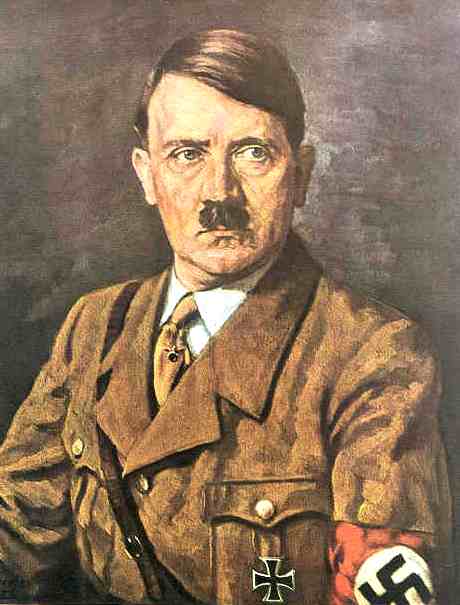
Would God Let Hitler in Heaven?

Post Author: Bill Pratt

I find that many non-believers are hopelessly confused about salvation by God’s grace.  This confusion was amply illustrated the other day on an Unbelievable? podcast when the atheist debater challenged the Christian debater with the following: “Isn’t it true that the Christian God would have allowed Hitler into heaven if he had repented and trusted in Christ on his deathbed?”

The  atheist questioner clearly believed that Hitler, based on his numerous evil deeds (I still don’t understand how atheists can say that Hitler did anything objectively evil, but that’s another issue altogether), did not deserve to be accepted by God, and the fact that the Christian God would accept Hitler under any circumstances was simply unacceptable.   He (the atheist) could never believe in a God that would let Hitler into heaven because justice would be denied if this were to occur.

One can sympathize with this point of view if we are dealing with the God of Islam, who weighs everyone’s good deeds and bad deeds on a scale to determine where they will spend the afterlife.  It is hard to imagine that Hitler could ever get into heaven under that system, but that is not how the God of Christianity works.

The Christian debater correctly pointed out that nobody deserves to be accepted by God, but that through Christ’s work on the cross, God will accept those who have placed their trust in what Christ did for them.  God will apply Christ’s atoning sacrifice to every person who desires it by dedicating themselves to their Savior.  Christ paid the penalty for all of mankind’s sins, including Hitler’s.  If Hitler had truly repented and trusted in Christ before he died, like the thief on the cross, he would have been welcomed into paradise by God.  There is no reason to believe that he ever did this, so this is a purely hypothetical exercise meant to illustrate a point.

That is why Christians are always talking about the grace of God.  God offers us eternity with him, but only because of Christ.  God knows that if a scale of justice were applied, every single one of us would be condemned for our thoughts and our deeds.  According to the Bible and to anyone who has really looked within their soul, we are a million miles away from the goodness that God expects of us.  The scale, after all, is calibrated to weigh our deeds against the standard of the righteousness of God.  Does anyone really believe they can stand before God on their own merit?

I thank God that I will never have to, and if you’ve trusted Christ, neither will you.

What Is the Difference Between Religion and the Gospel? Part 2

Post Author: Bill Pratt

I have just completed reading The Reason for God by Timothy Keller, which has provided me much material for the blog in recent days.  In one powerful section of the book, Keller carefully draws out the distinction between one definition of “religion” and the Christian gospel.  Today I pick up the discussion where I left off in Part 1 of the series.

Keller gets back to the issue of divisiveness that we touched on a few days ago.  Those who are “religious,” who believe that God accepts them because of their good deeds, inevitably imagine themselves to be more advanced, of higher rank, than members of other faiths.

Religion and the gospel also differ fundamentally in how they treat the Other—those who do not share one’s own beliefs and practices. Postmodern thinkers understand that the self is formed and strengthened through the exclusion of the Other—those who do not have the values or traits on which I base my own significance. We define ourselves by pointing to those whom we are not. We bolster our sense of worth by devaluing those of other races, beliefs, and traits.

If we understand that God accepts us because of Christ, our views toward others change radically.

This gospel identity gives us a new basis for harmonious and just social arrangements. A Christian’s worth and value are not created by excluding anyone, but through the Lord who was excluded for me. His grace both humbles me more deeply than religion can (since I am too flawed to ever save myself through my own effort), yet it also affirms me more powerfully than religion can (since I can be absolutely certain of God’s unconditional acceptance). That means that I cannot despise those who do not believe as I do.

Keller continues:

Since I am not saved by my correct doctrine or practice, then this person before me, even with his or her wrong beliefs, might be morally superior to me in many ways. It also means I do not have to be intimidated by anyone. I am not so insecure that I fear the power or success or talent of people who are different from me. The gospel makes it possible for a person to escape oversensitivity, defensiveness, and the need to criticize others. The Christian’s identity is not based on the need to be perceived as a good person, but on God’s valuing of you in Christ.

Since one of the most fundamental characteristics of being human is feeling defensive about ourselves, we can know how much progress we’ve made as Christ-followers when these feelings come under control, when they start to subside.  They may never completely go away, but the more we come under the Kingship of Christ, the less we will see those who do not believe as we do as enemies, but as people Christ died for.

What Is the Difference Between Religion and the Gospel? Part 1

Post Author: Bill Pratt

I have just completed reading The Reason for God by Timothy Keller, which has provided me much material for the blog in recent days.  In one powerful section of the book, Keller carefully draws out the distinction between one definition of “religion” and the Christian gospel.  First, Keller clarifies what he means by “religion” in this particular context:

In the broader sense, religion is any belief system of ultimate values that shapes our pursuit of a particular kind of life in the world. This is the reason that it is quite fair to call secularism a religion, and Christianity as well. However, virtually all religions require to one degree or another a form of self-salvation through merit. They require that people approach God and become worthy through various rites, observances, and behaviors. This is also what most people think of when they think of religion, and in this sense Christianity as presented in the New Testament is radically distinct. That is why for the purposes of this chapter we will speak of Christianity as distinct from “religion.”

According to Keller, religion “operates on the principle ‘I obey – therefore I am accepted by God.'”

The operating principle of the gospel is “I am accepted by God through what Christ has done – therefore I obey.”  This is what the concept of grace is in Christianity, that God accepts us because of what Jesus has done, not because of our own efforts.  Thus religion and gospel play out quite differently in people’s lives.

Two people living their lives on the basis of these two different principles may sit next to each other in the church pew. They both pray, give money generously, and are loyal and faithful to their family and church, trying to live decent lives. However, they do so out of two radically different motivations, in two radically different spiritual identities, and the result is two radically different kinds of lives.

The primary difference is that of motivation. In religion, we try to obey the divine standards out of fear. We believe that if we don’t obey we are going to lose God’s blessing in this world and the next. In the gospel, the motivation is one of gratitude for the blessing we have already received because of Christ. While the moralist is forced into obedience, motivated by fear of rejection, a Christian rushes into obedience, motivated by a desire to please and resemble the one who gave his life for us.

The distinction between religion and gospel also plays out in our own personal identity – what we think of ourselves.  Here Keller reminds us that the person who believes that God accepts them based on their deeds feels superior to everyone else, whether they are liberal or conservative.

Another difference has to do with our identity and self-regard. In a religious framework, if you feel you are living up to your chosen religious standards, then you feel superior and disdainful toward those who are not following in the true path. This is true whether your religion is of a more liberal variety (in which case you will feel superior to bigots and narrow-minded people) or of a more conservative variety (in which case you will feel superior to the less moral and devout). If you are not living up to your chosen standards, then you will be filled with a loathing toward yourself. You will feel far more guilt than if you had stayed away from God and religion altogether.

In part 2 of this series, I will continue to examine Keller’s thoughts on the differences between religion and gospel.

Why Are We So Divided?

Post Author: Bill Pratt

A couple of years ago, I asked one of my good atheist friends what he thought the biggest problem facing mankind was.  His answer: our propensity to form exclusionary groups.  He explained that everywhere he looked, people were grouping themselves and casting everyone not in their group as “the enemy.”  He especially felt this to be a problem with religious people, as he was excluded from these communities because he was an atheist.

I’ve often thought about his assessment of the human tendency to exclude and to label outsiders as enemies.  Recently I encountered some thoughts on this human predisposition, captured by Tim Keller in The Reason for God.  Keller’s answer is drawn from the great theologian Jonathan Edwards.

In The Nature of True Virtue, one of the most profound treatises on social ethics ever written, Jonathan Edwards lays out how sin destroys the social fabric. He argues that human society is deeply fragmented when anything but God is our highest love.

How so?  Can’t we dedicate our lives to our family, to our nation, to our own interests?  Keller continues:

If our highest goal in life is the good of our family, then, says Edwards, we will tend to care less for other families. If our highest goal is the good of our nation, tribe, or race, then we will tend to be racist or nationalistic [Bill’s note: the Nazis dedicated their highest love to national Germany]. If our ultimate goal in life is our own individual happiness, then we will put our own economic and power interests ahead of those of others.

So how does making God our highest love solve the problem?

Edwards concludes that only if God is our summum bonum, our ultimate good and life center, will we find our heart drawn out not only to people of all families, races, and classes, but to the whole world in general.

Since God created each of us in his image, since we are all equally valuable in his eyes, since he desires that every one of us spend eternity with him, it is easy to see how the proper Christian response to every man, woman, and child, regardless of race, nation, or creed, is love, not exclusion.

Maybe you’re not convinced that setting our sights on other things cannot bring unity and break down divisions among people.  Can’t politics or ethnicity or socioeconomic status or tolerance or morality fit the bill?  Aren’t these worthy objects of our highest love?

If we get our very identity, our sense of worth, from our political position, then politics is not really about politics, it is about us. Through our cause we are getting a self, our worth. That means we must despise and demonize the opposition. If we get our identity from our ethnicity or socioeconomic status, then we have to feel superior to those of other classes and races. If you are profoundly proud of being an open-minded, tolerant soul, you will be extremely indignant toward people you think are bigots. If you are a very moral person, you will feel very superior to people you think are licentious. And so on.

There is no way out of this conundrum. The more we love and identify deeply with our family, our class, our race, or our religion, the harder it is to not feel superior or even hostile to other religions, races, etc. So racism, classism, and sexism are not matters of ignorance or a lack of education. Foucault and others in our time have shown that it is far harder than we think to have a self-identity that doesn’t lead to exclusion. The real culture war is taking place inside our own disordered hearts, wracked by inordinate desires for things that control us, that lead us to feel superior and exclude those without them, and that fail to satisfy us even when we get them.

I think Keller and Edwards are right.  The solution to my friend’s problem is to make God our highest love; everything other answer is a dead end.  I hope that some day he will agree with me.