Why Think Humans Have an Immaterial Soul? Part 1

Post Author: Bill Pratt

Another chapter from Joseph Owens’ book An Elementary Christian Metaphysics urged me to write.  This chapter has Owens explaining why he believes humans have an immaterial soul.

He first points out that “actions and reactions in the material universe take place under the conditions of singularity.”  He explains that an “individual ball hits an individual wall.”  The reason for this is that “matter in the real world limits a material form to being under designated quantitative dimensions of length, breadth, and thickness. . . . One throw with the shovel removes only one shovelful of earth.”  Things of matter are individual and singular.

Owens argues, however, that the human intellect attains things as universal, not just as individual or singular.

It knows a [thing’s] nature not as something restricted to the singular thing before its gaze, but as applicable to all individuals of the species.  It knows it in a way that breaks through the individuating conditions of matter.  It knows it in a way that is not possible for a merely material knower.  The universal way in which the human intellect knows things, therefore, marks it as a cognitive principle that is to a certain extent functioning independently of matter.

The human intellect is able to escape the individuality of matter because it knows things as universals.  For example, we can know what human means without seeing every single instance of a human.  We are able to universalize what a human is in our minds.

Secondly, Owens notes that the human intellect is able to know things in a way that transcends time.  Time and matter go together, so anything that eludes time is also independent of matter.

The individual sensible thing is continually changing from moment to moment.  As perceived by the senses, it is attained under these changing conditions.  A leaf is seen as swaying in the wind, as green in summer, as multicolored in autumn, as decaying and falling in the frosty weather.  Under the universal aspect of leaf, however, it is known by the intellect in a way that transcends time.  It is known under an aspect that can be applied to any leaf at any time, an aspect that does not undergo any changes with the passage of time. . . . In attaining its object as immune to the changes of time, the intellect is operating in a way that cannot have its source [in] matter.

Third, Owens argues that science and reasoning could not exist unless the human intellect could go beyond time and space.

The scientific reasoning of one man becomes the common property of all who pursue the science from one generation to the other.  The enormous body of knowledge is not lost with the death of the individuals who so far have been bringing it into being.  It is not limited to the conditions of individuation and change, conditions inevitably imposed by matter.  Scientific progress, accordingly, requires that the intellects through which it takes place function in a way that is independent of the strictly material principle in the knowing subjects.

In part 2 of this post, we will continue to look at the case that Owens builds for arguing that there must an immaterial part of man.

Top Ten Intelligent Design and Evolution Science News Stories of 2010

Post Author: Bill Pratt

This post is a few months belated, but better late than never.  Every year, Access Research Network does a phenomenal job collecting science news that bears on the intelligent design and evolution debate.  For 2010, they have again assembled a great list.  If you are at all interested in this debate, please go read the article where they have compiled the stories.
Which Part of Evolution Are We Talking About?

Post Author: Bill Pratt

I have followed the intelligent design (ID) movement for several years now and there is an error that I’ve seen opponents of ID make over and over.

The error is confusing the idea of common descent with the idea of random mutation and natural selection.

Common descent refers to the idea that all animal life is related, that if we trace back each living animal’s ancestry, we would find common ancestors.  If every animal could trace back its family history through ancestor.com, we would all find that we came from the same great, great, great (insert great thousands or millions of times) grandparents.  Some of us are closer relatives than others but we are all related if we go back far enough in history.  The idea of common descent can be supported by evidence from the fossil record and by comparing the DNA sequences of different kinds of animals.

The idea of random mutation and natural selection attempts to explain how animals have changed over time into all the diverse species we see today and in the fossil record.  Every time an animal reproduces, there is a chance for a genetic mutation occurring in the process.  If the mutation that the offspring inherits is helpful to its survival until it, too, can reproduce, well then the mutation is passed on to the next generation, and so on.

In this way, the genetic code is altered, and if enough of these mutations occur over time, you get a new species of animal.  The empirical evidence for this mechanism only demonstrates very small, and in many ways, trivial instances of change (e.g., finch beaks, peppered moths, antibiotic resistance, fruit fly mutations).  There is no empirical evidence of large scale evolution due to random mutation and natural selection (see Michael Behe’s The Edge of Evolution and my recent post on this topic).

Which idea does ID challenge?  Common descent or the mechanism of random mutation and natural selection?

ID theory almost exclusively addresses the mechanism of random mutation and natural selection, not common descent.  ID challenges the idea that complex, specified biological systems can develop through random mutation and natural selection.  Regardless of this fact, time and again, opponents of ID throw evidence of common descent at ID proponents, only revealing their ignorance of ID.  Just recently on this blog, as I was discussing the lack of empirical evidence for random mutation and natural selection, I was treated to commenters’ arguments again for common descent; the error seems pervasive.

It is time that we understand the difference between these two ideas.  I would love to hear good arguments against ID theory, but first ID opponents actually need to do some reading and try to understand what they are opposing.  Almost 9 times out 10, when I read opponents of ID, they badly  misunderstand the theory.  If anyone can point me to actual ID opponents who understand ID, I would much appreciate it.

Why Do We Celebrate Easter?

Post Author: Bill Pratt

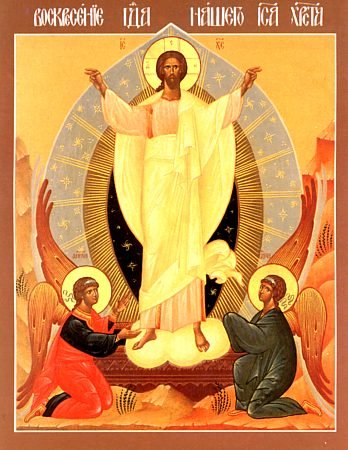
We celebrate Easter because it commemorates the resurrection of Jesus Christ.  Christians believe that Jesus was killed by crucifixion on a Friday and then actually came back to life on the following Sunday.

Some may ask, “So what?”  Why is it important that Jesus rose from the dead?

There are many answers to that question, including the fact that Jesus predicted this miracle ahead of time as proof that he is the Son of God.  But today I want to highlight a passage from 1 Cor. 15 where the apostle Paul explains why the resurrection is important to believers in a very practical way.

But if it is preached that Christ has been raised from the dead, how can some of you say that there is no resurrection of the dead?  If there is no resurrection of the dead, then not even Christ has been raised.  And if Christ has not been raised, our preaching is useless and so is your faith.  More than that, we are then found to be false witnesses about God, for we have testified about God that he raised Christ from the dead. But he did not raise him if in fact the dead are not raised. For if the dead are not raised, then Christ has not been raised either.  And if Christ has not been raised, your faith is futile; you are still in your sins. Then those also who have fallen asleep in Christ are lost.  If only for this life we have hope in Christ, we are to be pitied more than all men (1 Cor. 15:12-19).

Christ’s resurrection is the central teaching of Christianity.  According to Paul, if he wasn’t resurrected, then Christianity is a complete sham; all who believe in Christ for salvation are still in their sins and to be pitied if Christ was not raised.

For those of us who are believers, the resurrection is extremely important.  If Christ was not raised, we have no hope.

But Paul does not leave us hanging.  In verse 20, he makes clear what really occurred: “But Christ has indeed been raised from the dead, the firstfruits of those who have fallen asleep” (1 Cor. 15:20).

Paul concludes his treatment of the resurrection with these words: “Death has been swallowed up in victory” (1 Cor. 15:54).

The resurrection of Christ is the ultimate reassurance to all believers that death has finally been defeated.  We will all be resurrected, just as Christ.  Once you understand that Easter is a celebration of the defeat of death, you will finally understand why we celebrate this holy day.

Thanks be to God for a risen Savior!

What Happens to Us When We Gain New Knowledge?

Post Author: Bill Pratt

OK, I admit we’re in deep waters with this question, but I’ve been studying epistemology, the investigation of human knowledge, for the last few months and I have run across a short section in a book I’m reading that struck me as particularly profound.

Before I discuss that section, I want to share a common question that people ask me.  The question is this: “Why do you read and study so much?  What’s the point of it all?  Is there no end to your search for knowledge?”  Generally these are people who don’t know what to think of all the books I read, of the blog posts I write, of the seminary courses I take.  To them, it might all be a colossal waste of time.

The only way I can answer this question is that once I started studying the teachings of Christianity, my mind literally awakened to an immense world that I never knew existed.  Since that time, I have felt an incredible drive, almost a primal need, to learn as much as I can about God, humans, and the world we live in – in that order of importance.  I can’t get enough of it and I don’t think I ever will.

Is something wrong with me and people like me?  Sometimes I wonder, but then I ran across a passage in a book that explains why I do what I do – why I want to know things.  The book is An Elementary Christian Metaphysics by Joseph Owens and is one of the most difficult books I’ve ever read.  It is as abstract as you can possibly get, because the book is mostly about the concept of existence, of what it means for something to exist.  There is no more basic subject than that, and thus it makes for abstract reading.

So what does the book have to say?

Through sense cognition a man is able to become [in his mind] one by one the . . . things he encounters in his daily life.  He enriches himself with their forms as he perceives each of them [as they really are], and conserves the forms in his imagination.

Think about this.  We actually become the things we perceive as we bring them into our mind.  We are enriched by the things we come to know and we are able to preserve these things in our mind even after we stop seeing them.

Through intellection [man] is able to transcend the confines of the here and now, and become objects whose extent is unlimited.

How does this work?  We are able to identify common natures in things, and once we identify a common nature, we are able to know all things that possess that common nature.  For example, when we understand the concept of humanity as a nature, we now understand what all humans are like in their common humanity.  We can know what humans were like in the past, in the present, and in the future without ever seeing all instances of human beings.  That’s amazing when you think about it.

Though remaining an individual he is brought into a life that bursts away from the ghetto of his immediate surroundings and extends as far as do the natures of the things with which he comes in contact. . . . Through science he can enrich himself with myriad forms that could never impinge themselves on his immediate cognition.

The intellect and the ability to know things expands the universe far beyond what a man can directly see or hear.  How far can man go?

In grasping the [existence] of sensible things . . . he has the starting point from which he can reach [God].  By intellective reflection [man] becomes himself . . . and is himself in a way that enables him to dominate his own activity.  Knowing his own actions through reflection he has starting points for the investigation of spiritual nature.

Thus we are the only animals that can reach God by reflecting on ourselves.  We see that we have a spiritual nature, that we have a mind, that we think, feel, and will.  As Owens reminds us, this reflection provides the starting point for us to know that God exists.

Owens concludes:

The kinds of things that a man can know through his intellect are consequently unlimited. . . . Intellection, therefore, is able to enrich the knower cognitionally with the form of anything whatsoever.  Those forms remain with the knower permanently as [intellectual likenesses] in which the thing may again be actually known at any time.  There need be little wonder, then, that Aristotle saw in intellection the supreme happiness and destiny of man, and that according to the Christian the Beatific Vision is the ultimate goal of human living.

I believe that God has placed the desire to know in all humans, and that He has given some of us extra doses of that desire.  That is why I want to know.  Why has God given man the desire to know?  Because the pursuit of knowledge, for the Christian, eventually culminates in the ultimate human experience, seeing God in the Beatific Vision.  It doesn’t get any better than that.

Did Jesus’s Disciples Think He Was God? Part 2

Post Author: Bill Pratt

Continuing from part 1, there are additional lines of evidence showing that Jesus’s disciples thought he was God.  Again, this material is excerpted from theologian Norman Geisler’s book, Systematic Theology, Volume 2.

Picking up where we left off, the third line of evidence is that the disciples attributed the powers of God to Jesus.

According to Geisler:

There are some things only God can do, but these very things are attributed to Jesus by His disciples. He is said to be able to raise the dead (John 5:21; 11:38–44) and forgive sins (Acts 5:31; 13:38). Moreover, He is said to have been the primary agent in the creating of the universe (John 1:2–3; Col. 1:16) and in sustaining its existence (Col. 1:17). Surely only God can be said to be the Creator of all things, and the disciples claim this power for Jesus.

Fourth, the disciples associated Jesus’ name with God’s.

How did this happen in the New Testament?  Here are some examples:

Often in prayers or benedictions, Jesus’ name is used alongside God’s, as in “Grace and peace to you from God our Father and the Lord Jesus Christ” (Gal. 1:3; Eph. 1:2). The name of Jesus appears with equal status to God’s in the so-called trinitarian formulas: For example, the command to go and baptize “in the name [singular] of the Father and of the Son and of the Holy Spirit” (Matt. 28:19). Again this association is made at the end of 2 Corinthians: “May the grace of the Lord Jesus Christ, and the love of God, and the fellowship of the Holy Spirit be with you all” (13:14). If there is only one God, then these three persons must by nature be equated.

Fifth and finally, the disciples called Jesus God.

Geisler catalogues examples from the apostles John and Paul, and the writer of Hebrews.  All three call Jesus God in multiple ways.

First, the apostle John:

Thomas saw His wounds and cried, “My Lord and my God!” (John 20:28). The prologue to John’s gospel also minces no words, stating, “In the beginning was the Word, and the Word was with God, and the Word [Jesus] was God” (John 1:1).

Paul and the writer of Hebrews provide several more examples:

Paul wrote, “Theirs are the patriarchs, and from them is traced the human ancestry of Christ, who is God over all, forever praised!” (Rom. 9:5). He calls Jesus the one in whom “all the fullness of Deity lives in bodily form” (Col. 2:9). In Titus, Jesus is “our great God and Savior” (2:13), and the writer to the Hebrews says of Him, “Your throne, O God, will last for ever and ever” (Heb. 1:8). Paul says that before Christ existed in the “form of a servant,” which clearly refers to being really human, He existed in the “form of God” (Phil. 2:5–8 NKJV). The parallel phrases suggest that if Jesus was fully human, then He was also fully God. A similar term, “the image of the invisible God,” is used in Colossians 1:15 to mean the manifestation of God Himself. This description is strengthened in Hebrews, where it says, “The Son is the radiance of God’s glory and the exact representation of his being, sustaining all things by his powerful word” (Heb. 1:3).

Geisler summarizes all of the evidence nicely:

In summary, there is manifold testimony from Jesus Himself and from those who knew Him best that Jesus claimed to be God and that His followers believed this to be the case. They claim of the carpenter of Nazareth these unique titles, powers, prerogatives, and activities that apply only to God. There is no reasonable doubt that this is what they believed and what Jesus thought of Himself according to the New Testament.

Did Jesus’s Disciples Think He Was God? Part 1

Post Author: Bill Pratt

A couple of years ago, I wrote seven posts on the subject of whether Jesus claimed to be God.  At the end of those posts, I promised to follow up with an additional series of posts discussing whether Jesus’s disciples thought he was God.  Better late than never, I suppose.  Here begins that series.

There are several lines of evidence captured by theologian Norman Geisler in his book, Systematic Theology, Volume 2, that point to the fact that Jesus’s disciples did indeed believe he was divine.

First, the disciples attributed titles of deity to Jesus.

The apostle John referred to Jesus as the “the first and the last” (Rev. 1:17; 2:8; 22:13); “the true light” (John 1:9); the “bridegroom” (Rev. 21:2); “Savior of the world” (John 4:42; cf. Isa. 43:3).  He also attributed to Jesus the role of “Redeemer” in Rev. 5:9.

The apostle Peter called Jesus the “rock” and “stone” (1 Peter 2:6–8; cf. Ps. 18:2; 95:1); and “the Chief Shepherd” (1 Peter 5:4).

The apostle Paul referred to Jesus as the “rock” (1 Cor. 10:4) and the “bridegroom” (Eph. 5:22–33).  According to Geisler, “The Old Testament role of ‘Redeemer’ (Hosea 13:14; Ps. 130:7) is given to Jesus by Paul in Tit. 2:13–14.  Jesus is the forgiver of sins in Col. 3:13 and He is  “Christ Jesus, who will judge the living and the dead” (2 Tim. 4:1).

What is so special about these titles?  Geisler explains, “All of these titles are unique to Jehovah (Yahweh) in the Old Testament but are given to Jesus in the New Testament.”  The disciples were steeped in the Old Testament and would have only applied these titles with great care.  If they did not think Jesus was divine, they would have never used these words to describe him.

Second, the disciples considered Jesus the Messiah-God.

The New Testament opens with a passage concluding that Jesus is Immanuel (“God with us”), which refers to the messianic prediction of Isaiah 7:14. The very title “Christ” carries the same meaning as the Hebrew appellation “Messiah” (“Anointed One”). In Zechariah 12:10, Jehovah says, “They will look on me, the one they have pierced.” The New Testament writers apply this passage to Jesus twice (John 19:37; Rev. 1:7) as referring to His crucifixion.

But there is more, as Geisler elaborates on Paul’s view of Jesus.

Paul interprets Isaiah’s message, “For I am God, and there is no other.… Before me every knee will bow; by me every tongue will swear” (Isa. 45:22–23) as applying to his Lord, “at the name of Jesus every knee should bow … and every tongue confess that Jesus Christ is Lord, to the glory of God the Father” (Phil. 2:10–11). The implications of this are strong, because Paul says that all created beings will call Jesus both Messiah (Christ) and Jehovah (Lord).

There are several more lines of evidence that Geisler presents.  We’ll cover these in future posts, so ya’ll come back now!